Scabies Diagnosis: Complete Guide To Tests And Criteria
Learn how scabies is diagnosed, from clinical exams to advanced tests, and understand symptoms for accurate identification.
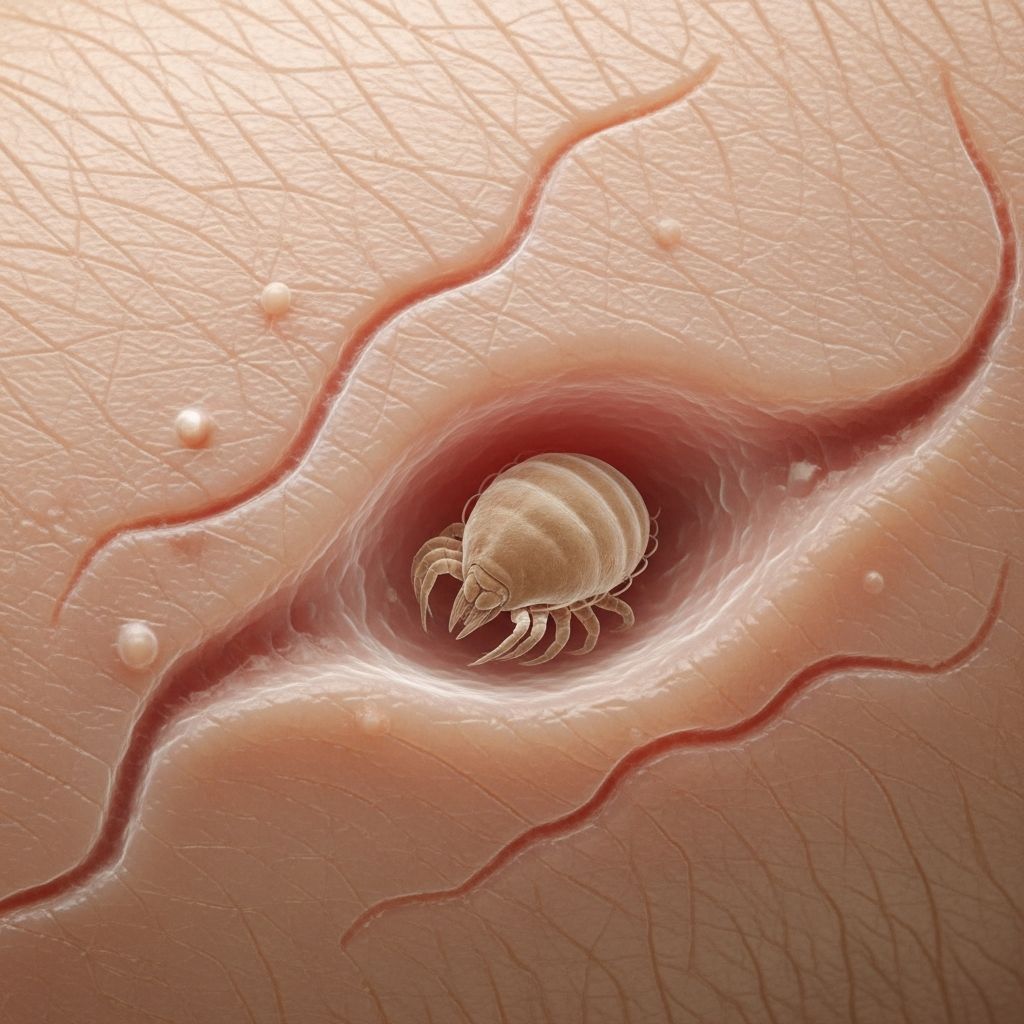
Scabies, caused by the mite Sarcoptes scabiei var. hominis, is diagnosed primarily through clinical examination, supported by history of intense itching and contact exposure. Advanced techniques like dermoscopy and microscopy confirm the presence of mites, eggs, or feces.
What Is Scabies?
Scabies is a contagious skin infestation by the human itch mite Sarcoptes scabiei, leading to severe pruritus and characteristic lesions. The female mite burrows into the stratum corneum, laying eggs that hatch into larvae, perpetuating the cycle. Globally, it affects over 200 million people annually, thriving in crowded conditions.
In typical cases, patients have 10-15 adult mites, but crusted scabies involves millions, posing higher transmission risks, especially in immunocompromised individuals. Symptoms emerge 4-6 weeks post-infestation in primaries, or 1-4 days in reinfestations due to sensitized immunity.
Scabies Symptoms
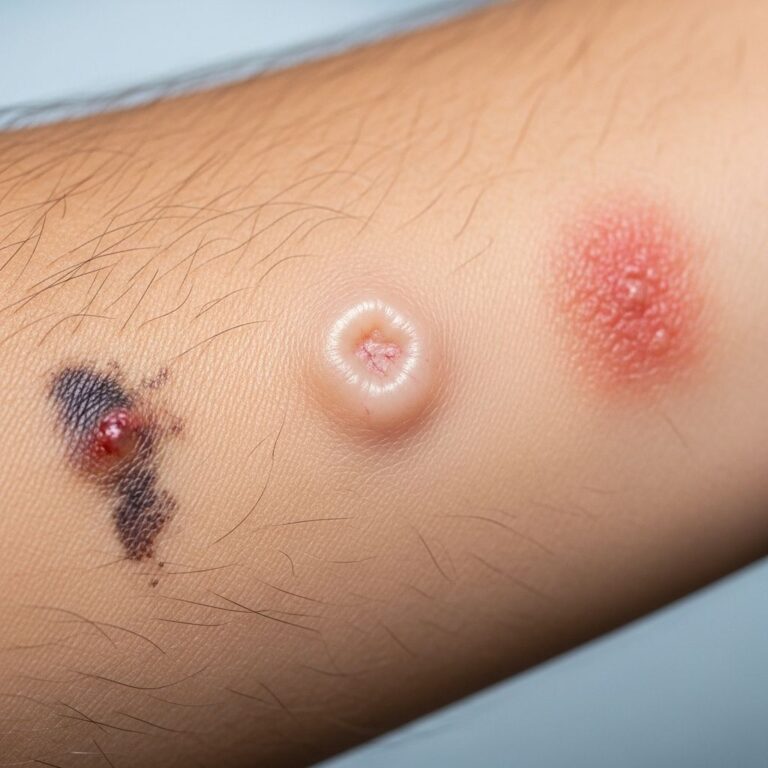
The hallmark symptom is intense itching, worse at night, from hypersensitivity to mite products. Linear burrows, papules, and nodules appear in typical sites: finger webs, wrists, elbows, axillae, waistline, buttocks, and genitals in adults.
- Skin lesions: Burrows (thread-like), papules, vesicles, excoriations from scratching.
- Distribution: Interdigital spaces, flexor wrists, male genitalia, breasts in females; infants show scalp, palms, soles involvement.
- Secondary effects: Eczema, impetigo from bacterial superinfection.
In children and elderly, presentations vary: widespread rash, vesicopustules on palms/soles. Crusted scabies features hyperkeratotic crusts, dystrophic nails, often misdiagnosed as psoriasis.
Who Is at Risk for Scabies?
Scabies affects all ages, socioeconomic groups, but risk factors include overcrowding, poor hygiene, close contacts (households, institutions), immunosuppression (HIV, elderly), and tropical climates. Outbreaks occur in nursing homes, prisons, childcare.
Children under 15 and elderly comprise 50% of cases in endemic areas. Immunocompromised patients develop crusted (Norwegian) scabies, highly contagious with mite loads exceeding 1 million.
How to Tell If You Have Scabies: Common Signs
Suspect scabies with pruritus plus family contacts itching similarly—nearly pathognomonic. Look for burrows: wavy, brown-gray lines 2-15mm, often finger webs. Papules on wrists/genitals, nocturnal itch intensify suspicion.
In atypical cases (elderly, infants), generalized erythema or nodules mimic eczema. Burrows may be obscured by scratching/infection; history trumps.
Scabies vs. Other Conditions
Differential diagnoses include insect bites, eczema, impetigo, folliculitis, tinea, psoriasis, bullous pemphigoid. Scabies burrows distinguish it; no burrows prompt alternatives.
| Condition | Key Features | Differentiator from Scabies |
|---|---|---|
| Eczema | Dry, scaly patches | No burrows, less contagious |
| Impetigo | Honey-crusted lesions | Bacterial culture positive |
| Tinea | Annular plaques | KOH prep shows hyphae |
| Psoriasis | Thick silvery scales | Auspitz sign, no itch at night |
Crusted scabies differentials: seborrheic dermatitis, widespread tinea.
Scabies Diagnosis
Diagnosis relies on clinical suspicion: pruritic rash in typical distribution plus contact history. In endemic areas, this suffices; elsewhere, confirm parasitologically.
International Alliance for Control of Scabies (IACS) 2020 criteria standardize diagnosis:
- Confirmed: Mites/eggs/feces via microscopy, dermoscopy, imaging.
- Clinical: Burrows or typical lesions (genitalia) in typical sites + 2 history features (pruritus, contacts).
- Suspected: Typical lesions +1 history or atypical +2.
Related Stories



Simplified criteria for field use in endemic settings prioritize burrows/papules in wrists/webs/genitals + night itch; high sensitivity/specificity.
Dermoscopy
Dermoscopy reveals ‘delta sign’ (jet contrail with triangular mite head) at burrow ends. Non-invasive, bedside; burrow ink test enhances visualization—ink tracks burrow. Sensitivity rivals scraping.
Skin Scraping
Scrape burrow with #15 blade/mineral oil, examine microscopically for mites (0.2-0.4mm), eggs, scybala (fecal globules). Low yield (10-20%) due to few mites.
Adhesive Tape Test
Apply tape to lesion, transfer to slide; visualizes mites/eggs/feces. Simple, less invasive than scraping.
PCR Testing
Real-time PCR detects mite DNA from dry swabs; high sensitivity, useful in low-burden or post-treatment cases. Emerging standard.
Other Methods
Ink test highlights burrows; biopsy rarely needed, shows mites in stratum corneum. Videodermatoscopy advances detection.
When to See a Doctor for Scabies
Seek care for persistent itch, burrows, contact exposure. Urgent if crusted (thick crusts, nail dystrophy) or in vulnerable groups. Early diagnosis prevents outbreaks.
Scabies Treatment
First-line: topical permethrin 5% cream, applied head-to-toe, left 8-14 hours, repeated after 1 week. Oral ivermectin for crusted/cantapply cases. Treat contacts simultaneously; wash/launder linens.
Post-scabietic itch lasts 2-4 weeks; emollients, antihistamines help. Antibiotics for superinfections.
Prevention and Control
Avoid skin contact; treat households. In outbreaks, mass drug administration (ivermectin). Improve hygiene, reduce crowding.
Frequently Asked Questions (FAQs)
What does scabies look like?
Linear burrows, papules in webs/wrists/genitals; intense night itch.
Can a doctor diagnose scabies without a microscope?
Yes, clinically via history/exam; microscopy confirms.
How accurate is dermoscopy for scabies?
Highly sensitive for delta sign; bedside confirmation.
Is PCR better than scraping for scabies diagnosis?
PCR detects DNA reliably, even low mite loads.
Who developed scabies diagnostic criteria?
IACS via Delphi consensus, 2020.
References
- Scabies: current knowledge and future directions — Frontiers in Tropical Diseases. 2024. https://www.frontiersin.org/journals/tropical-diseases/articles/10.3389/fitd.2024.1429266/full
- Scabies — World Health Organization. 2022-10-14. https://www.who.int/news-room/fact-sheets/detail/scabies
- Everything You Need to Know About Scabies — Healthline. 2023. https://www.healthline.com/health/scabies
- Scabies: diagnosis and treatment — PMC – NIH. 1999. https://pmc.ncbi.nlm.nih.gov/articles/PMC1215558/
- What Is Scabies? — JAMA Network. 2023. https://jamanetwork.com/journals/jama/fullarticle/2838870
- The Diagnosis and Treatment of Crusted Scabies — DermSquared. 2023. https://skin.dermsquared.com/skin/article/view/3269
Similar Articles








Read full bio of Sneha Tete