Scabies Pathology: Key Insights Into Histology And Diagnosis
Detailed histopathological analysis of scabies infestation, including epidermal changes, inflammatory infiltrates, and variants like crusted scabies.
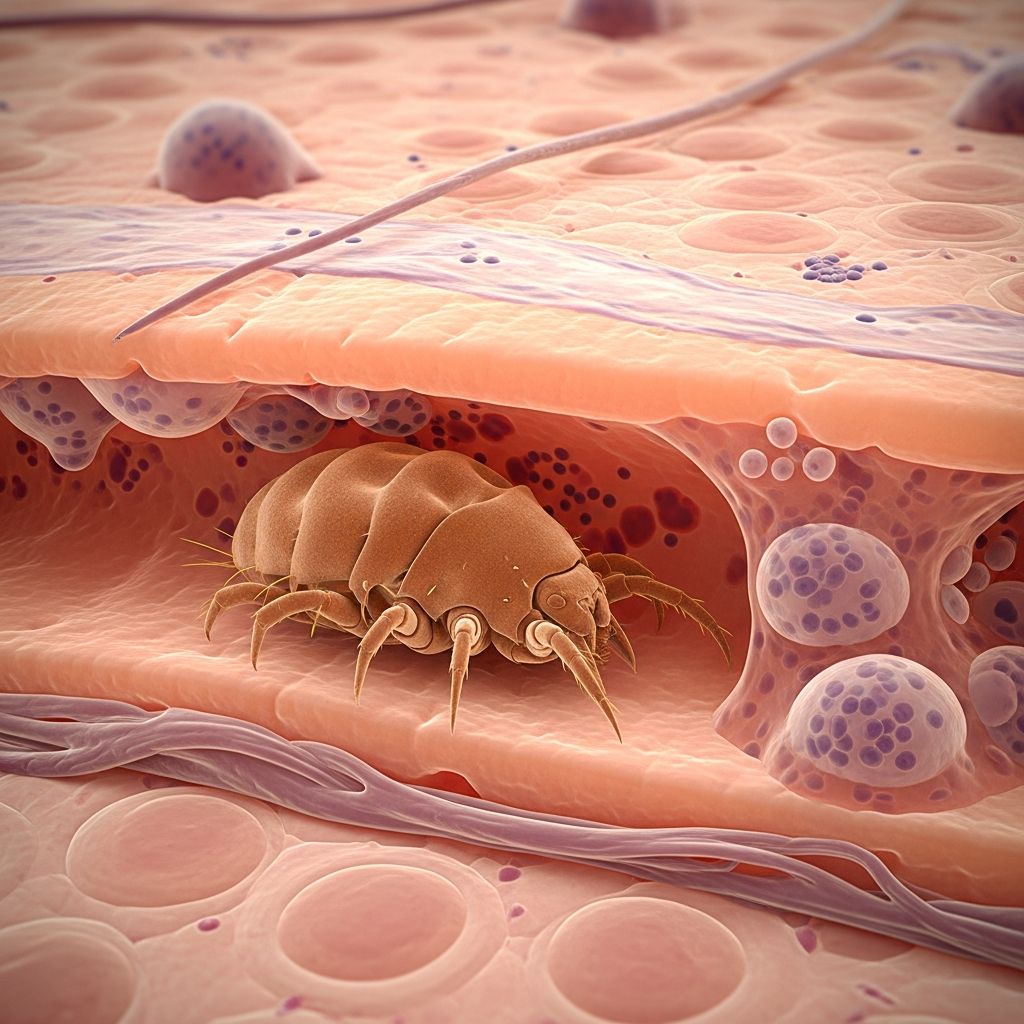
Scabies pathology reveals a distinctive pattern of epidermal and dermal changes caused by infestation with the mite Sarcoptes scabiei var. hominis, characterized by scale-crust formation, spongiosis, and eosinophil-rich inflammatory infiltrates.
Introduction
Scabies is a highly contagious ectoparasitic infestation caused by the human mite Sarcoptes scabiei var. hominis, leading to intense pruritus and polymorphic skin lesions due to a type IV hypersensitivity reaction. Histopathologically, skin biopsies from scabies lesions demonstrate an epidermal inflammatory process with a wedge-shaped dermal infiltrate, often featuring numerous eosinophils as a key clue to arthropod bite reactions. While mites are infrequently identified in routine biopsies, the inflammatory pattern provides diagnostic insights, particularly in classical and crusted (Norwegian) variants.
The pathology reflects both direct mite burrowing in the stratum corneum—where females lay eggs and deposit feces—and the host’s delayed immune response, which triggers symptoms after 4-6 weeks in primary infestations or rapidly in reinfestations. Secondary changes from excoriation, such as ulceration and impetiginization, further complicate the histology.
Clinical Features Leading to Biopsy
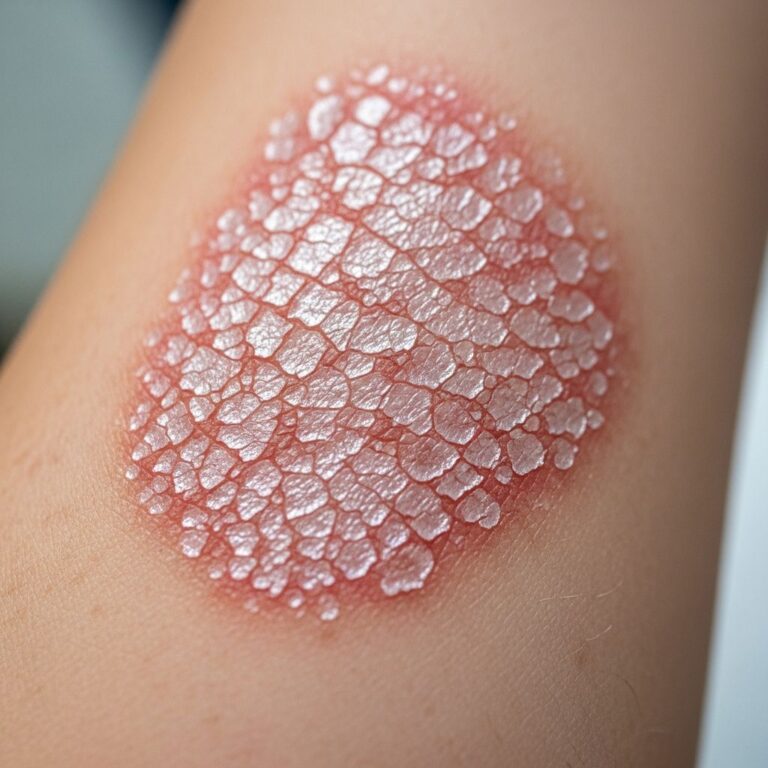
Patients typically present with intense nocturnal pruritus, burrows (short, wavy lines 2-15 mm long with a vesicle at the end), and papules in interdigital spaces, wrists, axillae, umbilicus, genitals, and buttocks. In immunocompromised individuals, crusted scabies manifests as hyperkeratotic plaques with thick yellow crusts on palms, soles, nails, elbows, knees, and scalp, harboring millions of mites.
Biopsies are pursued when clinical diagnosis is uncertain, especially to rule out differentials or confirm infestation in atypical presentations. Common biopsy sites include active burrows or papules, though mites are seen in only 10-20% of cases due to their superficial location.
Histopathology
Scanning Power View
Low-power examination shows a characteristic epidermal process with scale-crust and a wedge-shaped dermal inflammatory infiltrate extending superficially and deeply (Figure 1 equivalent description: epidermal scale overlies a broad-based dermal wedge). This pattern distinguishes scabies from purely superficial dermatitides.
Epidermal Changes
The epidermis exhibits significant
scale-crust
composed of serous exudate, neutrophils, and eosinophils, often with focal ulceration or erosion from scratching. Spongiosis (intercellular edema) and vesiculation are prominent, mimicking eczematous conditions, while mites or their scybala (fecal pellets) may be visible as round structures (20-40 μm) or burrows in the stratum corneum.- Parakeratosis and hyperkeratosis in chronic lesions.
- Psoriasiform hyperplasia in crusted scabies with marked stratum corneum thickening packed with mites.
- Acanthosis (epidermal thickening) in hyperinfested areas.
Dermal Infiltrate
The dermis shows a
wedge-shaped or diffuse perivascular and interstitial infiltrate
of lymphocytes and numerouseosinophils
, with scattered superficial neutrophils in excoriated or impetiginized cases. Deep interstitial eosinophils are a critical clue to arthropod reactions, extending beyond superficial vasculitis patterns.In crusted scabies, the infiltrate is denser with CD8+ lymphocyte predominance, elevated eosinophils, IgE, and IgG, reflecting immune dysregulation.
Special Stains and Immunohistochemistry
Mites stain positively with periodic acid-Schiff (PAS) due to chitin in their exoskeletons, aiding identification. Eosinophils highlight with Luna or Giemsa stains. Direct immunofluorescence may show linear basement membrane zone (BMZ) IgG in some cases, mimicking bullous pemphigoid, but without true subepidermal blisters.
Related Stories



Crusted (Norwegian) Scabies Pathology
Crusted scabies, seen in immunocompromised patients (e.g., HIV, elderly, debilitated), features extreme mite proliferation (up to millions) within a markedly thickened stratum corneum. Key features include:
- Hyperkeratosis with embedded mites, eggs, and scybala.
- Psoriasiform epidermal hyperplasia and acanthosis.
- Dense dermal lymphoeosinophilic infiltrate with CD8+ skew.
This form is highly contagious via fomites and carries high mortality from secondary sepsis.
Differential Diagnosis
Scabies pathology overlaps with several conditions; deep eosinophils and scale-crust help differentiate.
| Condition | Key Overlapping Features | Distinguishing Features from Scabies |
|---|---|---|
| Bullous pemphigoid (urticarial phase) | Superficial eosinophils, spongiosis | Eosinophils align along basal layer; vacuolar degeneration; positive linear BMZ on DIF |
| Allergic contact dermatitis | Spongiotic vesicles, eosinophils | Less deep interstitial eosinophils; no mites; epidermal eosinophils more prominent |
| Fibreglass dermatitis | Irritant changes, some eosinophils | Filaments in stratum corneum; fewer eosinophils |
| Arthropod bites (other) | Fewer mites; variable patterns; clinical history | |
| Impetigo/superinfection | Neutrophils, crust | Bacterial colonies; less eosinophils; Gram stain positive |
Other mimics include prurigo nodularis (lichenified nodules from chronic scratching) and post-streptococcal complications like glomerulonephritis from secondary Staphylococcus aureus or Streptococcus pyogenes.
Complications and Secondary Changes
Chronic excoriation leads to lichenification, prurigo nodularis, and bacterial superinfection (impetigo, cellulitis). Mite proteins inhibit complement, promoting bacterial evasion and risks like sepsis, rheumatic fever, or glomerulonephritis. Crusted scabies mortality stems from sepsis in immunosuppressed hosts.
Diagnosis Confirmation
While dermoscopy (delta-wing sign) or microscopy of skin scrapings are first-line, biopsy confirms atypical cases. Mite identification seals the diagnosis, but inflammatory clues suffice when absent.
Frequently Asked Questions (FAQs)
What does scabies look like under the microscope?
A wedge-shaped dermal infiltrate with lymphocytes and eosinophils, epidermal spongiosis, scale-crust with neutrophils/eosinophils, and occasional mites in stratum corneum.
Is biopsy necessary for scabies diagnosis?
Rarely; clinical findings and scrapings suffice, but useful for differentials or crusted forms.
How does crusted scabies pathology differ?
Markedly thickened hyperkeratotic stratum corneum packed with mites, psoriasiform hyperplasia.
Can scabies cause glomerulonephritis?
Yes, via secondary Group A Streptococcus infection.
What stains help identify mites?
PAS highlights chitin; Luna for eosinophils.
References
- Crusted scabies – DermNet — DermNet NZ. 2023. https://dermnetnz.org/topics/crusted-scabies
- Scabies pathology – DermNet — DermNet NZ. 2023. https://dermnetnz.org/topics/scabies-pathology
- Scabies – StatPearls – NCBI Bookshelf — NCBI/NIH. 2023-10-01. https://www.ncbi.nlm.nih.gov/books/NBK544306/
- Scabies: Diagnosis and Treatment – DermNet — DermNet NZ. 2023. https://dermnetnz.org/topics/scabies
- Crusted scabies pathology – DermNet — DermNet NZ. 2015-01. https://dermnetnz.org/topics/crusted-scabies-pathology
- Scabies: Causes, Symptoms, and Treatment — Patient.info. 2023. https://patient.info/doctor/dermatology/scabies-pro
Similar Articles








Read full bio of medha deb