Scabies: Symptoms, Treatment, Diagnosis, And Prevention Guide
Comprehensive guide to scabies: causes, symptoms, diagnosis, treatment, and prevention of this highly contagious mite infestation.
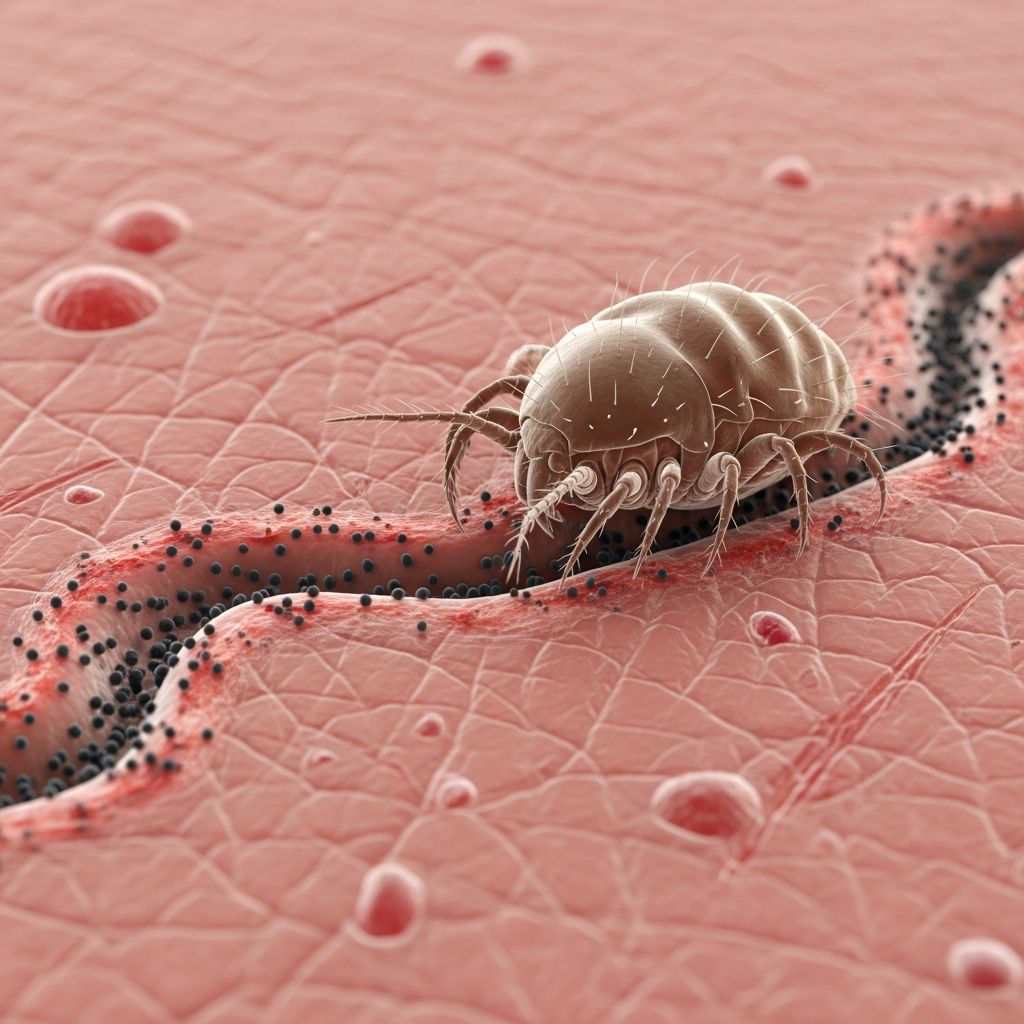
Scabies is a very itchy rash caused by a parasitic mite that burrows in the skin surface. Scabies is usually spread by skin-to-skin contact and is common worldwide, affecting people of all ages and socioeconomic backgrounds.
What is scabies?
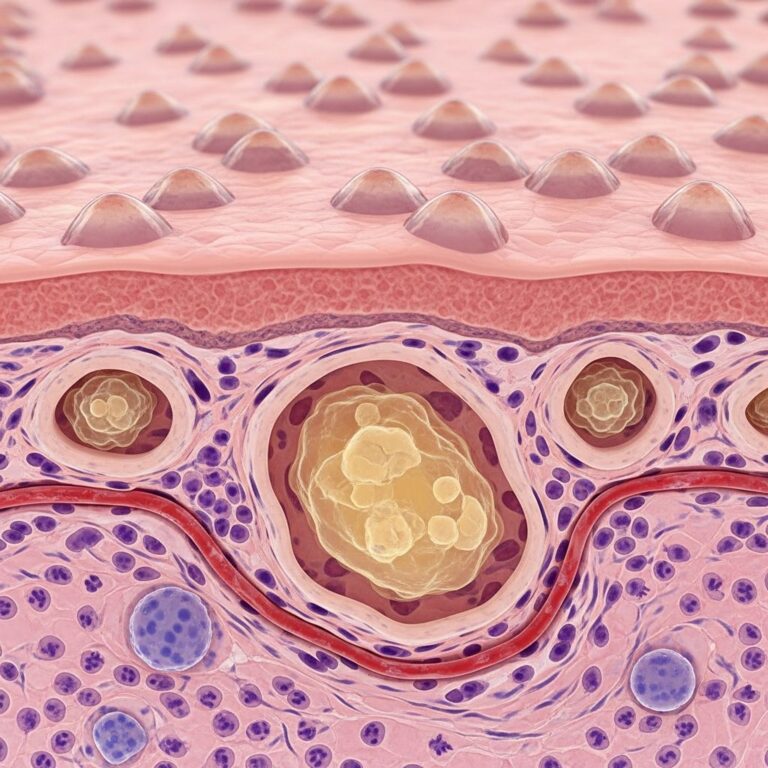
Scabies is an infestation of the skin by the human itch mite, Sarcoptes scabiei var. hominis. The female mite, measuring 0.3 60.4 mm long, burrows into the stratum corneum (the dead outer layer of the skin) within 30 minutes of contact with infested skin. She then deposits 2 63 eggs daily for her 1-month lifespan, after which she dies. Larvae emerge after 3 94 days and mature into adults after 10 17 days. The entire life cycle occurs within the human host.
Transmission occurs primarily through prolonged skin-to-skin contact, though fomites like bedding can play a role in crusted cases. It is highly contagious, especially in crowded settings, and responsible for significant morbidity due to intractable pruritus and secondary bacterial infections like impetigo.
Who gets scabies?
Scabies affects individuals of all ages, races, and social classes. Certain populations are at higher risk:
- Children aged 5 910 years
- Young adults in communal living (e.g., boarding schools, prisons)
- Immunocompromised patients
- Elderly in nursing homes
- Indigenous communities in tropical regions
Outbreaks are common in institutions and households, spreading rapidly if untreated.
What causes scabies?
The cause is infestation with Sarcoptes scabiei var. hominis. The gravid female mite tunnels into the epidermis, laying eggs that hatch into larvae. Sensitization to mite products (feces, saliva, eggs) occurs after 2 6 weeks, causing the characteristic intense itching, worse at night.
What are the clinical features of scabies?
Clinical features vary by patient immunity and infestation burden.
Classic scabies
Typically 10 915 mites per patient. Burrows (5 910 mm grey irregular lines) are pathognomonic, found on finger webs, wrists, elbows, axillae, umbilicus, and genitals (shaft of penis in men). A widespread itchy papular rash appears due to hypersensitivity, sparing head/neck in adults. Intense nocturnal pruritus leads to excoriations.
Nodular scabies
Pruritic, firm brown-red nodules (2 920 mm) in genital and axillary areas, persisting weeks post-treatment due to hypersensitivity.
Infantile scabies
Affects palms, soles, axillae, and scalp. Vesicles, pustules, and widespread rash common.
Crusted (Norwegian) scabies
Hyperinfestation (millions of mites) in immunocompromised (HIV, steroids, elderly). Thick crusts on scalp, nails, palms/soles; minimal itching. Highly contagious via fomites.

Diagnosis of scabies
Diagnosis combines history (itchy rash, contacts with similar symptoms), examination (burrows, distribution), and confirmation.
- Clinical: Burrows best seen on finger sides/wrists with dermoscopy (delta-wing sign).
- Microscopy: Scrape burrow end with curette/needle after ink test. Examine for mites, eggs, scybala (fecal pellets) under low-power microscope.
- Biopsy: Rarely needed; shows intraepidermal burrow with mite/ova.
- Adhesive tape test: Useful in infants/nails.
In crusted scabies, surface scrapings from crusts confirm diagnosis.
How is scabies treated?
Treatment targets mites and symptoms. Treat all household/close contacts simultaneously, even asymptomatics.
Topical scabicides
| Treatment | Dose/Application | Notes |
|---|---|---|
| Permethrin 5% cream | Apply whole body (neck down adults; head-to-toe infants), leave 8 14 hrs, repeat day 7 | First-line, safe pregnancy |
| Benzyl benzoate 25% | Apply daily x3 days, repeat week 2 | Irritant; dilute for children |
| Sulfur 5 10% ointment | Apply nightly x3 days, repeat week 1 | Safe infants/pregnancy |
Related Stories



Oral ivermectin
200 200 200 , repeat day 7 614. Ideal crusted/institutional outbreaks. Take with fatty meal.
Crusted scabies treatment
Combination: Ivermectin (multiple doses: days 1,2,8; up to 7 doses severe) + topical permethrin qod x1 week, then 2x/week + keratolytics (salicylic acid 5 10%, urea 10 40%). Hospital isolation.
Post-scabies itch lasts 2 4 weeks (treat with emollients, topical steroids, antihistamines). Secondary impetigo needs antibiotics.
Complications of scabies
- Secondary bacterial infection: Impetigo (Staph/Strep), leading to cellulitis or post-streptococcal glomerulonephritis.
- Crusted scabies: In immunosuppressed, sepsis risk.
- Post-scabietic itch: Hypersensitivity persisting months.
Prevention of scabies
- Treat all contacts same day.
- Machine wash hot water/dry clothes/bedding x2 3 days post-treatment.
- Vacuum furniture.
- Institutional: Screen/treat staff/residents; cohort isolation.
- Return to school/work 24 hrs post-first treatment.
Scabies in institutions
Epidemics controlled by:
- Case identification via surveillance.
- Contact tracing/treatment.
- Environmental decontamination.
- Ivermectin mass treatment if >3% prevalence.
Crusted cases require contact precautions.
Patient information
- Expect itch 2 4 weeks post-treatment (normal).
- Re-treat if burrows/rash persist >4 weeks.
- Avoid corticosteroids pre-diagnosis (mask signs).
Frequently Asked Questions
What causes intense itching in scabies?
The itch results from hypersensitivity to mite feces/eggs, peaking 4 weeks post-infestation.
Can scabies be spread by animals?
No, human scabies mites do not survive on pets.
Is head involved in scabies?
Rare in adults; common in infants/crusted cases.
How long is scabies contagious?
Until first post-treatment dose; fomites up to 72 hrs.
What if treatment fails?
Check compliance, resistance, crusted variant; re-treat + ivermectin.
References
- Scabies – Arthropod infestations 6 DermNet NZ. 2023. https://dermnetnz.org/cme/arthropods/scabies-cme
- Scabies in Children 6 KidsHealth.org.nz. 2024. https://www.kidshealth.org.nz/scabies-in-children
- Crusted scabies 6 DermNet NZ. 2023. https://dermnetnz.org/topics/crusted-scabies
- Scabies: diagnosis and management 6 bpac.org.nz. 2022-04-06. https://bpac.org.nz/2022/docs/scabies.pdf
- Scabies 6 Better Health Channel (VIC Gov). 2024. https://www.betterhealth.vic.gov.au/health/conditionsandtreatments/scabies
- Scabies 6 Healthify (NZ Health). 2024. https://healthify.nz/health-a-z/s/scabies
Similar Articles








Read full bio of Sneha Tete