Scalp Folliculitis Images: 6 Clinical Examples For Diagnosis
Explore detailed images and clinical insights into scalp folliculitis, its variants, symptoms, causes, and effective treatments.
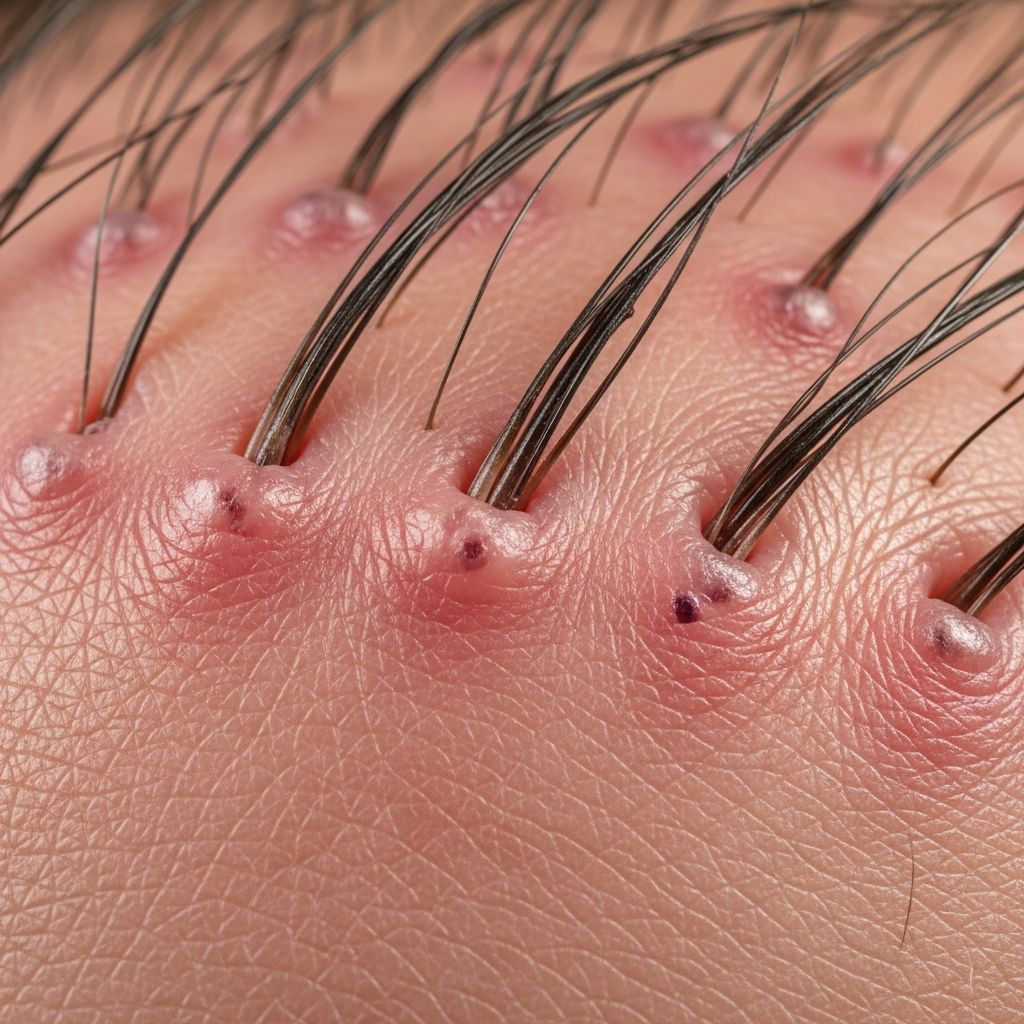
Scalp folliculitis refers to inflammation of the hair follicles on the scalp, often presenting as small red bumps, pustules, or nodules. This condition can range from mild, superficial irritation to severe, scarring forms. Images below illustrate various presentations to aid in diagnosis and understanding.
What is scalp folliculitis?
Scalp folliculitis is a common dermatological condition characterized by inflammation or infection of one or more hair follicles on the scalp. It manifests as small, itchy, or painful bumps resembling acne, which may develop into pustules filled with pus. The term encompasses several subtypes, including superficial folliculitis decalvans, tufted folliculitis, and perifolliculitis capitis abscedens et suffodiens (PCAS), also known as dissecting cellulitis of the scalp.
While often self-limiting, untreated cases can lead to scarring and permanent hair loss. The condition affects individuals of all ages but is more prevalent in adults with oily scalps or those engaging in practices that irritate follicles, such as tight hairstyles or frequent shaving.
Who gets scalp folliculitis?
Scalp folliculitis can affect anyone but is more common in:
- Men, particularly those who shave their heads or have close-cropped hair.
- Individuals with oily skin or excessive sweating (hyperhidrosis).
- People with compromised immune systems, such as those with HIV/AIDS or diabetes.
- Those using occlusive hair products, wigs, or tight hairstyles that cause friction.
It is not contagious but can recur if underlying triggers persist.
What causes scalp folliculitis?
The exact cause is multifactorial, often involving an inflammatory response to microorganisms within the hair follicle. Key triggers include:
- Bacterial infections: Primarily Staphylococcus aureus, cultured from many pustules.
- Fungal/yeast infections: Such as Malassezia or other yeasts, especially in humid environments.
- Mechanical irritation: Shaving, ingrown hairs, tight braids, or helmets trapping sweat.
- Other factors: Hot tub exposure (Pseudomonas), medications like corticosteroids, or immune suppression.
In severe forms like PCAS, genetic predisposition or immune dysregulation may play a role.
What are the clinical features of scalp folliculitis?
Symptoms typically begin with small red papules or pustules at the base of hair shafts, often along the hairline. Progression includes:
- Itching, tenderness, or burning sensation.
- Pus-filled bumps that may crust or scab.
- In deeper forms: Nodules, cysts, or abscesses with purulent drainage.
- Chronic cases: Tufting of hairs (multiple hairs emerging from one follicle), scaling, or scarring alopecia.
Images of scalp folliculitis:
- Mild superficial folliculitis: Multiple small erythematous papules and pustules on the scalp, resembling acne. Hair shafts are visible through the inflammation. (Image shows scattered lesions on occipital scalp.)
- Pustular folliculitis: Close-up of yellow-white pustules centered on follicles, with surrounding erythema. Gentle pressure expresses pus.
- Scalp folliculitis decalvans: Cicatricial alopecia with perifollicular erythema, scaling, and tufted hairs. Central scarring is evident.
- Tufted folliculitis: Groups of 5–20 hairs emerging from single dilated follicles, amid inflamed scalp.
- Perifolliculitis capitis abscedens et suffodiens (PCAS): Large fluctuant nodules and cysts with interconnecting sinus tracts. Purulent discharge and extensive scarring alopecia.
- Severe scarring: Bald patches with shiny, atrophic skin and residual nodules on the vertex.
Related Stories



Lesions may spread from the hairline to the crown if untreated.
Diagnosis
Diagnosis is primarily clinical, based on history and characteristic appearance. Swabs from pustules can identify bacteria like S. aureus or fungi.
Histology: Biopsy reveals neutrophilic or lymphocytic infiltration around follicles. In scarring types, fibrosis and follicle destruction are seen.
Differential diagnoses include:
| Condition | Key Features |
|---|---|
| Seborrhoeic dermatitis | Greasy scaling without pustules |
| Tinea capitis | Patchy alopecia, ‘black dots’, positive fungal culture |
| Acne keloidalis nuchae | Firm papules/plaques on nape, keloid scarring |
| Lichen planopilaris | Perifollicular violaceous scale, no pus |
| Discoid lupus erythematosus | Scarring with hypopigmentation/hyperpigmentation |
What is the treatment for scalp folliculitis?
Treatment targets the underlying cause and severity. Mild cases often resolve with hygiene; severe ones require medical intervention.
Home care and mild cases
- Wash scalp daily with mild or antifungal shampoo (e.g., ketoconazole 2%, ciclopirox).
- Avoid irritants: Stop shaving, loose hairstyles, occlusive products.
- Warm compresses 3–4 times daily to drain pustules.
- OTC antibiotic ointment or hydrocortisone for itch.
Topical treatments
- Antibiotics: Fusidic acid gel, clindamycin, erythromycin solution.
- Antifungals: Ketoconazole or ciclopirox shampoo.
- Steroids: Mild topical corticosteroid lotions (short-term).
Oral medications for moderate-severe cases
- Antibiotics: Doxycycline, cephalexin, or clindamycin for 4–12 weeks.
- Isotretinoin: For refractory cases or PCAS (0.5–1 mg/kg/day).
- Dapsone or steroids: For inflammatory variants.
Advanced interventions
- Intralesional steroids for nodules.
- Laser hair removal or photodynamic therapy.
- Surgical drainage for abscesses in PCAS.
PCAS is notoriously resistant; combination therapy with isotretinoin yields best results.
What is the outcome for scalp folliculitis?
Mild folliculitis resolves in 7–10 days with treatment. Chronic or deep forms may cause permanent scarring alopecia. Early intervention prevents progression. Recurrence is common without addressing triggers; maintenance shampoo reduces flares.
How can scalp folliculitis be prevented?
- Use clean razors; avoid shaving if possible.
- Daily shampooing with medicated products.
- Avoid sharing combs/towels; don’t use occlusive helmets without cleaning.
- Manage hyperhidrosis and control blood sugar in diabetics.
Images gallery
Key clinical images reinforce the spectrum:
- Early papules along frontal hairline.
- Confluent pustules on crown.
- Tufted hairs in folliculitis decalvans.
- Extensive nodules in PCAS with sinus tracts.
- Post-inflammatory hyperpigmentation and scarring.
(Note: In a full webpage, high-resolution dermatoscopic and clinical photos would be embedded here.)
Frequently asked questions
Is scalp folliculitis contagious?
No, it is not contagious, though sharing items can spread infectious agents.
Can scalp folliculitis cause permanent hair loss?
Yes, in scarring types like folliculitis decalvans or PCAS.
How long does it take to heal?
Mild cases: 1–2 weeks; severe: months with treatment.
Is tea tree oil effective?
May help mildly due to antifungal properties; dilute and patch-test.
When to see a dermatologist?
If persistent >2 weeks, spreading, fever, or scarring.
References
- Scalp folliculitis — DermNet NZ. 2023-12-01. https://dermnetnz.org/topics/scalp-folliculitis
- Scalp folliculitis: Symptoms, pictures, causes, shampoos and creams — Medical News Today. 2024-05-15. https://www.medicalnewstoday.com/articles/scalp-folliculitis
- Folliculitis – Symptoms & causes — Mayo Clinic. 2025-08-20. https://www.mayoclinic.org/diseases-conditions/folliculitis/symptoms-causes/syc-20361634
- Folliculitis — NCBI Bookshelf (StatPearls). 2025-01-10. https://www.ncbi.nlm.nih.gov/books/NBK547754/
- Folliculitis: Appearance, Causes, Symptoms & Treatment — Cleveland Clinic. 2024-11-05. https://my.clevelandclinic.org/health/diseases/17692-folliculitis
Similar Articles








Read full bio of Sneha Tete