Scapula (Shoulder Blade): What It Is, Anatomy & Function
Complete guide to the scapula: anatomy, structure, function, and common conditions affecting your shoulder blade.
What Is the Scapula?
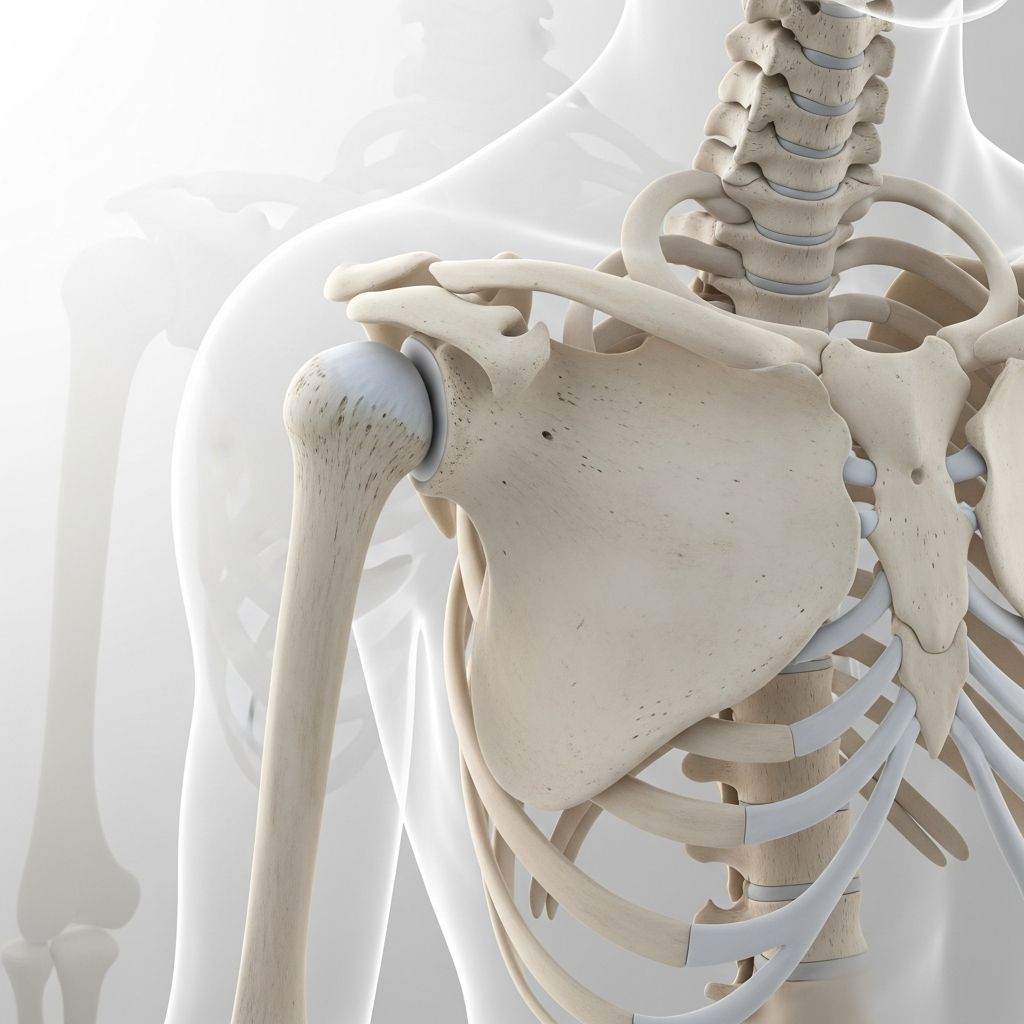
The scapula, commonly known as the shoulder blade, is one of three bones that form your shoulder joint. It connects your clavicle (collarbone) to your humerus (upper arm bone), creating a complex skeletal structure that enables a remarkable range of motion in your upper body. The scapula is a triangular bone located on the upper back, positioned between the levels of the second and eighth ribs on each side of your chest. You have two scapulae (the plural of scapula), one on each side, and they are part of your axial skeleton—the bones that form the center of your body.
The scapula’s flat, triangular shape is the origin of its common name, the shoulder blade. Even though it appears as a single bone, the scapula has three distinct surfaces, each with unique anatomical features and functional importance. More than a dozen muscles, tendons, and ligaments attach to the scapula, making it a crucial structure for shoulder function and overall upper limb movement.
Anatomy and Structure of the Scapula
Understanding the detailed anatomy of the scapula is essential for appreciating how your shoulder functions. The scapula consists of several key anatomical regions, each contributing to its structural integrity and functional capacity.
The Three Surfaces
The Costal Surface (Front)
The costal surface is the front of the scapula, the side that faces your ribcage. This surface is slightly concave and forms an important cup-shaped depression called the subscapular fossa. This fossa provides attachment and support for one of your rotator cuff muscles, the subscapularis, which plays a vital role in stabilizing your shoulder joint. Additionally, a small, hooked bony bump called the coracoid process extends from just under your clavicle. This distinctive projection anchors three important muscles that participate in shoulder movement and stability.
The Lateral Surface (Outer Edge)
The lateral surface is the outer edge of the scapula that points toward your humerus. This surface is broader than the other regions and features the glenoid cavity, a shallow socket-shaped depression where the head of the humerus fits to form the shoulder joint. The glenoid cavity is bordered by two small but significant bony projections called tubercles—the supraglenoid tubercle above and the infraglenoid tubercle below. These tubercles serve as attachment sites for important muscles and tendons of the rotator cuff and other shoulder muscles.
The Posterior Surface (Rear)
The posterior surface is the rear part of the scapula that faces your back. This surface is crossed obliquely by a prominent ridge called the spine of the scapula, which divides the bone into two concave areas: the supraspinous fossa above and the infraspinous fossa below. The spine of the scapula continues laterally and terminates in the acromion, a process that articulates with the clavicle in front and helps form the upper part of the shoulder socket. The spin and fossae provide attachment for muscles that act in rotating the arm.
Key Landmarks and Processes
The scapula features several important bony landmarks that serve as attachment sites for muscles and ligaments:
The Coracoid Process: This small, hooked projection extends from the front of the scapula beneath the clavicle. It anchors multiple muscles including the pectoralis minor, coracobrachialis, and the short head of the biceps brachii. The coracoid process also completes the shoulder socket alongside the glenoid cavity.
The Acromion: Formed as the lateral continuation of the spine of the scapula, the acromion is a broad, flat projection that articulates with the clavicle, forming the acromioclavicular joint. The point where the spine bends to form the acromion is called the acromial angle. The acromion serves as an attachment point for the deltoid muscle and forms part of the roof of the shoulder socket.
Related Stories



The Spine of the Scapula: This prominent ridge runs across the posterior surface of the scapula, running obliquely from the medial border to the lateral border. The spine gives attachment to muscles that act in rotating the arm and separates the supraspinous and infraspinous fossae.
The Glenoid Cavity: Located on the lateral aspect of the scapula, the glenoid cavity is a shallow socket that articulates with the head of the humerus to form the glenohumeral joint, commonly known as the shoulder joint. This ball-and-socket configuration allows for an exceptional range of motion.
Borders and Angles
The scapula has three distinct borders and three angles:
Borders: The superior border (top), the medial or vertebral border (inner edge toward the spine), and the lateral or axillary border (outer edge toward the arm). Various muscles attach along these borders to control scapular movement.
Angles: The superior angle (top), the inferior angle (bottom), and the lateral angle (where the lateral and inferior borders meet). These angles serve as important landmarks for clinicians and as attachment points for various muscles.
Functions of the Scapula
The scapula serves multiple critical functions that enable normal shoulder and upper limb function:
Support and Articulation: The scapula forms the socket component of the shoulder’s ball-and-socket joint. Its glenoid cavity receives the head of the humerus, creating the glenohumeral joint that allows for the shoulder’s extensive range of motion.
Muscle Attachment: The scapula serves as an attachment site for more than a dozen muscles, tendons, and ligaments. These structures include the rotator cuff muscles, the deltoid, the pectoralis muscles, the rhomboids, the serratus anterior, and many others. This extensive muscle attachment makes the scapula essential for creating forces that move and stabilize the shoulder.
Rotator Cuff Anchoring: The scapula provides critical attachment points for the four muscles of the rotator cuff: the supraspinatus, infraspinatus, teres minor, and subscapularis. These muscles stabilize the glenohumeral joint by holding the head of the humerus firmly against the shallow glenoid cavity.
Scapular Mobility and Stability: The scapula is unique because it moves along the ribcage in coordination with arm movements. This dynamic stability allows the scapula to adjust its position during arm elevation, rotation, and other movements, thereby optimizing the mechanical efficiency of shoulder movements.
Arm Movement Facilitation: The scapula enables shoulder abduction, elevation, and rotation. When you raise your arm to the side or overhead, your scapula moves in precise patterns to maintain optimal positioning of the shoulder joint throughout the movement range.
Muscles Attached to the Scapula
The scapula serves as an attachment point for numerous muscles that control shoulder and upper limb movements:
The Deltoid: This powerful shoulder muscle originates from the clavicle, acromion, and spine of the scapula. Its primary function is to lift your arm to the side. The deltoid inserts on the deltoid tuberosity of the humerus and is responsible for shoulder abduction.
Rotator Cuff Muscles: The four rotator cuff muscles—supraspinatus, infraspinatus, teres minor, and subscapularis—all attach to the scapula. Together, these muscles stabilize the glenohumeral joint by holding the head of the humerus firmly against the shallow glenoid cavity of the scapula.
Rhomboid Muscles: Running along the medial border are the rhomboid minor and rhomboid major, which retract and rotate the scapula. These muscles help pull your shoulder blade toward your spine.
Serratus Anterior: This muscle attaches along the anterior surface of the medial border and is important for scapular protraction and rotation. Weakness in the serratus anterior causes a condition called scapular winging.
Levator Scapulae: These smaller muscles extend from the side of your neck to your shoulder blades and help elevate the scapula.
Teres Major and Teres Minor: Found on the lateral border, the teres major assists in adduction and internal rotation of the humerus, while the teres minor is part of the rotator cuff, helping stabilize the shoulder joint.
Common Scapula-Related Conditions
While it is rare to injure your scapula on its own, various shoulder conditions can affect it:
Shoulder Fractures: Scapular fractures can occur, but they are very rare. The scapula is usually only broken during severe traumas such as car accidents or falls from heights. Most shoulder injuries affect the soft tissues rather than the bone itself.
Rotator Cuff Injuries: These injuries can affect the muscles and tendons that attach to the scapula. If the subscapularis muscle is torn or inflamed, it can significantly reduce arm rotation and contribute to shoulder instability, especially when you lift your arm above your head.
Scapular Winging: This condition occurs when the serratus anterior muscle is weak, causing the medial border of the scapula to stick out from the ribcage. Scapular winging can result from nerve damage or muscle weakness and affects the overall stability and function of the shoulder.
Impingement Syndrome: Structural variations in the acromion or inflammation of the rotator cuff tendons can lead to impingement, where soft tissues become compressed during shoulder movement.
When to Seek Medical Care
You should visit a healthcare provider if you are experiencing shoulder pain, especially if your shoulder hurts after a fall or sports injury. Additionally, seek medical attention if you experience arm weakness, cannot move your shoulder without pain, or notice scapular winging. Shoulder injuries are common because of the complexity of the shoulder joint and the constant use throughout daily activities.
Frequently Asked Questions About the Scapula
Q: What exactly is the scapula?
A: The scapula, or shoulder blade, is one of three bones that form your shoulder joint. It is a triangular bone located on your upper back that connects your clavicle (collarbone) to your humerus (upper arm bone). You have two scapulae, one on each side of your chest.
Q: How many muscles attach to the scapula?
A: More than a dozen muscles, tendons, and ligaments attach to the scapula. These include the rotator cuff muscles, deltoid, rhomboids, serratus anterior, levator scapulae, and the teres muscles.
Q: What is the glenoid cavity?
A: The glenoid cavity is a shallow socket-shaped depression on the lateral surface of the scapula where the head of the humerus fits to form the shoulder joint. This ball-and-socket configuration allows for an exceptional range of motion in the shoulder.
Q: What is the role of the rotator cuff in relation to the scapula?
A: The four rotator cuff muscles (supraspinatus, infraspinatus, teres minor, and subscapularis) all attach to the scapula. Together, they stabilize the glenohumeral joint by holding the head of the humerus firmly against the shallow glenoid cavity.
Q: Is it common to fracture your scapula?
A: No, scapular fractures are very rare. The scapula is usually only broken during severe traumas such as car accidents or falls from heights. Most shoulder injuries affect the soft tissues rather than the bone itself.
Q: What causes scapular winging?
A: Scapular winging occurs when the serratus anterior muscle is weak, causing the medial border of the scapula to stick out from the ribcage. This can result from nerve damage, muscle weakness, or injury to structures that control the serratus anterior muscle.
Q: What are the three surfaces of the scapula?
A: The scapula has three surfaces: the costal surface (front facing the ribcage), the lateral surface (outer edge pointing toward the humerus), and the posterior surface (rear facing the back).
References
- Scapula (Shoulder Blade): Landmarks, Borders & Surfaces | Anatomy — YouTube Educational Content. 2024. https://www.youtube.com/watch?v=R7wAYIkKKhE
- Scapula | Shoulder Blade, Bone Structure & Muscles — Encyclopaedia Britannica. 2024. https://www.britannica.com/science/scapula
- Scapula (Shoulder Blade): What It Is, Anatomy & Function — Cleveland Clinic. 2024. https://my.clevelandclinic.org/health/body/scapula-shoulder-blade
- Rotator Cuff: Muscles, Tendons, Function & Anatomy — Cleveland Clinic. 2024. https://my.clevelandclinic.org/health/body/rotator-cuff
- Shoulder Joint: What It Is, Anatomy & How It Works — Cleveland Clinic. 2024. https://my.clevelandclinic.org/health/body/24780-shoulder-joint
- Winged Scapula: Causes, Symptoms, Tests & Treatment — Cleveland Clinic. 2024. https://my.clevelandclinic.org/health/diseases/winged-scapula
- Back Muscles: Anatomy and Function of Upper, Middle & Lower Back — Cleveland Clinic. 2024. https://my.clevelandclinic.org/health/body/21632-back-muscles
Similar Articles








Read full bio of Sneha Tete