Schwannoma: Understanding Benign Nerve Tumors
Learn about schwannomas, benign tumors of nerve cells, their symptoms, diagnosis, and treatment options.
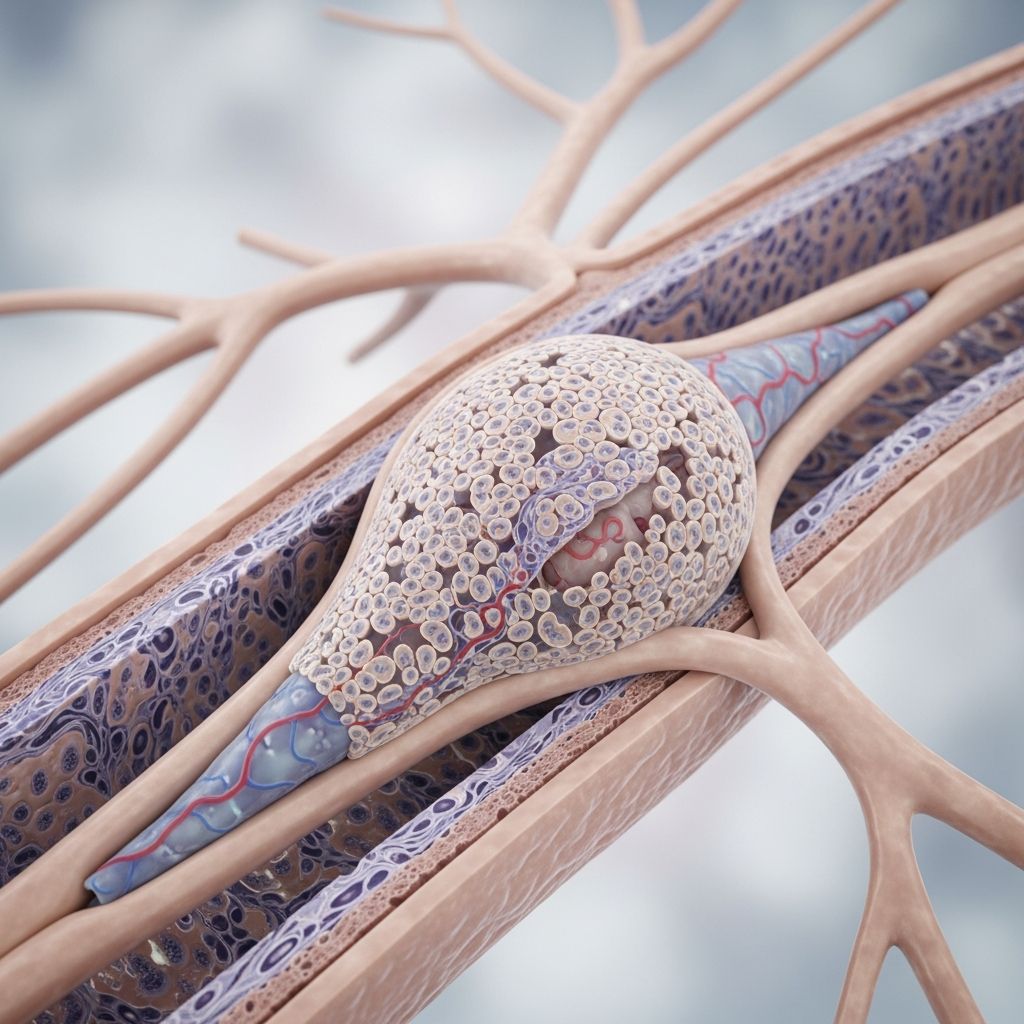
Schwannoma: What It Is, Causes, Symptoms & Treatment
A schwannoma is a tumor that develops from Schwann cells in your peripheral nervous system or nerve roots. These cells normally wrap around nerve fibers to provide insulation and support, much like the covering on an electrical wire. When these cells grow abnormally, they form a schwannoma. The good news is that schwannomas are almost always benign and slow-growing, meaning they are not cancerous and typically develop at a gradual pace. Understanding what a schwannoma is, how it develops, and what treatment options are available can help you make informed decisions about your health care.
What is a Schwannoma?
Schwannomas are tumors arising from the specialized cells that insulate nerve fibers throughout your body. These benign growths can occur almost anywhere a nerve exists, though they most commonly develop in specific locations. Understanding the nature of these tumors is essential for both patients and caregivers seeking to manage this condition effectively.
The peripheral nervous system, which consists of all the nerves outside your brain and spinal cord, is where most schwannomas develop. These tumors grow outward from the nerve rather than within it, which is why they can often be surgically removed without damaging the underlying nerve itself. This characteristic is one reason why the prognosis for schwannoma surgery is generally favorable.
Causes and Risk Factors
The exact cause of sporadic schwannomas remains unknown in most cases. However, researchers have identified certain factors that increase the risk of developing these tumors. Schwannomas can occur spontaneously without any known family history, making them unpredictable in many situations. Some individuals inherit a genetic predisposition to develop multiple schwannomas, a condition known as schwannomatosis or neurofibromatosis type 2.
Schwannomatosis is a hereditary condition characterized by the development of multiple schwannomas throughout the nervous system. Individuals with this condition may have gene mutations such as SMARCB1 that increase their susceptibility to tumor formation. Family history plays an important role in understanding your risk, particularly if relatives have been diagnosed with schwannomas or related nerve tumors.
Common Symptoms and Signs
The symptoms of schwannoma vary significantly depending on the tumor’s location, size, and how much pressure it exerts on surrounding nerves and tissues. Many small schwannomas cause no symptoms at all and are discovered incidentally during imaging tests performed for other reasons.
When schwannomas do cause symptoms, they often include:
– Numbness, tingling, or weakness in the area supplied by the affected nerve- Pain or burning sensations- Loss of function in the affected limb or body part- A visible lump or mass under the skin- Hearing loss or ringing in the ears (if the tumor affects the acoustic nerve)- Balance problems or dizziness- Facial weakness or numbness- Muscle weakness or atrophy over time
For acoustic neuromas, which are schwannomas affecting the nerve connecting the ear to the brain, symptoms typically progress gradually. As these tumors grow, they can increasingly affect hearing, cause persistent tinnitus (ringing in the ear), disturb balance, and even lead to facial weakness or numbness. It is important to note that the presence of symptoms does not necessarily indicate the tumor is growing rapidly; rather, it reflects the tumor’s current size and location relative to sensitive structures.
Related Stories



Diagnosis and Testing
Diagnosing a schwannoma typically begins with a thorough medical evaluation. Your healthcare provider will perform a neurological examination to assess nerve function and review your medical and family history to understand your risk factors. Because symptoms can mimic other conditions, diagnosis may take time and require multiple imaging studies.
Imaging Tests
Imaging tests are crucial for identifying and characterizing schwannomas. These may include:
– Magnetic Resonance Imaging (MRI) – the gold standard for detecting schwannomas and assessing their size, location, and relationship to surrounding structures- Computed Tomography (CT) – sometimes used to evaluate bone involvement or when MRI is contraindicated- Other specialized imaging to determine the precise extent of the tumor
MRI is particularly valuable because it provides detailed images of soft tissue and can help your doctor understand exactly where the tumor is located and whether it is growing.
Biopsy
Your healthcare provider may perform a biopsy to confirm the diagnosis. This involves taking a small sample of tissue from the tumor using a needle. A pathologist will then examine the cells under a microscope and run additional tests to determine the tumor type and confirm it is indeed a schwannoma. In many cases, imaging findings are so characteristic that biopsy is not necessary.
Genetic Testing
For patients with multiple schwannomas or those with a family history of schwannomatosis, genetic blood testing may be recommended. This can identify specific gene changes that cause different types of schwannomatosis, particularly mutations in the SMARCB1 gene for SMARCB1-related schwannomatosis.
Treatment Options
Treatment decisions for schwannoma depend on several factors, including the tumor’s location, size, growth rate, and whether it is causing symptoms. Your healthcare team will work with you to develop a personalized treatment plan tailored to your unique circumstances.
Observation and Monitoring
Many schwannomas grow very slowly or not at all after initial discovery. For asymptomatic or slowly growing tumors, your healthcare provider may recommend a “watch and wait” approach. This involves regular follow-up appointments, typically at least yearly, during which imaging tests will monitor the tumor’s growth and condition. This conservative approach allows you to avoid the risks associated with surgery or radiation while keeping close track of your tumor’s behavior.
Surgical Removal
Surgery is often recommended when a schwannoma is causing symptoms, growing rapidly, or reaching a size that threatens important structures. Because schwannomas grow outward from nerves rather than within them, surgeons can often remove the tumor while preserving nerve function.
Cleveland Clinic has pioneered minimally invasive surgical techniques for schwannoma removal. For certain tumors, particularly those in the skull base region, surgeons can now remove the tumor through the nose rather than making an opening in the skull, reducing trauma and recovery time. The specific surgical approach depends on the tumor’s size and location, with each technique carefully designed to safely reach the tumor and separate it from nearby nerve structures.
Your surgical team will discuss the benefits and potential risks of surgery with you. Possible risks include nerve damage, hearing loss, balance problems, facial weakness, or infection, depending on the tumor’s location.
Radiation Therapy
For patients who are not candidates for surgery or prefer non-surgical treatment, radiation therapy may be considered. Stereotactic radiosurgery, a focused radiation technique, has become increasingly popular for treating vestibular schwannomas and other nerve tumors. This approach offers excellent local control rates and a favorable safety profile compared with traditional surgery.
Immunotherapy and Chemotherapy
In rare cases where a schwannoma is malignant (cancerous), treatment may include immunotherapy and chemotherapy medications. However, this is uncommon, as the vast majority of schwannomas are benign.
Pain Management
For patients with schwannomatosis or multiple tumors causing chronic pain, medications may be recommended to relieve discomfort. The specific medications vary based on the location and severity of pain. If medications alone are insufficient, surgery or participation in clinical trials may be considered.
Prognosis and Long-Term Outlook
The prognosis for schwannoma is generally very good. In the majority of cases, when a schwannoma is completely removed surgically, the tumor does not recur. Benign schwannomas do not directly affect life expectancy.
However, the prognosis can be influenced by several factors:
– Tumor size and location- Whether the tumor is completely removed- Patient age and overall health- Presence of genetic conditions like neurofibromatosis type 2- Whether complications develop after treatment
Postoperative complications occur more frequently in certain circumstances, particularly with larger tumors or tumors in difficult-to-reach locations. Your healthcare provider can discuss these factors specific to your situation and provide realistic expectations for your outcome.
Complications and Side Effects
Most potential complications associated with schwannoma occur after surgical removal. The risk and type of complications depend largely on the tumor’s location and size. Common post-surgical complications may include:
– Hearing loss or changes in hearing- Balance disturbances or vertigo- Facial weakness or paralysis- Facial numbness or tingling- Infection or wound complications- Temporary or permanent nerve damage
It is important to discuss these potential risks with your surgical team before proceeding with treatment. Your healthcare providers can often manage or minimize these complications with appropriate post-operative care and rehabilitation.
Living With Schwannoma
Receiving a diagnosis of any tumor can be frightening, but it is reassuring to know that schwannomas are almost always benign and slow-growing. Many people live normal, healthy lives with schwannomas, whether they choose observation, surgery, or other treatments.
If you have been diagnosed with schwannoma and develop new or worsening symptoms, contact your healthcare provider for guidance on managing your condition. If your provider has recommended observation, maintain regular follow-up appointments to ensure your tumor is being properly monitored. Do not hesitate to ask questions about your condition and treatment options—your healthcare team is there to support you.
Seeking care from specialists experienced in managing nerve tumors can significantly impact your outcomes. Cleveland Clinic’s comprehensive brain, spine, and nerve tumor program brings together experts from neurosurgery, neuro-oncology, radiation oncology, and other specialties to provide coordinated, personalized care.
Frequently Asked Questions (FAQs)
Q: Are all schwannomas cancerous?
A: No. Schwannomas are almost always benign (non-cancerous), slow-growing tumors. Malignant schwannomas are extremely rare, occurring in only a small percentage of cases.
Q: Do all schwannomas require surgery?
A: No. Many small or asymptomatic schwannomas can be safely monitored without surgery. Your healthcare provider will recommend surgery only if the tumor is causing symptoms, growing rapidly, or threatens important structures.
Q: Will my schwannoma come back after surgery?
A: When a schwannoma is completely removed surgically, recurrence is uncommon. In the majority of cases, the tumor does not return.
Q: How often do I need follow-up appointments?
A: If your provider recommends observation rather than immediate treatment, you will typically need to see them at least yearly for imaging studies to monitor the tumor’s growth and condition.
Q: Can schwannoma affect my life expectancy?
A: Schwannomatosis and benign schwannomas do not directly affect life expectancy. Your healthcare provider can discuss your specific situation and provide personalized information about your outlook.
Q: What are minimally invasive treatment options?
A: Cleveland Clinic has developed minimally invasive surgical techniques, including transnasal approaches (through the nose) for certain schwannomas, reducing trauma and recovery time compared to traditional skull surgery. Stereotactic radiosurgery is another minimally invasive option that uses focused radiation to treat tumors without traditional surgery.
References
- Schwannoma Treatment — Cleveland Clinic. Retrieved December 1, 2025. https://my.clevelandclinic.org/services/schwannoma-treatment
- Schwannomatosis: What It Is, Symptoms & Treatment — Cleveland Clinic. Last reviewed October 30, 2024. https://my.clevelandclinic.org/health/diseases/schwannomatosis
- Schwannoma: What It Is, Causes, Symptoms & Treatment — Cleveland Clinic. Last reviewed June 24, 2022. https://my.clevelandclinic.org/health/diseases/17877-schwannoma
- Acoustic Neuroma (Vestibular Schwannoma): Symptoms — Cleveland Clinic. Last reviewed June 10, 2025. https://my.clevelandclinic.org/health/diseases/16400-acoustic-neuroma
- A Case-Based Practice Guide From the Radiosurgery Society — PubMed Central, National Institutes of Health. Published 2025. https://pubmed.ncbi.nlm.nih.gov/39909144/
- Nerve Sheath Tumor: Types, Symptoms & Causes — Cleveland Clinic. https://my.clevelandclinic.org/health/diseases/22526-nerve-sheath-tumors
Similar Articles








Read full bio of Sneha Tete