Sciatic Nerve Pain: Comprehensive Guide To Causes & Treatment
Understand the sciatic nerve's anatomy, function, common pain causes, symptoms, diagnosis, and effective treatments for relief.
The
sciatic nerve
is the largest nerve in the human body, playing a crucial role in motor function and sensation in the lower extremities. Sciatica, pain along this nerve’s path, affects up to 40% of people lifetime, often due to compression or irritation from conditions like herniated disks.What Is the Sciatic Nerve?
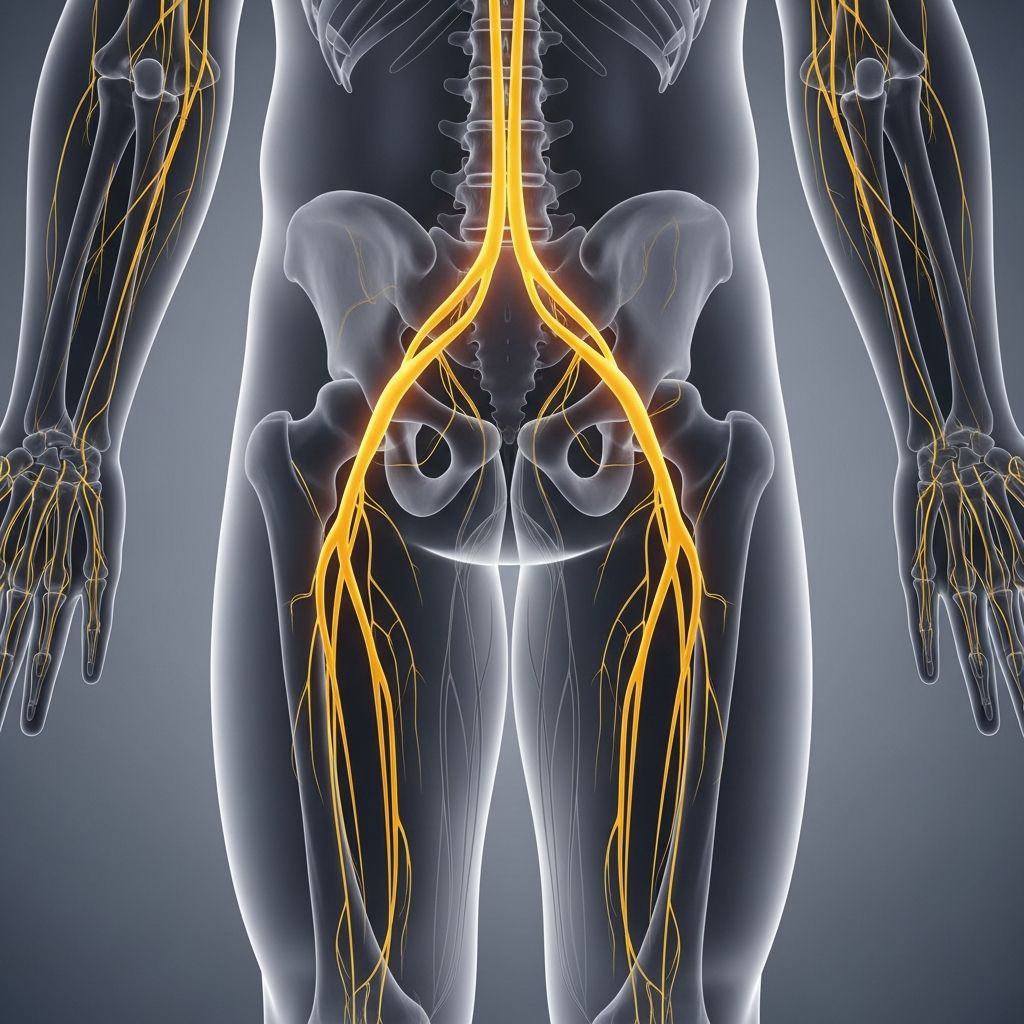
The sciatic nerve originates from nerve roots L4 to S3 in the lumbosacral spine, forming the thickest nerve with a diameter up to 2 cm. It exits the pelvis through the greater sciatic foramen, running inferior to the piriformis muscle, then down the posterior thigh via the biceps femoris, terminating in the popliteal fossa into tibial and common fibular (peroneal) nerves.
This nerve provides direct motor innervation to hamstrings and adductors, and indirect control to calf, anterior leg, and foot muscles. Sensorially, it supplies the posterior thigh, leg, and foot sole. Pathology anywhere along its course—from spine to leg—can trigger sciatica symptoms.
Sciatic Nerve Anatomy
Comprising L4-S3 roots, the sciatic nerve fuses in the pelvis. It passes posteriorly through the sciatic foramen, anterior to piriformis and posterior to gemellus superior/inferior, obturator internus, and quadratus femoris. In the thigh, it lies deep in biceps femoris, branching at the knee.
- Proximal path: Pelvic cavity to greater sciatic foramen.
- Mid-path: Posterior thigh between ischial tuberosity and greater trochanter.
- Distal branches: Tibial (posterior leg/sole) and common fibular (anterior leg/dorsum foot).
Sciatica arises from irritation or compression along this extensive pathway, distinguishing it from general low back pain.
Sciatic Nerve Function
The sciatic nerve is essential for lower body mobility and sensation. Motor functions include hamstring flexion/knee extension, adductor movement, calf plantarflexion, dorsiflexion, and intrinsic foot muscles. Sensory coverage spans posterior thigh, lateral/posterior leg, and foot plantar surface.
Direct compression causes motor deficits like weakness; inflammatory irritation primarily yields pain and paresthesia without severe weakness. Coughing, sneezing, or spine flexion exacerbates symptoms due to increased intradiscal pressure.
Sciatic Nerve Pain (Sciatica)
**Sciatica** manifests as sharp, burning pain radiating from lower back through buttocks, posterior thigh, and leg to foot, often unilateral. Accompanying symptoms: numbness, tingling (paresthesia), weakness. Pain worsens with sitting, coughing, or lumbar flexion.
Unlike nonspecific back pain, true sciatica traces the sciatic distribution, indicating root or nerve pathology. Severe cases show leg weakness or bowel/bladder changes signaling cauda equina emergency.
Symptoms of Sciatic Nerve Pain
- Pain: Shooting, electric-like from lumbar to foot; mild ache to debilitating.
- Numbness/Tingling: Pins-and-needles in leg/foot.
- Weakness: Difficulty lifting foot (foot drop), knee buckling.
- Worsening factors: Prolonged sitting, bending, twisting.
Symptoms lateralize to one side; bilateral rare, suggesting central pathology.
Related Stories



Sciatic Nerve Pain Causes
Sciatica stems from sciatic nerve irritation/compression:
- Herniated disk: Nucleus pulposus extrudes, pinching L4-S1 roots (most common, 90% cases).
- Bone spurs/Spinal stenosis: Osteophytes narrow foramina, compressing roots.
- Piriformis syndrome: Muscle spasms entrap nerve.
- Spondylolisthesis: Vertebral slippage irritates roots.
- Tumors/Infection: Rare masses or abscesses.
- Trauma: Fractures, hematomas.
Risk factors: Age (30-50 peak), obesity, prolonged sitting, diabetes (nerve vulnerability), heavy lifting.
Sciatic Nerve Pain Diagnosis
Diagnosis combines history, exam, imaging:
- History: Pain radiation, aggravating factors, red flags (weight loss, incontinence).
- Physical exam: Straight leg raise (30-70° reproduces leg pain = disk herniation), slump test, reflexes, strength.
- Imaging: MRI gold standard for soft tissue/nerve compression; X-ray for bone; CT if MRI contraindicated.
Persistent pain >6-8 weeks or deficits warrant imaging; acute deficits demand emergent MRI.
Sciatic Nerve Pain Treatment
90% resolve conservatively in weeks-months:
Conservative Management
- Rest/Activity modification: Avoid aggravating positions; short-term bed rest <2 days.
- Medications: NSAIDs (ibuprofen), muscle relaxants, neuropathic agents (gabapentin).
- Physical therapy: Core strengthening, stretches (piriformis, hamstrings), nerve glides; personalized plans reduce compression.
- Heat/Ice: Alternate for inflammation.
Interventional
- Epidural steroid injections: Reduce root inflammation; temporary relief.
Surgical
Indicated for severe/progressive deficits, cauda equina, failed conservative care >6-12 weeks. Microdiscectomy removes herniation; laminectomy for stenosis.
When to See a Doctor for Sciatic Nerve Pain
Seek care if:
- Pain persists >1 week, interferes with life.
- Severe: Can’t walk, leg weakness.
- Red flags: Bowel/bladder loss, saddle numbness (cauda equina—emergency!).
- Fever, unexplained weight loss (infection/tumor).
Early intervention prevents complications like chronic pain.
Sciatic Nerve Pain Prevention
- Maintain healthy weight; core/back strengthening exercises.
- Ergonomic workstation; frequent breaks from sitting.
- Proper lifting: Bend knees, not waist.
- Smoking cessation (impairs disk nutrition).
- Manage diabetes, posture.
Sciatic Nerve Pain Complications
Untreated compression risks:
- Chronic pain.
- Progressive weakness, foot drop.
- Permanent neuropathy.
- Rare: Bowel/bladder dysfunction, paralysis.
Frequently Asked Questions (FAQs)
What is the sciatic nerve?
The largest body nerve (L4-S3 roots), running from lumbar spine through buttocks/legs, innervating posterior thigh/leg/foot muscles and skin.
How long does sciatica last?
Most resolve 4-8 weeks conservatively; chronic if >3 months. Disk herniations often self-resolve.
Can sciatica be cured permanently?
Yes, via conservative care (90%), injections, or surgery. Prevention avoids recurrence.
Is walking good for sciatica?
Yes, gentle walking promotes circulation/healing; avoid overexertion. PT-guided activity best.
Does sciatica show on MRI?
Yes, MRI reveals herniations, stenosis, tumors compressing nerve/roots.
Key Causes Comparison
| Cause | Prevalence | Age Group | Typical Treatment |
|---|---|---|---|
| Herniated Disk | 90% | 30-50 | Conservative/Discectomy |
| Spinal Stenosis | Common >40 | >50 | PT/Decompression |
| Piriformis Syndrome | Less common | All | Stretches/Injections |
| Bone Spurs | Age-related | >60 | NSAIDs/Surgery |
References
- Sciatica – StatPearls — NCBI Bookshelf, NIH. 2023-07-17. https://www.ncbi.nlm.nih.gov/books/NBK507908/
- Sciatica – Symptoms and causes — Mayo Clinic. 2023-10-24. https://www.mayoclinic.org/diseases-conditions/sciatica/symptoms-causes/syc-20377435
- Physical Therapy for Sciatica — Confluent Health. 2024. https://confluenthealth.com/patients/conditions-we-treat/sciatica/
- Sciatica Symptoms, Causes, & Treatment — UVA Health. 2023. https://www.uvahealth.com/healthy-balance/sciatica-symptoms-causes-treatment/
- Sciatica: What It Is, Causes, Symptoms, Treatment — Cleveland Clinic. 2023-08-01. https://my.clevelandclinic.org/health/diseases/12792-sciatica
Similar Articles








Read full bio of Sneha Tete