Sciatica: Essential Guide To Causes, Symptoms & Treatment
Comprehensive guide to sciatica: symptoms, causes, diagnosis, treatments, and prevention strategies for effective pain relief.
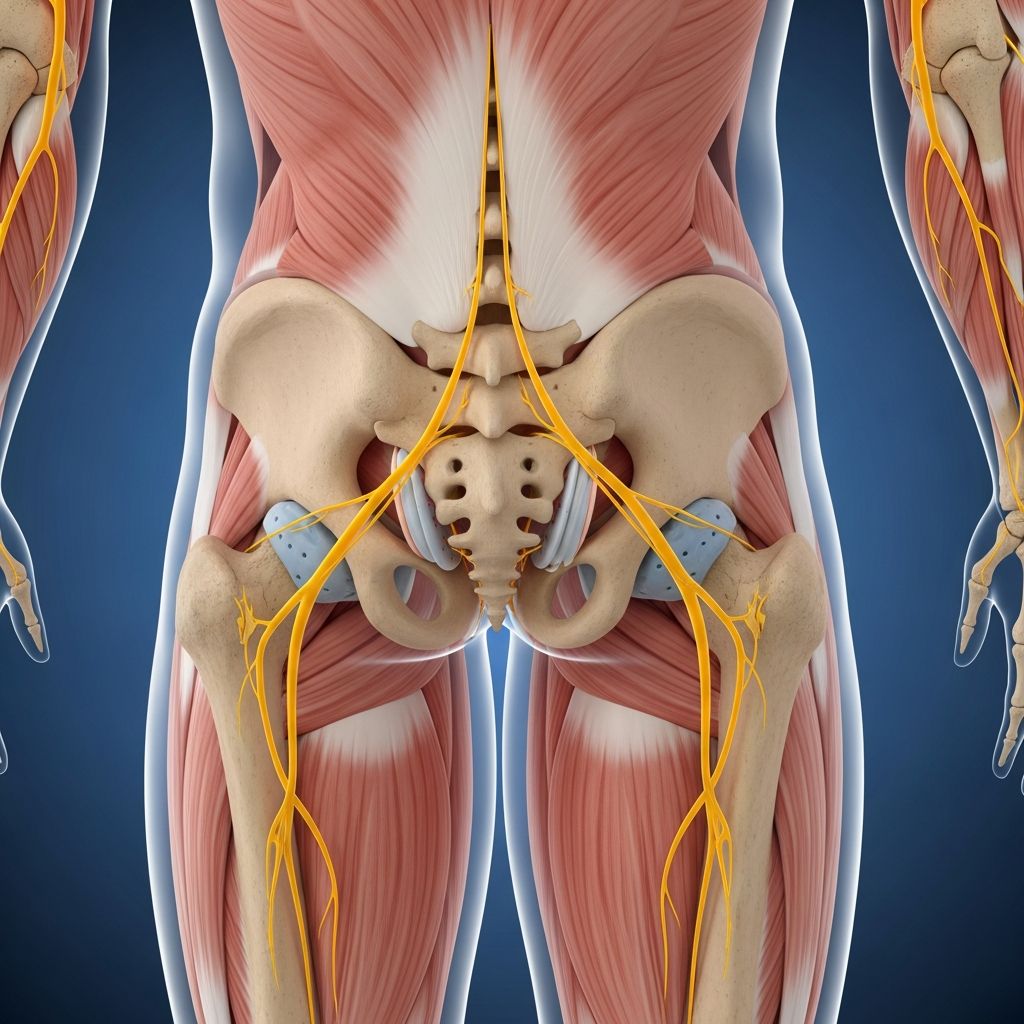
Sciatica refers to pain radiating along the sciatic nerve, which runs from the lower back through the hips, buttocks, and down each leg. It typically affects one side of the body and results from irritation, compression, or inflammation of the nerve roots or the nerve itself, most commonly due to a herniated disk or bone overgrowth in the lumbar spine.
What Is Sciatica?
The
sciatic nerve
is the body’s largest nerve, formed by nerve roots from L4 to S3 in the lumbosacral spine. It provides motor function to hamstrings, lower leg adductors, calf muscles, and foot muscles, while supplying sensation to the posterior thigh, lower leg, and foot sole. Sciatica is not a standalone diagnosis but a symptom of underlying issues causing nerve irritation or compression, leading to pain, paresthesia (tingling), or weakness.Sciatica differs from general low back pain or radiculopathy (broader pinched nerve symptoms). It specifically involves the sciatic nerve pathway and can range from mild aches to severe, debilitating jolts exacerbated by movement, coughing, or sitting.
Sciatica Symptoms
Symptoms usually start in the lower back or buttock and radiate down the leg, following the sciatic nerve path. Common signs include:
- Pain: Mild to sharp, burning, or electric shock-like, often worse with coughing, sneezing, or prolonged sitting.
- Numbness or tingling: Pins-and-needles sensation in the buttock, thigh, calf, or foot.
- Muscle weakness: Difficulty moving the leg or foot, making it feel heavy.
- Worsening with activity: Pain intensifies with lumbar flexion, twisting, bending, or prolonged positions.
Sciatica typically affects one side. Severe cases may involve leg swelling from inflammation (e.g., herniated disk or spinal stenosis) or piriformis syndrome.
Sciatica Causes
Sciatica arises when the sciatic nerve or its contributing roots (L4-S3) are compressed or inflamed. Primary causes include:
- Herniated or bulging disk: Most common, especially in those under 40; soft disk nucleus pushes through the annulus, pinching nerve roots.
- Spinal stenosis: Narrowing of the spinal canal, often in older adults, due to bone spurs or thickened ligaments.
- Spondylolisthesis: Vertebral slippage compressing nerves.
- Piriformis syndrome: Tight piriformis muscle irritates the sciatic nerve in the buttock.
- Other: Tumors (rare), pregnancy-related pressure, arthritis, or injury.
Onset can be sudden (e.g., disk herniation) or gradual (e.g., degenerative changes).
Sciatica Risk Factors
Certain factors increase susceptibility:
- Age 30-50: Peak disk herniation risk; older adults face bone spurs/arthritis.
- Obesity: Extra spinal stress.
- Prolonged sitting: Weakens core, promotes disk issues.
- Diabetes: Nerve damage vulnerability.
- Pregnancy: Hormonal ligament laxity and uterine pressure, not just weight.
- Occupation: Heavy lifting, twisting, or vibration exposure.
- Sedentary lifestyle: Reduces spinal support.
How Is Sciatica Diagnosed?
Diagnosis starts with history and physical exam: assessing pain radiation, straight-leg raise test (pain at 30-70° elevation indicates root irritation), reflexes, strength, and sensation.
Imaging confirms cause:
- MRI: Gold standard for disk herniation, stenosis.
- CT scan: If MRI contraindicated.
- X-ray: Rules out fractures, alignment issues.
- Electromyography (EMG): Nerve function if weakness persists.
Related Stories



Differentiate from radiculopathy mimics like hip issues or peripheral neuropathy.
Sciatica Treatment
Most cases (80-90%) resolve in 4-6 weeks with conservative care; surgery is rare (<10%).
Self-Care and Home Remedies
- Rest briefly (1-2 days), then stay active.
- Apply ice (first 48 hours) then heat.
- Over-the-counter NSAIDs (ibuprofen) for inflammation.
- Gentle stretches: knee-to-chest, piriformis stretch.
Medications
- NSAIDs/acetaminophen: Pain relief.
- Muscle relaxants: Spasms.
- Oral steroids: Short-term inflammation.
- Anticonvulsants/gabapentin: Nerve pain.
Physical Therapy
Core strengthening, McKenzie exercises, posture training, and nerve glides improve mobility and prevent recurrence.
Injections
Epidural steroid injections reduce inflammation around nerve roots; effective for 3-6 months in 50-70% cases.
Surgery
Reserved for severe, persistent symptoms (>6-12 weeks), progressive weakness, or cauda equina (emergency: bowel/bladder loss).
- Microdiscectomy: Removes herniated fragment.
- Laminectomy: Relieves stenosis.
Success rates: 80-90% pain relief.
Sciatica Prevention
Minimize risk through:
- Exercise: Core strengthening, low-impact cardio (walking, swimming).
- Posture: Ergonomic workstation, lift with knees.
- Weight management: Reduce spinal load.
- Quit smoking: Improves disk nutrition.
- Avoid prolonged sitting: Stand hourly.
Sciatica Complications
Usually self-limiting, but untreated severe cases risk:
- Chronic pain.
- Permanent nerve damage/weakness.
- Loss of bowel/bladder control (cauda equina syndrome: emergency).
- Leg swelling or foot drop.
Seek immediate care for red flags: saddle anesthesia, incontinence, severe weakness.
When to See a Doctor
Consult if pain lasts >1 week, worsens, or includes:
- Fever/weight loss (infection/tumor).
- Progressive weakness/numbness.
- Bowel/bladder issues.
- Pain despite self-care.
Frequently Asked Questions (FAQs)
Does sciatica go away on its own?
Yes, most cases resolve in weeks to months with self-care; herniated disk-related sciatica often improves without intervention.
Is sciatica the same as a pinched nerve?
Sciatica is a type of radiculopathy from sciatic nerve root pinching; not all pinched nerves cause sciatica.
Can sciatica occur during pregnancy?
Yes, due to ligament relaxation and uterine pressure; usually resolves post-delivery.
How long does sciatica last?
Acute: 4-8 weeks; chronic if >3 months. Early treatment shortens duration.
Is walking good for sciatica?
Yes, gentle walking promotes healing; avoid overexertion.
References
- Sciatica: What It Is, Causes, Symptoms, Treatment & Pain Relief — Cleveland Clinic. 2023. https://my.clevelandclinic.org/health/diseases/12792-sciatica
- Sciatica – Symptoms and causes — Mayo Clinic. 2023-10-23. https://www.mayoclinic.org/diseases-conditions/sciatica/symptoms-causes/syc-20377435
- Sciatica — StatPearls, NCBI Bookshelf, NIH. 2023-08-05. https://www.ncbi.nlm.nih.gov/books/NBK507908/
- Sciatica — OrthoInfo – AAOS. 2023. https://orthoinfo.aaos.org/en/diseases–conditions/sciatica/
- Diagnosing the Cause of Sciatica — Spine-health. 2023. https://www.spine-health.com/conditions/sciatica/diagnosing-cause-sciatica
Similar Articles








Read full bio of medha deb