The Science of Blue Eyes: Myths and Genetics
Discover why blue eyes aren't truly blue, the genetic mutation linking all blue-eyed people, and how inheritance shapes eye color diversity.
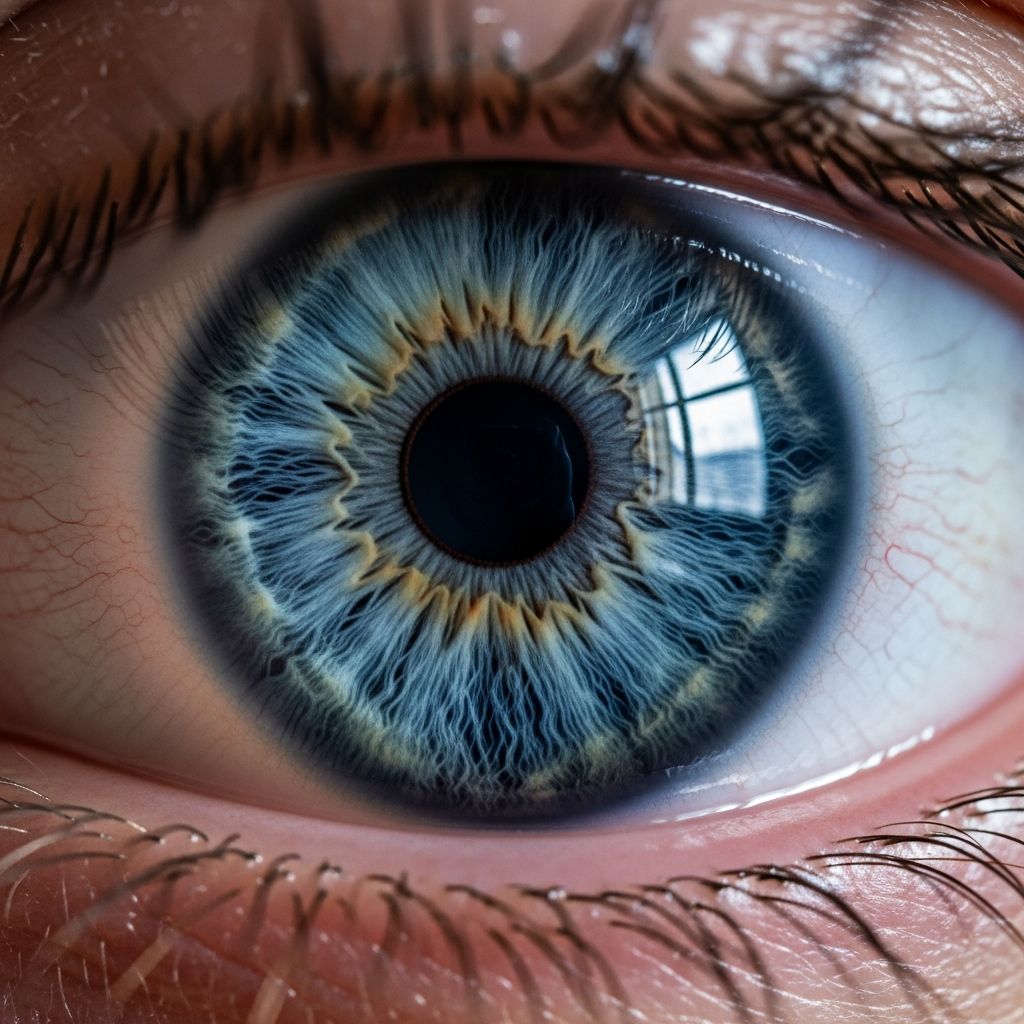
Blue eyes captivate with their striking hue, but this color arises not from pigment but from light scattering in the iris. A specific genetic change near the OCA2 gene acts as a switch, limiting melanin production and turning brown eyes blue for those inheriting it from both parents.
How Light Creates the Illusion of Blue
The human eye’s color stems from melanin in the iris, the pigmented ring around the pupil. Brown eyes contain abundant melanin absorbing most light, while blue eyes have minimal melanin, allowing light to scatter and reflect shorter blue wavelengths back to the viewer. This Tyndall effect, akin to why the sky appears blue, means blue eyes lack actual blue pigment.
In high-melanin irises, light penetrates deeply and gets absorbed, yielding darker tones. Low-melanin irises scatter light at the surface, emphasizing blue. Variations like green or hazel result from moderate melanin plus other pigments like lipochrome.
The Genetic Origin: A Shared Ancestor
All blue-eyed individuals trace back to one ancestor from around 6,000-10,000 years ago near the Baltic Sea region. A mutation in the HERC2 gene, adjacent to OCA2, created a ‘switch’ that reduces OCA2 activity, curbing melanin in the iris without affecting skin or hair.
OCA2 encodes the P protein essential for melanin synthesis. The HERC2 mutation doesn’t disable OCA2 entirely—preventing albinism—but dilutes iris melanin specifically. Professor Hans Eiberg’s research shows every blue-eyed person carries this exact switch at the same DNA location, confirming minimal genetic variation among them.
Dominance, Recessive Traits, and Inheritance Patterns
Eye color follows complex polygenic inheritance, but OCA2/HERC2 explains most blue-brown variation. The brown allele (ancestral) dominates; blue is recessive, requiring two copies for expression.
| Parental Eye Colors | Possible Child Outcomes | Blue Eye Probability |
|---|---|---|
| Blue + Blue | 100% Blue | 100% |
| Brown + Blue | 50% Brown, 50% Blue (if brown parent carries blue allele) | 50% |
| Brown + Brown | 75% Brown, 25% Blue (if both carry blue allele) | 25% |
This Punnett square simplification overlooks modifiers; heterozygotes usually show brown but can have green/hazel. Two blue-eyed parents nearly always produce blue-eyed children, though rare brown exceptions occur via epistasis where functional genes override.
Global Distribution and Evolutionary Theories
Blue eyes predominate in Europe (up to 89% in Finland, Estonia), rarer elsewhere: 8-10% U.S., 27% worldwide non-brown. The mutation spread via selection, possibly aiding mate recognition in low-light northern climates or signaling genetic compatibility.
- Europe: Highest prevalence, linked to founder effect from common ancestor.
- Asia/Africa: Near absence due to dominant brown alleles.
- Americas: Varies by ancestry; higher in European-descended populations.
Evolutionarily, the blue allele may have persisted as a ‘rare trait advantage,’ enhancing reproductive success by favoring similar mates, though evidence is indirect.
Related Stories



Eye Color Beyond Blue and Brown
Sixteen genes influence iris color; OCA2 covers ~74%. Others tweak shades: high melanin = black/brown; medium + yellow = green/hazel; low + Rayleigh scattering = blue; unique variants yield gray, amber, violet (often albinism-related).
- Green: Moderate melanin with lipochrome.
- Hazel: Mixed melanin distribution.
- Gray: Low melanin plus collagen scattering.
- Heterochromia: Differing eye colors from localized melanin issues.
Health Implications of Blue Eyes
Low iris melanin correlates with light sensitivity (photophobia), higher UV damage risk, and increased macular degeneration odds. Blue-eyed individuals face 2-3x greater uveal melanoma risk versus brown-eyed peers.
- Wear UV-protective sunglasses.
- Schedule regular eye exams.
- Avoid midday sun exposure.
Despite vulnerabilities, no evidence links eye color to vision acuity differences.
Common Questions About Blue Eyes
Can Brown-Eyed Parents Have a Blue-Eyed Child?
Yes, if both carry the recessive blue allele. Probability is 25% with two carriers.
Are All Blue Eyes Genetically Identical?
Nearly; 97%+ share the HERC2 mutation haplotype from one ancestor.
Why Do Babies’ Eyes Change Color?
Newborns often start blue due to low initial melanin; it increases post-birth, darkening eyes by 6-12 months.
Is Blue Eye Color Rare Globally?
Yes, ~8-10% worldwide, mostly European ancestry.
Can Eye Color Change in Adulthood?
Myths Debunked: Surprising Facts
- Myth: Blue eyes contain blue pigment. Fact: Pure optical scattering.
- Myth: Blue eyes see better at night. Fact: No acuity advantage; pupil dilates more.
- Myth: Two blue-eyed parents can’t have brown-eyed kids. Fact: Rare but possible via gene interactions.
Understanding blue eyes blends optics, genetics, and evolution, revealing nature’s intricate designs.
References
- Blue-eyed humans have a single, common ancestor — ScienceDaily. 2008-01-31. https://www.sciencedaily.com/releases/2008/01/080130170343.htm
- Why humans evolved blue eyes — PMC (PubMed Central). 2024. https://pmc.ncbi.nlm.nih.gov/articles/PMC12041803/
- Chances of Blue Eyes: A Genetic Explanation & Eye Color Chart — Family Education. 2023. https://www.familyeducation.com/babies/growth-development/what-are-the-chances-my-baby-will-have-blue-eyes-a-genetic-explanation
- Behind Blue Eyes: A Look at the Genetic and Cultural Components — College of Physicians of Philadelphia. 2022-05-25. https://collegeofphysicians.org/programs/education-blog/behind-blue-eyes-look-genetic-and-cultural-components-propelled-spread-blue-eyed-humans/
- The Genetics of Eye Color — HudsonAlpha Institute for Biotechnology. 2023. https://www.hudsonalpha.org/the-genetics-of-eye-color/
Similar Articles








Read full bio of medha deb