Sclerema Neonatorum: Causes, Symptoms, And Treatment Guide
Rare neonatal panniculitis causing skin hardening in sick premature infants, with poor prognosis but supportive treatments.
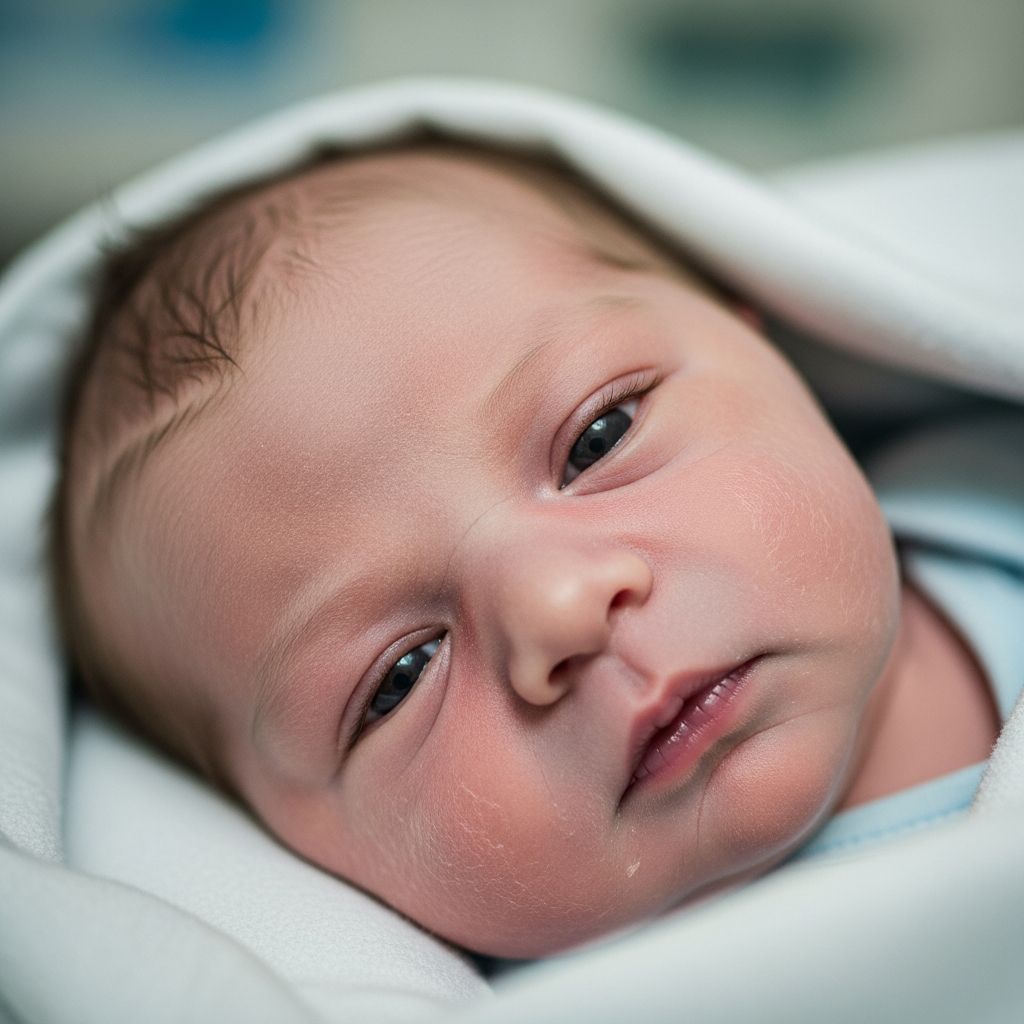
Sclerema neonatorum is a rare and severe form of panniculitis characterised by diffuse firm hardening of the skin and subcutaneous tissue in newborns. It predominantly affects gravely ill, premature infants and carries a high mortality rate despite intensive management.
What is sclerema neonatorum?
Sclerema neonatorum (SN) is an extremely rare type of panniculitis defined by the rapid onset of diffuse hardening of the skin and subcutaneous adipose tissue in neonates. Unlike the more common and benign subcutaneous fat necrosis of the newborn, sclerema involves minimal inflammation and affects the entire body, sparing only fat-free areas such as palms, soles, and genitalia.
The condition typically manifests within the first week of life, starting in areas with higher fat content like the buttocks, thighs, and trunk, then progressing symmetrically to involve the cheeks, neck, and limbs. The skin becomes cold, shiny, taut, and immobile, severely impairing movement, feeding, and respiration. Infants often present with systemic signs of severe illness, including lethargy, poor feeding, hypothermia, and respiratory distress.
Who gets sclerema neonatorum?
Sclerema neonatorum almost exclusively affects premature and low birth weight infants who are critically unwell. Common associations include:
- Extreme prematurity (often <32 weeks gestation)
- Low birth weight and inadequate subcutaneous fat
- Neonatal sepsis or overwhelming infection
- Hypothermia and poor thermoregulation
- Metabolic disturbances such as hypoglycaemia or electrolyte imbalances
- Maternal factors like prolonged rupture of membranes or chorioamnionitis
- Other stressors including respiratory distress syndrome, congenital heart disease, or surgical interventions
Full-term infants can rarely be affected, usually in the context of severe systemic illness. The condition is not hereditary and has no known ethnic predisposition.
What causes sclerema neonatorum?
The precise pathogenesis of sclerema neonatorum remains unclear, but it is thought to result from immaturity of neonatal adipose tissue combined with circulatory and metabolic compromise. Key proposed mechanisms include:
- Adipose tissue crystallisation: In stressed neonates, subcutaneous fat undergoes phase transition from liquid to solid crystalline state due to low temperature or metabolic stress, leading to tissue hardening.
- Vascular compromise: Poor peripheral perfusion from shock, sepsis, or hypothermia causes ischaemia of subcutaneous fat.
- Septal panniculitis: Histology shows needle-shaped clefts within adipocytes and thickening of fibrous septa with minimal inflammatory infiltrate.
- Systemic illness: Acts as the primary trigger, with sclerema representing a grave prognostic sign.
No single infectious agent has been consistently identified, though bacterial sepsis is a frequent association.
Clinical features
Sclerema neonatorum presents dramatically with rapid progression over hours to days. Initial features include:
| Feature | Description |
|---|---|
| Skin changes | Diffuse symmetric hardening starting on buttocks/thighs, spreading to trunk, limbs, cheeks; cold, shiny, waxy appearance; immobile skin folds |
| Systemic signs | Lethargy, poor feeding, hypothermia (<35.5°C), respiratory distress, cyanosis |
| Progression | Affects mouth opening, limb movement; spares palms/soles/genitalia |
| Laboratory | Thrombocytopenia, elevated CRP, leucocytosis; negative cultures common |
Two patterns are described: classic symmetric SN affecting proximal areas, and atypical asymmetric forms.
Diagnosis
Diagnosis is primarily clinical based on characteristic skin findings in a sick neonate. Key differentials include:
Related Stories



- Subcutaneous fat necrosis of the newborn (patchy, inflammatory, better prognosis)
- Cutaneous cold injury (localised, reversible with rewarming)
- Progressive nodular panniculitis (rare, inflammatory)
- Sepsis without sclerema
Investigations should focus on underlying illness:
- Blood culture, CRP, full blood count
- Sepsis workup (CSF, urine)
- Electrolytes, glucose, calcium
- Chest X-ray, blood gas
- Skin biopsy rarely needed (shows adipocytes with needle-shaped clefts, fibrous septa thickening)
Treatment
Treatment is supportive and targets underlying pathology, as no specific therapy exists. Mortality remains 50-80% despite intervention. Essential measures include:
- Intensive care: NICU admission, mechanical ventilation if needed.
- Treat sepsis: Broad-spectrum antibiotics (e.g., ampicillin/gentamicin, then vancomycin/piperacillin).
- Thermoregulation: Radiant warmer, servo-control to maintain neutral temperature.
- Metabolic support: IV fluids (1/5 NS + D5% + KCl), correct hypoglycaemia/electrolytes, TPN if needed.
- Adjunctive therapies:
- Parenteral steroids (hydrocortisone 2-3 mg/kg/day) – may halt progression in select cases
- IV immunoglobulin (controversial)
- Exchange transfusion (limited evidence)
- Gentle massage (theoretical benefit)
A case report described resolution after hydrocortisone in a septic preterm with progressing sclerema unresponsive to antibiotics.
What is the outcome for sclerema neonatorum?
Prognosis is poor with mortality >70% due to underlying illness rather than sclerema itself. Survivors may have residual skin stiffness but usually recover fully. Early recognition and aggressive management of sepsis/hypothermia improve chances. Sclerema portends grave illness but steroid use may limit spread. Long-term follow-up essential for neurodevelopmental assessment.
Frequently Asked Questions
Q: Can sclerema neonatorum be prevented?
A: Prevention focuses on antenatal care to reduce prematurity/sepsis risk, prompt neonatal resuscitation, and early NICU transfer for at-risk infants. No specific prophylaxis exists.
Q: Is sclerema neonatorum the same as subcutaneous fat necrosis?
A: No. Subcutaneous fat necrosis is localised, inflammatory, post-trauma/stress, with better prognosis; sclerema is diffuse, non-inflammatory, in sick premies.
Q: Do all babies with sclerema die?
A: No, though mortality is high (50-80%). Survival depends on underlying illness response; some cases resolve with supportive care and steroids.
Q: When does sclerema neonatorum start?
A: Typically within first week of life, often day 2-3, starting buttocks/thighs.
Q: Is biopsy required for diagnosis?
A: Rarely; clinical diagnosis suffices. Biopsy confirmatory if atypical presentation.
References
- Sclerema Neonatorum: Signs, Causes, And Treatment — Medicover Hospitals. 2023. https://www.medicoverhospitals.in/diseases/sclerema-neonatorum/
- Sclerema Neonatorum Treated Successfully with Parenteral Steroids — PMC/NCBI (Case Rep Pediatr). 2017-05-25. https://pmc.ncbi.nlm.nih.gov/articles/PMC5444035/
- Sclerema neonatorum in a premature newborn: A case report — Wiley Online Library (Skin Health Dis). 2024. https://onlinelibrary.wiley.com/doi/full/10.1002/ski2.255
- Sclerema neonatorum – DermNet — DermNet NZ. 2023. https://dermnetnz.org/topics/sclerema-neonatorum
- Sclerema Neonatorum (Sclerema Newborn) – Symptoma — Symptoma. 2023. https://www.symptoma.com/en/info/sclerema-neonatorum
- Sclerema Neonatorum in a Full-Term Infant Showing Favorable … — PMC/NCBI. 2017. https://pmc.ncbi.nlm.nih.gov/articles/PMC5705365/
Similar Articles








Read full bio of medha deb