Scleroderma: Causes, Symptoms, and Management
Explore the complexities of scleroderma, a rare autoimmune condition causing skin hardening and organ involvement, with insights into diagnosis and care strategies.
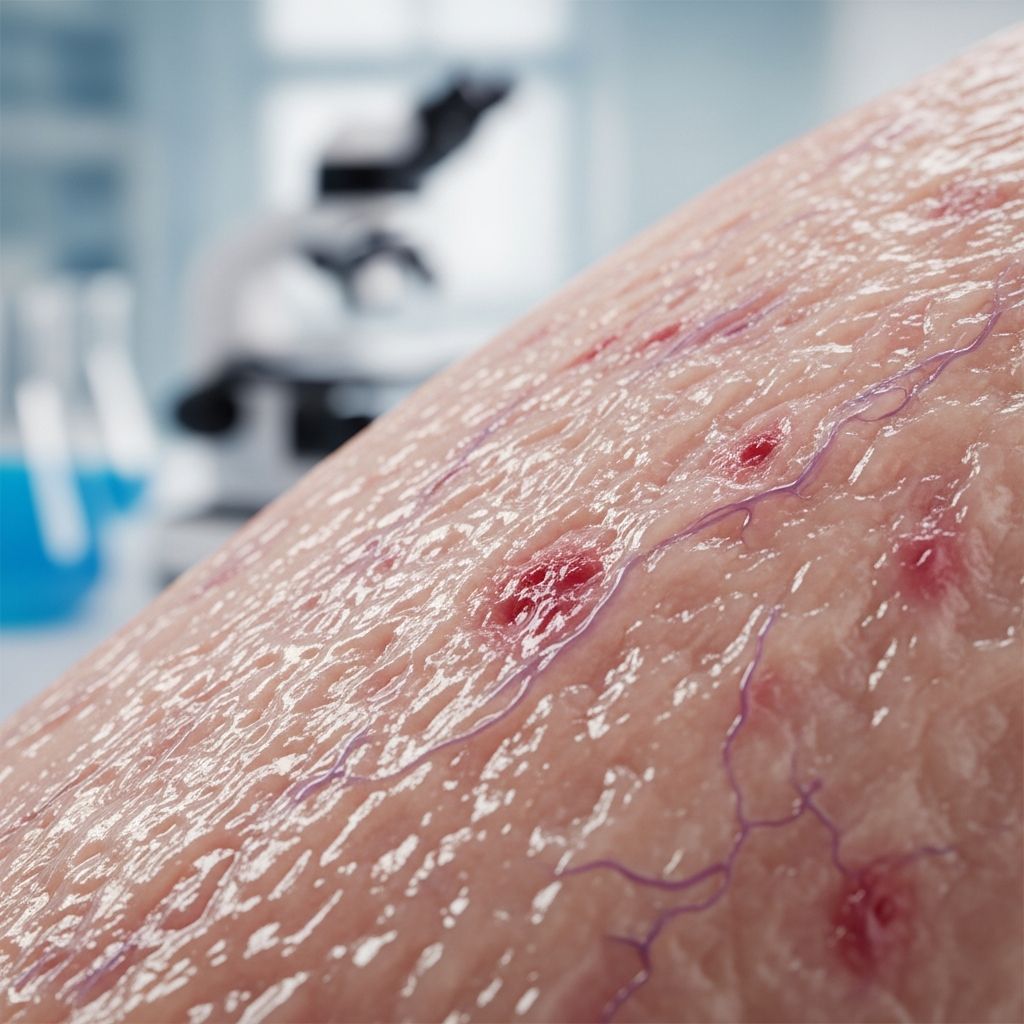
Scleroderma, also known as systemic sclerosis, represents a group of rare autoimmune disorders characterized by excessive collagen production, leading to skin hardening and potential damage to blood vessels and internal organs. This condition affects connective tissues throughout the body, resulting in fibrosis that can impair mobility and organ function.
Understanding the Fundamentals of Scleroderma
At its core, scleroderma involves an aberrant immune response where the body mistakenly targets its own tissues, particularly fibroblasts that produce collagen. This overproduction creates thick, rigid scar tissue, primarily in the skin but extending to organs like the lungs, heart, kidneys, and digestive system in systemic forms. Unlike common misconceptions, scleroderma is not contagious or directly inherited, though genetic predispositions may play a role alongside environmental triggers.
The disease manifests in two primary categories: localized, which confines effects to the skin and underlying tissues, and systemic, which involves widespread vascular and organ complications. Localized forms, such as morphea, present as patches of thickened skin without deeper involvement, while systemic variants pose greater risks due to their progressive nature.
Distinct Types of Scleroderma
Scleroderma’s classification helps tailor medical approaches. Localized scleroderma includes:
- Morphea: Oval-shaped patches of discolored, hardened skin on the trunk or limbs, often itchy or tender.
- Linear scleroderma: A band of thickened tissue running along an arm, leg, or forehead, potentially affecting muscle and bone growth in children.
Systemic scleroderma divides further into limited and diffuse subtypes based on skin extent and progression speed.
| Type | Skin Involvement | Key Features | Prognosis |
|---|---|---|---|
| Limited Cutaneous | Distal to elbows and knees, face | Raynaud’s phenomenon, slower onset; formerly CREST syndrome (calcinosis, Raynaud’s, esophageal issues, sclerodactyly, telangiectasia) | Better long-term outlook |
| Diffuse Cutaneous | Proximal to elbows/knees, trunk | Rapid skin thickening, early organ involvement like lungs/kidneys | Higher risk of complications |
Diffuse forms often progress through phases: an initial edematous stage with puffy fingers, followed by fibrotic hardening.
Root Causes and Risk Factors
The precise etiology remains elusive, but scleroderma is widely recognized as autoimmune, with immune cells attacking healthy tissues, triggering inflammation and fibrosis. Vascular damage precedes fibrosis, featuring intimal proliferation and capillary loss. Genetic factors, such as specific HLA alleles, increase susceptibility, particularly in families with autoimmune histories.
Environmental exposures like silica dust, solvents, or certain medications may initiate the process in predisposed individuals. Women are disproportionately affected, comprising about 75-90% of cases, with peak onset between ages 30-50. Overlaps with other autoimmune conditions like lupus or rheumatoid arthritis are common, complicating diagnosis.
Recognizing Early Warning Signs
Skin changes are hallmark indicators. Fingers may swell in a ‘puffy’ phase, accompanied by itching or burning, evolving into tight, shiny skin (sclerodactyly). Facial skin tightens, reducing mouth opening and creating a mask-like appearance.
- Vascular symptoms: Raynaud’s phenomenon, where fingers turn white, blue, then red in cold or stress, affects over 90% of systemic cases.
- Digestive issues: Esophageal dysmotility causes heartburn, swallowing difficulties, or bloating from slowed gut motility.
- Lung complications: Shortness of breath from interstitial lung disease or pulmonary hypertension.
- Musculoskeletal pain: Joint stiffness, tendon friction rubs, muscle weakness.
Related Stories



Other signs include dry mouth/eyes from Sjögren’s overlap, calcinosis (calcium deposits), and telangiectasias (dilated blood vessels).
Diagnostic Approaches and Challenges
Diagnosis relies on clinical evaluation, as no single test confirms scleroderma. Physicians assess skin thickness using the modified Rodnan score and order blood tests for autoantibodies like anti-centromere (limited type) or anti-Scl-70 (diffuse). Nailfold capillaroscopy reveals vascular abnormalities, while imaging such as high-resolution CT scans detect lung fibrosis.
Echocardiograms and pulmonary function tests screen for heart/lung involvement. Biopsies confirm fibrosis in ambiguous cases. Early detection is crucial, as delays worsen outcomes, yet symptoms mimic other rheumatologic diseases.
Comprehensive Treatment Strategies
No cure exists, but treatments target symptoms, halt progression, and preserve function. Immunosuppressants like methotrexate or mycophenolate manage inflammation in early diffuse disease, particularly lung involvement.
- Vascular therapies: Calcium channel blockers (e.g., nifedipine) for Raynaud’s; PDE-5 inhibitors or prostacyclins for pulmonary hypertension.
- Skin and GI management: Moisturizers, methotrexate for skin; proton pump inhibitors for reflux.
- Advanced options: Stem cell transplants for severe cases, showing promise in resetting immune responses.
Lifestyle measures are vital: protect skin from cold, maintain joint mobility through physical therapy, and monitor for complications like renal crisis (treated with ACE inhibitors).
Potential Complications and Prognosis
Systemic scleroderma carries risks of interstitial lung disease (affecting 40-60%), pulmonary arterial hypertension (15%), scleroderma renal crisis, and cardiac fibrosis. Cancer risk elevates, necessitating vigilant screening. Prognosis varies: limited types offer 10+ year survival over 70%, while diffuse cases with organ failure reduce it significantly. Multidisciplinary care improves outcomes.
Living with Scleroderma: Practical Advice
Patients benefit from support groups, stress management, and nutritional counseling to counter GI issues. Regular specialist visits (rheumatologist, pulmonologist) enable proactive care. Advances in biologics and antifibrotics like nintedanib offer hope for slowing fibrosis.
Frequently Asked Questions (FAQs)
What triggers scleroderma flares?
Cold exposure, stress, infections, or smoking can exacerbate Raynaud’s and skin tightening.
Is scleroderma hereditary?
Not directly, but genetic factors increase risk in families with autoimmune diseases.
Can children get scleroderma?
Yes, juvenile localized scleroderma is most common, potentially impacting growth.
How does scleroderma affect pregnancy?
Increased risks of hypertension and preterm birth; preconception counseling is essential.
Are there dietary recommendations?
Soft foods aid swallowing; avoid triggers like caffeine for reflux management.
References
- Scleroderma – Symptoms and causes — Mayo Clinic. 2023-10-26. https://www.mayoclinic.org/diseases-conditions/scleroderma/symptoms-causes/syc-20351952
- Systemic Sclerosis (Scleroderma) — StatPearls, NCBI Bookshelf, NIH. 2023-07-17. https://www.ncbi.nlm.nih.gov/books/NBK430875/
- Scleroderma: Symptoms, Causes & Treatment Options — Cleveland Clinic. 2023-08-01. https://my.clevelandclinic.org/health/diseases/scleroderma
- Scleroderma | Fact Sheets — Yale Medicine. 2024-01-15. https://www.yalemedicine.org/conditions/scleroderma
- Understanding Scleroderma — Scleroderma Foundation. 2023-05-10. https://scleroderma.org/understanding-scleroderma/
- Scleroderma Symptoms, Types, Causes, & Risk Factors — NIAMS, NIH. 2023-11-08. https://www.niams.nih.gov/health-topics/scleroderma
Similar Articles








Read full bio of medha deb