Scleroedema Guide: 8 Key Insights On Diagnosis & Treatment
Comprehensive guide to scleroedema: causes, clinical features, diagnosis, and management strategies for this rare skin condition.
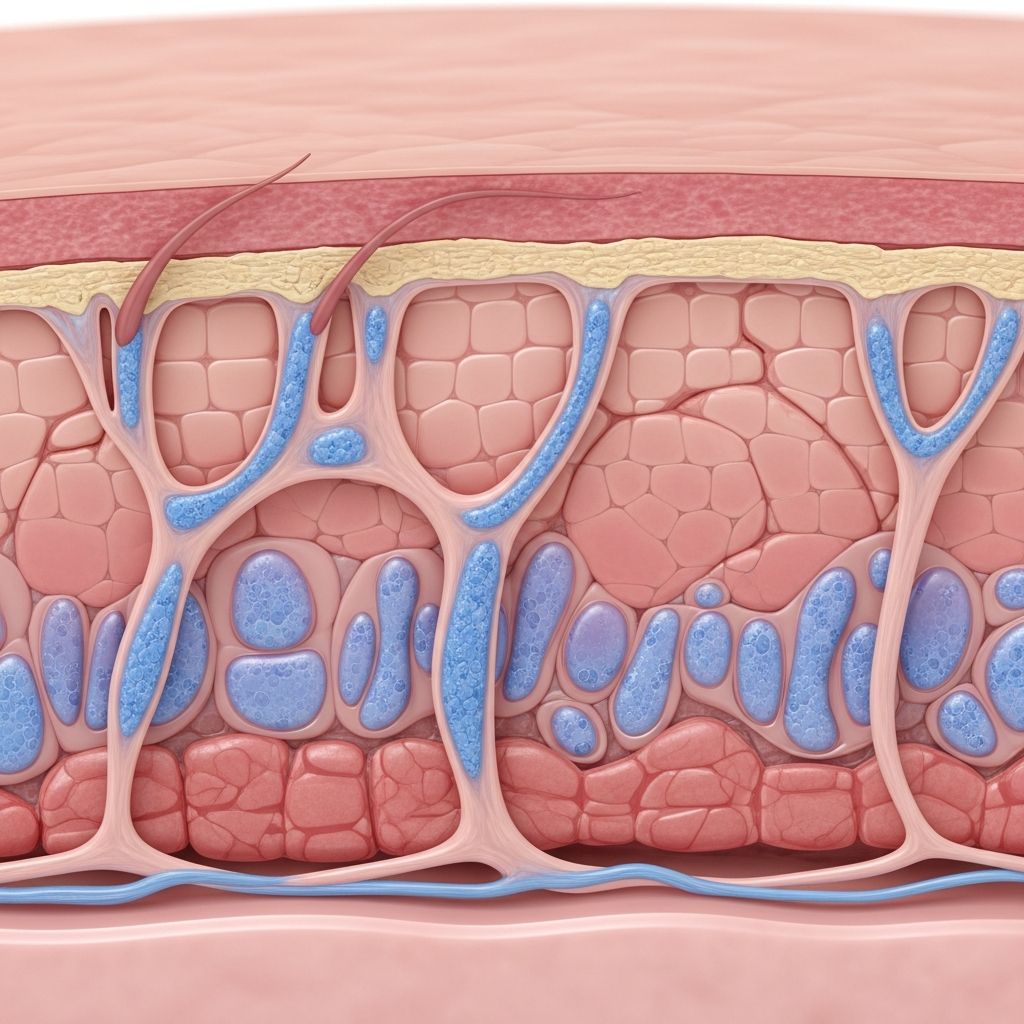
Scleroedema, also known as scleredema, is a rare idiopathic fibromucinous dermatosis characterized by symmetric, non-pitting induration of the skin on the face, neck, and upper trunk. It typically follows an acute febrile illness or arises in association with diabetes mellitus or monoclonal gammopathy. What is scleroedema?
What is scleroedema?
Scleroedema is a rare skin disease defined by thickening and hardening of the skin, primarily affecting the upper body. Unlike scleroderma, it spares the fingers and toes and does not involve Raynaud phenomenon or systemic sclerosis features. The condition arises from excessive deposition of collagen and mucin in the dermis, leading to firm, doughy skin texture. It was first described in 1902 by Buschke, hence occasionally termed Buschke disease.
The prevalence is unknown due to its rarity, but it affects all ages and races equally, with a slight male predominance. Three classical subtypes exist based on clinical course and associations:
- Classical (post-infectious) scleroedema: Most common in children and young adults, onset 2–6 weeks after a streptococcal infection like pharyngitis or tonsillitis. Self-limited, resolves in months to 2 years.
- Scleroedema diabeticorum: Linked to long-standing, poorly controlled insulin-dependent diabetes mellitus. Progressive and persistent, affecting 2.7–17% of diabetics.
- Scleroedema associated with monoclonal gammopathy: Rare, in adults with paraproteinaemia (IgG1 kappa most common). May progress to multiple myeloma in 5–20% of cases.
Histologically, all forms show thickened dermis with separated collagen bundles by mucin deposits, confirmed by alcian blue staining. Fenestration of collagen fibers distinguishes it from scleromyxoedema.
Who gets scleroedema?
Scleroedema impacts individuals across all demographics without strong predispositions, though patterns emerge by subtype:
| Subtype | Typical Demographics | Associations |
|---|---|---|
| Classical | Children, young adults | Post-streptococcal infection |
| Diabeticorum | Middle-aged to elderly | Insulin-dependent diabetes (type 2 common) |
| Gammopathy | Adults >50 years | Monoclonal gammopathy, myeloma risk |
Males are affected slightly more (2:1 ratio). No familial cases reported. In diabetics, it correlates with obesity, retinopathy, and nephropathy, suggesting microvascular damage role.
What causes scleroedema?
The aetiology remains incompletely understood, varying by subtype:
- Post-infectious: Streptococcal exotoxins may trigger fibroblast hyperactivity and glycosaminoglycan (GAG) overproduction. Elevated serum paraproteins occasionally noted.
- Diabetic: Advanced glycation end-products (AGEs) from chronic hyperglycaemia bind fibroblasts, increasing collagen and fibronectin synthesis. Insulin resistance and obesity exacerbate mucin deposition.
- Gammopathy: Paraproteins directly stimulate fibroblasts, leading to IgG deposition in skin.
Pathophysiology involves:
- Fibroblast proliferation and transformation to myofibroblasts.
- Overproduction of type I collagen, fibronectin, and hyaluronic acid.
- Mucin accumulation separating collagen bundles, causing induration.
No genetic mutations identified; environmental triggers like infections or metabolic stress implicated.
What are the clinical features of scleroedema?
Skin changes develop gradually over weeks. Key features include:
- Symmetric, sharply demarcated induration starting on neck and posterior shoulders.
- Spread to face, upper chest, back, arms; spares hands, feet, mucosae.
- Non-pitting, peau d’orange texture; skin feels woody, doughy, or rubbery.
- Restricted neck mobility (‘stiff man syndrome’ appearance).
- Facial oedema, furrowed brows, fixed expression; eyelids may not close fully.
- Hypertrichosis, hyperhidrosis, or anhidrosis on affected areas.
Associated symptoms:
- Mild itch or tenderness initially.
- Upper airway obstruction if laryngopharynx involved (rare).
- Joint stiffness from pericapillary fibrosis.
- Diabetic subtype: Coexists with diabetic dermopathy, bullosis diabeticorum.
Systemic involvement minimal; rare cases report cardiomyopathy, pulmonary fibrosis, or hypothyroidism.
Related Stories



How is scleroedema diagnosed?
Diagnosis relies on clinical presentation and skin biopsy:
- Clinical: Wood’s lamp accentuates affected areas; MRI shows dermal thickening.
- Histology (gold standard): Thickened dermis (2–3x normal), collagen bundles separated by pale mucin (alcian blue positive), normal eccrine glands/reticular dermis spared.
- Laboratory: Rule out diabetes (HbA1c), gammopathy (SPEP), streptococcal infection (ASO titre).
- Differentials: Scleromyxoedema (mucinous papules, monoclonal protein), amyloidosis (purpura, macroglossia), lipodermatosclerosis, eosinophilic fasciitis, graft-vs-host disease.
How is scleroedema differentiated from scleroderma?
| Feature | Scleroedema | Scleroderma (SSc) |
|---|---|---|
| Skin distribution | Neck, upper trunk; spares distal extremities | Distal extremities, face; proximal in diffuse |
| Onset | Induration without initial oedema | Oedema then induration |
| Pitting | Non-pitting | May pit early |
| Raynaud’s | Absent | Present (95%) |
| Nailfolds | Normal | Capillaroscopy abnormal |
| Associations | Diabetes, infection, paraprotein | Autoantibodies (ANA, Scl-70) |
| Histology | Mucin+, eccrine spared | Atrophy, fibrosis |
What is the treatment for scleroedema?
No curative therapy; management is supportive and subtype-specific:
- General: Emollients, avoid trauma; physical therapy for mobility.
- Post-infectious: Often self-resolves; penicillamine, steroids, PUVA if persistent.
- Diabetic: Strict glycaemic control (insulin optimization); UVB, ciclosporin, methotrexate reported benefits.
- Gammopathy: Treat underlying paraprotein (chemotherapy if myeloma).
Emerging therapies: Infliximab, IVIG, electron beam radiation (limited evidence).
What is the outcome for scleroedema?
Varies by type:
- Post-infectious: Complete resolution in 6–24 months (95%).
- Diabetic: Persistent, slowly progressive; improves with diabetes control.
- Gammopathy: Chronic, risk of malignancy progression.
Monitoring: Skin score, neck mobility, HbA1c, SPEP annually.
Frequently Asked Questions
Q: Is scleroedema the same as scleroderma?
A: No. Scleroedema affects upper body without Raynaud’s or autoantibodies; scleroderma is systemic with distal involvement.
Q: Can scleroedema be cured?
A: Post-infectious type often resolves spontaneously; others require managing underlying causes like diabetes.
Q: Does scleroedema affect internal organs?
A: Rarely; unlike scleroderma, no routine organ screening needed unless symptomatic.
Q: Is biopsy always required?
A: Yes, to confirm mucin deposition and exclude mimics like scleromyxoedema.
References
- Systemic Sclerosis (Scleroderma) — Patient.info. 2023-01-15. https://patient.info/doctor/multisystem-diseases/systemic-sclerosis-scleroderma
- Understanding and Managing Scleroderma — U.S. Pharmacist. 2022-11-01. https://www.uspharmacist.com/article/understanding-and-managing-scleroderma
- Systemic Sclerosis and the skin — Scleroderma Australia. 2023-03-01. https://www.sclerodermaaustralia.com.au/wp-content/uploads/2023/03/Scleroderma-Aus-SSc-and-the-Skin-Brochure-web.pdf
- Systemic sclerosis — DermNet NZ. 2024-05-20. https://dermnetnz.org/topics/systemic-sclerosis
- Localized scleroderma: clinical spectrum and therapeutic update — PMC (NCBI). 2015-02-01. https://pmc.ncbi.nlm.nih.gov/articles/PMC4323700/
Similar Articles








Read full bio of Sneha Tete