Undefined Sea Bather’s Eruption: Expert Guide For Swimmers
Itchy rash from jellyfish stings under swimwear: causes, symptoms, prevention, and effective treatments explained.
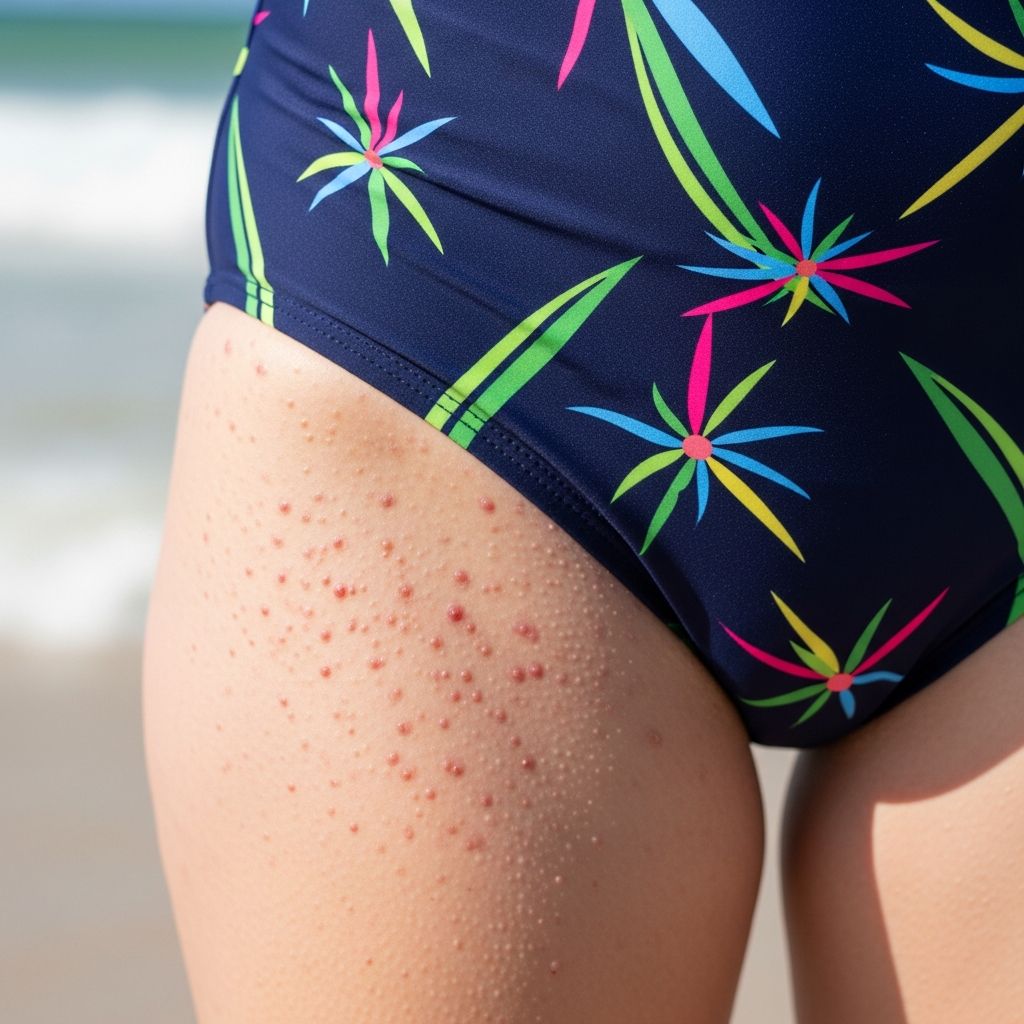
Sea bather’s eruption is an intensely pruritic dermatitis that manifests as an itchy rash primarily on skin covered by swimwear shortly after ocean swimming. It results from envenomation by nematocysts (stinging cells) of larval thimble jellyfish or sea anemones trapped against the skin.
What is sea bather’s eruption?
Sea bather’s eruption, colloquially known as ‘sea lice’ despite no lice involvement, was first documented in 1949 off Florida’s east coast, termed ‘Pica-Pica’ or ‘itchy-itchy’ in Spanish. This condition arises in tropical and subtropical waters worldwide, triggered by contact with specific marine coelenterates.
In regions like the eastern US coast from Florida to New York, the primary culprit is the thimble jellyfish Linuche unguiculata, affecting all free-swimming stages: ephyrae, medusae, and larvae. Off Long Island, Edwardsiella lineata sea anemone larvae are responsible. Variations occur globally, likely involving analogous species.
The mechanism involves swimmers inadvertently trapping these minute organisms (often 0.2-1 mm) under tight-fitting swimwear as water drains upon exiting the sea. Pressure from fabric against skin discharges nematocysts, injecting antigenic toxins that provoke an immune-mediated inflammatory response.
Prolonging wear of wet swimwear, freshwater showers (which hypotonically trigger nematocyst discharge), or towel rubbing exacerbates toxin release and symptoms. Subsequent exposures often yield more severe reactions due to sensitization.
Who gets sea bather’s eruption?
This eruption affects ocean swimmers of all ages, with higher incidence during peak larval seasons. Along Florida’s east coast, L. unguiculata larvae peak April-July; cases occur anytime. Children may experience more intense symptoms, including gastrointestinal upset. Approximately 20% report systemic malaise like fever, chills, fatigue, nausea, or headache.
- Peak prevalence: Spring-summer in temperate/subtropical zones
- Risk groups: Swimmers in tight swimwear; prior sufferers (sensitized)
- Geographic hotspots: Eastern US seaboard, Caribbean, Gulf of Mexico, Indian Ocean reports
Clinical features of sea bather’s eruption
Symptoms commence with prickling/tingling under swimwear (breasts, abdomen, groin, wetsuit cuffs) during or immediately post-swim. Within 2-24 hours, intense itching develops, potentially escalating to pain. Freshwater showers while suited intensify discharge.
Rash distribution favors occluded areas: waistbands, bras, bikini lines, genitals. It may spread to adjacent exposed skin. Morphology includes:
- Erythematous papules (1-5 mm)
- Vesicles/pustules
- Urticarial plaques (confluent)
- Follicular accentuation
Symptom duration averages 7-14 days, but may persist 4-8 weeks, especially in sensitized individuals. Constitutional symptoms (fever <101°F, fatigue, nausea, vomiting, dysuria) occur in ~20%, more in children. Severe cases mimic anaphylaxis but rarely involve respiratory compromise.
| Time Course | Symptoms/Signs |
|---|---|
| 0-2 hours | Prickling/tingling under suit |
| 2-24 hours | Itch → papules/vesicles |
| Day 2-7 | Peak inflammation, pustules |
| Week 2-8 | Resolution (post-inflammatory hyperpigmentation possible) |
Diagnosis of sea bather’s eruption
Diagnosis relies on characteristic history: recent sea bathing + rash confined to swimwear areas. Clinical exam confirms polymorphic eruption (papulovesicular, urticarial). Microscopy rarely reveals organisms post-discharge.
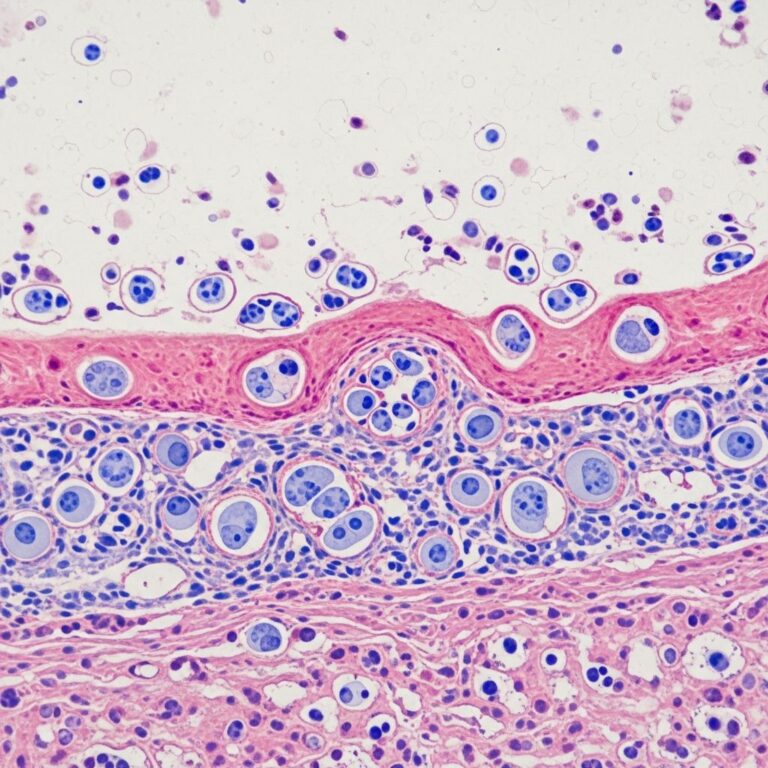
No specific lab tests exist; biopsy shows spongiotic dermatitis with eosinophilic infiltrate, nonspecific. History differentiates from mimics.
Differential diagnosis of sea bather’s eruption
Key mimics include:
- Swimmer’s itch (cercarial dermatitis): Affects exposed skin post-fresh/saltwater; schistosome cercariae
- Seaweed dermatitis: Lyngbya majuscula toxin; no trapped organisms
- Hot tub folliculitis: Pseudomonas; follicular pustules post-chlorinated exposure
- Textile dermatitis: Symmetric under clothing but delayed onset, no vesicles
- Chigger bites: Grouped, exposed skin, longer duration
Related Stories



Geographic exposure + timing discriminate sea bather’s eruption.
Prevention of sea bather’s eruption
Preventive strategies target nematocyst inactivation/dislodgement:
- Immediate post-swim ritual: Remove swimwear; rinse body (not suit) with 5% acetic acid (vinegar) or isopropyl alcohol to neutralize nematocysts
- Shower protocol: Naked with seawater/saltwater first, then soap
- Suit decontamination: Machine wash hot water/detergent; or vinegar soak + handwash. Dry stinging cells persist
- Barrier methods: Loose clothing, full-body Lycra suits, prompt changes
- Seasonal avoidance: Skip infested beaches April-July (Florida)
Treatment of sea bather’s eruption
Supportive/symptomatic therapy predominates; spontaneous resolution typical within 2 weeks.
Acute management (first 24h)
- Vinegar/alcohol rinse: Inactivates residual nematocysts
- Cold compresses: Vasoconstriction reduces pain/itch
- Avoid: Rubbing, hot water, delayed suit removal
Symptomatic relief
| Symptom | Treatment | Notes |
|---|---|---|
| Itch/Pain | Hydrocortisone 1% cream (BID x7-14d); Calamine/menthol lotion | OTC; face/groin: low potency |
| Severe itch | Class I-II topical steroid (clobetasol short-term elsewhere) | Rx; taper use |
| Systemic symptoms | NSAIDs (ibuprofen); Antihistamines (fexofenadine day, diphenhydramine night) | Avoid aspirin in kids |
| Refractory/severe | Oral prednisone 0.5-1mg/kg x3-5d | Fever, lymphadenopathy, malaise |
Advise hydration, infection vigilance (pustules → bacterial superinfection). Symptoms consistent but unresponsive cases warrant physician evaluation.
Outcome of sea bather’s eruption
Most resolve without sequelae in 1-2 weeks; hyperpigmentation/scarring rare unless excoriated/infected. Sensitization increases severity/duration on re-exposure. No long-term effects reported.
Frequently Asked Questions
Is sea bather’s eruption contagious?
No, it results from direct nematocyst envenomation, not person-to-person transmission.
Does vinegar really help sea bather’s eruption?
Yes, 5% acetic acid promptly neutralizes undischarged nematocysts, though established rash requires symptomatic treatment.
How long does sea lice rash last?
Typically 7-14 days; up to 2 months in sensitized individuals or delayed treatment.
Can children get sea bather’s eruption?
Yes, often more severely with GI symptoms; treat promptly, avoid aspirin.
Is sea bather’s eruption the same as jellyfish sting?
Similar mechanism (nematocysts) but distinct: affects covered skin from trapped larvae vs. exposed skin from direct medusa contact.
References
- Sea bather’s eruption — DermNet NZ. 2023. https://dermnetnz.org/topics/sea-bathers-eruption
- Seabathers Eruption — Freiman A, Tannenbaum S. StatPearls [Internet]. NCBI Bookshelf. 2023-08-08. https://www.ncbi.nlm.nih.gov/books/NBK482307/
- Seabather’s Eruption — Divers Alert Network (DAN). 2023. https://dan.org/health-medicine/health-resources/diseases-conditions/sea-bathers-eruption/
- How to Treat a Sea Lice Rash (Seabather’s Eruption) — Riverchase Dermatology. 2024-06-12. https://www.riverchasedermatology.com/blog/how-to-treat-a-sea-lice-rash-seabathers-eruption/
- Seabather’s Eruption — Mahoney Dermatology. 2023. https://mahoneydermatology.com/seabathers-eruption/
Similar Articles








Read full bio of Sneha Tete