Seaweed Dermatitis Complete Guide: Causes, Symptoms, Treatment
Understanding the itchy, burning rash from toxic seaweed contact and effective prevention strategies.
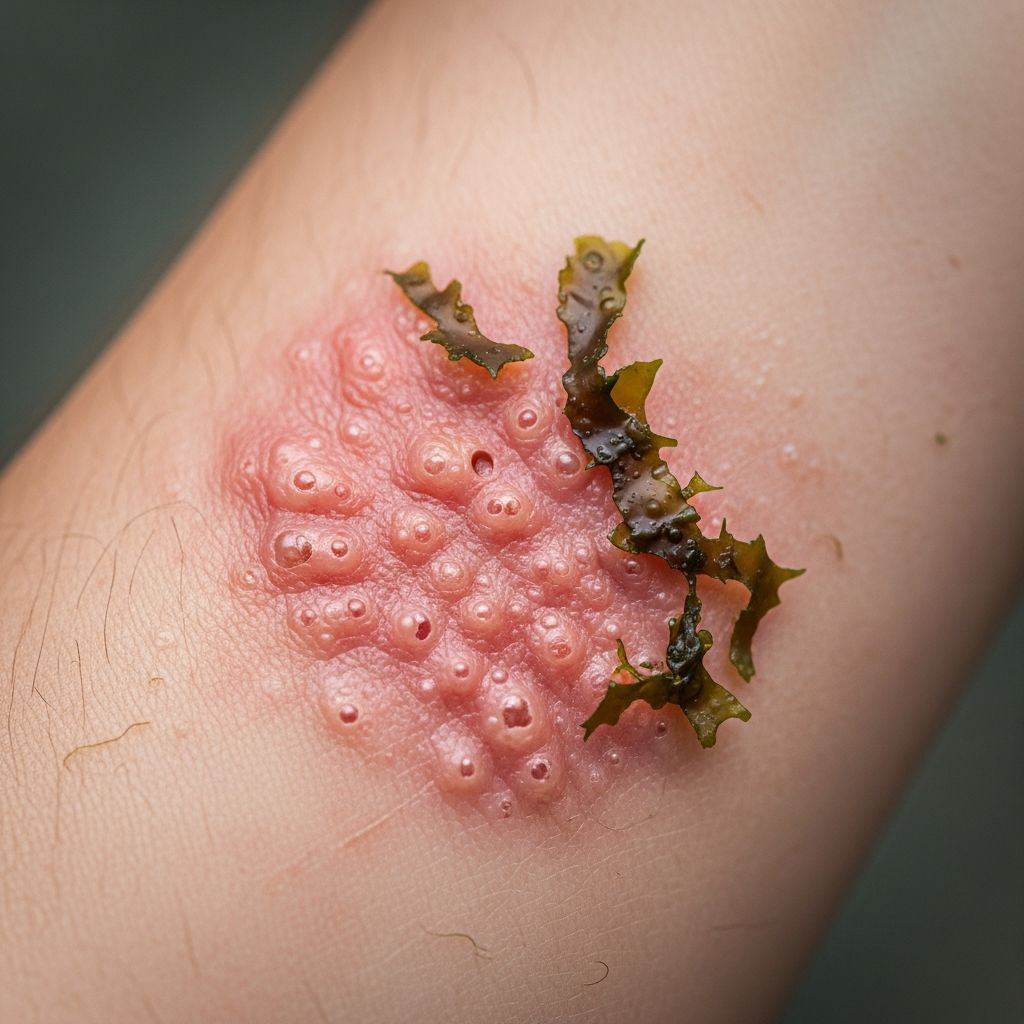
Seaweed dermatitis is a skin rash caused by direct contact with a poisonous type of seaweed (alga), most commonly Lyngbya majuscula. This condition manifests as an irritant contact dermatitis, distinct from allergic reactions or stings from other marine life.
What is Seaweed Dermatitis?
Seaweed dermatitis, also known as Lyngbya dermatitis or stinging seaweed disease, results from exposure to toxins produced by certain blue-green algae or cyanobacteria, primarily Lyngbya majuscula. This filamentous alga thrives in tropical and temperate coastal waters worldwide, including regions like Hawaii, Florida, and the Caribbean. Unlike sea bather’s eruption caused by jellyfish larvae or swimmer’s itch from parasitic flatworms, seaweed dermatitis stems from chemical irritants rather than mechanical or allergic mechanisms.
The alga appears as dark green to black, hair-like strands that can wash ashore or float in shallow waters. Direct skin contact, especially in areas trapped under swimsuits, triggers the reaction. Toxicity levels vary by region, season, and strain, with blooms often linked to warm, nutrient-rich waters.
Who Gets Seaweed Dermatitis?
Anyone engaging in water activities in infested areas is at risk, including swimmers, surfers, divers, and beachgoers. Children and adults alike can be affected, though those wearing tight-fitting swimsuits experience more severe reactions due to prolonged contact in occluded areas. Men may notice scrotal swelling, while women often report rashes under the breasts or along waistbands. Outbreaks are more common during summer months when algal blooms peak.
- Swimmers and bodyboarders in rough surf
- Divers handling seaweed
- Beach walkers stepping on stranded algae
- Individuals with sensitive skin or prior exposures
Causes
The primary culprit is Lyngbya majuscula, which produces potent lipopolysaccharides called lyngbyatoxin A and debromoaplysiatoxin. These non-protein toxins act as potent irritants, penetrating the skin barrier and causing inflammation. Upon contact, the toxins disrupt cell membranes, release inflammatory mediators, and provoke a localized response.
Histopathology reveals acute dermatitis with lymphocyte, eosinophil, and neutrophil infiltrates. Ingested algae can cause gastrointestinal issues, but dermal contact is the main pathway. Environmental factors like high temperatures, calm waters, and pollution exacerbate blooms.
Key Toxins:
- Lyngbyatoxin A: Activates protein kinase C, leading to intense pruritus and erythema.
- Debromoaplysiatoxin: Similar mechanism, promoting blister formation.
Clinical Features
Symptoms emerge minutes to 24 hours post-exposure, starting with intense
itching
andburning
. Ared maculopapular rash
follows, often conforming to swimsuit patterns—waistbands, under breasts, groin, buttocks, and scrotum in men. Blisters (vesicles) may develop, evolving into erosions that desquamate, leaving tender, bright red skin.Additional symptoms include:
- Swollen eyelids or conjunctivitis
- Nasal/throat irritation
- Headache and fatigue
- Fever in severe cases
- Skin sores lasting up to 2 weeks
Duration: Mild cases resolve in 4-48 hours; severe ones up to 12 days with secondary infection risk (pus, warmth, odor).
| Symptom | Onset | Severity | Common Sites |
|---|---|---|---|
| Burning/Itching | Minutes-Hours | Mild-Moderate | Occluded areas |
| Red Rash | Hours | Moderate | Swimsuit distribution |
| Blisters/Erosions | Hours-Days | Severe | Groin, breasts |
| Swelling/Fever | Days | Severe | Face, systemic |
Related Stories



Diagnosis
Diagnosis relies on clinical history of recent saltwater exposure in endemic areas and characteristic swimsuit-pattern rash. Observation of Lyngbya strands on skin or gear supports it. Differential includes:
- Sea bather’s eruption (jellyfish larvae: papules under suits)
- Swimmer’s itch (schistosomes: cercarial pattern)
- Cnidarian stings (linear wheals)
- Seabather’s eruption vs. seaweed: seaweed lacks stinging cells, follows direct contact.
Biopsy shows spongiosis, exocytosis, and mixed infiltrate; toxin assays are research-only. Location and rash distribution aid differentiation.
Treatment
Immediate decontamination is crucial. Remove swimsuit, rinse skin and fabric vigorously with soap and fresh water, followed by isopropyl alcohol to neutralize toxins.
Home Care (Mild-Moderate):
- Cool wet compresses or oatmeal baths
- Calamine lotion or lidocaine sunburn cream
- 1% Hydrocortisone cream 2-3x daily
- Oral antihistamines (diphenhydramine 25-50mg q6h adults)
Severe Cases: Oral corticosteroids (prednisone 0.5-1mg/kg taper), H2 blockers (ranitidine 150mg q12h). Antibiotics if infected (e.g., cephalexin).
Monitor for infection signs: worsening redness, pus, fever. Consult physician for children, persistent symptoms, or systemic involvement. Avoid sun exposure post-treatment due to photosensitivity.
Prevention
Avoidance is key:
- Check beaches for Lyngbya warnings (hair-like clumps)
- Wear rash guards, loose swimwear; rinse immediately post-swim
- Scrub gear with alcohol
- Steer clear of blooms in warm, stagnant waters
Public health alerts from DOH (e.g., Hawaii) flag high-risk areas.
More Information
Sargassum seaweed can cause similar irritation via trapped organisms, but Lyngbya is toxin-specific. Research highlights bloom increases with climate change. PubMed case: 13yo with vesicular rash post-Hawaii surf.
Frequently Asked Questions
What causes the burning sensation in seaweed dermatitis?
Lyngbyatoxin A and debromoaplysiatoxin from Lyngbya majuscula irritate skin cells, causing rapid inflammation.
How long does seaweed dermatitis last?
Typically 4-48 hours for mild cases; up to 12 days with sores.
Is seaweed dermatitis contagious?
No, it’s a chemical irritant, not infectious.
Can children get seaweed dermatitis?
Yes; treat conservatively, consult pediatrician for steroids.
How to differentiate from jellyfish stings?
Seaweed rash is patchy under suits without tentacles; stings are linear.
What if blisters form?
Keep clean, apply hydrocortisone; seek MD if infected.
References
- Seaweed Irritation Rash Treatment, Symptoms & First Aid — eMedicineHealth. 2023. https://www.emedicinehealth.com/wilderness_seaweed_irritation/article_em.htm
- Symptoms and Signs of Seaweed Irritation — eMedicineHealth. 2023. https://www.emedicinehealth.com/wilderness_seaweed_irritation/symptom.htm
- Seaweed Dermatitis — DermNet NZ. 2024. https://dermnetnz.org/topics/seaweed-dermatitis
- Stinging Seaweed Disease — Hawaii State Department of Health. 2023. https://health.hawaii.gov/docd/disease_listing/stinging-seaweed-disease/
- Lyngbya dermatitis (toxic seaweed dermatitis) — PubMed (Int J Dermatol). 2011-07. https://pubmed.ncbi.nlm.nih.gov/21790555/
Similar Articles








Read full bio of Sneha Tete