Sebaceous Carcinoma Expert Guide For Diagnosis And Treatment
Rare aggressive skin cancer from sebaceous glands: symptoms, diagnosis, Muir-Torre links, and treatments explained.
Author: Dermatology Expert — Updated 2026
What is sebaceous carcinoma?
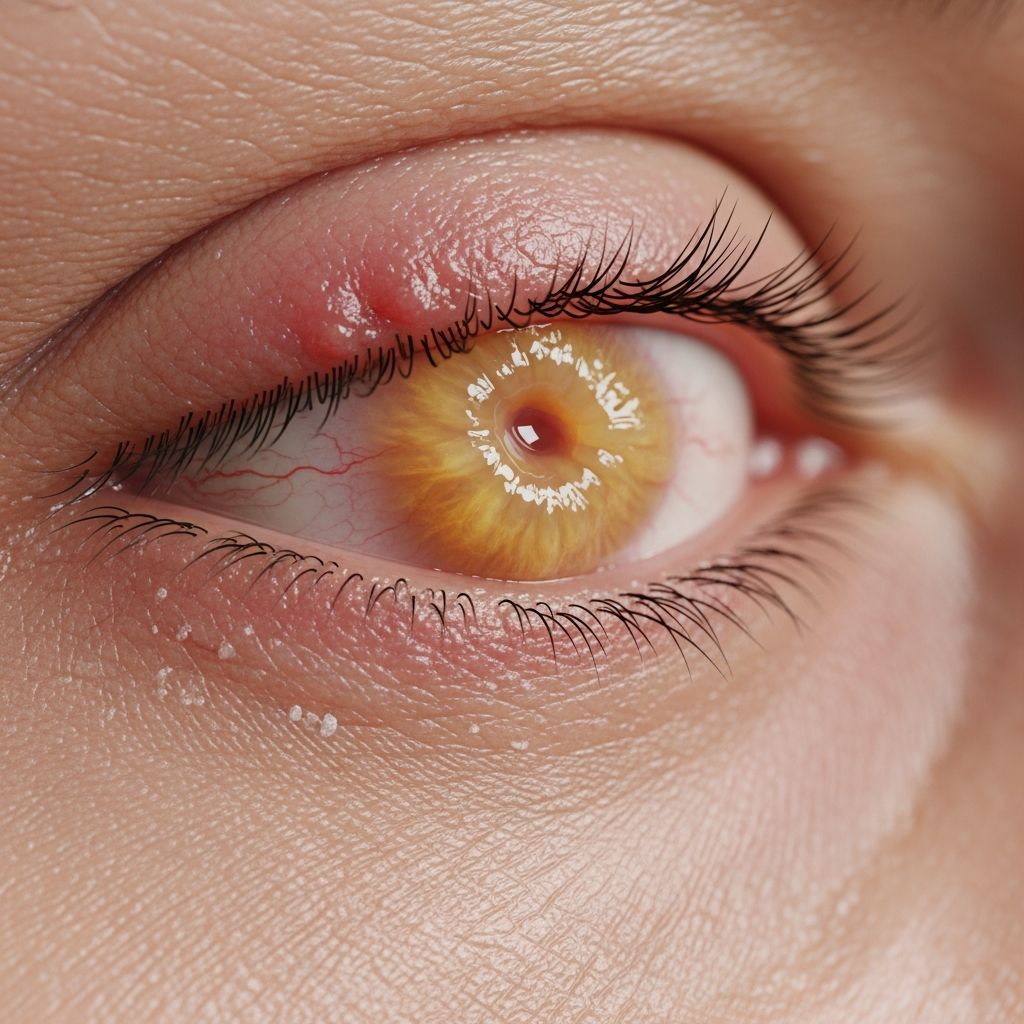
Sebaceous carcinoma is a rare and aggressive skin cancer originating from sebaceous glands, which produce the oily substance sebum to lubricate skin and hair. Also known as sebaceous gland adenocarcinoma, it accounts for less than 1% of all cutaneous malignancies but has high morbidity due to local invasion and metastasis potential. These tumors most commonly arise in the periocular region (eyelids and surrounding areas), comprising up to 75% of cases, but can occur anywhere sebaceous glands exist, such as the head, neck, trunk, or extremities.
Periocular forms are particularly challenging due to their subtle presentation, often mimicking benign conditions like chalazia or blepharoconjunctivitis. Extraocular sebaceous carcinomas tend to be nodular and more readily recognized. The tumor’s aggressiveness stems from pagetoid spread (intraepithelial invasion), multicentric origins, and propensity for lymphovascular invasion.
Who gets sebaceous carcinoma?
Sebaceous carcinoma primarily affects older adults, with peak incidence between 60 and 80 years. Women are affected more frequently than men, especially in periocular cases (ratio up to 2:1). It occurs more commonly in Asian populations compared to Caucasians.
Risk factors include:
- Advanced age: Most cases diagnosed after 60 years.
- UV radiation exposure: Chronic sun damage implicated in extraocular tumors.
- Muir-Torre syndrome (MTS): A subtype of hereditary non-polyposis colorectal cancer (HNPCC/Lynch syndrome), where 18.8–33.3% of sebaceous tumor patients are affected. Skin lesions may precede visceral cancers by up to 25 years in 22% of cases.
- Prior radiation therapy: Increases risk in irradiated fields.
- Immunosuppression: Seen in organ transplant recipients or HIV patients.
In MTS, germline mutations in DNA mismatch repair (MMR) genes (MLH1, MSH2) lead to microsatellite instability. Guidelines recommend germline testing for extraocular sebaceous carcinoma, Mayo MTS risk score ≥2, or patients under 50 with MMR-deficient tumors.
What causes sebaceous carcinoma?
The exact etiology is multifactorial. Key genetic alterations include:
- LEF1 mutations: Transcription enhancer binding factor completely silenced in sebaceous carcinomas.
- TP53 inactivation: Common in aggressive tumors.
- Wnt/β-catenin pathway aberrations: Drive malignant proliferation.
- HER2 overexpression: Potential for targeted therapies.
- TGF-β, PTEN, NF-κB dysregulation: Contributes to tumor progression.
Environmental factors like UV exposure cause cumulative DNA damage, while MTS-related MMR defects predispose to multiple sebaceous neoplasms.
Clinical features
Sebaceous carcinoma presents insidiously, leading to diagnostic delays averaging 1–2 years for periocular cases. Common features include:
- Periocular (75% cases): Chronic blepharoconjunctivitis, diffuse eyelid thickening, loss of eyelashes, yellow plaque or nodule, madarosis (lash loss).
- Extraocular (25%): Firm, yellow-orange nodule, often on head/neck; may ulcerate.
- Pagetoid spread: Intraepithelial invasion mimicking chronic inflammation.
Symptoms: painless mass, eyelid irritation, tearing, vision changes if conjunctiva involved. Advanced cases show orbital invasion or lymph node enlargement.
Diagnosis
Diagnosis requires high clinical suspicion and histopathological confirmation. Steps include:
- Clinical exam: Eyelid eversion, slit-lamp for ocular involvement.
- Biopsy: Full-thickness incisional or punch biopsy essential; superficial shavings miss dermal invasion.
- Histopathology: Dermal-based tumor with basaloid cells and multivacuolated sebocytes (foamy cytoplasm). Features necrosis, pagetoid epidermal spread. WHO grades I–III based on differentiation (grade III poorest prognosis).
- Immunohistochemistry: EMA+, BerEP4+, AR+, CK7+ (ocular). Oil Red O/Sudan IV for lipids; PRAME for grading.
- Imaging: CT/MRI for orbital extension; sentinel lymph node biopsy (SLNB) for staging.
- Germline testing: For MTS if criteria met.
Related Stories



Differential diagnosis
| Condition | Key Distinguishers |
|---|---|
| Chalazion/Blepharitis | Benign, responsive to conservative Rx; no pagetoid spread. |
| Sebaceous adenoma/epithelioma | Well-circumscribed, no atypia/necrosis. |
| Basal cell carcinoma (BCC) | Peripheral palisading; EMA-. |
| Squamous cell carcinoma (SCC) | Keratinization; BerEP4-, AR-. |
| Merkel cell carcinoma | CK20+ dots; rapid growth. |
Pathology
Microscopically, sebaceous carcinoma shows poorly circumscribed dermal nodules invading subcutis. Tumor cells are basaloid with frothy, vacuolated sebocytes (30–80% differentiation). Common: comedo necrosis, pagetoid intraepidermal spread. High-grade tumors lack mature sebocytes.
Immunostains aid differentiation: positive for EMA, adipophilin, AR; negative in mimics like clear cell SCC. Ocular variants CK7+ distinguish from adnexal tumors.
Treatment
Surgery is mainstay. Gold standard: Mohs micrographic surgery (MMS) or complete circumferential peripheral and deep margin assessment (CCPDMA), achieving 11% recurrence vs. 36% wide local excision (WLE). MMS preserves tissue, ideal for eyelids (70% head/neck cases).
- Margins: 5–6 mm clinical; histological clearance mandatory.
- SLNB for tumors >2 cm, eyelid/periocular, or high-risk features.
Radiation: Adjuvant for positive margins/nodes or palliative; not primary due to recurrence risk.
Systemic therapy (advanced/unresectable): Immunotherapy (PD-1 inhibitors), anti-HER2, retinoids, EGFR inhibitors.
Follow-up: Exam/imaging q6 months x3 years; colonoscopy for MTS.
Outcome and prognosis
Prognosis varies: 5-year survival 92% localized, 50% metastatic. Poor factors: periocular site, grade III, pagetoid spread, lymphovascular invasion. Mortality 5–10% from local invasion or metastases (lymph nodes 10–20%, distant 5%). Early diagnosis critical; MTS screening improves outcomes by detecting visceral cancers early.
Frequently Asked Questions
Q: Is sebaceous carcinoma curable?
A: Yes, with early complete excision via MMS; cure rates >90% for localized disease.
Q: How is sebaceous carcinoma linked to colon cancer?
A: Via Muir-Torre syndrome (HNPCC variant); sebaceous tumors marker for MMR defects. Screen with colonoscopy.
Q: Can sebaceous carcinoma be on the body, not just eyelids?
A: Yes, 25% extraocular, often head/neck as yellow nodules.
Q: What is the best treatment for eyelid sebaceous carcinoma?
A: Mohs surgery for tissue-sparing complete removal.
Q: Does radiation cure sebaceous carcinoma?
A: No, used adjunctively; surgery primary.
References
- Sebaceous Carcinoma | Treatment & Management — StatPearls Publishing. 2024. https://www.statpearls.com/point-of-care/149613
- Sebaceous carcinoma pathology — DermNet NZ. 2014. https://dermnetnz.org/topics/sebaceous-carcinoma-pathology
- Sebaceous Gland Carcinoma: Symptoms, Causes, and Treatments — Healthgrades. 2025. https://resources.healthgrades.com/right-care/skin-cancer/sebaceous-gland-carcinoma
- Sebaceous carcinoma — DermNet NZ. 2025. https://dermnetnz.org/topics/sebaceous-carcinoma
- S1-Guideline Sebaceous Carcinoma — Wiley Online Library. 2024-10-01. https://onlinelibrary.wiley.com/doi/full/10.1111/ddg.15405
Similar Articles








Read full bio of medha deb