Seborrhoeic Dermatitis Guide: Causes, Symptoms, & Treatment
Comprehensive guide to seborrhoeic dermatitis: symptoms, causes, diagnosis, and effective treatments for all age groups.
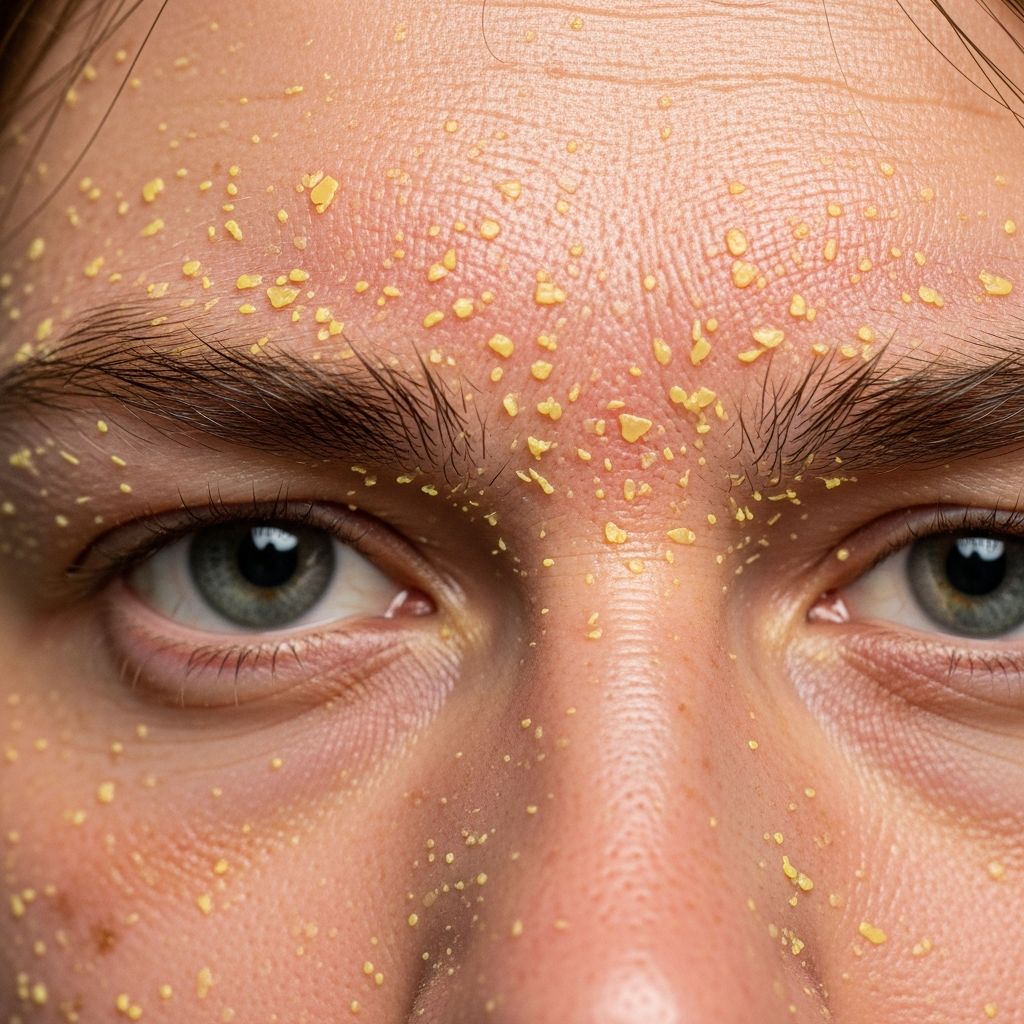
Seborrhoeic dermatitis is a common, chronic, or relapsing form of eczema/dermatitis that mainly affects the sebaceous gland-rich regions of the scalp, face, and trunk.
Introduction
**Seborrhoeic dermatitis** (also called
seborrheic dermatitis
orseborrhoea
) is an inflammatory skin condition characterized by scaly, itchy, and sometimes greasy patches, primarily in areas with high sebaceous gland activity such as the scalp, face, ears, chest, and flexures. It manifests as a papulosquamous eruption with erythematous plaques covered by fine, greasy yellow scales, often resembling dandruff on the scalp. This condition affects 3–12% of the general population and follows a biphasic pattern, peaking in infancy and again in adulthood between 30–60 years. While generally benign, it can significantly impact quality of life due to its relapsing nature, pruritus, and cosmetic concerns.In infants, it presents as
cradle cap
, a thick, yellowish crust on the scalp that typically resolves spontaneously by 6–12 months. In adults, it often flares with stress, cold weather, or immunosuppression, and is more prevalent in males. Histologically, it shows nonspecific features like spongiosis, parakeratosis, and perivascular lymphocytic infiltrates, with Malassezia yeast often implicated in the stratum corneum.Demographics
Seborrhoeic dermatitis exhibits a
biphasic incidence
: infantile cases affect up to 70% of newborns under 3 months, mostly resolving by 12 months, while adult onset peaks at 30–60 years, impacting 3–12% overall. It is more common in males and individuals with darker skin types, ranking among the top five diagnoses in Black patients. Prevalence increases in immunocompromised populations, such as those with HIV/AIDS, where severe, generalized forms signal underlying disease.- **Infants**: 10–70% incidence, self-limiting.
- **Adults**: 1–3% in general population; up to 85% in HIV-positive individuals.
- **Risk factors**: Parkinson’s disease, Down syndrome, psychiatric conditions, and oily skin.
Causes
The exact etiology remains multifactorial, involving
Malassezia yeast
overgrowth (lipophilic fungi normally resident on skin), sebum production, immune dysregulation, and genetic predisposition. Malassezia spp. metabolize sebum into irritant-free fatty acids, triggering inflammation in susceptible individuals. Environmental triggers include cold/dry weather, stress, sleep deprivation, and hormonal changes.- Microbial**: Malassezia furfur and restricta proliferate in sebum-rich areas.
- Immune**: Abnormal T-cell response and cytokine release (IL-1, IL-6).
- Genetic/Other**: Familial clustering; associations with neurological disorders.
In infants, it may relate to maternal hormones or immature immunity, while adult flares link to androgen-driven sebum excess.
Clinical Features
Lesions favor sebaceous areas: scalp (dandruff), eyebrows, nasolabial folds, postauricular creases, chest, back, axillae, groin, and umbilicus. Presentations include:
- **Scalp**: Greasy yellow scales, pruritus; mild form is dandruff.
- **Face**: Erythematous patches with fine scale; petaloid on chest.
- **Flexures**: Moist, fissured plaques with less scaling.
- **Severe**: Pityriasiform seborrhoeide (extensive trunk involvement).
Symptoms: Itching (scalp most), burning; asymptomatic in infants. Acute: Salmon-colored papules with crust; chronic: Thickened plaques.
Variation in Skin Types
In
darker skin types
, seborrhoeic dermatitis appears ashypopigmented macules/patches
with fine scale, rather than prominent erythema.Petaloid
forms show arcuate, flower-like patches on trunk/face; polycyclic lesions possible. Post-inflammatory hyper/hypopigmentation persists, complicating diagnosis.| Skin Type | Typical Presentation |
|---|---|
| Light skin | Erythematous plaques, greasy yellow scale |
| Darker skin | Hypopigmented patches, petaloid/arcuate shapes |
Complications
Usually benign, but risks include
secondary bacterial infections
(flexures/eyelids),Candida overgrowth
(diaper area), anderythroderma
in severe cases. In HIV/immunodeficient patients, extensive involvement indicates poor prognosis if untreated. Chronic cases cause dyschromia, hair loss, and psychosocial distress.Related Stories



Diagnosis
Primarily
clinical
, based on distribution, greasy scale, and sebaceous site predilection. No specific test;KOH prep
may show Malassezia (spaghetti-and-meatballs). Biopsy rare, reveals nonspecific spongiotic dermatitis with shoulder parakeratosis. Sudden severe onset warrants HIV screening.Differential Diagnoses
Key mimics:
- Psoriasis**: Sharper margins, thicker silver scale; overlaps in 50% (seborrheic psoriasis).
- Atopic dermatitis**: More pruritic, flexural, oozing; elevated IgE.
- Tinea capitis/corporis**: KOH fluorescence, leading edge.
- Candidiasis**: Satellite pustules, moist.
- Langerhans cell histiocytosis** (infants): Systemic signs, petechiae.
Treatment
Stepwise:
First-line topical antifungals
(ketoconazole 2% shampoo/cream, 2–4x/week). Maintenance: Weekly prophylaxis.- Mild scalp**: Antifungal shampoos (ketoconazole, ciclopirox, zinc pyrithione).
- Face/body**: Low-potency steroids (hydrocortisone) + antifungals; calcineurin inhibitors (pimecrolimus).
- Infants**: Emollients, gentle cleansing; ketoconazole shampoo if persistent.
- Refractory**: Oral antifungals (itraconazole, fluconazole); monitor LFTs.
Avoid irritants; manage triggers.
Outcome
Infantile form self-resolves (90% by 12 months). Adult: Chronic relapsing; effective control with maintenance therapy. Prognosis excellent unless immunocompromised.
Frequently Asked Questions (FAQs)
Q: Is seborrhoeic dermatitis contagious?
A: No, it is not contagious; caused by internal factors like yeast overgrowth and immune response.
Q: Can seborrhoeic dermatitis cause hair loss?
Q: A: Temporary shedding from inflammation; resolves with treatment.
Q: How long does cradle cap last?
A: Usually 6–12 months; treat with oils/shampoos if needed.
Q: Is it related to poor hygiene?
A: No, hygiene does not cause it; affects clean skin.
Q: What triggers flares in adults?
A: Stress, cold weather, illness, alcohol.
References
- Seborrheic dermatitis: Causes and treatment — DermNet NZ. 2023. https://dermnetnz.org/topics/seborrhoeic-dermatitis
- Seborrheic Dermatitis – StatPearls — NCBI Bookshelf / National Center for Biotechnology Information. 2023-07-17. https://www.ncbi.nlm.nih.gov/books/NBK551707/
- Seborrheic Dermatitis: An Overview — American Academy of Family Physicians (AAFP). 2006-07-01. https://www.aafp.org/pubs/afp/issues/2006/0701/p125.html
- Seborrheic Dermatitis — Cleveland Clinic. 2023. https://my.clevelandclinic.org/health/diseases/14403-seborrheic-dermatitis
- Seborrheic dermatitis: Causes — American Academy of Dermatology (AAD). 2023. https://www.aad.org/public/diseases/a-z/seborrheic-dermatitis-causes
Similar Articles








Read full bio of medha deb