Seborrhoeic Dermatitis: Symptoms, Causes, Treatment Guide
Comprehensive guide to seborrhoeic dermatitis: causes, symptoms, diagnosis, and effective treatments for all skin types.
Introduction
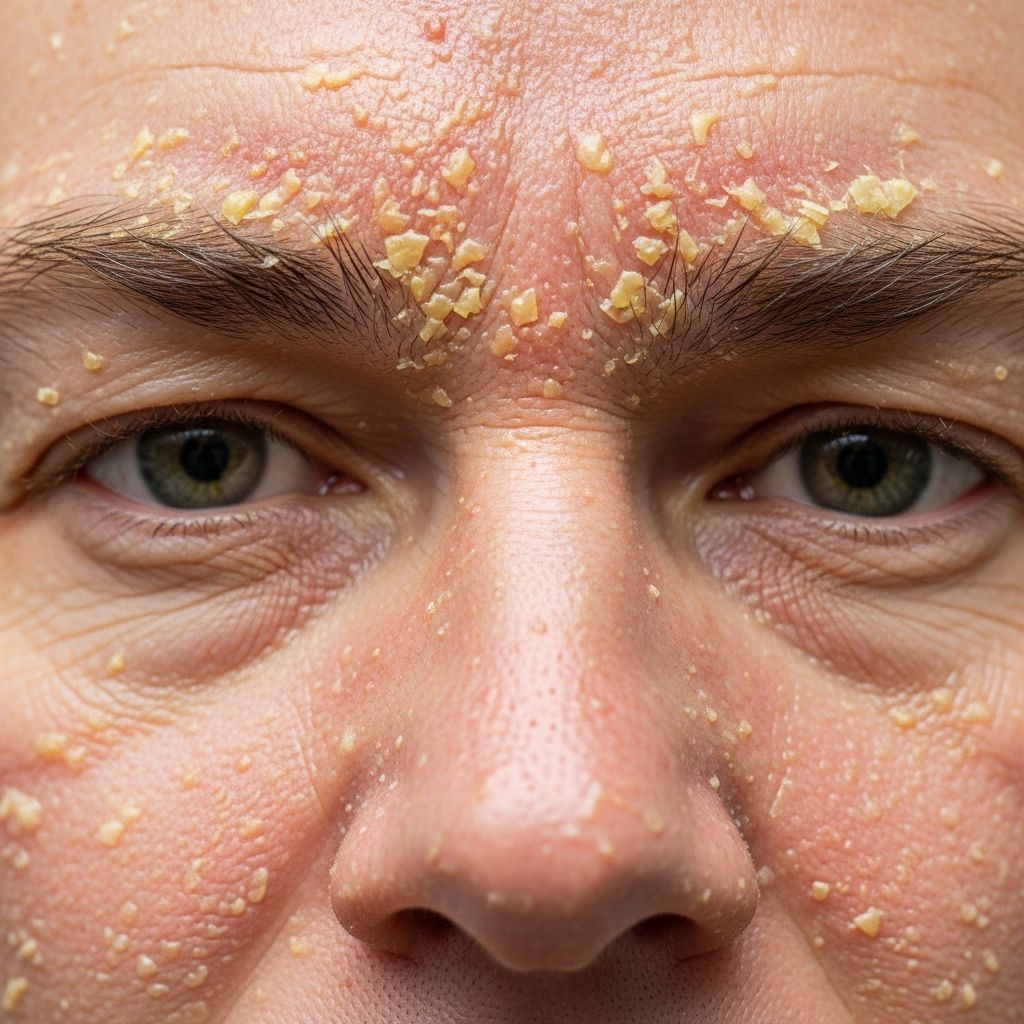
Seborrhoeic dermatitis is a common, chronic, or relapsing form of eczema/dermatitis that typically affects sebaceous gland-rich regions such as the scalp, face, and trunk. It manifests as flaky, greasy scales on erythematous skin, often causing discomfort like itching or burning. While not contagious or a sign of poor hygiene, it can significantly impact quality of life due to its persistence and visibility. The condition arises from an interplay of genetic, environmental, and microbial factors, with Malassezia yeast proliferation playing a central role. Effective management focuses on reducing inflammation, controlling yeast overgrowth, and removing scales.
Demographics
Seborrhoeic dermatitis affects individuals across all ages and skin types, but prevalence varies. In adults, it impacts 1-5% of the general population, rising to 3-10% in immunocompromised groups like those with HIV. Infants commonly experience it as cradle cap, affecting up to 70% in the first months of life, which often resolves spontaneously. It is equally common in men and women but more frequent in those with oily skin or certain ethnic backgrounds. Among darker skin types, it ranks among the top five dermatological diagnoses, presenting uniquely without the typical erythema.
- Infants: Peak incidence at 3 months, self-limiting in most cases.
- Adults: Onset in adolescence or adulthood, chronic with flares.
- Risk groups: Parkinson’s disease patients (up to 60%), HIV-positive individuals, and those under stress or with neurological conditions.
Causes
The exact aetiology of seborrhoeic dermatitis remains incompletely understood, but multiple factors contribute. Malassezia yeast, a normal skin saprophyte, is implicated through its lipases and phospholipases, which cleave free fatty acids from sebum, triggering inflammation. Genetic predispositions affect skin barrier function and immune response, leading to overreaction against this yeast. Other contributors include hormonal fluctuations, nutritional deficits (e.g., zinc or pyridoxine), neurogenic factors, and environmental triggers like cold weather or stress. It is not an allergy but an inflammatory response to microbial overgrowth and sebum changes.
Key pathophysiological mechanisms include:
- Disruption of skin microbiota and impaired T-cell response to Malassezia.
- Increased unsaturated fatty acids and abnormal keratinocyte shedding.
- Epidermal barrier disturbances linked to genetics.
Clinical Features
Characteristic lesions appear in seborrhoeic areas: scalp (dandruff or cradle cap), nasolabial folds, glabella, eyebrows, beard, ears, chest, and flexures. Features include well-demarcated pink or yellow-red plaques with greasy, yellowish scales. Itching is common, and extensive involvement may be termed pityriasiform seborrhoeide. In infants, it presents as thick, greasy scalp scaling, sometimes extending to flexures.
| Site | Typical Presentation |
|---|---|
| Scalp | Dandruff, thick scales (cradle cap in infants) |
| Face | Erythema with greasy scales in nasolabial folds, eyebrows |
| Trunk | Patches on sternum, intertriginous areas |
Variation in Skin Types
Presentation differs by skin phototype. In lighter skin, vivid erythema with white-yellow scales predominates. Darker skin types show less redness, instead featuring scaly hypopigmented macules or petaloid (arcuate, petal-like) patches. This can lead to underdiagnosis in diverse populations. Studies confirm higher prevalence and distinct morphology in Black patients, emphasizing the need for culturally competent dermatology.
- Fair skin: Salmon-pink plaques, prominent scaling.
- Darker skin: Hypopigmented, petaloid lesions; less inflammation visible.
Complications
While benign, seborrhoeic dermatitis can cause secondary bacterial infections from scratching, leading to crusting or impetiginization. Chronic cases may result in post-inflammatory hyperpigmentation, especially in darker skins. In severe, widespread forms, it mimics other conditions like psoriasis. Immunosuppressed patients risk dissemination. Emotional distress from visible scaling affects psychosocial well-being.
Related Stories



Diagnosis
Diagnosis is clinical, based on history and characteristic distribution/scaling in seborrhoeic areas. No specific tests are routine, but microscopy or culture may rule out infection. Wood’s lamp can exclude erythrasma. In ambiguous cases, skin biopsy shows spongiosis, parakeratosis, and yeast forms.
Differential Diagnoses
Key differentials include:
| Condition | Distinguishing Features |
|---|---|
| Psoriasis | Thicker silver scales, extensor surfaces, nail changes |
| Atopic dermatitis | Flexural lichenification, personal/family atopy history |
| Candidiasis | Mucosal/intertriginous, satellite lesions |
| Contact dermatitis | Geometric distribution from irritants |
| Tinea | Annular, annular scaling; KOH positive |
| Erythrasma | Coral-red under Wood’s lamp, toe webs/groin |
Treatment
Treatment targets yeast, inflammation, and scales, tailored by age, severity, and site. Mild cases respond to over-the-counter antifungals; severe require prescriptions. Maintenance prevents flares. General skincare: gentle cleansing, moisturizing, avoid irritants.
Infantile Seborrhoeic Dermatitis
Cradle cap resolves spontaneously. Use emollients, soft brushing, or mild shampoos. For persistent cases: ketoconazole or salicylic acid shampoos. Avoid forceful scraping to prevent infection.
Adult Scalp Treatment
- First-line: Antifungal shampoos (ketoconazole 2%, zinc pyrithione 1%, selenium sulfide, ciclopirox 1%). Lather, leave 5-10 min, rinse 2-3x/week.
- Steroid lotions (hydrocortisone 1%) for itch/inflammation, short-term.
- Refractory: Oral antifungals (itraconazole).
Facial/Body Treatment
- Topical antifungals: Ketoconazole cream/foam, most effective.
- Mild steroids: Hydrocortisone 1% or potent short courses.
- Calcineurin inhibitors: Pimecrolimus/tacrolimus for periorificial areas.
- Newer: Roflumilast 0.3% foam (FDA-approved ≥9 years).
- Keratolytics: Salicylic acid, sulfur for scales.
For severe/recalcitrant: Oral itraconazole, tetracyclines, isotretinoin (low-dose), or phototherapy.
Triggers and Prevention
Avoid stress, harsh products, cold/dry weather. Regular antifungal use maintains remission.
Outcome
Seborrhoeic dermatitis is chronic/relapsing; infantile form resolves by 1 year. Adults achieve control with ongoing therapy but rarely cure, as sensitivity to Malassezia persists. Prognosis improves with adherence; complications are rare with prompt treatment.
Frequently Asked Questions (FAQs)
Q: Is seborrhoeic dermatitis contagious?
A: No, it is not contagious. It results from an immune response to normal skin yeast, not infection transmission.
Q: Can seborrhoeic dermatitis be cured?
A: No permanent cure exists, but it can be effectively managed long-term with treatments to prevent flares.
Q: What triggers flares?
A: Stress, hormonal changes, cold weather, harsh soaps, and illness.
Q: Is it related to poor hygiene?
A: No, despite greasy scales; it affects clean skin due to sebum and yeast factors.
Q: When to see a doctor?
A: If symptoms persist >2 weeks, worsen, or show signs of infection.
References
- Seborrheic Dermatitis: Causes, Symptoms, Treatment — National Eczema Association. 2023. https://nationaleczema.org/types-of-eczema/seborrheic-dermatitis/
- Seborrhoeic Dermatitis — DermNet NZ. 2024. https://dermnetnz.org/topics/seborrhoeic-dermatitis
- Diagnosis and Treatment of Seborrheic Dermatitis — American Academy of Family Physicians (AAFP). 2015-02-01. https://www.aafp.org/pubs/afp/issues/2015/0201/p185.html
- Seborrhoeic Dermatitis – Treatment and Causes — Healthdirect (Australian Government). 2024. https://www.healthdirect.gov.au/seborrhoeic-dermatitis
- Seborrheic Dermatitis — StatPearls, NCBI Bookshelf (National Library of Medicine). 2023. https://www.ncbi.nlm.nih.gov/books/NBK551707/
- Seborrheic Dermatitis — U.S. Department of Veterans Affairs (VA.gov). 2023. https://www.va.gov/WHOLEHEALTHLIBRARY/tools/seborrheic-dermatitis.asp
Similar Articles








Read full bio of Sneha Tete