Sebum: Complete Guide To Composition, Production & Skin Health
Discover the vital role of sebum in skin health, its composition, production, regulation, and links to common disorders.
What is sebum?
Sebum is the oily secretion produced by sebaceous glands in the skin. It forms a protective lipid film on the skin surface, preventing water loss, protecting against environmental irritants, and maintaining skin barrier function. Sebum is a complex mixture of lipids, primarily consisting of glycerides (about 57%), wax esters (26%), squalene (12%), and cholesterol esters with cholesterol (4.5%). These components waterproof the skin, provide antimicrobial properties, and contribute to skin suppleness.
The visible oil on the skin results from a combination of sebum, epidermal lipids from dead skin cells, sweat, and external debris. Without adequate sebum, skin becomes dry and prone to cracking; excess leads to greasy skin and follicular occlusion.
Sebaceous glands
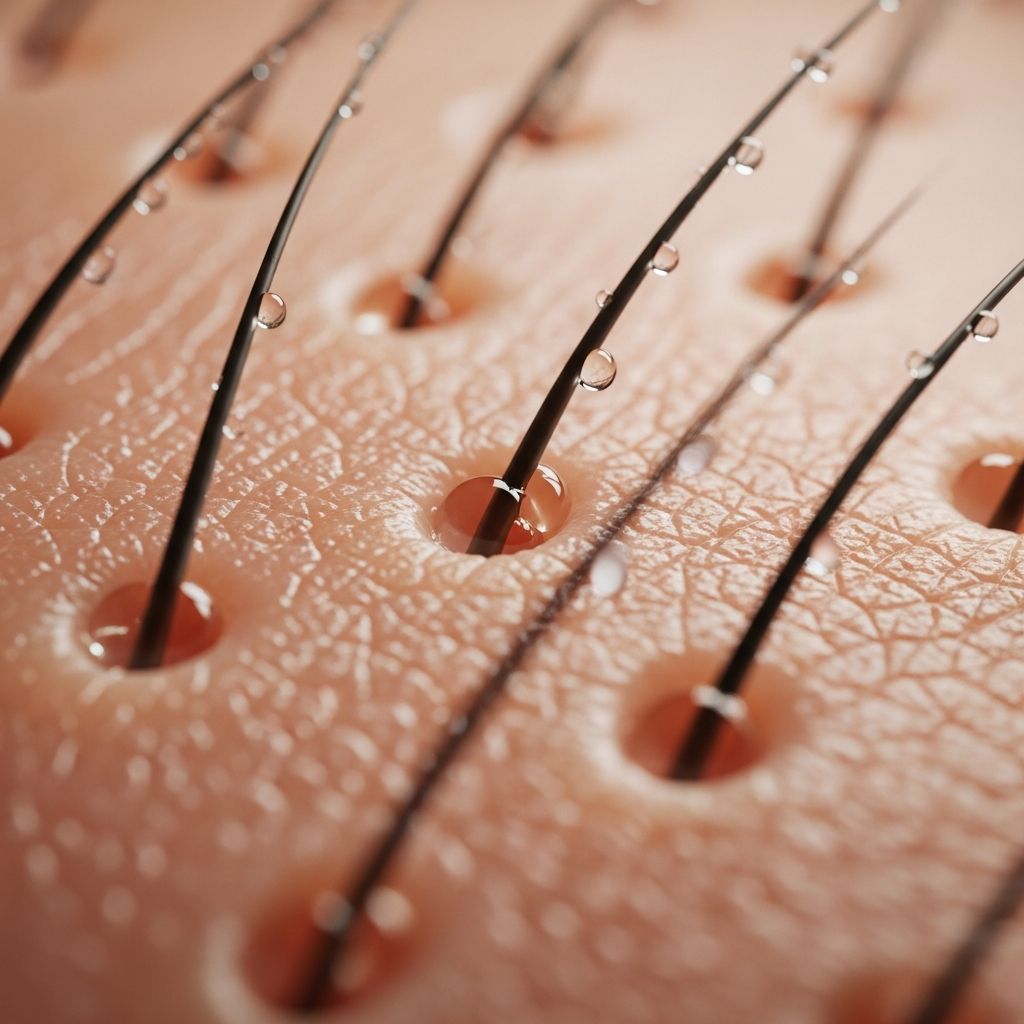
Sebaceous glands are holocrine glands located throughout the skin, except on the palms and soles. They are densely concentrated on the face, scalp, upper trunk, and intertriginous areas. Each gland connects to a hair follicle via a sebaceous duct, through which sebum is discharged.
Gland cells differentiate rapidly, lasting about one week from formation to disintegration. Immature sebocytes accumulate lipids and rupture, releasing their contents as sebum. In the duct, bacterial lipases from skin flora hydrolyze triglycerides into free fatty acids, altering sebum’s composition and contributing to its antimicrobial effects.
- Structure: Acinar (cluster-like) with central duct opening into follicle.
- Size variation: Largest on face/nose (up to 100x larger than body glands).
- Development: Active in utero, influenced by maternal and fetal hormones.
How is sebum produced?
Sebum production follows a holocrine mechanism: sebocytes in the gland periphery proliferate, migrate centrally, fill with lipids, and disintegrate. Triglycerides dominate intracellularly but break down extracellularly into free fatty acids (30-50% of surface sebum), wax monoesters, and other lipids. Squalene, a unique sebum component, acts as an antioxidant.
Daily sebum output averages 1-2 mg/cm² on facial skin in young adults, varying by site: highest on forehead/scalp (2-4 mg/cm²), lowest on limbs. Production peaks during adolescence due to hormonal surges.
| Skin Area | Average Sebum Output (mg/cm²/day) |
|---|---|
| Forehead | 1.5-3.0 |
| Scalp | 1.0-2.5 |
| Chest | 0.5-1.5 |
| Arms/Legs | 0.1-0.5 |
Table 1: Typical sebum excretion rates by body region in adults.
What regulates sebum production?
Hormonal control: Androgens are primary stimulators. Testosterone and dehydroepiandrosterone (DHEA) from adrenals/gonads circulate as precursors. Skin 5α-reductase (type 1) converts them to potent dihydrotestosterone (DHT), binding androgen receptors in sebaceous cells to boost lipogenesis.
Progesterone’s role is paradoxical: it inhibits 5α-reductase yet correlates with premenstrual sebum flares. Estrogens mildly suppress production. Corticosteroids and growth hormone have minor effects.
Neural/genetic factors: Autonomic nerves modulate via α-adrenergic receptors. Genetic polymorphisms in androgen pathways influence baseline production.
Sebum production through life
Sebaceous glands activate in utero (12-16 weeks gestation), producing sebum stimulated by fetal androgens, contributing to vernix caseosa. Neonatal sebum peaks in first months (maternal hormone influence), then declines through childhood.
Related Stories



Puberty triggers 500% increase via gonadal androgens; males produce more than females. Adult levels stabilize (men > women), declining post-menopause and after age 70 due to reduced hormone levels and gland atrophy.
- Newborns: High (adult-equivalent).
- Pre-puberty: Low.
- Adolescence: Peak (face/scalp most affected).
- Adulthood: Moderate decline.
- Elderly: Significant reduction, causing xerosis.
Diseases associated with excessive sebum production (seborrhoea)
Seborrhoea denotes oily skin from hyperactive glands, affecting scalp, face, chest. Causes include:
- Androgen excess: PCOS, congenital adrenal hyperplasia, androgen-secreting tumors.
- Puberty/pregnancy.
- Medications: corticosteroids, phenytoin, lithium.
- Parkinson disease (60-80% prevalence).
- Other: acromegaly, epilepsy, Down syndrome, HIV.
Excess sebum promotes acne, rosacea, seborrheic dermatitis via follicular plugging and Malassezia proliferation.
Diseases associated with reduced sebum production
Hyposeborrhea causes asteatotic dermatitis. Associated conditions:
- Old age.
- Endocrine: hypopituitarism, hypogonadism, hypo/hyperthyroidism.
- Nutritional: starvation, zinc/essential fatty acid deficiency.
- Neurological: Sjögren syndrome.
- Topical irritants/harsh cleansers.
Drugs that reduce sebum production
- Isotretinoin: Gold standard; shrinks glands 90%, reduces output 90% (dose-dependent).
- Antiandrogens: Cyproterone acetate, spironolactone, flutamide (women with hyperandrogenism).
- Birth control pills: Combined oral contraceptives suppress androgens.
- Retinoids: Etretinate, acitretin.
- Others: Zinc, vitamin A (high doses).
Drugs that increase sebum production
- Corticosteroids (systemic/topical).
- Anticonvulsants: phenytoin, carbamazepine.
- Mood stabilizers: lithium.
- Immunosuppressants: ciclosporin.
- Androgens/testosterone therapy.
Drugs that alter sebum composition
Medications can shift lipid ratios:
- Increase free fatty acids: Topical sulfur.
- Increase squalene: Isotretinoin.
- Wax esters: Vitamin A deficiency.
Clinical relevance of sebum
Balanced sebum prevents xerosis; excess drives:
- Acne vulgaris: Follicular hyperkeratosis + sebum + P. acnes.[10]
- Seborrhoeic dermatitis: Malassezia in sebum-rich areas.
- Sebaceous naevus: Congenital hamartoma with overgrowth.
Management: Topical retinoids, benzoyl peroxide balance production; antifungals address secondary effects.
Frequently Asked Questions (FAQs)
What is sebum made of?
Primarily triglycerides (glycerides), free fatty acids, wax esters, squalene, cholesterol/cholesterol esters.
How can I reduce excess sebum?
Use oil-free cleansers, topical retinoids, niacinamide; consult for isotretinoin if severe.
Does diet affect sebum production?
High-glycemic diets may increase via insulin-androgens; omega-3s potentially reduce.
Why is my skin oilier at certain times?
Hormonal fluctuations (menstruation, stress, puberty) stimulate androgens.
Can low sebum cause hair loss?
Dry scalp from hyposeborrhea may contribute to fragility, but not primary alopecia cause.
References
- Sebum — DermNet NZ. 2023-10-15. https://dermnetnz.org/topics/sebum
- Sebaceous Glands: Function, Location & Secretion — Cleveland Clinic. 2023-08-20. https://my.clevelandclinic.org/health/body/24538-sebaceous-glands
- Seborrheic Dermatitis — StatPearls, NCBI Bookshelf. 2023-07-04. https://www.ncbi.nlm.nih.gov/books/NBK551707/
- What Is Sebum and Why Does It Build Up on Skin and Hair? — Healthline (citing Harvard Med). 2023-11-10. https://www.healthline.com/health/beauty-skin-care/sebum
- Seborrhoea — DermNet NZ. 2023-09-22. https://dermnetnz.org/topics/seborrhoea
Similar Articles








Read full bio of medha deb