Securing Your Ideal Ophthalmology Fellowship
Master the fellowship application process with proven strategies for ophthalmology residents aiming for subspecialty success.
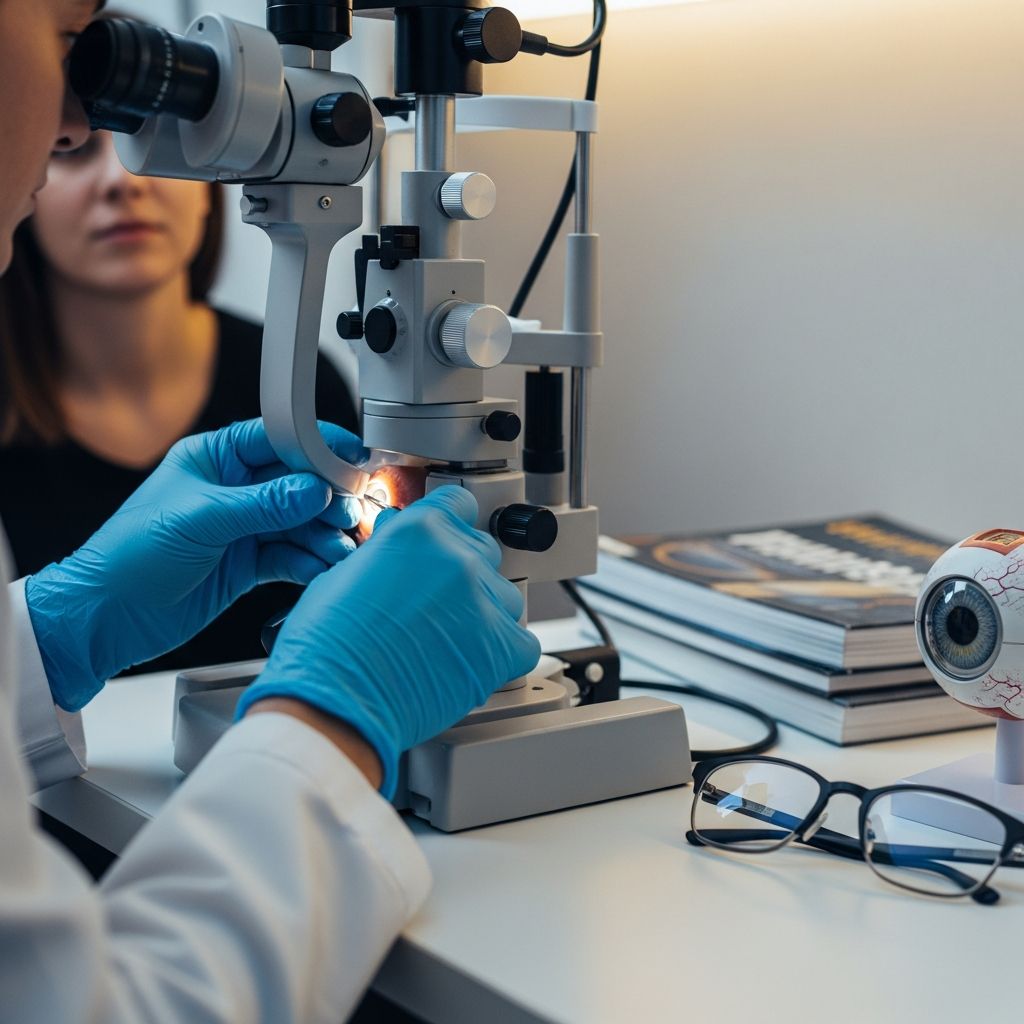
Ophthalmology fellowships offer specialized training in areas like retina, glaucoma, cornea, and pediatric ophthalmology, enabling residents to advance their careers in competitive subspecialties. Success in the match process requires strategic planning from early residency through the post-interview phase, managed primarily through the SF Match system with applications opening in late June.
Defining Your Subspecialty Path
Choosing a fellowship begins with self-assessment during PGY-1 or PGY-2. Consider your clinical interests, procedural skills, and long-term goals. Subspecialties vary widely:
- Retina: Focuses on vitreoretinal surgery, managing complex retinal detachments and macular diseases.
- Glaucoma: Emphasizes surgical and medical management of intraocular pressure.
- Cornea and External Disease: Involves transplants and anterior segment reconstruction.
- Oculoplastics: Combines ophthalmology with plastic surgery for eyelid and orbital conditions.
- Pediatric Ophthalmology and Uveitis: Addresses congenital issues and inflammatory eye diseases.
Attend grand rounds, shadow specialists, and rotate through services to test fit. Discuss with mentors early to align experiences with your chosen field.
Building a Strong Foundation in Residency
From PGY-1, prioritize excellence in clinical duties, research, and networking. High surgical volume, strong evaluations, and publications distinguish top candidates. Aim for at least three research projects, including quality improvement initiatives and case reports, as they bolster CVs even if not all reach publication.
| Residency Year | Key Actions |
|---|---|
| PGY-1/2 | Excel in core rotations; identify subspecialty interest; start research. |
| PGY-3 | Increase surgical cases; present at meetings; secure letter writers. |
| PGY-4 | Finalize research outputs; apply for fellowships; prepare interviews. |
Proactively seek feedback and sub-internships at target programs to demonstrate commitment.
Leveraging Mentorship and Networking
Mentors provide insider knowledge on program cultures, application strengths, and faculty connections. Identify potential letter writers by PGY-3’s end: one department chair, one subspecialty faculty, and a third strong advocate, preferably in your field.
- Schedule meetings with updated CVs and personal statements.
- Request letters 1-2 months before deadlines, providing submission instructions.
- Attend national meetings to present abstracts, network, and learn trends.
Visibility at conferences like AAO or subspecialty symposia enhances your profile and offers application advice from current fellows.
Mastering the Application Components
Applications open end of June; submit by early August for competitiveness. Core elements include:
- CV: Highlight research, presentations, publications, and leadership.
- Personal Statement: Concise (one page), explain subspecialty passion, key experiences, and career vision. Avoid negatives; focus on positives.
- Letters: Three required; target subspecialty experts for impact.
- Transcripts and Scores: USMLE, OKAP, undergrad/medical school records.
Gather documents early into a digital folder for efficiency. Track supplemental requirements like surgical videos via spreadsheet.
Selecting and Researching Programs
Compile a list of 20-40 programs using SF Match directories and senior fellows’ spreadsheets. Factors to evaluate:
| Criteria | Questions to Ask |
|---|---|
| Program Size | Number of fellows? Faculty-to-fellow ratio? |
| Surgical Volume | Average cases per fellow? OR independence? |
| Research Opportunities | Funding? Publication expectations? |
| Location/Lifestyle | Call duties? Family-friendly? |
Related Stories



Contact coordinators for details; review program websites and recent publications.
Navigating the Interview Trail
Interviews span September-November. Schedule via Central Application Service (CAS), prioritizing non-overlapping dates. Preparation tips:
- Research faculty, recent papers, and program strengths.
- Practice mock interviews to handle behavioral questions like “Why this subspecialty?” or “Weaknesses?”
- Prepare questions on curriculum, mentorship, and alumni outcomes.
- Dress professionally; arrive early; send thank-you emails.
During tours, note facilities, fellow interactions, and atmosphere. Take detailed notes for ranking.
Finalizing Your Rank Order List
Post-interviews, consult mentors to weigh pros/cons. Submit preliminary rank list early December; revise until deadline. Strong top choices with mentor advocacy can influence matches.
Match results follow a week later. Ranked-choice system favors mutual top preferences.
Common Pitfalls and How to Avoid Them
- Procrastination: Start document collection and research in PGY-3.
- Poor Letters: Cultivate relationships early; provide writers with materials.
- Weak Personal Statement: Revise multiple drafts; seek feedback.
- Interview Mismatches: Use calendar for conflicts; prepare broadly.
Post-Match Considerations
Congratulations on matching! Prepare for licensure, credentialing using saved documents. If unmatched, explore SOAP or reapply next cycle with strengthened profile.
Frequently Asked Questions (FAQs)
How many programs should I apply to?
Typically 20-40, depending on subspecialty competitiveness. Retina often requires more.
When do I request letters of recommendation?
By early PGY-4, at least one month before submission. Provide CV and instructions.
Is research mandatory?
Not strictly, but 2-3 projects with outputs significantly boost competitiveness.
What if interviews overlap?
Check CAS dates early; negotiate with programs or prioritize.
Can I update my rank list?
Yes, until the early December deadline.
Long-Term Career Impact
Fellowship training positions you for academia, private practice, or research leadership. Subspecialists often achieve higher earnings and job satisfaction due to expertise.
References
- Applying for Fellowship: Tips for Applicants — Retina Today. 2014-09-01. https://retinatoday.com/articles/2014-sept/applying-for-fellowship
- The Ophthalmology Resident’s Guide to Fellowship — Eyes On Eyecare. Recent (post-2023 update inferred). https://eyesoneyecare.com/resources/ophthalmology-resident-guide-fellowship-applications/
- Applying to Ophthalmology Guide UCSF — UCSF MedEd (.edu). 2023-06-02. https://meded.ucsf.edu/sites/meded.ucsf.edu/files/inline-files/APPLYING%20TO%20OPHTHALMOLOGY%20GUIDE%20UCSF%20Updated%20June%202%20-2023.pdf
- Top 5 Tips for Preparing Ophthalmology Residency and Fellowship Applicants — PMC (NCBI). Recent. https://pmc.ncbi.nlm.nih.gov/articles/PMC10804836/
Similar Articles








Read full bio of Sneha Tete