Selective Estrogen Receptor Modulators (SERMs): Treatment & Prevention
Understanding SERMs: How hormone therapies treat breast cancer and osteoporosis effectively.
What Are Selective Estrogen Receptor Modulators (SERMs)?
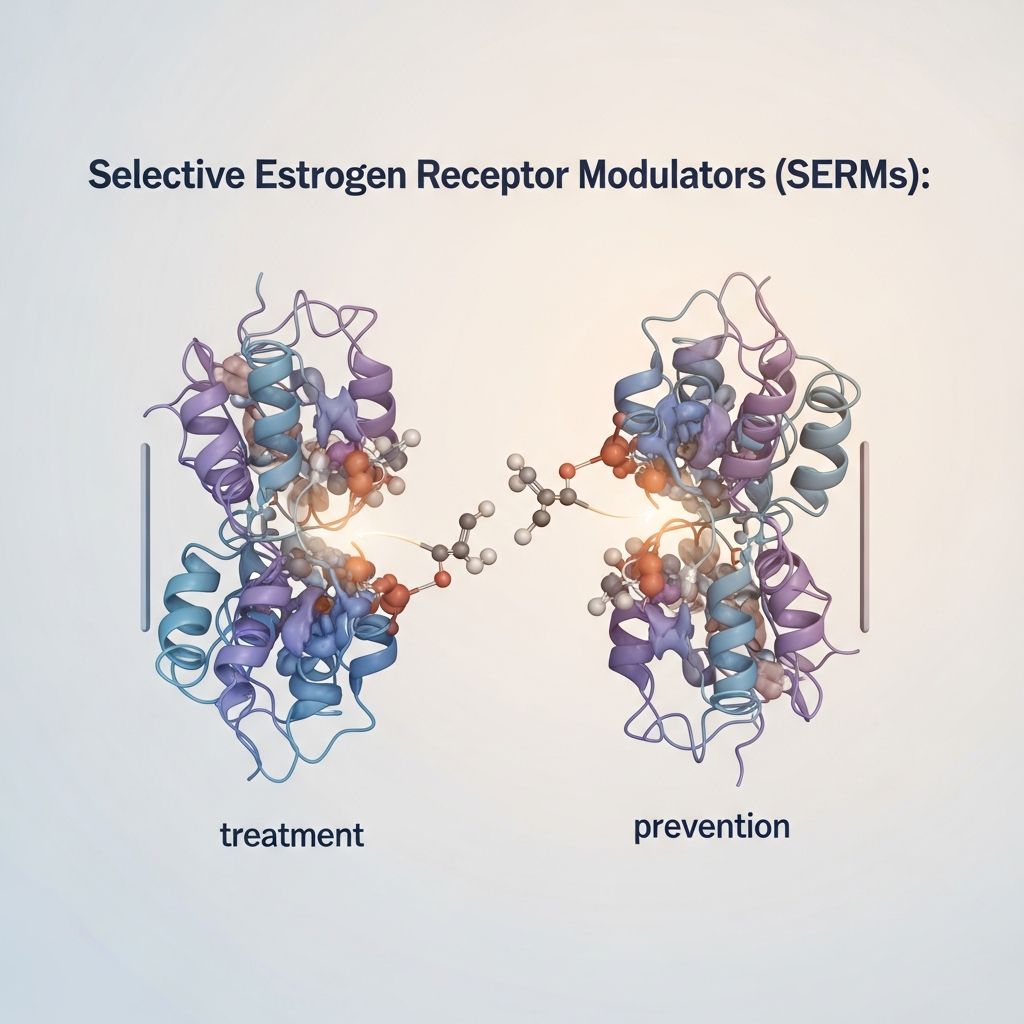
Selective estrogen receptor modulators, commonly referred to as SERMs, are a class of hormone therapy medications that manage how estrogen works throughout your body. Unlike traditional hormone therapies that have uniform effects across all tissues, SERMs are uniquely designed to act differently depending on the specific tissue they encounter. This selective action allows these medications to block estrogen in some parts of your body while mimicking estrogen’s beneficial effects in others.
Common SERMs prescribed by healthcare providers include tamoxifen (brand names Nolvadex® and Soltamox®) and raloxifene (Evista®). These medications have become essential tools in modern medicine for treating hormone-sensitive conditions. Tamoxifen was the first agent in this drug class and remains one of the most widely used, while raloxifene represents a more recent advancement offering different tissue-specific benefits.
How Do SERMs Work?
SERMs function as medical multitaskers by performing two seemingly opposite functions simultaneously within your body. On one hand, they actively block estrogen from connecting with cancer cells in breast tissue, preventing these cells from multiplying and growing. This blocking action is crucial in preventing the progression of estrogen receptor-positive (ER-positive) breast cancer, where cancer cell growth is driven by estrogen binding to receptors on the cancer cell surface.
On the other hand, SERMs act like estrogen in your bones, boosting estrogen levels in bone tissue and preventing osteoporosis. This dual mechanism allows a single medication to address multiple health concerns. In breast tissue, SERMs antagonize estrogen receptors, while in bone tissue, they agonize these same receptors, demonstrating the selective nature that defines this drug class.
Uses and Applications of SERMs
Healthcare providers use SERMs to treat various conditions, primarily focusing on cancer prevention and treatment alongside bone health management. The versatility of these medications makes them valuable across multiple medical scenarios.
Breast Cancer Treatment and Prevention
SERMs are highly effective in managing estrogen receptor-positive (ER-positive) breast cancer, the most common form of breast cancer affecting both women and men. ER-positive breast cancer occurs when estrogen connects with proteins inside cancer cells, causing them to grow and multiply. This represents 67% to 80% of breast cancer cases in women and 90% of breast cancer cases in men.
Healthcare providers typically prescribe tamoxifen and/or raloxifene to:
– Prevent breast cancer in people at high risk for the disease- Treat existing ER-positive breast cancer- Reduce the risk of cancer recurrence after initial treatment- Help slow down spreading cancer
Studies demonstrate significant preventive benefits. Research shows that tamoxifen reduces breast cancer risk by 40% in women who haven’t gone through menopause. For postmenopausal women, raloxifene may reduce the risk of spinal fractures and help prevent osteoporosis-related complications while also providing some breast cancer risk reduction.
Osteoporosis Management
Osteoporosis affects approximately 8 million women in the United States, making it a significant public health concern. SERMs play a critical role in managing this condition by slowing bone loss and reducing the risk of fractures. By mimicking estrogen’s beneficial effects in bone tissue, SERMs help maintain bone density and strengthen the skeletal system in postmenopausal women who are particularly vulnerable to rapid bone loss.
Related Stories



Other Clinical Applications
Beyond breast cancer and osteoporosis, certain SERMs have additional clinical applications. Natural phytoestrogens, which are plant-based forms of SERM compounds, include clomiphene citrate (Clomid®, Serophene®). Healthcare providers prescribe clomiphene citrate to boost ovulation in women with infertility concerns. Soy-based foods contain phytoestrogens; however, current evidence does not support that eating soy-based foods reduces breast cancer risk.
Types of SERMs and Their Characteristics
Several SERMs are currently approved by healthcare regulatory bodies, each with unique profiles and specific tissue selectivity.
| SERM Medication | Brand Names | Primary Uses | Key Characteristics |
|---|---|---|---|
| Tamoxifen | Nolvadex®, Soltamox® | Breast cancer treatment and prevention, HR-positive breast cancer | First-generation SERM; reduces breast cancer risk by 40% in premenopausal women |
| Raloxifene | Evista® | Osteoporosis treatment, breast cancer risk reduction | Reduces spinal fractures in postmenopausal women; dual benefits for bone and cancer prevention |
| Bazedoxifene | Duavee® | Osteoporosis prevention in postmenopausal women | Often used in combination with conjugated estrogens |
| Ospemifene | Osphena® | Genitourinary syndrome of menopause | Orally active; addresses menopausal symptoms |
| Clomiphene Citrate | Clomid®, Serophene® | Ovulation induction, infertility treatment | Natural phytoestrogen; most established SERM for fertility |
Treatment Duration and Dosing
The length of SERM therapy varies depending on the condition being treated and individual patient circumstances.
Tamoxifen Therapy
People taking tamoxifen to prevent or treat breast cancer typically take a pill or liquid medication every day for five years. After this initial period, treatment may transition to another medication, such as an aromatase inhibitor, to continue cancer prevention or management. Some patients may be offered tamoxifen for up to 10 years, depending on their risk profile and how well they tolerate the medication.
Raloxifene Therapy
People who take raloxifene to reduce breast cancer risk take a pill every day for an indefinite period. This ongoing treatment approach reflects the chronic nature of both osteoporosis and breast cancer risk, requiring sustained management to maintain protective benefits.
Effectiveness of SERMs
Research has demonstrated the significant effectiveness of SERMs in both cancer prevention and bone health management. These medications represent decades of medical advancement in hormone therapy treatment.
Cancer Prevention Efficacy
Yes, SERMs are highly effective at preventing breast cancer. Healthcare providers typically prescribe SERMs to prevent and treat ER-positive breast cancer, which represents the majority of breast cancer diagnoses. ER-positive breast cancer accounts for 67% to 80% of breast cancer in women and 90% of breast cancer in men. To provide context, the American Cancer Society estimates that in 2023, nearly 300,000 people in the United States were diagnosed with breast cancer.
Bone Health Benefits
Studies show that raloxifene effectively reduces the risk of spinal fractures in women who develop osteoporosis after going through menopause. The medication’s ability to strengthen bone tissue while simultaneously protecting against breast cancer makes it an ideal choice for postmenopausal women concerned about both conditions.
Benefits of SERM Therapy
For individuals at high risk for breast cancer, taking SERMs may significantly reduce that risk and potentially prevent cancer development entirely. Tamoxifen may keep cancer from coming back after treatment and help slow down cancer that’s spreading. Additionally, raloxifene prevents and treats osteoporosis while reducing breast cancer risk, providing comprehensive health benefits in a single medication.
Side Effects of SERMs
Like most cancer treatments and hormone therapies, SERMs have side effects, some of which may be mild while others require medical attention.
Common Side Effects
Common tamoxifen side effects include:
– Hot flashes and night sweats- Vaginal dryness and discharge- Nausea and vomiting- Fatigue- Mood changes and depression- Weight gain- Headaches- Joint and muscle pain
You should call your provider if common side effects like hot flashes or night sweats seem to be getting worse or significantly impact your quality of life.
Serious Side Effects
Rarely, selective estrogen receptor modulators may cause serious side effects that require immediate medical attention. These include stroke and pulmonary embolism (blood clot in the lungs). Call 911 or seek immediate medical attention if you experience symptoms including:
– Chest pain or pressure- Sudden difficulty breathing- Sudden severe headache- Sudden vision changes- Weakness on one side of the body- Sudden difficulty speaking- Coughing up blood
Contraindications to SERMs include a history of deep vein thrombosis, pulmonary embolism, thrombotic stroke, retinal vein thrombosis, transient ischemic attack, or known inherited clotting predisposition. SERMs should not be used while pregnant or breastfeeding or with concurrent use of warfarin or estrogen.
SERMs vs. Other Treatment Options
While SERMs are highly effective, healthcare providers may recommend other treatment options depending on individual circumstances, cancer type, and risk factors. Aromatase inhibitors represent an alternative hormone therapy that reduces the amount of estrogen in the body rather than blocking estrogen receptor connections. Some patients may switch between SERMs and aromatase inhibitors during their treatment course to optimize outcomes and manage side effects.
The Impact of SERM Therapy
Breast cancer remains the most common form of cancer affecting women, and osteoporosis affects approximately 8 million people in the United States. For decades, selective estrogen receptor modulators have been making a significant difference for people living with one or both of these serious medical conditions. SERMs help prevent breast cancer in people at high risk for the disease and ultimately help people to live longer. They may also help women who have osteoporosis by slowing bone loss and reducing the risk of fractures that could lead to serious complications and loss of independence.
Frequently Asked Questions About SERMs
Q: Are SERMs considered chemotherapy?
A: No, SERMs are not chemotherapy. They are a type of hormonal therapy that works by managing estrogen receptor activity in specific tissues. While chemotherapy drugs kill rapidly dividing cells, SERMs selectively block or promote estrogen action depending on the tissue type, making them fundamentally different from traditional cancer chemotherapy.
Q: Can SERMs be used during pregnancy or while breastfeeding?
A: No, SERMs should not be used while pregnant or breastfeeding. These medications can affect fetal development and pass into breast milk, potentially harming the infant. It is essential to discuss contraception and family planning with your healthcare provider if you are taking SERMs.
Q: How long does it take for SERMs to show effectiveness?
A: The timeline for SERM effectiveness varies depending on the condition being treated. For cancer prevention, benefits accumulate over time with consistent use. For osteoporosis management, measurable improvements in bone density may take several months to appear. Your healthcare provider can explain what to expect during your specific treatment course.
Q: What interactions should I be aware of when taking SERMs?
A: SERMs should not be used concurrently with warfarin (a blood thinner) or estrogen-containing medications. Inform your healthcare provider about all medications and supplements you are taking to avoid harmful interactions. Certain medications may affect how SERMs work in your body or increase the risk of side effects.
Q: Are there natural alternatives to SERMs?
A: While some plant-based compounds contain phytoestrogens that have SERM-like properties, including those found in soy-based foods, current evidence does not support that dietary phytoestrogens provide the same level of therapeutic benefit as prescription SERMs. Always consult with your healthcare provider before considering dietary supplements as an alternative to prescribed SERM therapy.
Q: Can men use SERMs for breast cancer treatment?
A: Yes, men can and do use SERMs for breast cancer treatment. Male breast cancer represents a small percentage of all breast cancers, and ER-positive breast cancer accounts for 90% of male breast cancer cases. SERMs like tamoxifen are effective treatment options for men with hormone-sensitive breast cancer.
Next Steps: Discussing SERMs With Your Healthcare Provider
If you’re at risk for breast cancer or you have osteoporosis, it’s important to discuss SERM therapy with your healthcare provider. They can explain the benefits and risk factors specific to your situation, help you understand how selective estrogen receptor modulators work, and determine if this treatment is appropriate for your individual health needs. Your provider will review your medical history, current medications, and personal risk factors to develop a personalized treatment plan that maximizes benefits while minimizing potential complications.
References
- Selective Estrogen Receptor Modulators (SERMs) — Cleveland Clinic. 2024. https://my.clevelandclinic.org/health/treatments/24732-selective-estrogen-receptor-modulators-serm
- SERMs – Their Role In Menopause Management — Australasian Menopause Society. 2023. https://www.menopause.org.au
- Selective Estrogen Receptor Modulators: Tamoxifen and Raloxifene — Cleveland Clinic Journal of Medicine. 2015. https://www.ccjm.org/content/89/11/643
- Estrogen Receptor Agonist-Antagonists for Menopause Treatment — Cleveland Clinic Journal of Medicine. 2011. https://www.ccjm.org/content/84/6/463
- Hormone Therapy for Breast Cancer — Cleveland Clinic. 2024. https://my.clevelandclinic.org/health/treatments/hormone-therapy-for-breast-cancer
- Tamoxifen: Uses, Side Effects & Risks — Cleveland Clinic. 2024. https://my.clevelandclinic.org/health/treatments/9785-tamoxifen
- Hormone Therapy for Cancer — Cleveland Clinic. 2024. https://my.clevelandclinic.org/health/treatments/17108-hormone-therapy-to-treat-cancer
Similar Articles








Read full bio of medha deb