Semen Contact Allergy Guide: Symptoms, Diagnosis & Treatment
Rare allergic reaction to seminal fluid causing local or systemic symptoms in women and men, manageable with condoms or desensitization.
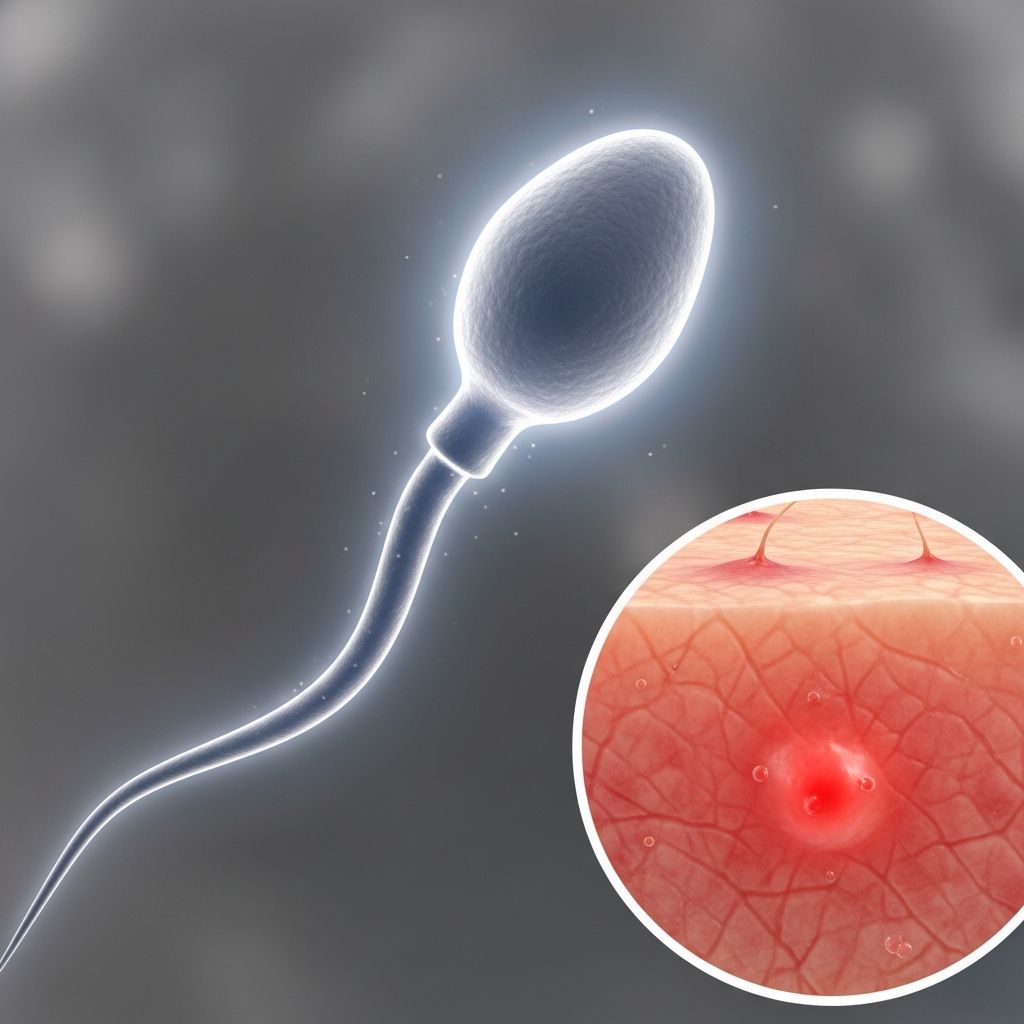
Semen contact allergy is a rare but notable form of allergic contact urticaria that occurs during or after contact with seminal fluid. It is also known as human seminal plasma allergy, seminal plasma hypersensitivity, or seminal fluid hypersensitivity.
Introduction
Semen contact allergy manifests as either localised reactions confined to the site of contact or systemic responses affecting the whole body. Symptoms are typically immediate, starting within 30 minutes of exposure, and can range from mild irritation to life-threatening anaphylaxis. This condition primarily affects women but can occur in men as well, including self-allergy to one’s own semen.
While rare, increased awareness through case studies reveals it may be underdiagnosed. A review of cases indicates that symptoms are fully prevented by condom use, highlighting effective preventive strategies.
Demographics
Semen contact allergy predominantly affects women of reproductive age who engage in unprotected vaginal intercourse. Case studies report occurrences after first intercourse, suggesting prior sensitisation possibly from cross-reactive proteins like those in dog dander. Men are less commonly affected but can experience reactions on their own skin or with partners.
Prevalence is low, with historical estimates under 100 global cases until 1997, but studies screening symptomatic women found nearly 12% with probable seminal plasma hypersensitivity (SPH). No specific ethnic or geographic predisposition is noted, though hormonal events like pregnancy or menopause may contribute.
Causes
The primary cause is an immune response to proteins in human seminal plasma. Systemic reactions involve type I immediate hypersensitivity mediated by IgE antibodies against multiple seminal allergens, notably prostate-specific antigen (PSA), a 33–34 kD glycoprotein.
Localised reactions lack clear IgE involvement and may stem from unknown mechanisms, occasionally type III immune-complex or fixed drug-like eruptions. Sensitisation might occur via cross-reactivity with dog dander proteins, explaining onset after first exposure. Other factors include medications or food allergens passing into semen.
Clinical Features
Symptoms onset immediately after seminal fluid contact. Localised reactions predominate, but systemic ones can be severe.
Localised Reactions
- Severe vulvovaginal burning, itching, or tingling
- Redness, swelling, and less commonly blistering
- Angioedema of vulva, labia, or perineum
- Vulvovaginitis with discharge
These affect contact sites like genitals, hands, mouth, chest, or anus.
Systemic Reactions
- Urticaria (hives)
- Angioedema
- Dyspnoea or wheeze
- Rhinitis
- Conjunctivitis
- Hypotension, nausea, vomiting
- Anaphylaxis (rare but life-threatening)
Symptoms resolve within 24 hours typically, but localised pain or malaise may persist days to weeks, often intensifying with repeated exposures.
Complications
While not linked to infertility, complications include relationship strain from avoided intercourse. Severe cases risk anaphylactic shock with symptoms like swollen throat, weak pulse, or unconsciousness requiring emergency care.
Repeated exacerbations of asthma post-intercourse or systemic reactions from topical semen contact are documented. Increasing reaction intensity heightens risks without intervention.
Diagnosis
Diagnosis starts with a detailed sexual and medical history confirming symptoms post-unprotected intercourse, absent with condoms. Skin prick testing with fresh partner’s semen (diluted) is key; positive wheal-and-flare within 15-20 minutes confirms IgE-mediated allergy.
Related Stories



Blood tests for PSA-specific IgE antibodies support diagnosis. Testing washed spermatozoa differentiates from seminal plasma proteins. Rule out infections, irritants, or other allergies via vaginal swabs or patch tests.
Differential Diagnoses
| Condition | Key Distinguishing Features |
|---|---|
| Vaginal infections (e.g., candidiasis) | Discharge, odour; no condom protection; positive cultures |
| Condom/lubricant allergy | Occurs with barrier use; patch test positive |
| Spermicide reaction | Associated with specific contraceptives |
| Friction dermatitis | No systemic symptoms; mechanical history |
| Postcoital dyspareunia | Non-allergic pain without rash |
Accurate differentiation prevents misdiagnosis, as rashes mimic semen allergy.
Treatment
General Management
- Avoidance: Condoms prevent all symptoms effectively
- Post-exposure: Antihistamines (e.g., cetirizine 10mg) for mild symptoms; topical corticosteroids for localised inflammation
- Severe reactions: Intramuscular adrenaline (epinephrine) auto-injector if anaphylaxis risk
Specific Management
- Subcutaneous Desensitisation: Using partner’s seminal plasma proteins; eliminates symptoms in >95% over time. Requires 2-3 weekly exposures to maintain.
- Intravaginal Desensitisation: Gradual application of diluted semen every 20 minutes until undiluted tolerance; repeat intercourse every 48 hours.
- Prophylactic antihistamines before intercourse for mild cases.
Localised reactions show variable outcomes; systemic respond better to immunotherapy.
Outcome
Desensitisation yields excellent long-term control for systemic cases, with sustained tolerance via regular exposure. Localised allergies may recur if maintenance lapses. No infertility association, but untreated cases strain relationships. Early diagnosis improves quality of life.
Frequently Asked Questions (FAQs)
Q: Is semen contact allergy curable?
A: Not fully curable, but desensitisation achieves >95% symptom elimination with maintenance exposures.
Q: Can men have semen allergy?
A: Yes, including to their own semen, causing localised or systemic symptoms post-ejaculation.
Q: Does it affect fertility?
A: No direct link to infertility; condom use prevents symptoms during conception attempts.
Q: How soon do symptoms appear?
A: Within 20-30 minutes of exposure, lasting hours to days.
Q: Is it only from vaginal sex?
A: No, any skin/mucosal contact (oral, anal, manual) can trigger reactions.
References
- Semen Allergy: Causes, Symptoms, Diagnosis & Treatment — Cleveland Clinic. 2023-10-12. https://my.clevelandclinic.org/health/diseases/25024-semen-allergy
- Semen contact allergy — DermNet NZ. 2024-05-15. https://dermnetnz.org/topics/semen-contact-allergy
- Semen Allergy — PubMed. 2020-10-01. https://pubmed.ncbi.nlm.nih.gov/33039013/
- Semen Allergy: Symptoms, Treatment, Effect on Fertility, and More — Healthline. 2023-08-20. https://www.healthline.com/health/healthy-sex/semen-allergy
- Semen Allergies Aren’t Rare After All (And Yes Men Have Them Too) — American Society of Registered Nurses. 2023-11-05. https://www.asrn.org/journal-advanced-practice-nursing/3329-semen-allergies-arent-rare-after-all-and-yes-men-have-them-too.html
Similar Articles








Read full bio of medha deb