Seminal Vesicle: Location, Anatomy, Function & Disorders
Understanding seminal vesicles: anatomy, reproductive function, and common health conditions.
Understanding the Seminal Vesicle
The seminal vesicles, pronounced “SEM-uh-nl” “VES-i-kuhls,” are essential glands in the male reproductive system that play a critical role in reproductive function. These glands are responsible for producing the majority of the fluid that comprises semen, the reproductive fluid that carries sperm cells during ejaculation. Most males have two seminal vesicles, which work in coordination with other components of the reproductive system to facilitate the production and delivery of semen.
The primary function of the reproductive system is to help produce babies, and seminal vesicles contribute significantly to this biological process. Understanding the anatomy, location, and function of these glands is essential for recognizing how they contribute to male fertility and reproductive health.
Anatomy and Structure of Seminal Vesicles
Seminal vesicles have a distinctive appearance and complex internal structure that enables them to perform their reproductive functions effectively. Each seminal gland resembles a coiled bag or pouch and consists of both glandular tissue and muscular tissue, along with blood vessels and nerves throughout their structure.
Physical Dimensions and Composition
A typical seminal gland measures approximately 5 centimeters in length (just under 2 inches) in its coiled state. However, if fully stretched out, each vesicle would measure approximately twice this length due to its highly coiled configuration. The seminal vesicles are elongated, saclike structures that are typically 5 to 7 centimeters long and about 2 to 3 centimeters wide in sexually mature males.
Each vesicle contains a single tubule that is approximately 15 centimeters long and is highly coiled and convoluted. This tubule is surrounded by connective tissue that includes blood and lymphatic vessels, nerve fibers, and supportive tissue. The tubelike structure itself comprises three distinct layers:
- Inner layer: A moist, folded mucous membrane that secretes the fluids produced by the seminal vesicles. This membrane is highly folded when the tube is empty and can be distended without injury when filled with secretions.
- Middle layer: A smooth muscle layer composed of longitudinal and circular tissue that contracts during ejaculation to empty the vesicle’s contents.
- Outer layer: A fibrous covering made of elastic tissue that supports the structure and aids in contraction during ejaculation.
Location of Seminal Vesicles
The seminal vesicles are strategically positioned within the male pelvis to optimize their function in the reproductive process. Understanding their anatomical location helps clarify their role in relation to other reproductive and urinary organs.
Anatomical Position
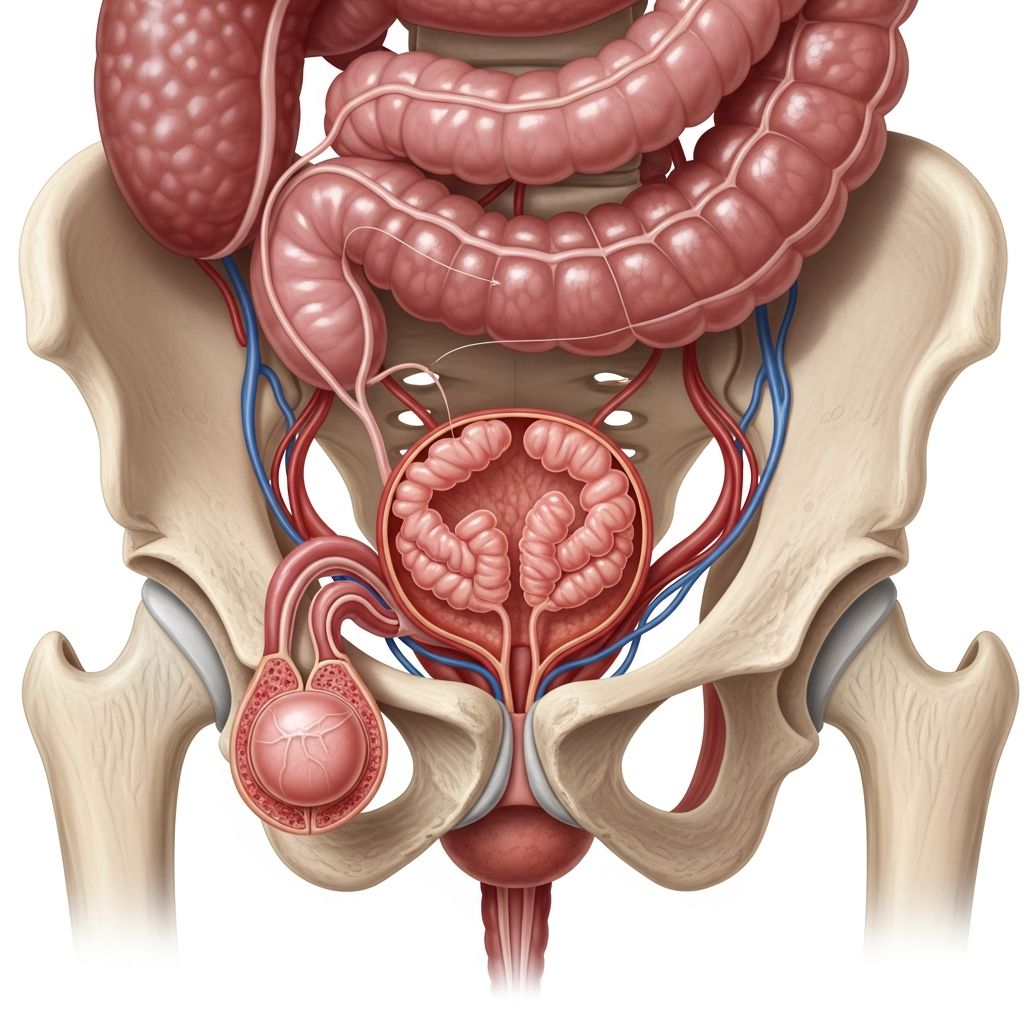
The seminal vesicles are located behind your urinary bladder but in front of your rectum. They sit slightly above the prostate gland and are separate structures from the prostate, despite their close anatomical proximity. The tip of the vas deferens, which transports sperm, is positioned near the vesicles. Additionally, lymph nodes are located nearby, and the vesicles connect to your prostate gland through their ductal system.
This anatomical arrangement allows the seminal vesicles to work in coordination with the vas deferens and other reproductive organs to ensure proper fluid and sperm transport during ejaculation.
Functions of Seminal Vesicles
Related Stories



The seminal vesicles perform multiple critical functions that are essential for successful reproduction and male sexual function. Their primary roles involve fluid production, sperm nourishment, and mechanical transport of semen.
Semen Composition and Fluid Production
The fluids produced by the seminal vesicles constitute a substantial portion of the total semen volume. These fluids make up approximately 50% to 80% of semen’s volume, with some sources indicating they contribute about 60% to 70% of ejaculate. This significant contribution demonstrates the critical importance of seminal vesicles in semen production.
The seminal vesicles take approximately three days to refill after ejaculation, meaning the body continuously produces new seminal fluid to maintain reproductive capacity.
Key Components of Seminal Fluid
The fluids produced in the seminal vesicles contain several essential substances that support sperm survival and enhance the likelihood of successful fertilization:
- Fructose: A sugar that provides sperm with energy necessary for movement and survival during their journey through the female reproductive tract.
- Alkaline fluid: Helps neutralize the acidic environment of both the male urethra and the female vagina, protecting sperm from acid damage.
- Proteins (semenogelin): Forms a gel-like protective layer around sperm, offering protection during transport.
- Phosphorus and potassium: Mineral components that help sperm cells move effectively.
- Prostaglandins: Hormones that aid fertilization by causing the mucous lining of the cervix to be more receptive to sperm and by promoting peristaltic contractions of the uterus and fallopian tubes.
- Clotting factors: Components that prolong the lifespan of sperm cells within the female reproductive system.
Mechanical Function and Ejaculation
Beyond fluid production, seminal vesicles play an active mechanical role during ejaculation. The muscular tissue within the vesicles contracts during sexual climax, which physically pushes seminal fluid and sperm into the urethra and out through the penis. This muscular contraction is essential for the actual delivery of semen during ejaculation.
The seminal vesicles work together with other parts of the reproductive system, including the vas deferens and ampulla (a structure that stores and helps transport sperm), to coordinate the movement of semen into and out of the penis.
Relationship to Other Reproductive Organs
The seminal vesicles do not function in isolation; rather, they are part of an integrated system of reproductive organs that work together to produce and transport semen.
Connection to the Prostate Gland
While seminal vesicles and the prostate are distinct glands, they work cooperatively in semen production. The prostate gland adds its own secretions to the fluids produced by the seminal vesicles, creating the complete semen mixture that carries sperm. Despite their proximity and collaborative function, these are separate anatomical structures with distinct roles.
Integration with the Ejaculatory Duct System
The seminal vesicles connect with the vas deferens, and part of the seminal vesicles combined with the vas deferens form the ejaculatory duct. The ejaculatory duct passes through the prostate, where it picks up prostatic fluid before the mixture enters the prostatic portion of the urethra. This seamless integration ensures that sperm, seminal vesicle fluid, and prostatic fluid combine into semen before ejaculation.
Common Disorders and Conditions Affecting Seminal Vesicles
Various medical conditions can affect the seminal vesicles and potentially impact reproductive health and fertility.
Congenital Disorders
Agenesis of the seminal vesicle: This congenital defect occurs when one or both seminal vesicles are completely or partially absent from birth. While patients typically show no symptoms, this abnormality can result in infertility due to insufficient seminal fluid production.
Zinner disease: This condition involves the formation of seminal vesicle cysts that are accompanied by ipsilateral kidney agenesis (absence of a kidney on one side) and improper ureter insertion into the seminal vesicle cyst.
Acquired Conditions
Seminal vesicle hemorrhage: The rupture of a small blood vessel within the seminal vesicles is the most common cause of blood in the semen, a condition known as hematospermia. This symptom often appears following seminal vesicle hemorrhage.
Seminal vesiculitis: This condition involves inflammation of the seminal vesicles, which frequently affects the male urogenital tract. While the exact pathophysiology remains unclear, researchers believe that a deficiency in semenogelin I secretion, which possesses antibacterial properties, may contribute to bacterial inflammation.
Hypotonic seminal vesicles: When the seminal vesicles lack sufficient muscular tone, they cannot contract properly to expel their contents. This condition may contribute to infertility.
Amyloidosis of the seminal vesicles: This condition involves the abnormal accumulation of crystalline and misfolded proteins within the seminal vesicles. Seminal vesicle amyloidosis is more commonly observed in older males and is characterized by progressive protein accumulation.
Diagnostic Methods for Seminal Vesicle Evaluation
Several imaging and diagnostic techniques are employed to identify and evaluate seminal vesicle anomalies and disorders.
Imaging Technologies
Computed Tomography (CT): Contrast-enhanced CT imaging remains one of the most effective methods for identifying various seminal vesicle anomalies. On CT scans, normal seminal vesicles appear as fluid-filled structures with a thin septum dividing them.
Magnetic Resonance Imaging (MRI): MRI is another valuable technique for detecting seminal vesicle anomalies. On MRI, normal seminal vesicles appear as extended fluid-filled structures with narrow septa, displaying weak signal intensity on T1-weighted images and maximum signal intensity on T2-weighted images. This imaging modality provides excellent soft tissue contrast for evaluating the vesicles’ internal structure and detecting abnormalities.
Frequently Asked Questions
Q: What is the difference between seminal vesicles and the prostate?
A: Seminal vesicles and the prostate are separate glands that contribute different fluids to semen. Seminal vesicles produce 50-80% of semen volume and provide fructose, proteins, and prostaglandins, while the prostate adds additional secretions. Though located near each other, they are distinct structures with different functions.
Q: How long does it take for seminal vesicles to refill after ejaculation?
A: Seminal vesicles typically take approximately three days to refill completely after ejaculation. This natural refilling process ensures continued reproductive capacity.
Q: Can seminal vesicle problems cause infertility?
A: Yes, certain seminal vesicle conditions can affect fertility. Congenital agenesis, hypotonic vesicles, severe infections, or obstruction of the ejaculatory ducts can all impact semen quality and sperm viability, potentially contributing to infertility.
Q: What symptoms might indicate a seminal vesicle problem?
A: Symptoms of seminal vesicle disorders may include hematospermia (blood in semen), pain during ejaculation, infertility, or pelvic pain. Some conditions may be asymptomatic and only discovered during fertility evaluation or imaging for other reasons.
Q: Are seminal vesicles part of the prostate gland?
A: No, seminal vesicles are separate glands located above and behind the prostate. While they work together in semen production and are anatomically close, they are distinct structures with different compositions and functions.
References
- Seminal Vesicle: Location, Anatomy, Function & Disorders — Cleveland Clinic. 2024. https://my.clevelandclinic.org/health/body/22433-seminal-vesicle
- Seminal Vesicle: Function, Location & Structure — Britannica. 2024. https://www.britannica.com/science/seminal-vesicle
- Seminal Vesicles Overview — Healthline. 2024. https://www.healthline.com/health/human-body-maps/seminal-vesicles
- Seminal Vesicle: What to Know — WebMD. 2024. https://www.webmd.com/men/seminal-vesicle-what-to-know
- Vas Deferens: Function, Anatomy & Conditions — Cleveland Clinic. 2024. https://my.clevelandclinic.org/health/body/22763-vas-deferens
- Semen: Fluid, Production, Storage & Composition — Cleveland Clinic. 2024. https://my.clevelandclinic.org/health/body/semen
- Ejaculatory Duct Obstruction: Causes, Symptoms & Surgery — Cleveland Clinic. 2024. https://my.clevelandclinic.org/health/diseases/22819-ejaculatory-duct-obstruction
Similar Articles








Read full bio of Sneha Tete