Sensorineural Hearing Loss: Symptoms, Causes & Treatment
Understand sensorineural hearing loss: causes, symptoms, diagnosis, and treatment options including hearing aids and cochlear implants.
Understanding Sensorineural Hearing Loss
Sensorineural hearing loss (SNHL) occurs when sound cannot reach your inner ear properly, resulting in diminished hearing ability. This type of hearing loss can develop suddenly or gradually, and may be present at birth or develop later in life. The condition affects millions of people worldwide and can significantly impact quality of life, social interactions, and overall well-being.
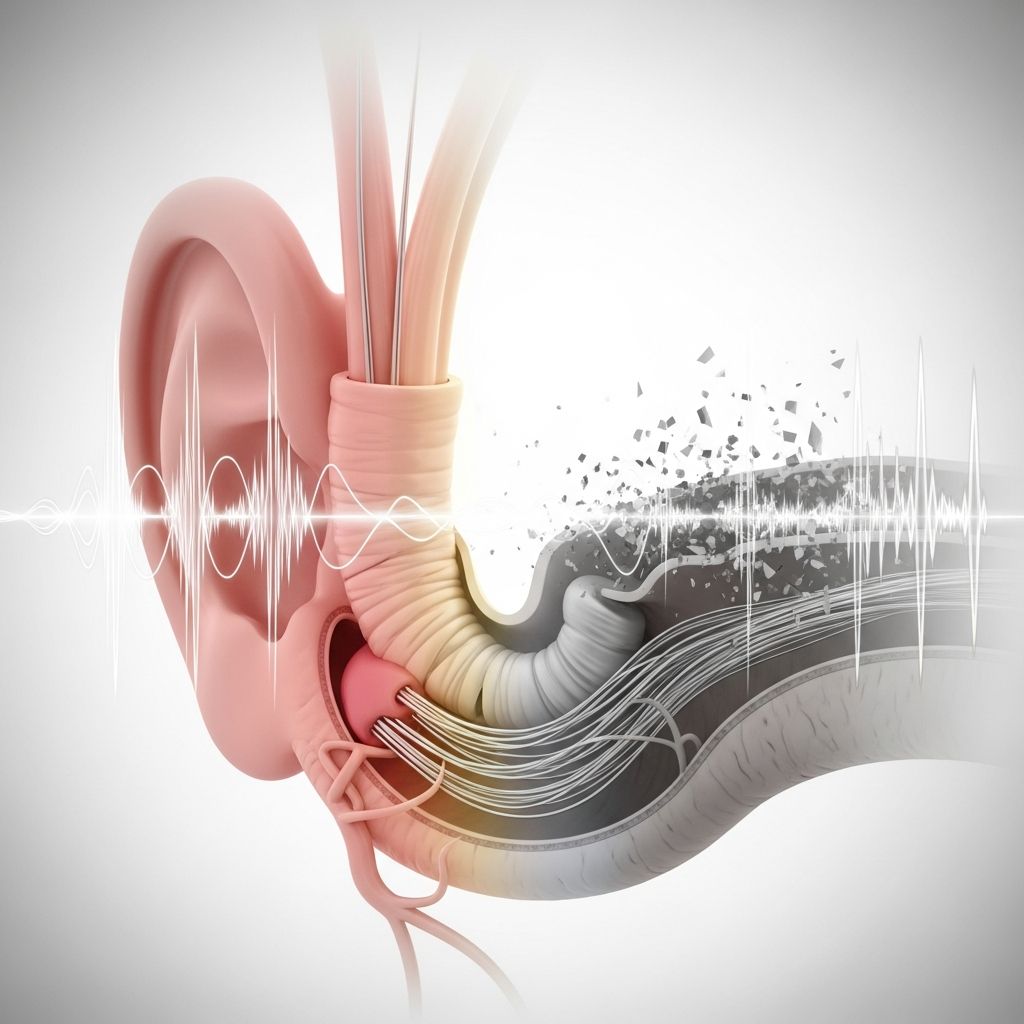
Unlike other forms of hearing loss, SNHL involves damage to the delicate structures within the inner ear. When these critical components are compromised, sound waves cannot be effectively converted into signals that your brain interprets as sound. While sensorineural hearing loss is often permanent, various treatment options can help restore hearing ability and allow individuals to remain connected to the world around them.
How Hearing Works
To understand sensorineural hearing loss, it’s important to know how normal hearing functions. Sound enters the ear and travels through the ear canal to the eardrum, which vibrates in response to these sound waves. These vibrations are then transmitted through three tiny bones in the middle ear—the hammer, anvil, and stirrup—which amplify the sound and send it to the inner ear.
Inside the inner ear lies a spiral-shaped structure called the cochlea, which contains thousands of tiny hair cells. These hair cells are the crucial receptors responsible for converting sound vibrations into electrical signals that travel to the brain via the auditory nerve. The brain then interprets these signals as sound. When these hair cells become damaged or die, they cannot regenerate, leading to hearing loss.
What Causes Sensorineural Hearing Loss?
Sensorineural hearing loss can result from various causes, including:
- Infection — Certain viral or bacterial infections can damage the inner ear structures and hair cells
- Trauma or injury — Head injuries or temporal bone fractures can result in sudden hearing loss
- Loud noise exposure — Prolonged exposure to loud sounds can damage hair cells irreversibly
- Age-related changes — Hair cells naturally deteriorate with age, causing gradual hearing loss
- Genetic factors — Some people are born with congenital hearing loss due to genetic conditions
- Certain medications — Some ototoxic drugs can damage the inner ear
- Sudden sensorineural hearing loss — This can occur without an identifiable cause or following specific triggering events
- Vascular problems — Conditions affecting blood vessels in the inner ear can compromise hearing
Recognizing the Symptoms
Sensorineural hearing loss presents with distinct symptoms that affect how you perceive sound. Because hair cells in the inner ear are damaged, you may experience difficulty hearing soft sounds, and even loud noises may sound muffled or unclear. This combination creates a unique challenge where sounds are quieter and less distinct simultaneously.
Common symptoms of SNHL include:
- Difficulty understanding speech, especially in noisy environments
- Trouble hearing high-pitched sounds
- Perception that others are mumbling
- Need to increase volume on television, radio, or other devices
- Difficulty following conversations, particularly in group settings
- Fatigue from increased listening effort
- Ringing in the ears (tinnitus)
- Dizziness or balance problems in some cases
Related Stories



Many people with SNHL experience both reduced hearing sensitivity and decreased clarity, which results in diminished speech understanding. This can lead to social withdrawal, embarrassment, and feelings of isolation when attempting to participate in conversations or group activities.
Diagnosis of Sensorineural Hearing Loss
If you suspect you have hearing loss, your healthcare provider will conduct a thorough evaluation. The diagnostic process begins with a detailed medical history and questions about your symptoms, including when the hearing loss began, whether it developed suddenly or gradually, and whether it affects one ear or both.
An audiologist will perform specialized hearing tests to determine whether you have SNHL. These tests may include:
- Audiometry — Testing your ability to hear sounds at different frequencies and volumes
- Speech discrimination testing — Assessing your ability to understand words and speech
- Tympanometry — Measuring how well your eardrum and middle ear function
- Acoustic reflex testing — Evaluating the reflex response of your middle ear muscles
Depending on your symptoms and medical history, your healthcare provider may also examine your cranial nerves or order imaging tests such as an MRI or CT scan to rule out other conditions that could be causing your hearing loss. These imaging studies are particularly important if you have sudden sensorineural hearing loss, as they can help identify underlying causes and determine the best course of treatment.
Treatment Options for Sensorineural Hearing Loss
While sensorineural hearing loss is typically permanent in most cases, several effective treatment options can significantly improve your hearing ability and quality of life.
Hearing Aids
Hearing aids are the most common and widely used treatment for SNHL. These devices amplify sounds, making them louder and easier to understand. Modern hearing aids are sophisticated electronic devices that can be customized to your specific hearing loss pattern. They work by capturing sound through a microphone, amplifying it to compensate for the damaged hair cells, and delivering the amplified sound to your ear through a speaker. Digital hearing aids can be programmed to emphasize certain frequencies where you have the most hearing loss, improving speech clarity and overall hearing ability.
Cochlear Implants
For individuals with severe to profound sensorineural hearing loss who do not benefit adequately from hearing aids, cochlear implants offer an alternative solution. A cochlear implant essentially replaces key parts of the hearing system when they no longer work optimally. The device consists of both external and internal components that work together to bypass damaged structures and directly stimulate the hearing nerve with electrical energy.
The external components include a microphone, processor, and transmitter that capture sound and convert it into digital signals. These signals are then transmitted to an internal receiver-stimulator surgically implanted beneath the skin. The receiver-stimulator sends electrical impulses to electrodes placed in the cochlea, directly stimulating the auditory nerve. This allows sound to be heard more clearly and can significantly improve speech recognition and quality of life.
Recent clinical trials have demonstrated that cochlear implants can help restore binaural functionality, improve quality of life, and facilitate reversal of neuroplasticity related to auditory deprivation. Studies show that patients experience improved localization and speech recognition abilities, and in many cases, the implants effectively attenuate tinnitus.
Other Assistive Devices
Beyond hearing aids and cochlear implants, other devices can help manage sensorineural hearing loss:
- Bone-anchored hearing aids (BAHA) — Devices that transmit sound through bone conduction to the inner ear
- Personal amplifiers — Small portable devices that amplify sound in specific situations
- Alerting and notification systems — Devices that alert you to sounds like doorbells, phone rings, or alarms
- Hearing loop systems — Technology that transmits sound directly to your hearing aid or cochlear implant in theaters, churches, and public venues
Treatment for Sudden Sensorineural Hearing Loss
Sudden sensorineural hearing loss (SSNHL) is a medical emergency that requires immediate attention. If you experience sudden hearing loss in one or both ears, seek medical treatment right away, as early intervention may result in better outcomes. Your specialist will want to rule out any underlying conditions causing the symptoms and may order imaging tests like an MRI to exclude other problems.
If SSNHL is diagnosed, your provider will likely prescribe steroid therapy to reduce inflammation in your inner ear. Treatment typically begins with oral steroids (pills). If you cannot tolerate oral medication due to underlying medical conditions, your provider may recommend steroid injections directly into your eardrum, which can be effective in delivering medication to the affected area.
Living with Sensorineural Hearing Loss
Adjusting to sensorineural hearing loss can be emotionally challenging. Sounds you once enjoyed may no longer be as clear as they were, and it’s natural to feel upset, sad, or scared—especially if you’re worried about your hearing not returning. However, there is hope. Modern treatments like hearing aids and cochlear implants can help you hear better and feel reconnected to the world around you.
Beyond medical treatments, several strategies can help you cope with hearing loss:
- Learn communication strategies that work in different environments
- Inform family, friends, and colleagues about your hearing loss
- Position yourself optimally in conversations, facing the speaker
- Ask people to speak clearly and repeat information when needed
- Use visual cues like lip reading to supplement your hearing
- Reduce background noise when possible during conversations
- Consider counseling or support groups to address emotional aspects of hearing loss
- Stay engaged in social activities despite hearing challenges
Prognosis and Long-Term Outlook
The overall outlook for sensorineural hearing loss depends on the underlying cause and severity of the condition. In most cases, SNHL is permanent because damaged hair cells in the inner ear cannot regenerate. However, this does not mean your situation is hopeless. With appropriate treatment and rehabilitation, you can maintain excellent hearing ability and quality of life.
Research shows that earlier implantation and shorter duration of hearing loss before treatment begins result in improved outcomes. This is why prompt diagnosis and early intervention are so important, particularly for sudden hearing loss cases. With modern technology and treatment options available today, individuals with sensorineural hearing loss can continue to participate fully in work, social, and recreational activities.
Frequently Asked Questions
Q: Is sensorineural hearing loss permanent?
A: In most cases, yes. Sensorineural hearing loss is typically permanent because the hair cells in the inner ear that are damaged cannot regenerate. However, various treatments including hearing aids and cochlear implants can effectively manage the condition and restore hearing ability.
Q: Can sensorineural hearing loss be reversed?
A: Currently, there is no cure to reverse sensorineural hearing loss. However, early intervention with medical treatments and assistive devices can prevent further deterioration and help restore functional hearing abilities.
Q: How is sensorineural hearing loss different from conductive hearing loss?
A: Sensorineural hearing loss involves damage to the inner ear or auditory nerve, while conductive hearing loss occurs when sound cannot travel through the outer or middle ear. SNHL is typically permanent, whereas some types of conductive hearing loss may be treatable.
Q: What should I do if I experience sudden hearing loss?
A: Seek medical attention immediately. Sudden sensorineural hearing loss is a medical emergency, and early treatment with steroids or other interventions may improve outcomes significantly.
Q: Are hearing aids or cochlear implants better for treating sensorineural hearing loss?
A: The choice depends on the severity of your hearing loss and your individual circumstances. Hearing aids are typically the first-line treatment and work well for mild to moderate hearing loss. Cochlear implants are recommended for severe to profound hearing loss when hearing aids provide insufficient benefit.
Q: Can I prevent sensorineural hearing loss?
A: While you cannot prevent age-related or genetic hearing loss, you can reduce your risk by protecting your ears from loud noise exposure, managing medical conditions that affect hearing, and avoiding ototoxic medications when possible.
References
- Sensorineural Hearing Loss: Symptoms, Causes & Treatment — Cleveland Clinic. 2024. https://my.clevelandclinic.org/health/diseases/sensorineural-hearing-loss
- Patients with Asymmetrical Hearing, Including Single-Sided Deafness, Can Benefit from Cochlear Implants — Cleveland Clinic ConsultQD. 2024. https://consultqd.clevelandclinic.org/patients-with-asymmetrical-hearing-including-single-sided-deafness-can-benefit-from-cochlear-implants
- Auditory Outcomes Following Cochlear Implantation in Children with Unilateral Hearing Loss — National Center for Biotechnology Information (NCBI). 2024. https://pmc.ncbi.nlm.nih.gov/articles/PMC11087191/
- Understanding Sudden Hearing Loss in One Ear — Cleveland Clinic Health. 2024. https://health.clevelandclinic.org/sudden-hearing-loss-dont-ignore-this-ear-emergency
- Hearing Loss: Types, Symptoms, Causes & Treatment — Cleveland Clinic. 2024. https://my.clevelandclinic.org/health/diseases/17673-hearing-loss
- Hearing Loss is Often Undiscovered, but Screening is Easy — Cleveland Clinic Journal of Medicine, Vol. 71, No. 3. 2004. https://www.ccjm.org/content/ccjom/71/3/225.full.pdf
Similar Articles








Read full bio of Sneha Tete