Serum Sickness: Complete Guide to Causes, Symptoms & Treatment
Understanding serum sickness: causes, symptoms, diagnosis, and management of this type III hypersensitivity reaction.
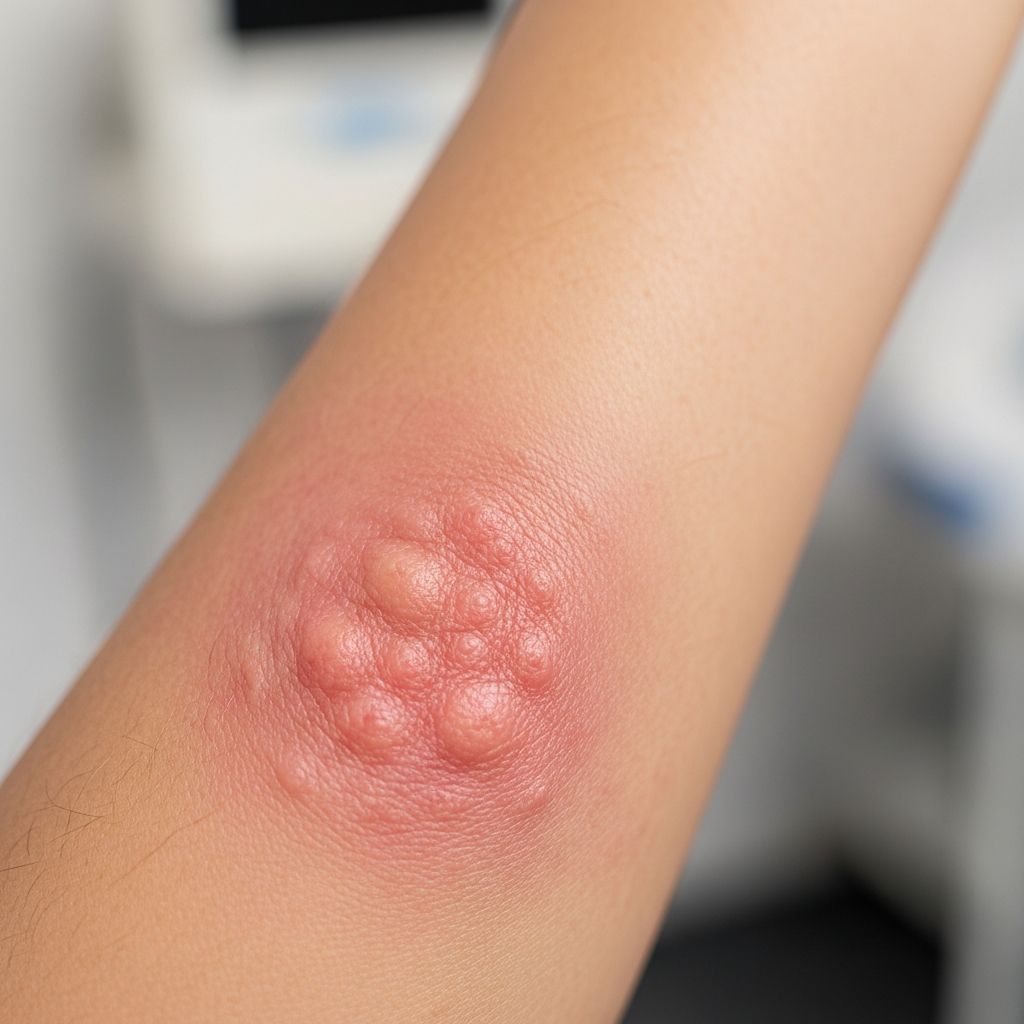
Serum sickness is a type III hypersensitivity reaction characterized by the formation of immune complexes following exposure to foreign proteins, such as heterologous antisera or certain medications. It typically manifests 7–21 days after initial exposure with a triad of fever, rash (often urticarial), and arthralgias or arthritis. This condition, first described in the early 20th century after antiserum administration for diphtheria, is now rare due to reduced use of animal-derived sera but persists with modern biologics and drugs.
What is serum sickness?
Serum sickness represents a classic example of immune complex-mediated disease, where soluble antigens from foreign serum bind circulating antibodies, forming complexes that deposit in vascular endothelium, joints, and kidneys. Complement activation ensues, recruiting neutrophils and causing inflammation. Symptoms arise from this widespread tissue deposition, distinguishing it from immediate (type I) or cell-mediated (type IV) hypersensitivities.
Unlike serum sickness-like reactions (SSLRs), true serum sickness involves detectable immune complexes and is more commonly associated with nonhuman proteins. SSLRs, prevalent in children, mimic symptoms but lack immune complex formation and are often drug-induced without heterologous sera.
Who gets serum sickness?
Serum sickness affects individuals exposed to triggering agents, historically more common in adults receiving antisera for infections like tetanus or rabies. Today, it occurs in patients treated with monoclonal antibodies (e.g., rituximab, infliximab), antithymocyte globulin for transplant rejection, or certain antibiotics. Children are more prone to SSLRs from drugs like cefaclor or amoxicillin.
Risk factors include prior sensitization, which accelerates onset to 1–3 days on re-exposure, and underlying immune dysregulation. Incidence has declined with synthetic alternatives to animal sera, but biologics have sustained cases.
Causes of serum sickness
- Heterologous antisera: Antitoxins for snakebites, tetanus, rabies, or botulism from horse or rabbit serum.
- Biologic agents: Antithymocyte globulin, rituximab, infliximab, omalizumab.
- Drugs mimicking reaction: Penicillins (e.g., amoxicillin), cephalosporins (e.g., cefaclor), sulfonamides, minocycline.
- Infections or vaccines (rarely for true serum sickness): Streptococcal infections, hepatitis B, or certain vaccines may trigger SSLRs.
The pathogenesis involves antigen excess leading to small, soluble immune complexes that evade clearance and deposit systemically.
Clinical features of serum sickness
Symptoms emerge 7–21 days post-exposure (1–4 days on rechallenge). Prodrome includes low-grade fever, malaise, and myalgias, progressing to:
- Fever: Often high (>38.5°C) in true serum sickness.
- Rash: Urticarial or morbilliform, pruritic, migrating; may involve palms/soles (unlike typical hives).
- Arthralgias/arthritis: Symmetric, affecting knees, ankles, wrists, MCP joints; up to 2/3 of cases.
- Lymphadenopathy: Generalized.
- Other: Proteinuria, edema, abdominal pain, neuropathy (rare).
In SSLRs, common in children: itchy rash on extremities/trunk, fever, joint pain (limping), swollen hands/feet.
Diagnosis of serum sickness
Diagnosis is clinical, based on history of exposure, timing, and symptom triad. Supportive findings:
- Labs: Elevated ESR/CRP, low complement (C3/C4), circulating immune complexes (in true serum sickness), mild proteinuria.
- Skin biopsy (rare): Leukocytoclastic vasculitis with immune deposits.
Related Stories



Differential includes infections (Lyme, scarlet fever), vasculitis (Kawasaki, Henoch-Schönlein purpura), drug eruptions, juvenile idiopathic arthritis.
Differential diagnosis
| Condition | Key Distinguishing Features |
|---|---|
| Urticaria/Anaphylaxis | Mucosal involvement, rapid onset; no arthralgias/fever. |
| SSLR | No immune complexes; drug-triggered, more rash/joint pain in kids. |
| Viral exanthema | Self-limited, no arthritis; prodrome differs. |
| Juvenile idiopathic arthritis | Chronic course, no exposure history. |
| Kawasaki disease | Mucosal changes, coronary involvement. |
Management and treatment of serum sickness
Primary: Discontinue offending agent; symptoms resolve in 1–2 weeks without sequelae. Symptomatic care:
- Mild: Antihistamines (rash/itch), NSAIDs/acetaminophen (pain/fever).
- Moderate-severe: Oral corticosteroids (prednisone 1 mg/kg/day, taper over 1–2 weeks).
- Supportive: Cold packs, rest; avoid re-exposure permanently.
Hospitalization rare unless dehydration or severe organ involvement (e.g., nephritis). Prognosis excellent; no scarring typically.
Prevention of serum sickness
Screen for prior reactions; use humanized biologics over animal-derived. Desensitization not standard. Educate on allergy documentation.
Timeline and progression
Day 0: Exposure.
Days 7–21: Symptom onset (fever, rash).
Weeks 2–4: Peak, then resolution.
Re-exposure: Accelerated, severe.
Frequently Asked Questions
What is the difference between serum sickness and serum sickness-like reaction?
True serum sickness involves immune complexes from foreign proteins; SSLRs are drug-induced without complexes, more common in children.
How long does serum sickness last?
Symptoms typically resolve in 1–3 weeks after stopping the trigger; supportive care hastens relief.
Is serum sickness contagious?
No, it is an immune reaction, not infectious.
Can serum sickness recur?
Yes, re-exposure causes faster, more severe reaction; avoid implicated agents lifelong.
What drugs commonly cause serum sickness-like reactions?
Cefaclor, amoxicillin, penicillins, sulfonamides.
Patient education and outlook
Monitor for symptoms post-biologic/drug initiation. Most recover fully without long-term effects. Update medical records with triggers. Serum sickness underscores the balance between therapeutic proteins and immune risks in modern medicine.
References
- Serum Sickness Video Summary — Osmosis.org. Accessed 2026. https://www.osmosis.org/video/Serum_sickness
- Serum Sickness-Like Reaction (SSLR) — UMass Memorial Health. Accessed 2026. https://www.ummhealth.org/health-library/serum-sickness-like-reaction-sslr
- The Signs of Serum Sickness — Parkview Health. Accessed 2026. https://www.parkview.com/blog/the-signs-of-serum-sickness
- Serum Sickness: Care Instructions — Alberta Health Services. Accessed 2026. https://myhealth.alberta.ca/Health/aftercareinformation/pages/conditions.aspx?hwid=abs1139
- Serum Sickness and Serum Sickness-Like Reactions (SSLRs) — Royal Children’s Hospital Melbourne. Accessed 2026. https://www.rch.org.au/clinicalguide/guideline_index/Serum_Sickness_and_Serum_Sickness_like_reactions_(SSLRs)/
- Serum Sickness — MedlinePlus, U.S. National Library of Medicine. 2023-10-01. https://medlineplus.gov/ency/article/000820.htm
- Serum Sickness – StatPearls — NCBI Bookshelf. 2023-07-17. https://www.ncbi.nlm.nih.gov/books/NBK538312/
Similar Articles








Read full bio of Sneha Tete