Sevelamer Tablets and Sachets: Renagel and Renvela Guide
Complete guide to sevelamer carbonate and hydrochloride for managing high blood phosphate levels.
About Sevelamer Tablets and Sachets
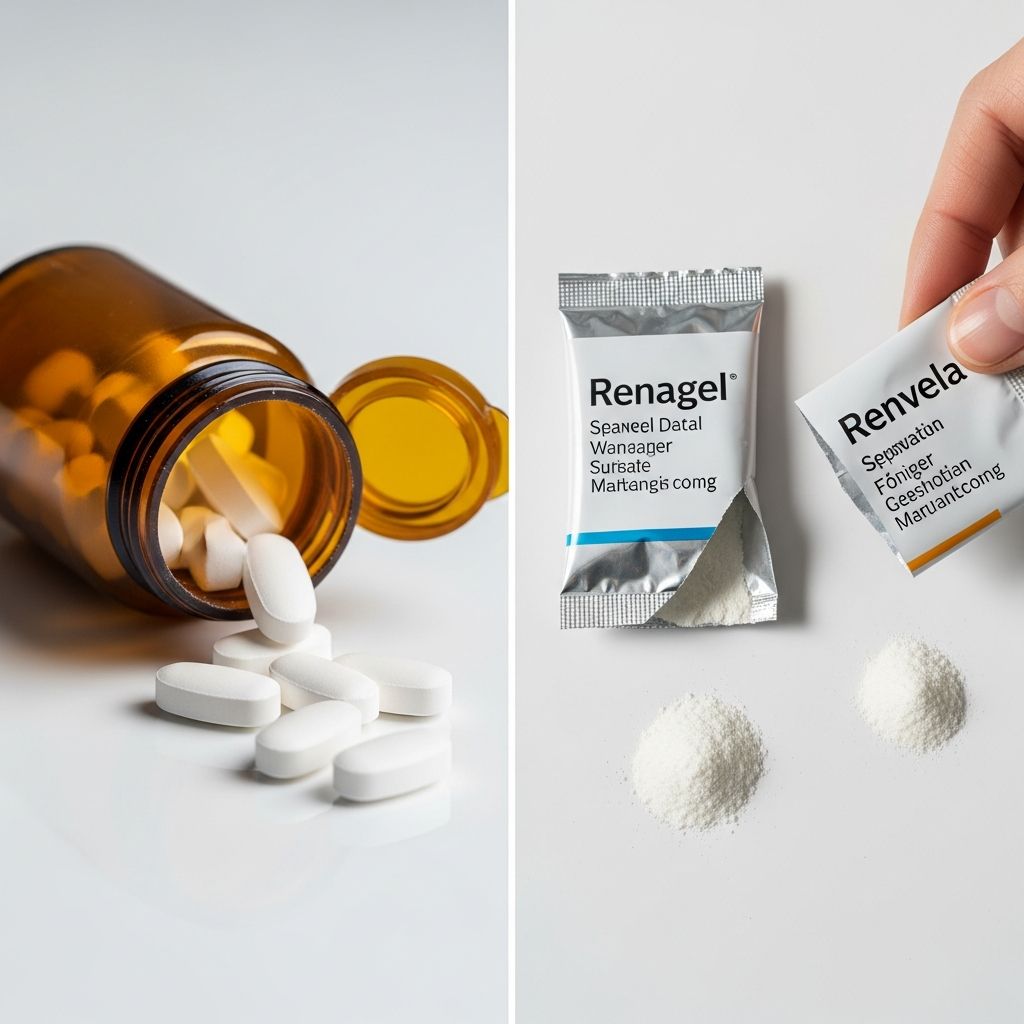
Sevelamer is a phosphate binder medication used to control high blood phosphate levels, a condition called hyperphosphatemia. This medicine is available under two brand names: Renagel (sevelamer hydrochloride) and Renvela (sevelamer carbonate). Both formulations work through the same mechanism but differ slightly in their chemical composition and available forms.
Sevelamer is prescribed for patients with chronic kidney disease (CKD), particularly those undergoing dialysis treatment. When the kidneys do not function properly, they cannot filter excess phosphate from the blood, leading to dangerously high levels. Sevelamer helps address this critical issue by preventing phosphate absorption in the digestive system.
How Sevelamer Works
Sevelamer functions as a non-calcium, nonmetal phosphate binder, making it distinct from other phosphate-lowering medications. The mechanism of action is straightforward yet effective: when you take sevelamer with meals, it attaches to phosphate molecules in the food within your gastrointestinal tract. This binding prevents the phosphate from being absorbed into your bloodstream, thereby reducing the amount of phosphate circulating in your blood.
The active ingredient in Renvela (sevelamer carbonate) is a polymeric amine that contains multiple amines separated by one carbon from the polymer backbone. These amines exist in a protonated form in the intestine and interact with phosphate molecules through ionic and hydrogen bonding. Because sevelamer is not absorbed by the body, the risk of systemic toxicity is very low.
Beyond phosphate control, research shows that sevelamer also lowers parathyroid hormone levels and reduces serum total and LDL cholesterol levels. This dual benefit makes it particularly valuable for patients at risk of bone disease and cardiovascular complications.
Types of Sevelamer Medications
Two main formulations of sevelamer are available, each with distinct characteristics:
| Medication | Active Ingredient | Available Forms | Use |
|---|---|---|---|
| Renagel | Sevelamer hydrochloride | Tablets | Initial treatment for hyperphosphatemia in CKD patients on dialysis |
| Renvela | Sevelamer carbonate | Tablets and powder suspension packets | Treatment for hyperphosphatemia in adults and children 6+ years with CKD on dialysis |
Patients may be switched from Renagel tablets to Renvela powder or tablets using the same dose in grams per meal. Your doctor will determine the best formulation based on your specific needs and preferences.
Who Can Use Sevelamer
Sevelamer is indicated for specific patient populations with chronic kidney disease. Adult patients receiving either hemodialysis or peritoneal dialysis are the primary users of this medication. Additionally, Renvela is approved for adults and children aged 6 years and older with chronic kidney disease not on dialysis, provided their serum phosphorus levels exceed 1.78 mmol/l.
Your doctor will determine whether sevelamer is appropriate for you based on your kidney function, current dialysis status, and phosphate levels. This medication should be used as part of a comprehensive treatment approach that may include calcium supplements, vitamin D, or vitamin D analogues to prevent renal bone disease.
Related Stories



Dosage and Administration
Sevelamer dosing is individualized based on your serum phosphorus levels. The following represents typical dosing guidance:
For Adults Not Taking a Phosphate Binder
- Renagel (sevelamer hydrochloride): Initial dose is typically 800 to 1600 mg (1 to 2 tablets) three times daily with meals. Your doctor will adjust your dose based on blood phosphorus levels, aiming for a target serum phosphorus concentration of 3.5 to 5.5 mg/dL or less.
- Renvela (sevelamer carbonate): Starting dose is 0.8 or 1.6 grams administered orally three times per day with meals based on serum phosphorus levels.
For Patients Switching Between Formulations
If you are switching from Renagel tablets to Renvela powder or tablets, you will use the same dose in grams, with adjustments made by your doctor as needed. Similarly, if switching from calcium acetate to sevelamer, your doctor will determine the best dose and adjust as necessary.
Maximum Dosage
- Renagel: Maximum of 13 grams per day for adults
- Renvela: Maximum of 14 grams per day for adults
Always take sevelamer tablets with meals to maximize its effectiveness. The powder suspension should be prepared according to package instructions and consumed with food.
Clinical Effectiveness
Clinical studies have demonstrated the effectiveness of sevelamer in managing hyperphosphatemia. In two major studies involving 110 adults with kidney disease on dialysis, Renvela brought phosphate levels down to approximately 1.5-1.6 mmol/l, which is within or close to the normal range. The medication proved to be as effective as other authorized phosphate binders in these trials.
In a third major study involving 49 adults not on dialysis, Renvela reduced phosphate levels from 2.0 mmol/l to 1.6 mmol/l, demonstrating its effectiveness in this patient population as well. The European Medicines Agency concluded that Renvela’s benefits are greater than its risks based on these clinical findings.
Side Effects and Safety Considerations
Like all medications, sevelamer can cause side effects, though not everyone experiences them. The most common adverse effects are gastrointestinal in nature.
Common Side Effects
- Nausea and vomiting
- Diarrhea
- Stomach pain and discomfort
- Constipation
These gastrointestinal side effects are generally manageable and may diminish over time as your body adjusts to the medication. Most adverse events reported in clinical trials were gastrointestinal in nature, with no new safety signals identified.
Important Safety Information
Because sevelamer is not absorbed by the body, the risk of systemic toxicity is very low. However, you should inform your healthcare provider of any existing medical conditions or other medications you are taking, as sevelamer may interact with certain drugs. It is particularly important to discuss any existing gastrointestinal disorders before starting treatment.
Important Precautions and Recommendations
To use sevelamer safely and effectively, follow these important guidelines:
- Take with meals: Sevelamer must be taken with food to be effective. The medication binds phosphate in your digestive tract during digestion.
- Do not crush or chew tablets: Swallow tablets whole as directed.
- Consistent timing: Take your medication at the same times each day to maintain steady blood phosphate levels.
- Regular monitoring: Your doctor will regularly check your serum phosphorus levels and adjust your dose accordingly.
- Complementary treatments: Use sevelamer as part of a comprehensive approach including calcium supplements and vitamin D as prescribed.
- Stay hydrated: Maintain adequate fluid intake, especially important if you experience diarrhea.
Frequently Asked Questions
Q: What is the difference between Renagel and Renvela?
A: Both medications contain sevelamer but differ in their salt form. Renagel contains sevelamer hydrochloride and is available as tablets, while Renvela contains sevelamer carbonate and is available as both tablets and powder suspension packets. Renvela is approved for use in children aged 6 and older, whereas Renagel is primarily for adults. You can switch between them using the same dose in grams.
Q: How long does it take for sevelamer to work?
A: Sevelamer begins working immediately when taken with meals, as it binds phosphate in your digestive system. However, it may take several weeks of consistent use and dose adjustments before your blood phosphate levels stabilize within the target range. Your doctor will monitor your progress with regular blood tests.
Q: Can I take sevelamer without food?
A: No. Sevelamer must be taken with meals to be effective. It works by binding phosphate in the food you eat, so taking it without food significantly reduces its effectiveness.
Q: What should I do if I miss a dose?
A: Take your missed dose with your next meal if you remember. Do not double your dose to make up for a missed one. If it is almost time for your next scheduled dose, skip the missed dose and continue with your regular dosing schedule.
Q: Are there any foods I should avoid while taking sevelamer?
A: Your doctor or kidney dietitian may recommend limiting foods high in phosphorus, such as dairy products, nuts, seeds, and certain processed foods. Sevelamer helps reduce phosphate absorption, but dietary phosphorus restriction is also important for maintaining healthy phosphate levels.
Q: Can sevelamer cause allergic reactions?
A: Allergic reactions to sevelamer are rare. However, inform your healthcare provider immediately if you experience signs of an allergic reaction such as rash, itching, swelling of the face or throat, or difficulty breathing.
Q: Is sevelamer safe for children?
A: Renvela (sevelamer carbonate) is approved for children aged 6 years and older with chronic kidney disease on dialysis. The dose for pediatric patients is determined by your child’s doctor based on body surface area and serum phosphorus levels. Renagel has specific pediatric dosing that must be determined by a physician.
Q: Will sevelamer affect my other medications?
A: Sevelamer may bind certain medications in your digestive system, potentially reducing their effectiveness. Inform your doctor about all medications and supplements you are taking. You may need to take some medications at different times than your sevelamer doses.
References
- Renvela | European Medicines Agency (EMA) — European Medicines Agency. 2024. https://www.ema.europa.eu/en/medicines/human/EPAR/renvela
- Sevelamer (Oral Route) – Side Effects & Dosage — Mayo Clinic. 2024. https://www.mayoclinic.org/drugs-supplements/sevelamer-oral-route/description/drg-20065958
- Sevelamer: Uses, Interactions, Mechanism of Action — DrugBank. 2024. https://go.drugbank.com/drugs/DB00658
- RenaGel – Drug Summary — Physicians’ Desk Reference (PDR). 2024. https://www.pdr.net/drug-summary/Renagel-sevelamer-hydrochloride-1187
- Renvela (Sevelamer Carbonate) Prescribing Information — U.S. Food and Drug Administration. 2020. https://www.accessdata.fda.gov/drugsatfda_docs/label/2020/022127s019,022318s021lbl.pdf
- Sevelamer – StatPearls — National Center for Biotechnology Information (NCBI). 2024. https://www.ncbi.nlm.nih.gov/books/NBK607999/
Similar Articles








Read full bio of Sneha Tete