Shampoo: Composition, Types, and Scalp Health
Understanding shampoo ingredients, formulations, and their role in maintaining healthy scalp and hair.
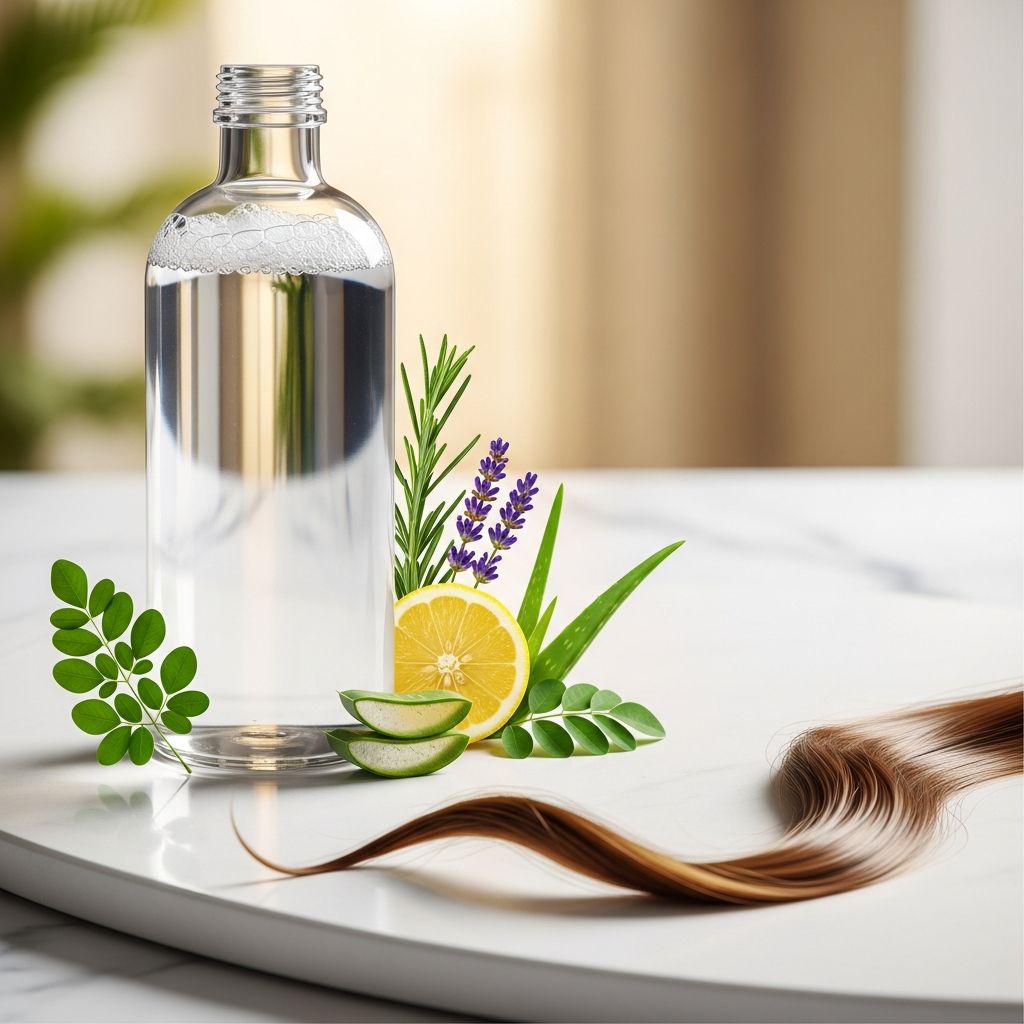
Shampoo: Understanding Composition and Function
Shampoos are complex formulations designed to cleanse the scalp and hair while providing various therapeutic and cosmetic benefits. A typical shampoo is composed of 10 to 30 ingredients that work synergistically to achieve cleansing, conditioning, and specialized care objectives. Understanding the composition and function of these products is essential for selecting appropriate shampoos for different scalp and hair conditions.
Basic Shampoo Composition
The fundamental structure of a shampoo relies on synthetic detergents, commonly known as syndets or surfactants, as primary cleansing agents. These molecules possess an amphiphilic nature, meaning they contain both lipophilic (oil-attracting) and hydrophilic (water-attracting) sites. The lipophilic sites bind to sebum and oily dirt, while the hydrophilic ends attach to water, enabling effective removal of oils and impurities during washing.
Beyond cleansing agents, shampoos often contain several categories of supporting ingredients that enhance their performance and cosmetic appeal.
Shampoo Ingredients and Their Functions
Primary Components
Shampoos typically include the following key ingredient categories:
- Cleansing agents (Surfactants): The primary active ingredients that remove dirt and oil from the scalp and hair shaft.
- Conditioning agents: Proteins, silicones, and other compounds that improve hair texture, smoothness, and manageability.
- Antistatic and detangling agents: Reduce frizz and facilitate combing through wet or dry hair.
- Thickeners: Increase the viscosity of the shampoo for better consistency and application.
- Humectants: Ingredients such as glycerin that attract and retain moisture in hair and scalp.
- Sequestering agents: Prevent mineral deposits from hard water from interfering with shampoo efficacy.
- Colorants and fragrances: Enhance visual appeal and sensory experience.
- Preservatives: Prevent bacterial and fungal contamination during storage.
Specialized Care Ingredients
Modern shampoo formulations increasingly incorporate specialized ingredients designed to address specific scalp and hair concerns. These may include antifungal agents, anti-inflammatory compounds, exfoliating agents, and botanical extracts with therapeutic properties. Recent innovations, such as fermented Salix purpurea (purple willow) bark extract, demonstrate the shift toward natural ingredients with documented antimicrobial and anti-inflammatory benefits.
Medicated Shampoos for Scalp Conditions
Active Ingredients in Medicated Formulations
Medicated shampoos are specifically formulated to treat various scalp disorders and contain active pharmaceutical ingredients. These products serve distinct therapeutic purposes depending on their active components.
Salicylic acid functions as a keratolytic agent, loosening and removing flakes of dead skin from the scalp surface. This ingredient is particularly useful for conditions characterized by excessive scaling.
Antimicrobial agents, including selenium sulfide, zinc pyrithione, ketoconazole, and ciclopirox, reduce the population of Malassezia yeasts on the scalp. Malassezia species are implicated in the pathogenesis of dandruff and seborrhoeic dermatitis, making these agents effective for managing these conditions. Zinc pyrithione has demonstrated progressive reduction in dandruff with repeated use, showing statistically significant improvements within three to nine washes.
Coal tar remains a valuable option for certain scalp conditions, particularly psoriasis and atopic dermatitis, though it is less commonly used in contemporary formulations due to cosmetic concerns and availability of newer agents.
Clinical Applications
Medicated shampoos are primarily used for treating:
Related Stories



- Dandruff and seborrhoeic dermatitis
- Scalp psoriasis
- Atopic dermatitis affecting the scalp
- Fungal scalp infections
- Scalp inflammation and irritation
Recent developments in shampoo technology have enhanced the efficacy of anti-dandruff formulations, allowing for shorter contact times and reduced irritation profiles compared to earlier generations of medicated shampoos.
Natural and Botanical Ingredients in Modern Shampoos
Salix Purpurea Bark Extract
Fermented Salix purpurea (purple willow) bark extract represents a contemporary approach to combining traditional botanicals with modern dermatological science. This ingredient possesses anti-inflammatory, antifungal, and exfoliating properties attributed to its salicylate content. Clinical evaluation of shampoos containing 2% and 4% concentrations of this extract demonstrated effectiveness in reducing both dandruff and scalp erythema in patients with varying scalp conditions.
In a 56-day clinical trial, the 4% formulation provided quicker and more intense results in reducing visible dandruff and redness compared to the 2% concentration, though both formulations proved effective and well-tolerated. Notably, improvements became evident at days 42 and 56 of treatment, confirmed by macrophotography documentation.
Other Soothing and Conditioning Botanicals
Contemporary scalp relief shampoos frequently incorporate complementary natural ingredients:
- Aloe vera: Provides immediate soothing effects for irritated and inflamed scalp tissue.
- Tea tree oil: Offers antimicrobial and anti-inflammatory benefits for sensitive scalp conditions.
- Colloidal oatmeal: Soothes underlying inflammation and nourishes the skin, providing relief from dryness and sensitivity.
- Allantoin: Known for skin-soothing properties that alleviate dryness and sensitivity.
- Menthol: Provides cooling sensation and mild analgesic effects for itchy scalp relief.
- Urea: Gently exfoliates the scalp, breaking down and dissolving dead skin cells while promoting a cleaner, healthier scalp surface.
Advanced Shampoo Technologies
2-in-1 Shampoo and Conditioner Formulations
A significant advancement in shampoo technology emerged with the development of 2-in-1 products that combine cleansing and conditioning in a single formulation. The successful development of these products involved incorporating charge-neutral dimethicone conditioning ingredients suspended as microfine droplets within complex crystal lattices into anionic surfactant-based shampoo systems. This technology provides complete cleaning efficacy equivalent to separate conditioners while avoiding problems associated with sebum interactions and conditioner build-up.
Ingredient Safety and Allergenic Potential
Research comparing traditional shampoos with those labeled as “clean” has revealed important differences in allergenic potential. Traditional shampoos contain more allergenic ingredients than their clean counterparts, according to analysis using the American Contact Dermatitis Society core series allergen list. This finding suggests that consumers with sensitive skin or contact dermatitis may benefit from carefully selecting shampoos with simplified formulations and fewer known allergens.
Efficacy and Treatment Duration
Timeline for Visible Results
The effectiveness of shampoo treatments varies depending on the specific condition and active ingredients used. Clinical studies demonstrate that visible improvements in scalp conditions typically emerge after several weeks of consistent use. In trials of Salix purpurea-containing shampoos, no significant changes were reported in the initial weeks, but most participants observed improvement at days 42 and 56, with these results confirmed by macrophotography.
Long-term Use Considerations
Both gentler formulations (2% concentration) and more potent formulations (4% concentration) can be used effectively for long-term management of scalp conditions. However, individuals with sensitive skin may experience better tolerance with lower concentration formulations, which provide a more gradual but equally effective approach to scalp health maintenance.
Selecting Appropriate Shampoos for Different Scalp Conditions
For Dandruff and Seborrhoeic Dermatitis
Shampoos containing antifungal agents such as zinc pyrithione, selenium sulfide, or ketoconazole are most appropriate for managing dandruff and seborrhoeic dermatitis caused by Malassezia yeast overgrowth. These medicated formulations should be used as directed, typically for 5-10 minutes of contact time before rinsing thoroughly.
For Sensitive and Dry Scalp
Individuals with sensitive or dry scalp conditions benefit from shampoos incorporating soothing ingredients such as colloidal oatmeal, allantoin, and natural extracts. These formulations prioritize scalp comfort and hydration while maintaining cleansing efficacy. Using complementary scalp care products, such as serums containing additional soothing agents, can enhance results when used consistently alongside the shampoo.
For Scalp Psoriasis and Atopic Dermatitis
Shampoos containing coal tar or those with gentle, anti-inflammatory botanical ingredients may provide relief for scalp psoriasis and atopic dermatitis. These conditions often require specialized treatment approaches, and selection should be guided by dermatological assessment.
Practical Tips for Optimal Shampoo Use
- Application technique: Apply shampoo to wet scalp using gentle circular motions, allowing adequate contact time (typically 1-2 minutes) before thorough rinsing.
- Consistency: Regular use of appropriate shampoo formulations yields better results than sporadic use; establish a consistent routine for maximum benefit.
- Complementary products: Combining shampoo with compatible conditioners and scalp serums enhances overall scalp health and results.
- Discontinuation of other treatments: When beginning a new medicated shampoo, discontinue other dandruff or scalp treatments to avoid interference and accurately assess efficacy.
- Rinse thoroughly: Ensure complete removal of all shampoo residue to prevent product accumulation and scalp irritation.
Frequently Asked Questions (FAQs)
Q: How long does it take for medicated shampoo to work?
A: Most medicated shampoos require consistent use for 4-8 weeks before significant visible improvements in scalp conditions become apparent. However, some products may show initial benefits within 2-3 weeks with regular application.
Q: Can I use medicated shampoo long-term?
A: Yes, many medicated shampoos are formulated for long-term use and can be incorporated into a regular hair care routine. However, if symptoms persist or worsen after 4 weeks of use, consult a dermatologist for alternative treatment options.
Q: What is the difference between 2-in-1 shampoo-conditioner products and separate products?
A: 2-in-1 formulations combine cleansing and conditioning in one product through advanced technology, providing convenience and avoiding conditioner build-up. Separate products may offer more targeted benefits but require additional time for application.
Q: Are natural shampoo ingredients as effective as medicated ingredients?
A: Natural ingredients like Salix purpurea bark extract, colloidal oatmeal, and tea tree oil have demonstrated anti-inflammatory and antifungal properties. Their efficacy depends on concentration and individual scalp conditions; medicated shampoos may provide faster results for severe conditions.
Q: Do traditional shampoos contain more allergens than clean shampoos?
A: Research indicates that traditional shampoos generally contain more allergenic ingredients than shampoos marketed as “clean.” Individuals with sensitive skin or contact dermatitis may benefit from selecting products with simpler formulations.
Q: How should I apply shampoo for maximum effectiveness?
A: Apply shampoo to wet scalp using gentle circular motions, allow adequate contact time (1-2 minutes), then rinse thoroughly. For medicated shampoos, follow specific contact time instructions on the product label.
References
- Salix purpurea Shampoo Supports Scalp Health in Patients with Dandruff and Erythema — Dermatology Times. 2024. https://www.dermatologytimes.com/view/salix-purpurea-shampoo-supports-scalp-health-in-patients-with-dandruff-and-erythema
- Scalp Relief Shampoo Ingredients and Benefits — Dermal Therapy. 2025. https://dermaltherapy.co.nz/article/finding-relief-with-scalp-relief-shampoo-ingredients-and-benefits/
- Shampoos — DermNet New Zealand. 2023. https://dermnetnz.org/topics/shampoo
- Shampoos: Ingredients, efficacy and adverse effects — Trüeb, T. Journal of the German Society of Dermatology. 2007. https://onlinelibrary.wiley.com/doi/abs/10.1111/j.1610-0387.2007.06304.x
- Shampoo and Conditioners: What a Dermatologist Should Know? — National Center for Biotechnology Information. 2014. https://pmc.ncbi.nlm.nih.gov/articles/PMC4458934/
- Allergenic Ingredients More Common in Traditional Shampoos vs Clean Shampoos — Dermatology Advisor. 2024. https://www.dermatologyadvisor.com/news/allergenic-ingredients-more-common-in-traditional-shampoos-vs-clean-shampoos/
- Traditional Shampoos Appear to Have More Allergenic Ingredients Than Clean Shampoos — US Pharmacist. 2024. https://www.uspharmacist.com/article/traditional-shampoos-appear-to-have-more-allergenic-ingredients-than-clean-shampoos
Similar Articles








Read full bio of medha deb