Shiitake Flagellate Dermatitis: Photo Guide And Key Facts
Explore shiitake flagellate dermatitis: characteristic linear rashes from raw shiitake mushrooms, with images, symptoms, causes, and treatment.
Shiitake flagellate dermatitis, also known as
shiitake dermatitis
orflagellate mushroom dermatitis
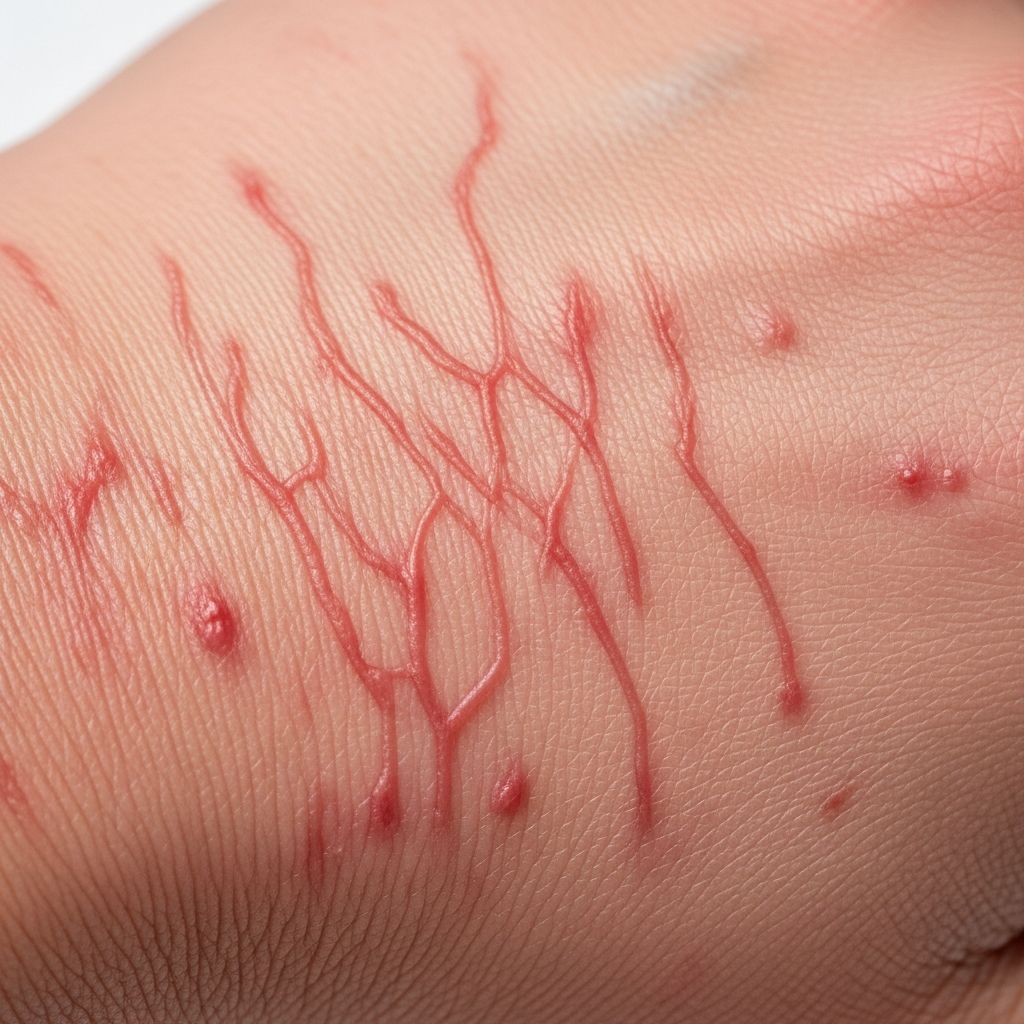
, is a distinctive, self-limiting skin condition characterized by linear, whip-like erythematous eruptions following consumption of raw or undercooked shiitake mushrooms (Lentinula edodes). First described in 1977, it presents with intense pruritus and hallmark flagellate streaks primarily on the trunk, extremities, and nape.What is shiitake flagellate dermatitis?
**Shiitake flagellate dermatitis** derives its name from the flagellate (whip-like) pattern of the rash, resembling marks from flogging, often exacerbated by scratching (Koebner phenomenon). Shiitake mushrooms, the second most consumed worldwide especially in Asian cuisine, contain lentinan, a thermolabile polysaccharide implicated in this toxic reaction.
The condition is not allergic but a toxic dermatosis, typically onsetting 24-48 hours post-ingestion (range: 2 hours to 5 days), resolving in 1-3 weeks without scarring, unlike some mimics. Global cases rise with shiitake popularity in supplements and foods.
- Prevalence: Higher in Japan/China due to consumption; rare elsewhere but increasing.
- Demographics: Affects genetically susceptible individuals; no strong age/gender bias reported.
- Key trigger: Raw, undercooked, dried, or powdered shiitake; fully cooked less risky as heat destroys lentinan.
Clinical features of shiitake flagellate dermatitis
Symptoms begin with pruritic red macules evolving into linear papules, papulovesicles, or purpuric streaks in parallel whiplash distribution. Intense itching prompts scratching, accentuating the flagellate pattern.
- Onset: 24-48 hours post-exposure; early fever, malaise rare.
- Distribution: Trunk, proximal extremities, nape; spares face, scalp, mucosae.
- Morphology: Erythematous micropapules (1mm) in linear groups; dark red/purple welts; blisters may form.
- Symptoms: Severe pruritus (hallmark); burning; no pain initially.
- Duration: 7-21 days; spontaneous resolution.
Shiitake flagellate dermatitis images
Clinical images reveal the pathognomonic flagellate erythema. Descriptions from peer-reviewed sources:
- Back and legs showing striped erythematous papules in friction/scratch zones.
- Widespread purple welts mimicking flogging or poison ivy exaggeration.
- Trunk with parallel linear streaks of infiltrated papulovesicles.
- Extremities with grouped micropapules in whiplash pattern.
These visuals aid rapid diagnosis; post-inflammatory hyperpigmentation absent, distinguishing from bleomycin-induced cases.
Differential diagnosis
Flagellate rashes prompt differentials; history of shiitake ingestion clinches diagnosis.
| Condition | Key Characteristics |
|---|---|
| Bleomycin-induced flagellate dermatitis | Chemotherapy history; mucosal involvement; hyperpigmentation persists. |
| Contact dermatitis | Localized to exposure; vesicles/bullae; Koebner possible but not linear. |
| Dermatomyositis | Heliotrope rash, Gottron papules, muscle weakness; rare flagellate erythema. |
| Herpes zoster | Unilateral dermatomal vesicles; burning pain; varicella history. |
| Drug eruption (e.g., docetaxel) | Recent medication; systemic symptoms; not mushroom-linked. |
Pathogenesis
Lentinan, a β-glucan in shiitake cell walls, triggers the reaction in susceptible individuals. Thermolabile, it’s inactivated by cooking (>60°C). Mechanism: Likely cytokine release (IL-1, TNF-α, nitric oxide) causing epidermal vasodilation, hemorrhage, mimicking whipping.
Related Stories



- Non-IgE mediated toxic response; genetic predisposition suspected.
- Not dose-dependent; even small amounts suffice.
- Rare sulfur-supplement links (e.g., Sulfurzyme).
Treatment of shiitake flagellate dermatitis
Supportive; self-resolves. Focus: Symptom relief.
- First-line: High-potency topical corticosteroids (e.g., clobetasol) twice daily for 1-2 weeks.
- Symptomatic: Oral antihistamines (loratadine, hydroxyzine) for pruritus; cool compresses.
- Severe cases: Oral corticosteroids (prednisone 0.5-1mg/kg tapered); UVB phototherapy reported.
- Avoid: Scratching to prevent secondary infection.
- Prevention: Cook shiitake thoroughly; avoid raw in susceptible persons.
No recurrence if mushrooms avoided; rechallenge risks repeat.
Frequently asked questions (FAQs) — Shiitake flagellate dermatitis
What causes shiitake flagellate dermatitis?
Ingestion of raw or undercooked shiitake mushrooms containing lentinan polysaccharide.
How long after eating shiitake mushrooms does the rash appear?
Typically 24-48 hours; range 12 hours to 5 days.
Does shiitake dermatitis leave scars or marks?
No scarring; resolves without hyperpigmentation, unlike bleomycin type.
Is shiitake flagellate dermatitis contagious?
No, it’s a toxic reaction, not infectious.
Can cooking prevent shiitake dermatitis?
Yes, thorough cooking (>60°C) denatures lentinan.
What does shiitake flagellate dermatitis look like?
Linear, whip-like erythematous streaks with papules on trunk/extremities.
How is shiitake dermatitis treated?
Topical steroids, antihistamines; supportive care.
Who is at risk for shiitake dermatitis?
Genetically susceptible individuals; common in shiitake consumers.
(Word count: 1678)
References
- Flagellate dermatitis following consumption of a sulfur-containing supplement — Journal of Integrative Dermatology. 2023. https://jintegrativederm.org/doi/10.64550/joid.dxdn8a36
- Severely Pruritic, Whip-like Dermatitis — American Academy of Family Physicians (AAFP). 2021-02-15. https://www.aafp.org/pubs/afp/issues/2021/0215/p243.html
- A rash of poor cooking — Royal Australian College of General Practitioners (RACGP). 2022-03. https://www1.racgp.org.au/ajgp/2022/march/a-rash-of-poor-cooking
- A characteristic rash caused by Shiitake mushrooms — National Institutes of Health (PMC). 2021. https://pmc.ncbi.nlm.nih.gov/articles/PMC8222744/
- Shiitake Dermatitis Alert — North American Mycological Association. n.d. https://namyco.org/publications/mcilvainea-journal-of-american-amateur-mycology/shiitake-dermatitis-alert/
- Shiitake mushroom dermatitis — Wikipedia (references primary sources). n.d. https://en.wikipedia.org/wiki/Shiitake_mushroom_dermatitis
Similar Articles








Read full bio of Sneha Tete