Shiitake Flagellate Dermatitis: Causes, Diagnosis & Treatment
Understanding the distinctive whiplash-like rash triggered by shiitake mushroom consumption and its management.
Authoritative facts about shiitake flagellate dermatitis: what it is, causes, clinical features, diagnosis, management, and prevention.
What is shiitake flagellate dermatitis?
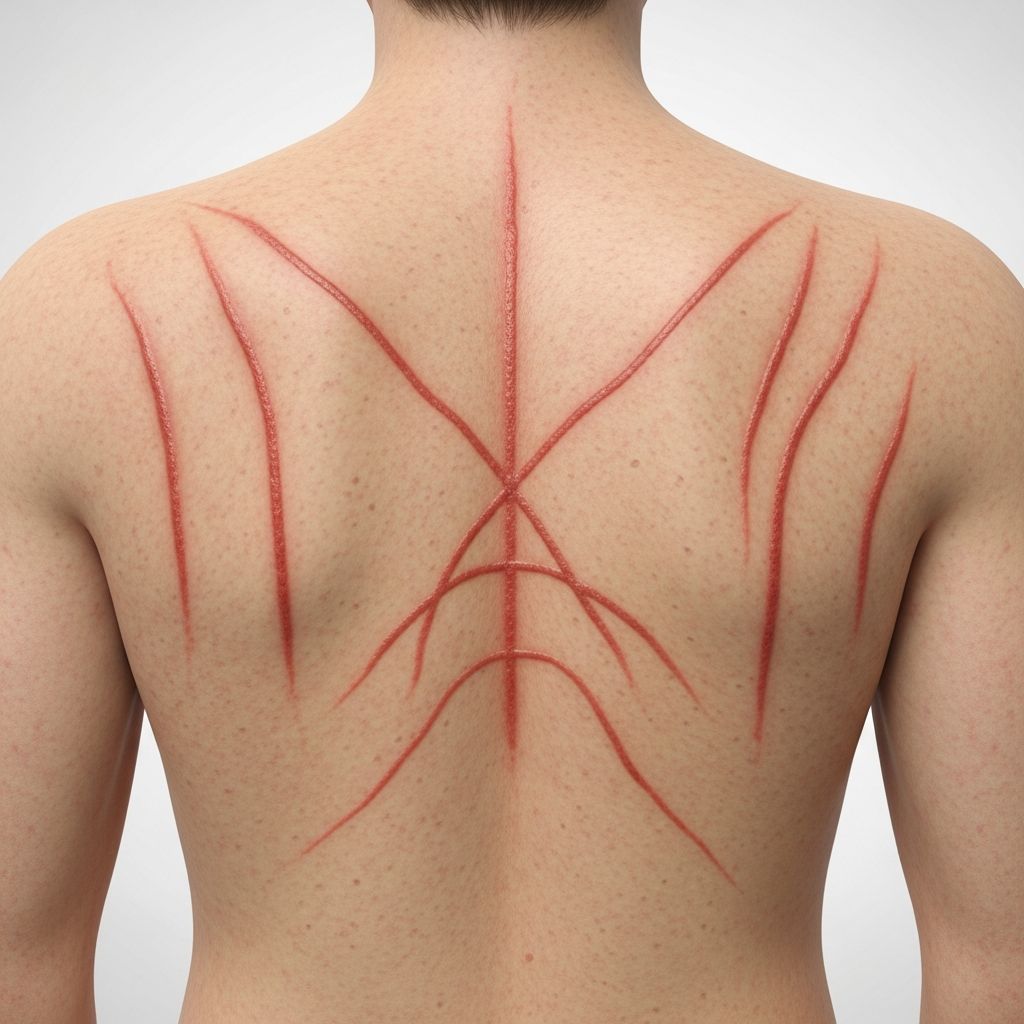
Shiitake flagellate dermatitis, also known as shiitake dermatitis or flagellate mushroom dermatitis, is a rare, self-limited toxic skin reaction characterized by the sudden onset of intensely pruritic, linear, whiplash-like erythematous eruptions on the trunk and proximal extremities. It occurs specifically after ingestion of raw or undercooked shiitake mushrooms (Lentinula edodes), a popular edible fungus native to East Asia but now cultivated worldwide.
The term “flagellate” refers to the distinctive dermatosis pattern resembling whip marks or scratches, often exacerbated by scratching (Koebner phenomenon). First described in Japan in 1977 by Nakamura, who reviewed 51 cases, it was initially thought to be confined to Asia due to higher shiitake consumption there. However, with global popularity of shiitake in cuisine, cases are increasingly reported worldwide, including in North America and Europe.
Unlike allergic reactions, this is a toxicoderma—a direct toxic effect on the skin—predominantly affecting genetically susceptible individuals. It typically resolves within 1-3 weeks without scarring, distinguishing it from similar flagellate eruptions caused by bleomycin chemotherapy.
Who gets shiitake flagellate dermatitis?
Shiitake flagellate dermatitis affects individuals who consume raw, undercooked, dried, or powdered shiitake mushrooms. It is not dose-dependent and can occur after small amounts. Susceptibility appears genetic, with higher incidence in Asian populations possibly due to dietary habits and genetic factors.
- Demographics: Reported across ages, but more common in adults consuming shiitake dishes in Asian restaurants or home cooking. No gender predilection noted.
- Risk factors: Ingestion of uncooked or lightly cooked shiitake; recent reports confirm cases even with thoroughly cooked mushrooms, though rarer.
- Prevalence: Rare globally; underreported outside Japan and China. In Japan, where shiitake production is massive, dozens of cases are documented annually.
Causes and pathophysiology
The exact mechanism remains unclear but is attributed to a toxic reaction involving lentinan, a thermolabile β-glucan polysaccharide in the shiitake cell wall. Lentinan, used medicinally for immune modulation, cholesterol reduction, and anticancer properties, triggers a type IV hypersensitivity-like response in susceptible individuals.
Unlike thoroughly heat-stable proteins, lentinan degrades incompletely with partial cooking, leading to vascular dilation, leakage of inflammatory mediators beneath the skin, and flagellate patterning via friction or scratching (Koebnerization). Histologically, it shows epidermal spongiosis, parakeratosis, perivascular lymphocytic infiltrates with eosinophils—mimicking acute eczema or bleomycin dermatitis but without post-inflammatory hyperpigmentation.
Systemic symptoms like fever, malaise, diarrhea, or headache occur rarely (<10% of cases). Repeated shiitake exposure can cause recurrence, so lifelong avoidance is advised.
Clinical features
Symptoms emerge 24-72 hours post-ingestion (median 48 hours; range 2 hours to 5 days), starting as non-pruritic red macules progressing to pruritic papules, papulovesicles, or purpuric welts in linear, parallel streaks.
Related Stories



| Feature | Description |
|---|---|
| Onset | 24-72 hours after shiitake ingestion |
| Primary lesions | Linear erythematous papules/papulovesicles in whiplash pattern |
| Location | Trunk, shoulders, proximal extremities, nape; spares face, mucosa, palms/soles |
| Symptoms | Severe pruritus (hallmark); burning; rare fever/headache |
| Duration | 7-21 days; self-resolves without scarring |
Severe cases may feature edema (periorbital, hands), mimicking DRESS syndrome, or widespread purpura. Lesions darken to purple welts, then fade.
Diagnosis
Diagnosis is clinical, based on characteristic flagellate morphology, pruritus, and history of recent shiitake ingestion. No specific lab test exists; biopsy is rarely needed but confirmatory if performed.
- Differential diagnosis:
- Bleomycin flagellate dermatitis (drug history, hyperpigmentation persists)
- Dermatomyositis (muscle weakness, heliotrope rash)
- Herpes zoster (unilateral, dermatomal, vesicles)
- Contact dermatitis (no ingestion history)
- Drug eruption (medication timeline)
Histology: Spongiotic dermatitis, interface changes, eosinophilic infiltrates. Patch testing negative.
Treatment and management
Symptomatic relief is mainstay; no cure needed as self-limited. Avoid shiitake permanently.
- First-line: High-potency topical corticosteroids (e.g., clobetasol) + oral antihistamines (e.g., loratadine) for pruritus.
- Severe cases: Oral corticosteroids (prednisone 0.5-1 mg/kg tapered over 7-10 days); UVB phototherapy rarely.
- Supportive: Cool compresses, emollients, avoid scratching to prevent Koebnerization.
- Prognosis: Excellent; full resolution in 1-3 weeks without sequelae.
Prevention
Cook shiitake thoroughly (boiling/frying >10-15 min) to denature lentinan. Educate consumers, especially of raw shiitake in salads or sushi. Those with prior episodes must avoid entirely.
Frequently asked questions (FAQs)
Q: Is shiitake flagellate dermatitis contagious?
A: No, it is a toxic reaction, not infectious or contagious.
Q: Can cooked shiitake cause it?
A: Primarily raw/undercooked, but cases reported with cooked or powdered forms; thorough cooking minimizes risk.
Q: Does it leave scars or marks?
A: No scarring typically; temporary hyperpigmentation possible but resolves unlike bleomycin type.
Q: How long does shiitake dermatitis last?
A: 7-21 days with supportive care; pruritus peaks early.
Q: Should I see a doctor?
A: Yes, for confirmation, symptom relief, and to rule out differentials; severe cases need systemic therapy.
References
- Flagellate dermatitis after consumption of Shiitake mushrooms — PMC/NCBI. 2014-07-29. https://pmc.ncbi.nlm.nih.gov/articles/PMC4112260/
- Flagellate dermatitis following consumption of a sulfur-containing… — Journal of Integrative Dermatology. 2024. https://jintegrativederm.org/doi/10.64550/joid.dxdn8a36
- Unusually severe case of shiitake mushroom dermatitis… — Skin Health and Disease, Oxford Academic. 2024-10-18. https://academic.oup.com/skinhd/article/5/1/56/7964335
- Severely Pruritic, Whip-like Dermatitis — American Academy of Family Physicians (AAFP). 2021-02-15. https://www.aafp.org/pubs/afp/issues/2021/0215/p243.html
- A rash of poor cooking — Royal Australian College of General Practitioners (RACGP). 2022-03. https://www1.racgp.org.au/ajgp/2022/march/a-rash-of-poor-cooking
- Shiitake Dermatitis Alert — North American Mycological Association. 2023. https://namyco.org/publications/mcilvainea-journal-of-american-amateur-mycology/shiitake-dermatitis-alert/
Similar Articles








Read full bio of medha deb