Short Anagen Syndrome: What You Need To Know In 2025
Understanding short anagen syndrome: causes of persistently short scalp hair in children and its management.
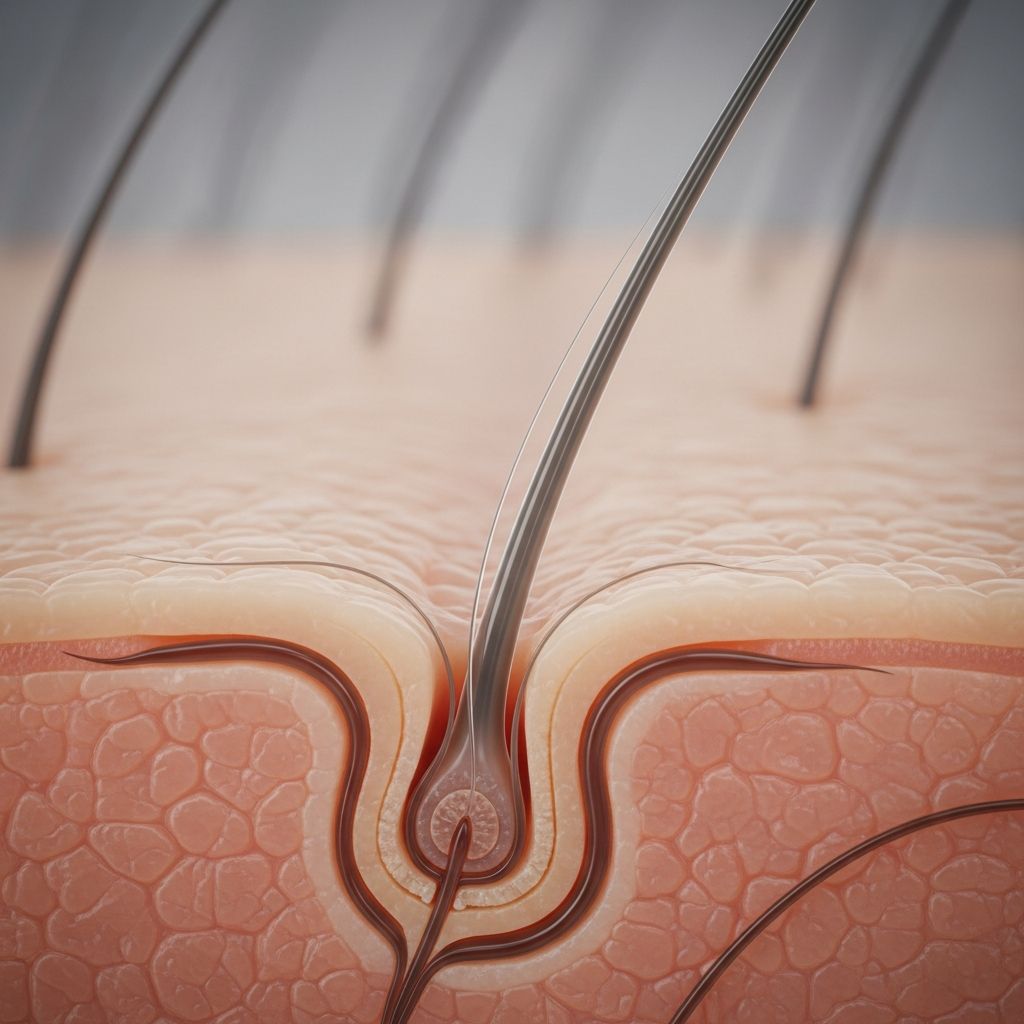
Short anagen syndrome is a rare dermatological condition characterised by abnormally short scalp hair due to a significantly reduced duration of the anagen (growth) phase of the hair cycle.
What is short anagen syndrome?
The normal hair cycle consists of three main phases:
anagen
(growth),catagen
(transition), andtelogen
(resting/shedding). In healthy individuals, the anagen phase for scalp hair lasts 4–7 years, allowing hair to grow up to 90 cm or more. In short anagen syndrome, this phase is dramatically shortened to just 1–2 years, resulting in hair that never exceeds 5–6 cm in length.Parents often notice this in early childhood (ages 2–4), reporting that their child ‘never needs a haircut’ or has ‘baby hair that doesn’t grow long’. The condition is benign, with normal hair density and no true hair loss (alopecia), but it can cause cosmetic concern and psychological distress for families. Most cases present with fine, blonde hair, though it occurs across hair types.
Who gets short anagen syndrome?
Short anagen syndrome primarily affects children, with onset typically recognised between 2–5 years of age. It is rare, with only sporadic case reports in medical literature since its first description in 1991. Familial cases suggest possible autosomal dominant inheritance, but most are sporadic with no identified genetic mutations in early reports.
Recent studies have associated it with
WNT10A gene variants
(e.g., c.682 T>A; p.Phe228Ile), a gene linked to hair follicle development. In a 2025 case series, two of three paediatric patients carried this heterozygous variant, supporting a genetic predisposition in some cases. Adult persistence is noted, unlike loose anagen syndrome which improves with age.- Prevalence: Rare; <50 cases reported globally
- Age: Childhood (2–10 years)
- Gender: No preference
- Hair type: Often fine/blonde, but variable
What causes short anagen syndrome?
The exact aetiology remains unknown. No consistent genetic abnormality has been identified in most cases, though the WNT10A association in recent paediatric cases suggests a role in follicle cycling regulation. It is considered congenital, with synchronised short anagen leading to periodic shedding and uniformly short hair.
Unlike acquired hair disorders, there are no triggers like medications, nutrition, or illness. The shortened anagen may result from intrinsic follicular dysfunction, preventing progression to full-length growth. Ongoing research explores Wnt signalling pathways critical for anagen maintenance.
Clinical features
The hallmark is
persistently short scalp hair
(≤6 cm) despite normal density and no breakage. Hair appears uniform in length, often described as ‘never cut’.| Feature | Description |
|---|---|
| Hair length | Uniformly short (<6 cm) |
| Density | Normal |
| Shaft quality | Normal texture, no fragility/breakage |
| Shedding | May have increased telogen hairs periodically |
| Body hair | Unaffected |
| Scalp/skin | Normal |
Children exhibit normal growth, development, teeth, nails, and intellect. No associated ectodermal dysplasia.
Diagnosis
Diagnosis is clinical, supported by trichoscopy and exclusion of differentials. Key criteria include:
- Short hair shafts of normal morphology
- Normal hair density
- No fragility
- Normal hair pull test (≤10% telogen hairs)
- Normal physical exam
- Trichogram: Short telogen hairs with tapered (uncut) tips
Related Stories



**Hair pull test**: Gently pull 20–50 hairs; normal yield (2–10 telogen hairs) differentiates from loose anagen syndrome (high anagen pull) or telogen effluvium (>20% telogen).
**Trichoscopy**: Reveals short, non-cut telogen hairs with club roots and variable shaft diameter.
Genetic testing for WNT10A may confirm in select cases. Biopsy is rarely needed.
Differential diagnosis
- Loose anagen syndrome: Hair pulls easily; improves with age
- Congenital hypotrichosis: Reduced density from birth
- Hair shaft disorders (e.g., monilethrix): Fragile, beaded hairs
- Telogen effluvium: Acute shedding post-trigger
- Nutritional deficiencies: Brittle hair, systemic signs
Investigations
Standard blood tests (FBC, ferritin, thyroid, zinc) rule out metabolic causes. Trichogram remains gold standard, showing >80% telogen hairs shorter than normal. Recent algorithms recommend trichoscopy first-line.
Treatment
Observation suffices as it’s benign and cosmetic.
Topical minoxidil 5% twice daily
prolongs anagen, increasing length in some (e.g., 2–4 cm gain after 6 months), though evidence is anecdotal. Side effects: Irritation, hypertrichosis; use cautiously in children.No role for systemic therapies. Patient education reassures families. Most persist into adulthood, but some self-improve post-puberty.
Prognosis
Benign with no progression to baldness. Hair remains short-term, but quality improves with age in subsets. Psychological support addresses family concerns.
Frequently Asked Questions
Will my child’s hair ever grow long?
In most cases, it remains short, but minoxidil may help. Unlike loose anagen, it often persists.
Is short anagen syndrome genetic?
Sporadic mostly; WNT10A variants in some families.
Does it affect only blond hair?
Common but not exclusive.
Can diet or supplements fix it?
No; normal nutrition doesn’t alter anagen duration.
Is biopsy required?
Rarely; trichogram suffices.
References
- Short anagen syndrome — DermNet NZ. 2010 (updated). https://dermnetnz.org/topics/short-anagen-syndrome
- Short anagen syndrome – Wikipedia — Wikipedia. Accessed 2026. https://en.wikipedia.org/wiki/Short_anagen_syndrome
- Short Anagen Hair Syndrome and Its Association With WNT10A Gene Variants — Pediatric Dermatology (Wiley). 2025-05-29. https://onlinelibrary.wiley.com/doi/10.1111/pde.15976
- Short anagen syndrome: A case series and algorithm for diagnosis — Pediatric Dermatology. 2025. https://firstwordpharma.com/story/5384165
- Short Anagen Hair Syndrome — University of Miami Scholarship. Accessed 2026. https://scholarship.miami.edu/esploro/outputs/journalArticle/Short-Anagen-Hair-Syndrome/991031577844102976
Similar Articles








Read full bio of medha deb