Shoulder Joint: Anatomy, Function & Movement
Understand your shoulder joint: anatomy, function, movement, and common conditions explained.
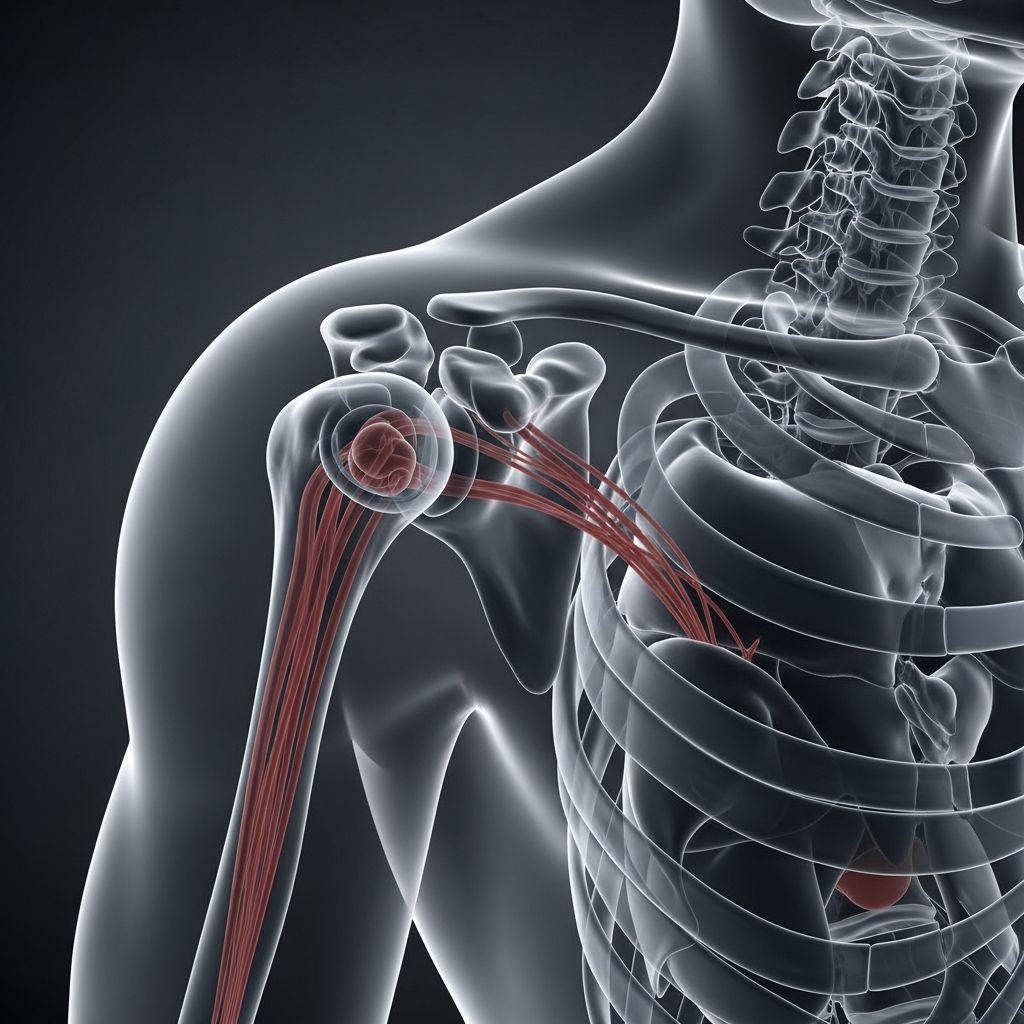
Understanding Your Shoulder Joint
Your shoulder is one of the most remarkable joints in your body, offering an exceptional range of motion that allows you to perform countless daily activities and athletic movements. Also known as the glenohumeral joint, your shoulder joint is a ball-and-socket joint that connects your upper arm to the rest of your body. This unique structure enables your shoulder to move in more directions than any other joint, making it incredibly versatile but also susceptible to injury.
The shoulder joint’s ability to move so freely comes from its distinctive anatomy and the complex network of muscles, tendons, and ligaments that support it. Understanding how your shoulder works is essential for maintaining its health and preventing injuries that could limit your mobility and quality of life.
Shoulder Joint Anatomy
Your shoulder joint is composed of several key structures that work together to create this highly mobile joint. The main components include bones, cartilage, ligaments, tendons, and muscles, each playing a vital role in shoulder function and stability.
Bones of the Shoulder
The shoulder joint involves three primary bones: The humerus (upper arm bone) is the long bone that extends from your shoulder to your elbow. The head of the humerus is rounded, resembling a ball. The scapula, commonly called the shoulder blade, is a flat, triangular bone located at the back of your shoulder. It contains a shallow socket called the glenoid cavity that holds the head of the humerus. The clavicle (collarbone) is the bone that connects your shoulder blade to your breastbone, helping to stabilize your shoulder joint and transfer forces from your arm to your spine.
Cartilage and Soft Tissue
The glenoid labrum is a ring of cartilage that surrounds the socket of your shoulder blade, deepening it and helping to hold the ball of your humerus securely in place. Articular cartilage covers the ends of your bones where they meet in the joint, allowing for smooth, frictionless movement. Synovial fluid fills the joint capsule, lubricating the joint and reducing friction during movement.
Ligaments
Ligaments are tough, fibrous tissues that connect bone to bone and provide stability to your shoulder. The glenohumeral ligaments hold the head of your humerus in the socket, while the coracoclavicular ligaments connect your collarbone to your shoulder blade. The acromioclavicular ligament stabilizes the joint where your collarbone meets your shoulder blade.
Shoulder Joint Structure and Function
The shoulder joint’s ball-and-socket design is what allows for such extensive movement. The rounded head of your humerus (the ball) fits into the glenoid cavity of your scapula (the socket), much like a golf ball resting on a tee. However, the socket is relatively shallow compared to other ball-and-socket joints like the hip, which provides more mobility but less inherent stability.
This anatomical arrangement means that your shoulder relies heavily on surrounding muscles, tendons, and ligaments for stability rather than on bone structure alone. The rotator cuff, a group of four muscles and their tendons, plays a crucial role in holding the head of the humerus in the socket while allowing movement. These muscles work together to maintain the integrity of the joint during both movement and rest.
Related Stories



Key Muscles and Tendons
Your shoulder is supported by approximately eight muscles that provide strength, stability, and shape. The most important of these are the rotator cuff muscles, which include the supraspinatus, infraspinatus, teres minor, and subscapularis.
The deltoid muscles, which form the outer shape of your shoulder, include the anterior (front), lateral (side), and posterior (back) deltoids. These muscles help you raise your arm and move it in different directions. The pectoralis major and minor assist with arm movement toward your body, while the latissimus dorsi helps pull your arm downward and backward.
Tendons connect all these muscles to your bones, serving as levers that move your bones as your muscles contract and expand. When you contract your shoulder muscles, the tendons pull on the attached bones to move your shoulder and upper arm.
Shoulder Joint Movements and Range of Motion
Your shoulder joint allows movement in multiple directions, making it the most flexible joint in your body. Understanding these movements helps you appreciate how well-designed your shoulder is and how various activities engage different muscle groups.
Primary Shoulder Movements
Forward flexion allows you to raise your arm in front of your body, as when reaching for something on a shelf or throwing a ball. Extension enables you to move your arm backward, important for activities like swimming and rowing. Abduction allows your arm to move away from your body to the side, while adduction brings your arm close to your body. Internal rotation rotates your arm inward, and external rotation rotates it outward.
The shoulder also allows circumduction, a movement where you move your arm in a complete circle, combining all the other movements in a continuous motion. This comprehensive range of motion enables the performance of complex athletic movements and precise manual tasks.
The AC Joint
While the glenohumeral joint is the primary shoulder joint, the acromioclavicular (AC) joint is also an important part of your shoulder. Located at the top of your shoulder where your collarbone connects to your shoulder blade, the AC joint is a planar joint that allows your collarbone and shoulder blade to glide smoothly past each other. Although the AC joint is passive—meaning its movements are controlled by other muscles and joints—it plays a crucial role in shoulder function and stability.
AC joint injuries are very common, with experts estimating that around 40% of shoulder injuries affect this joint. These injuries typically result from sudden force to the shoulder, such as from falls, sports injuries, or trauma like car accidents.
How Your Shoulder Works
The shoulder joint functions through a sophisticated coordination of muscles, tendons, ligaments, and bones. When you decide to move your arm, your brain sends signals to the appropriate shoulder muscles. These muscles contract, pulling on tendons that are attached to your bones. The tendons act as levers, moving your bones and creating the movement you want to perform.
The rotator cuff muscles work continuously to stabilize your shoulder joint, whether you’re moving or keeping your arm still. They hold the head of your humerus in the socket and prevent it from sliding out of place. Other muscles provide the power and control needed for various arm movements, from fine motor tasks to powerful athletic movements.
Your shoulder’s stability depends on this complex muscular system working in perfect coordination. When muscles become weak or injured, your shoulder loses stability, making it more susceptible to further injury and limiting your ability to perform daily activities.
Common Shoulder Conditions
Because of its complex structure and wide range of motion, your shoulder is prone to various injuries and conditions. Rotator cuff injuries are particularly common, especially among athletes who play contact sports. These injuries can range from minor strains to complete tears of the rotator cuff tendons.
Shoulder impingement occurs when structures within your shoulder become compressed, causing pain and limiting movement. Frozen shoulder (adhesive capsulitis) causes stiffness and pain that restricts shoulder movement. Arthritis can develop in your shoulder joint, although many people never experience pain or other symptoms. Shoulder dislocation happens when the head of your humerus comes out of the socket, usually from significant trauma.
AC joint arthritis and AC joint separation or dislocation are also common shoulder conditions. These injuries often result from falls or direct blows to the shoulder and can affect your shoulder’s stability and function.
Maintaining Shoulder Health
The best way to take care of your shoulder joint is to maintain good overall health and engage in appropriate exercise. Regular strength training, particularly exercises that target the rotator cuff muscles, helps maintain shoulder stability and prevent injuries.
Proper posture throughout the day reduces unnecessary stress on your shoulder joint. Warming up before physical activity and cooling down afterward helps prepare your muscles for activity and aids recovery. Stretching regularly improves flexibility and reduces muscle tension that could compromise shoulder function.
If you engage in activities that involve repetitive overhead movements, such as swimming, pitching, or mechanics work, be particularly vigilant about shoulder care. These activities place additional stress on your shoulder and increase your risk of injury. Taking regular breaks, using proper technique, and maintaining adequate strength and flexibility can help prevent common injuries associated with these activities.
When to Seek Medical Care
You should contact a healthcare provider if you experience new or worsening shoulder pain, persistent stiffness, weakness in your arm or shoulder, inability to move your shoulder without pain, or pain that follows a fall or sports injury. Your healthcare provider can evaluate your symptoms, perform appropriate diagnostic tests, and recommend treatment options ranging from conservative management to surgical intervention if necessary.
Frequently Asked Questions
Q: Why is the shoulder joint so flexible compared to other joints?
A: The shoulder’s flexibility comes from its ball-and-socket design and relatively shallow socket. While this provides tremendous range of motion, it also means the shoulder relies heavily on muscles and tendons for stability rather than on bone structure alone.
Q: What is the rotator cuff, and why is it so important?
A: The rotator cuff is a group of four muscles and tendons that surrounds your shoulder joint. It holds the head of your humerus in place in its socket and enables you to move and rotate your arm while maintaining shoulder stability.
Q: Can shoulder arthritis cause symptoms?
A: Arthritis can develop in your shoulder joint, but many people never feel pain or other symptoms. Some individuals may not need treatment or ever know they have shoulder arthritis, while others may experience pain and stiffness.
Q: What causes most shoulder injuries?
A: Anything that puts a lot of sudden force on your shoulder can damage it. Sports injuries and trauma like car accidents and falls are the most common causes of shoulder injuries.
Q: How many bones make up the shoulder joint?
A: Three primary bones make up your shoulder joint: the humerus (upper arm bone), the scapula (shoulder blade), and the clavicle (collarbone).
Q: How many muscles support the shoulder?
A: There are about eight muscles in your shoulder that support this joint. The four rotator cuff muscles are the most important, while others like the deltoids and pectoralis muscles provide additional strength and movement capability.
References
- AC Joint (Acromioclavicular Joint): What It Is & Function — Cleveland Clinic. https://my.clevelandclinic.org/health/body/ac-joint-acromioclavicular-joint
- Rotator Cuff: Muscles, Tendons, Function & Anatomy — Cleveland Clinic. https://my.clevelandclinic.org/health/body/rotator-cuff
- Shoulder Muscles: Anatomy, Function & Common Conditions — Cleveland Clinic. https://my.clevelandclinic.org/health/body/21798-shoulder-muscles
- Deltoid Muscles: What Are They, Anatomy, Location & Function — Cleveland Clinic. https://my.clevelandclinic.org/health/body/21875-deltoid-muscles
- Scapula (Shoulder Blade): What It Is, Anatomy & Function — Cleveland Clinic. https://my.clevelandclinic.org/health/body/scapula-shoulder-blade
Similar Articles








Read full bio of Sneha Tete