Shoulder Muscles: Anatomy, Function & Common Conditions
Complete guide to shoulder muscle anatomy, functions, and common conditions affecting your shoulder.
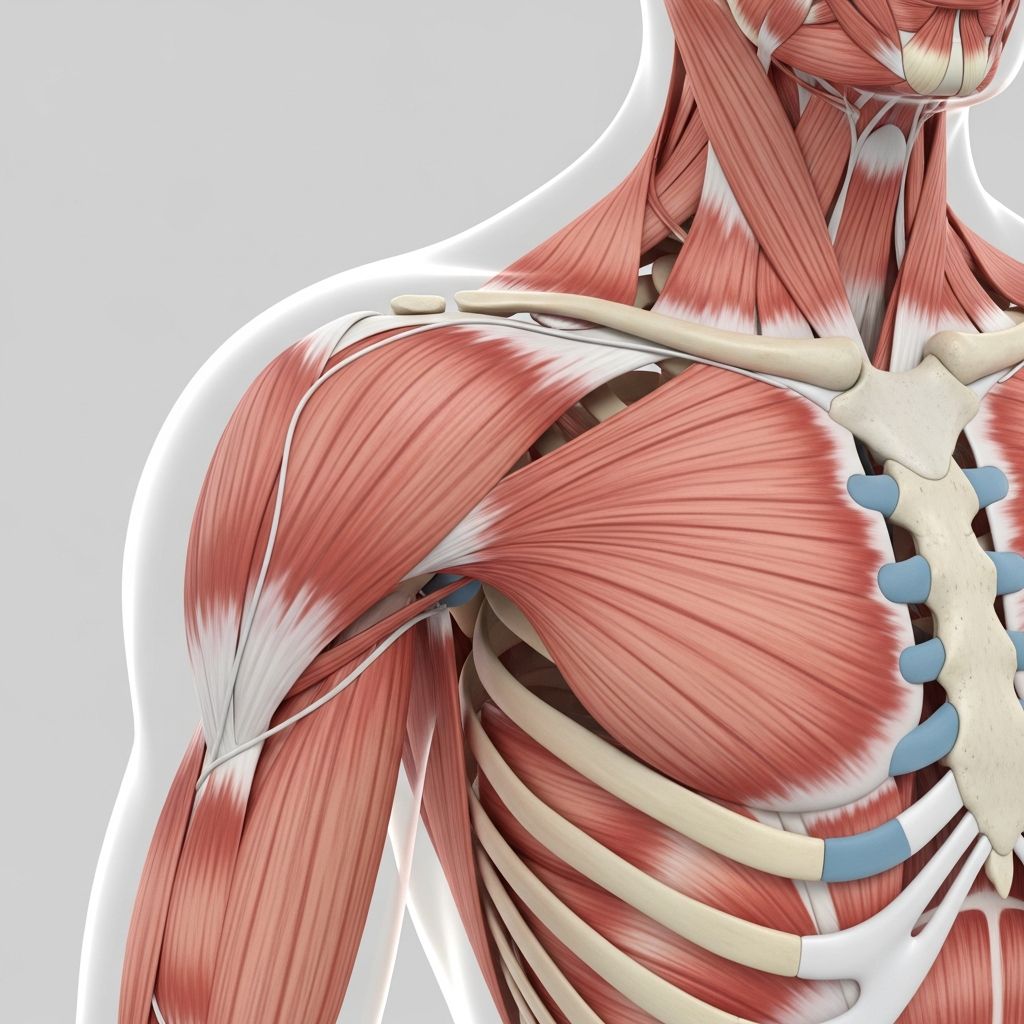
Understanding Your Shoulder Muscles
Your shoulder is one of the most mobile joints in your entire body, capable of performing a remarkable range of movements. This exceptional flexibility comes from a sophisticated system of muscles that work together to provide strength, stability, and motion. The shoulder is a ball-and-socket joint, also known as the glenohumeral joint, which connects your arm to the trunk of your body. Approximately eight major muscles support this joint, working in harmony to give your shoulder its impressive range of motion, structural support, and protective capabilities.
From throwing a baseball to reaching for items on a shelf, your shoulder muscles are constantly engaged in everyday activities. Understanding how these muscles function and what can go wrong with them is essential for maintaining shoulder health and preventing injuries.
The Structure and Composition of Shoulder Muscles
Shoulder muscles are composed of specialized tissue that contains elastic fibers, allowing them to flex and contract with precision. These muscles are skeletal muscles, which means they appear red and white, giving them a striated or streaked appearance under microscopic examination. This unique composition enables your shoulder muscles to perform the dynamic movements required for daily activities.
The shoulder muscles are interconnected through a network of tendons that attach these muscles to bones. The key bones involved in shoulder structure include:
– Scapula (shoulder blade)- Humerus (upper arm bone between shoulder and elbow)- Clavicle (collarbone)
These tendons act as levers, transmitting the force generated by contracting muscles to move your bones and create the full range of shoulder motions.
The Rotator Cuff: Your Shoulder’s Core Stability System
The rotator cuff represents the most critical muscle group in your shoulder. This sophisticated system consists of four distinct muscles and their associated tendons that work together to maintain stability and enable rotation of your shoulder. The rotator cuff muscles surround your shoulder joint like a protective cuff, holding the head of your humerus (upper arm bone) securely in its socket within your scapula.
The four rotator cuff muscles are:
– Supraspinatus – Located above the spine of the scapula, it initiates shoulder abduction- Infraspinatus – Positioned below the spine, it rotates the shoulder externally- Teres minor – Assists with external rotation and shoulder stability- Subscapularis – Located on the front of the shoulder blade, it provides internal rotation
Together with their tendons, these muscles cup the front of your shoulder and provide the strength and stability necessary for controlled movements. They also protect your shoulder joint from injury during dynamic activities. The rotator cuff is particularly important because it keeps your shoulder and upper arm stable when you move and use them in various directions.
Supporting Shoulder Muscles
Beyond the rotator cuff, several other muscles play important supporting roles in shoulder function and movement:
The Deltoid Muscle
Your deltoid muscles crown your shoulder, covering the front, side, and back of the joint. They form an upside-down triangle shape and are superficial muscles, meaning they’re close to the surface of your skin. The deltoids consist of three distinct heads or parts: anterior (front), lateral (side), and posterior (back).
The deltoid muscles help you:
– Lift your arm to the front, side, and back- Perform overhead movements- Rotate your arm in different directions- Maintain shoulder joint stability and protection
Related Stories



The Coracobrachialis Muscle
Your coracobrachialis is a small but important muscle located in the front compartment of your upper arm, close to your armpit. This slender muscle attaches to the front of your shoulder joint and your upper arm bone, playing a supporting role in bending your upper arm and bringing it close to your body.
Other Supporting Muscles
Additional muscles that work alongside the rotator cuff and deltoids include the pectoralis major, which travels from your chest across the front of your shoulder to your upper arm, and various scapular muscles that help position and stabilize your shoulder blade during arm movements.
Primary Functions of Shoulder Muscles
Your shoulder muscles serve multiple essential functions that work together to enable the remarkable mobility and stability your shoulder provides:
Movement and Range of Motion
Shoulder muscles allow you to perform a wide variety of movements in multiple directions. Whether flexing your arm forward, extending it backward, abducting it to the side, or rotating it internally and externally, your shoulder muscles create these movements through coordinated contractions and relaxations.
Stability and Joint Support
One of the most critical functions of shoulder muscles is maintaining joint stability. The shoulder is a relatively unstable joint because the socket is quite shallow, similar to a golf ball sitting on a tee. The muscles and tendons surrounding the joint must continuously work to keep the ball-shaped head of your humerus properly seated in its socket, preventing dislocation and injury.
Protection
Your shoulder muscles form a protective layer around the shoulder joint, shielding the underlying structures from trauma and injury. This is especially important during contact sports or accidental falls.
Common Shoulder Muscle Conditions
Because the shoulder undergoes constant wear and tear due to its exceptional flexibility and frequent use, shoulder muscles are susceptible to various injuries and degenerative conditions. In 2006, more than 7 million people sought healthcare for shoulder problems, with approximately 2 to 4 million of these cases involving the rotator cuff.
Rotator Cuff Injuries
These are among the most common shoulder conditions, ranging from strains and inflammation to partial or complete tears. Rotator cuff problems can develop from repetitive overhead movements, acute injuries, or degenerative changes over time.
Deltoid Muscle Injuries
Deltoid muscle pain commonly affects swimmers, pitchers, and anyone who performs repetitive overhead arm movements. These injuries can range from strains to tendinitis, causing pain and limiting shoulder function.
Shoulder Instability
When the muscles and tendons fail to maintain proper joint stability, your shoulder can become unstable, leading to subluxation (partial dislocation) or full dislocation.
Degenerative Conditions
Arthritis and other degenerative conditions can affect the shoulder joint and surrounding muscles, causing chronic pain and reduced mobility.
Muscle Strains and Sprains
Overuse, sudden movements, or improper technique can cause muscle strains in any of your shoulder muscles, leading to pain, inflammation, and temporary loss of function.
The Impact of Shoulder Surgery on Muscles
It’s important to understand that shoulder surgery can significantly affect your deltoid and other shoulder muscles. Because the deltoid runs across most of your shoulder and is located near the surface of your skin, surgeons often must cut through these muscles when performing rotator cuff repairs, tendon surgeries, or other shoulder procedures. This surgical trauma can lead to muscle weakness, inflammation, and extended recovery periods. Like any surgery, shoulder procedures carry risks of infection, bleeding, blood clots, and scar tissue formation.
Maintaining Healthy Shoulder Muscles
Keeping your shoulder muscles strong and flexible is essential for preventing injuries and maintaining function throughout your life. This involves:
– Regular exercise and strength training- Proper warm-up and cool-down routines- Maintaining good posture- Using correct technique during sports and physical activities- Avoiding repetitive overhead movements without adequate rest- Seeking professional guidance for rehabilitation after injury
Frequently Asked Questions
Q: How many muscles are in the shoulder?
A: Approximately eight major muscles support your shoulder joint, with the four rotator cuff muscles being the most critical. Additional supporting muscles include the deltoids, coracobrachialis, and various scapular muscles that work together to enable shoulder movement and stability.
Q: What is the rotator cuff and why is it important?
A: The rotator cuff is a group of four muscles and tendons that surround your shoulder joint and hold your upper arm bone in place. It’s crucial because it provides stability, enables shoulder rotation, and protects your joint during everyday activities and sports.
Q: What causes deltoid muscle pain?
A: Deltoid muscle pain commonly results from repetitive overhead arm movements, as seen in swimmers and pitchers, or from acute injuries. It can also develop from muscle strains, tendinitis, or overuse without adequate rest periods.
Q: How can I prevent shoulder muscle injuries?
A: Preventing shoulder injuries involves maintaining proper strength and flexibility through regular exercise, using correct technique during activities, warming up before physical exertion, avoiding overuse, and seeking professional guidance if you experience persistent pain.
Q: What happens to shoulder muscles during surgery?
A: During shoulder surgery, surgeons often must cut through deltoid and other shoulder muscles to access deeper structures for rotator cuff repairs or tendon surgeries. This can cause temporary weakness and requires careful rehabilitation during recovery.
Q: Should I see a doctor for shoulder pain?
A: Yes, you should visit a healthcare provider if you’re experiencing persistent shoulder pain, especially if your shoulder hurts after a fall or sports injury, or if pain interferes with daily activities or sleep.
References
- Deltoid Muscles: What Are They, Anatomy, Location & Function — Cleveland Clinic. 2024. https://my.clevelandclinic.org/health/body/21875-deltoid-muscles
- Shoulder Muscles: Anatomy, Function & Common Conditions — Cleveland Clinic. 2024. https://my.clevelandclinic.org/health/body/21798-shoulder-muscles
- Rotator Cuff: Muscles, Tendons, Function & Anatomy — Cleveland Clinic. 2024. https://my.clevelandclinic.org/health/body/rotator-cuff
- Coracobrachialis Muscle: What It Is, Function & Anatomy — Cleveland Clinic. 2024. https://my.clevelandclinic.org/health/body/coracobrachialis-muscle
- Scapula (Shoulder Blade): What It Is, Anatomy & Function — Cleveland Clinic. 2024. https://my.clevelandclinic.org/health/body/scapula-shoulder-blade
Similar Articles








Read full bio of medha deb