Shrimp Nail Comprehensive Guide To Causes, Symptoms & Treatment
Understanding shrimp nail: causes, symptoms, diagnosis, and management of this rare nail deformity resembling a shrimp's curved back.
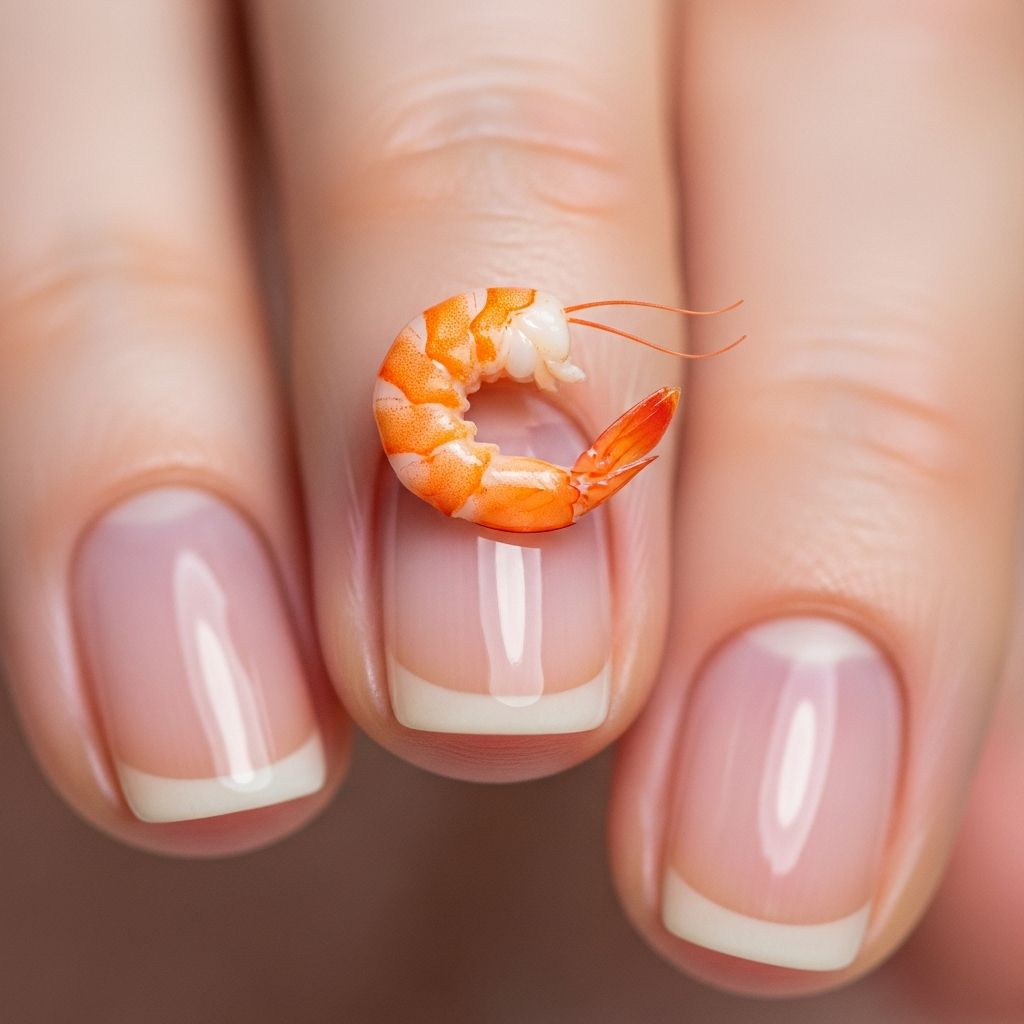
Shrimp nail is a rare and striking nail deformity characterized by a pronounced vertical curvature of the nail plate, resembling the curved back of a shrimp. This condition arises from repeated episodes of onychomadesis—the spontaneous separation of the nail plate from the nail matrix—occurring before the previous nail has fully regenerated. It most commonly affects the great toenails but can involve other nails. While often acquired due to trauma, medications, or inflammation, rare congenital cases exist. Early recognition is crucial to address underlying causes and prevent progression.
What is shrimp nail?
Shrimp nail, also known as stacked nail deformity or retronychia-like curvature, features multiple stacked nail plates with transverse ridges, creating a severe upward or backward bend. The nail appears dystrophic, thickened, and curved, mimicking a shrimp’s exoskeleton. This results from sequential interruptions in nail growth at the proximal matrix, leading to layered, malformed plates that fail to adhere properly.
The condition was first described in clinical literature as a form of great toenail dystrophy (GTND), where repeated onychomadesis produces ridges and curvature as the distal nail embeds into soft tissue. Patients often report pain, tenderness, and functional impairment, especially with footwear.
Who gets shrimp nail?
Shrimp nail predominantly affects adults, with a mean age of around 43 years, and shows a female predominance (approximately 85% in studied cohorts). It is most common in the great toenails (hallux), often bilaterally, but can involve fingernails rarely. Risk factors include:
- History of nail trauma (e.g., tight shoes, stubbing, sports injuries) in over 70% of cases.
- Systemic inflammatory conditions like ulcerative colitis or psoriasis.
- Drug exposure, particularly TNF-α inhibitors such as infliximab or certolizumab.
- Compromised mobility or cognitive issues increasing unrecognized trauma risk (e.g., dementia).
Children and young adults may present with congenital malalignment variants, though acquired forms dominate.
Causes and pathophysiology
The core mechanism is repeated onychomadesis, where the nail matrix temporarily arrests growth, causing proximal nail plate separation. New nail layers form atop incomplete predecessors, leading to stacking and curvature. Key triggers include:
- Trauma: Most common; direct injury or repetitive microtrauma from ill-fitting shoes compresses the matrix.
- Drugs: Newly reported with anti-TNF agents (infliximab, certolizumab), onset 6-7 months post-initiation, without trauma history.
- Inflammation/infection: Paronychia, psoriasis, or ulcerative colitis flare-ups inflame the matrix.
- Systemic insults: Rarely, chemotherapy or severe illness.
Histologically, matrix inflammation or arrest leads to Beau’s lines evolving into full separation. In GTND series, 23.8% showed shrimp nail features alongside chromonychia and onycholysis.
Clinical features
Shrimp nail presents with:
- Appearance: Curved, stacked nail plates (≥3 layers) with transverse ridges; yellow-brown chromonychia; onychotrophy (thinning) proximally and hypertrophy distally.
- Location: Bilateral great toenails most affected; mild paronychia with periungual granulation.
- Symptoms: Tenderness (38%), pain on pressure, ingrown edges (28%), impacted nails (33%).
- Progression: Slow regrowth post-avulsion (e.g., 2/3 nail in 18 months).
Images depict lateral ridges in early stages evolving to full crustacean-like deformity.
Diagnosis
Diagnosis is clinical, based on characteristic curvature and history. Key steps:
Related Stories



- History: Trauma, drugs, systemic disease onset timing.
- Examination: Confirm stacking, ridges, chromonychia; assess paronychia.
- Rule out differentials: Mycology (KOH, culture, PAS) to exclude onychomycosis; biopsy if needed.
| Feature | Shrimp Nail | Onychomycosis | Yellow Nail Syndrome |
|---|---|---|---|
| Curvature | Severe stacked | Absent | Mild thickening |
| Chromonychia | Yellow-brown | White/yellow | Yellow |
| Onychomadesis | Repeated | Rare | Absent |
| Trauma history | Common | Variable | No |
Differential diagnosis
- Retronychia: Similar stacking from ingrown nails/trauma; more acute pain.
- Congenital malalignment (CMGTN): Present from birth; lateral deviation.
- Onychogryphosis: Ram’s horn-like; elderly/trauma.
- Psoriatic nails: Pitting, oil-drop; systemic signs.
- Dystrophic nails (general): Broad term; psoriasis, lichen planus causes.
Investigations
- Nail clippings for microscopy/culture to exclude fungus.
- Histopathology if neoplasm/infection suspected.
- Matrix biopsy rarely: shows inflammation, no specific findings.
Management
Treatment targets underlying cause; conservative for mild cases.
- Conservative: Tape stripping, grinding; poor response.
- Surgical: Partial/complete nail avulsion ± matrix phenolization; slow regrowth expected.
- Topical: Steroid-antifungal combos (e.g., hydrocortisone/miconazole) for paronychia.
- Systemic: Discontinue offending drugs if possible; monitor inflammatory diseases.
- Supportive: Proper footwear, trauma avoidance.
Prognosis variable; recurrence common without cause removal. Multidisciplinary input (dermatology, rheumatology).
Prevention
- Wear well-fitting shoes.
- Monitor nails on immunomodulators.
- Prompt trauma/infection treatment.
FAQ
Is shrimp nail permanent?
Not always; avulsion allows regrowth, but slow (months-years) and recurrence risks persist if triggers remain.
Can shrimp nail affect fingernails?
Rarely; predominantly toenails, especially great toes.
Is shrimp nail contagious?
No; not infectious, though mimic onychomycosis must be excluded.
How is shrimp nail treated?
Avulsion for severe cases; topicals for inflammation; address causes like drugs/trauma.
Does anti-TNF cause shrimp nail?
Emerging reports link infliximab/certolizumab; temporal association strong.
References
- BH11 A curious cause of ‘shrimp nail’ — British Journal of Dermatology. 2024. https://academic.oup.com/bjd/article/191/Supplement_1/i78/7698799
- Great Toenail Dystrophy: A Single-Center Experience and Review — PMC / Annals of Dermatology. 2015-04-14. https://pmc.ncbi.nlm.nih.gov/articles/PMC4369658/
- ‘Shrimp nail’ – stacked vertical curvature of the nail plate occurring as a potential side-effect of tumour necrosis factor-alpha inhibitor use — PubMed. 2024. https://pubmed.ncbi.nlm.nih.gov/38839417/
- Shrimp Nail Images — DermNet. Recent. https://dermnetnz.org/images/shrimp-nail-images
- Shrimp nail image — DermNet. Recent. https://dermnetnz.org/imagedetail/2711-shrimp-nail
- Dystrophic Nails: Symptoms, Causes & Treatment — Cleveland Clinic. Recent. https://my.clevelandclinic.org/health/diseases/22490-dystrophic-nails
Similar Articles








Read full bio of medha deb