Sickle Cell Disease: Causes, Symptoms, and Treatment
Learn about sickle cell disease: inherited blood disorder affecting red blood cells and oxygen transport.
Sickle Cell Disease: An Overview
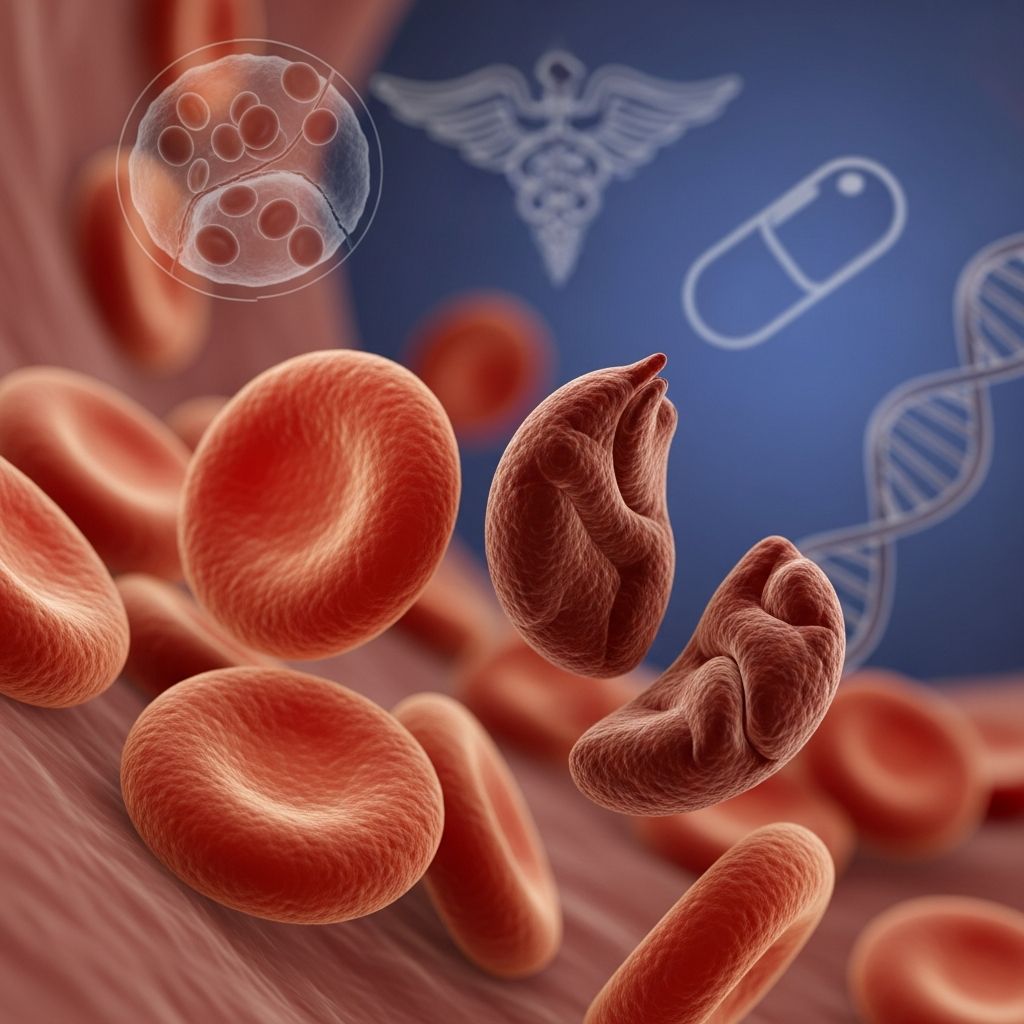
Sickle cell disease (SCD) is an inherited blood disorder characterized by the production of abnormal hemoglobin, which causes red blood cells to become distorted into a crescent or sickle shape. This genetic condition affects millions of people worldwide and can lead to severe complications including chronic pain, organ damage, and shortened lifespan. Unlike many other genetic conditions, sickle cell disease is not restricted to any particular racial or ethnic group, though it is more prevalent in certain populations, including those with ancestry from Africa, the Mediterranean region, the Middle East, and India.
The disease arises from a single-point mutation in the β-globin gene of hemoglobin, where glutamic acid is substituted with valine. This seemingly small genetic change has profound effects on red blood cell function and overall health. Understanding the nature of sickle cell disease is crucial for patients, families, and healthcare providers to effectively manage this complex condition.
Understanding the Genetics of Sickle Cell Disease
Sickle cell disease is an autosomal-recessive genetic condition, meaning an individual must inherit the faulty hemoglobin gene from both parents to develop the disease. The inheritance pattern works as follows:
- Sickle Cell Trait: Individuals who inherit one sickle cell gene from one parent and normal hemoglobin from the other are carriers. These individuals typically do not experience symptoms and can lead normal, healthy lives, though they may pass the gene to their offspring.
- Sickle Cell Disease: Those who inherit two faulty hemoglobin genes—one from each parent—develop sickle cell disease and experience its symptoms.
- Compound Heterozygous Forms: Some individuals inherit hemoglobin S from one parent and another faulty hemoglobin gene, such as beta-thalassemia, hemoglobin C, hemoglobin D, or hemoglobin E, from the other parent.
When both parents are carriers of the sickle cell gene, there is a 25% probability that each child will be born with sickle cell disease, a 50% chance the child will be a carrier, and a 25% chance the child will inherit normal hemoglobin from both parents.
Types of Sickle Cell Disease
Several variants of sickle cell disease exist, each with varying severity levels:
- Hemoglobin SS (HbSS): This is the most common and most severe form, occurring when an individual inherits one sickle cell gene from each parent.
- Hemoglobin SC (HbSC): A milder form of sickle cell disease that typically causes fewer complications than HbSS.
- Hemoglobin S/Beta-Thalassemia (HbS/β-thalassemia): Another milder variant resulting from inheriting hemoglobin S and a beta-thalassemia gene.
Pathophysiology: How Sickle Cell Disease Develops
The pathophysiology of sickle cell disease involves a cascade of molecular and cellular events. In healthy individuals, red blood cells are disc-shaped and flexible, allowing them to move smoothly through blood vessels and deliver oxygen throughout the body. In people with sickle cell disease, hemoglobin behaves differently when oxygen levels decrease.
Upon deoxygenation, hemoglobin S becomes insoluble and polymerizes into rigid fibers, causing red blood cells to distort into the characteristic sickle or crescent shape. These rigid, abnormally shaped cells cannot pass easily through small blood vessels, causing blockages that restrict blood flow and oxygen delivery to tissues and organs. This vaso-occlusion leads to tissue ischemia, oxygen deprivation, and potentially permanent organ damage.
Related Stories



Additionally, sickled red blood cells have a much shorter lifespan than normal red blood cells. While healthy red blood cells survive approximately 120 days, sickled cells typically survive only 10 to 20 days due to accelerated hemolysis (destruction). This rapid destruction of red blood cells leads to chronic hemolytic anemia, characterized by persistently low hemoglobin and hematocrit levels.
Clinical Features and Symptoms
Clinical features of sickle cell disease typically emerge in the latter half of the first year of life, as fetal hemoglobin (HbF) declines and is replaced by adult hemoglobin. Symptoms vary widely among individuals and can range from mild to severe.
Primary Symptoms
- Vaso-Occlusive Crises: Acute, severe pain episodes affecting various body parts, particularly the abdomen, chest, joints, and bones. These unpredictable crises can last from hours to weeks.
- Chronic Hemolytic Anemia: Low levels of hemoglobin resulting from the accelerated destruction of sickled red blood cells, causing fatigue, weakness, and shortness of breath.
- Acute Aplastic Crises: Temporary cessation of red blood cell production in the bone marrow, leading to severe anemia.
- Splenic Sequestration Episodes: Trapping of large numbers of red blood cells in the spleen, causing organ enlargement and sudden severe anemia.
- Increased Susceptibility to Infections: Damage to the spleen reduces its ability to filter bacteria and fight infections, making patients vulnerable to bacterial and viral infections.
Associated Complications
Patients with sickle cell disease are at risk for numerous complications including malnutrition, stunted growth, bone deformities, visual impairment, acute chest syndrome, stroke, nephropathy (kidney disease), pulmonary hypertension, and bone necrosis (avascular necrosis). The complexity and severity of these complications underscores the need for comprehensive, multidisciplinary medical care.
Diagnosis and Testing
Diagnosis of sickle cell disease involves a straightforward blood test approach. A simple initial blood test can screen for abnormal hemoglobin. If the screening test is positive, a second confirmatory test called hemoglobin electrophoresis is performed to determine whether the patient has sickle cell disease or is a carrier.
These diagnostic tests can be performed at any age. In many countries, including Saudi Arabia, newborn screening for sickle cell disease is routine practice, allowing for early diagnosis and intervention. Early diagnosis is particularly important because it enables healthcare providers to implement preventive measures and initiate treatment promptly, significantly improving outcomes.
Management and Treatment Approaches
While there is no universal cure for sickle cell disease, several treatment approaches help manage symptoms and prevent complications:
Traditional Management Strategies
- Red Blood Cell Transfusions: Regular transfusions can help maintain adequate hemoglobin levels and reduce the frequency of vaso-occlusive crises and organ complications.
- Pain Management: Comprehensive pain management includes both acute crisis intervention and chronic pain control. Recent research has explored the use of buprenorphine for patients with complex chronic pain associated with sickle cell disease.
- Hydroxyurea: This medication increases fetal hemoglobin production, which does not polymerize, thereby reducing sickling and crisis frequency.
- Supportive Care: Adequate hydration, rest, oxygen therapy, and treatment of infections are essential components of symptom management.
Advanced Therapeutic Options
Recent advances offer hope for more definitive treatment through gene therapy and stem cell-based approaches. Autologous stem cell-based genome editing and additive gene therapy represent promising new frontiers. Anti-sickling globin genes can be inserted into patient cells using lentiviral vectors. Clinical investigations have shown that when hemoglobin S is decreased to less than 50%, patients experience fewer hemolysis episodes and acute pain crises.
Gene therapy approaches include CRISPR-Cas9, base editing, prime editing, and lentiviral gene therapy. However, these advanced therapies still face challenges including off-target genetic effects, delivery efficiency, and high costs. Despite these limitations, they represent significant progress toward potentially curative treatments.
Healthcare Disparities and Support
Despite significant medical advances, healthcare disparities persist in sickle cell disease management. Sickle cell disease remains a condition characterized by tremendous healthcare disparities, with historically lower research funding compared to other diseases. Specialized care centers, such as the Johns Hopkins Sickle Cell Center for Adults, play a crucial role in providing comprehensive, patient-centered care that addresses both medical and psychosocial needs.
These specialized clinics offer transformative care by ensuring patients receive immediate treatment, feel comfortable during their care, and receive support navigating their treatment plans—a stark contrast to emergency room experiences where sickle cell patients may be dismissed or inadequately treated.
Future Directions in Research and Treatment
The field of sickle cell disease treatment continues to evolve rapidly. Current research focuses on developing interventions that either deliver non-sickling hemoglobin or prevent polymerization to reverse the underlying pathology. Beyond addressing the primary molecular defect, researchers are also exploring targeted approaches to manage secondary and tertiary effects, including inflammation, pain management, and leukocyte adhesion.
Investment in sickle cell disease research and treatment infrastructure remains critical for developing more effective, accessible, and affordable therapeutic options for the millions of people worldwide living with this debilitating condition.
Frequently Asked Questions
Q: Is sickle cell disease curable?
A: While there is no universal cure, stem cell transplantation and gene therapy show promise. Gene therapy approaches can decrease hemoglobin S levels to less than 50%, reducing crises and hemolysis episodes. Traditional management focuses on symptom control and complication prevention.
Q: How is sickle cell disease inherited?
A: Sickle cell disease is an autosomal-recessive condition. A person develops the disease when they inherit the sickle cell gene from both parents (25% chance if both parents are carriers). Inheriting the gene from only one parent results in sickle cell trait, with no symptoms.
Q: What is the difference between sickle cell trait and sickle cell disease?
A: Sickle cell trait carriers have one faulty hemoglobin gene and typically experience no symptoms. Individuals with sickle cell disease have inherited two faulty genes and experience significant health complications.
Q: What triggers sickle cell crises?
A: Vaso-occlusive crises can be triggered by dehydration, infection, temperature changes, stress, physical exertion, and low oxygen levels. Individual triggers vary considerably among patients.
Q: Can people with sickle cell disease lead normal lives?
A: With proper medical care, symptom management, and support, many individuals with sickle cell disease can lead productive lives. However, the condition requires ongoing medical monitoring and management to prevent complications.
References
- Sickle Cell Disease: Understanding Pathophysiology, Clinical Features and Novel Therapeutic Approaches — PMC National Center for Biotechnology Information (NCBI), National Library of Medicine. 2024. https://pmc.ncbi.nlm.nih.gov/articles/PMC12411783/
- Sickle Cell Anemia — Johns Hopkins Aramco Healthcare. https://www.jhah.com/en/news-events/in-focus/sickle-cell-anemia/
- The Thorny History of Sickle Cell Anemia — Johns Hopkins University Hub. 2023. https://hub.jhu.edu/2023/01/25/sickle-cell-anemia-history/
- Advances in the Treatment of Sickle Cell Disease — Johns Hopkins University Research Portal. https://pure.johnshopkins.edu/en/publications/advances-in-the-treatment-of-sickle-cell-disease/
Similar Articles








Read full bio of Sneha Tete