Sign Of Leser-Trélat: Expert Insights On This Rare Cancer Sign
Abrupt eruption of multiple seborrheic keratoses signaling potential internal malignancy.
The
sign of Leser-Trélat
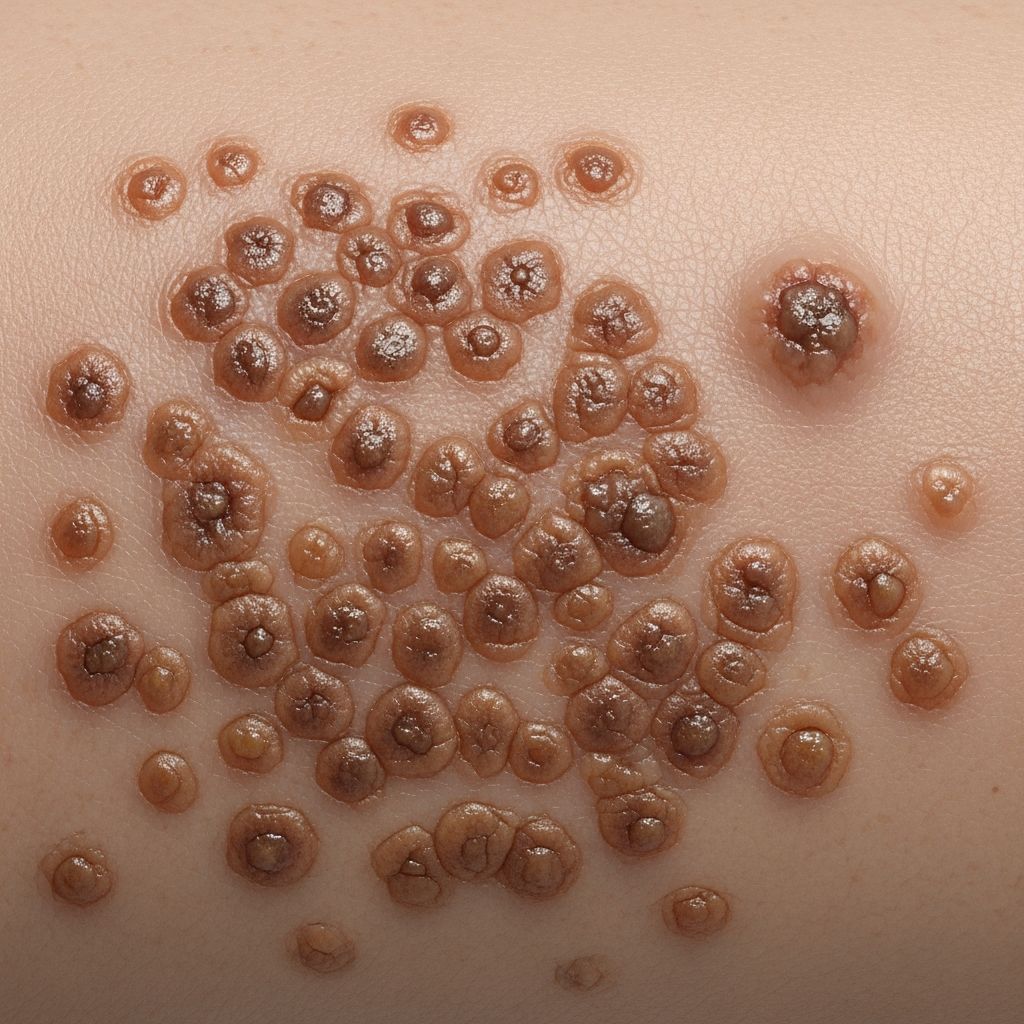
is a rare dermatological phenomenon characterized by the abrupt appearance and rapid proliferation of multipleseborrheic keratoses
, often accompanied by intense pruritus. This condition is considered aparaneoplastic syndrome
, serving as a cutaneous marker for underlying internal malignancies, particularly gastrointestinal adenocarcinomas. First described in the late 19th century, it raises clinical suspicion for occult cancer, prompting thorough oncologic evaluation.What is the sign of Leser-Trélat?
The sign of Leser-Trélat manifests as an explosive eruption of numerous seborrheic keratoses—benign, pigmented, waxy skin lesions—that develop over weeks to months, contrasting with the gradual onset of typical age-related seborrheic keratoses. These lesions often itch severely and may enlarge preexisting ones. While seborrheic keratoses are common in older adults, their sudden, widespread appearance in this context signals potential malignancy.
Debate persists on its validity as a true paraneoplastic sign due to the prevalence of both seborrheic keratoses and cancer in the elderly. However, in younger patients or with truly eruptive patterns, it warrants investigation. The acronym
LESER
(sudden Lesions of many seborrheic keratoses that Expand and Rapidly increase in number) encapsulates its features.Who gets the sign of Leser-Trélat?
This sign predominantly affects individuals over 50-60 years, aligning with the demographics of seborrheic keratoses and common cancers. No strong gender predilection exists, though some series report slight female predominance. Risk escalates with age and malignancy history. Rarely reported in younger patients, where it strongly suggests paraneoplastic etiology.
- Prevalence: Rare; fewer than 100 well-documented cases.
- Age: Typically >50 years.
- Associations: 74% linked to GI cancers in reviews.
What causes the sign of Leser-Trélat?
The exact pathogenesis remains unclear but involves tumor secretion of growth factors like epidermal growth factor (EGF), transforming growth factor-alpha (TGF-α), and cytokines stimulating keratinocyte proliferation. These factors, produced by malignancies, induce eruptive seborrheic keratoses remotely. Malignancies overexpress TGF-α, correlating with lesion intensity.
Supporting
Curth’s postulates
for paraneoplastic syndromes: parallel onset, tumor-specificity, and lesion regression post-tumor treatment.What are the clinical features of the sign of Leser-Trélat?
Lesions mimic ordinary seborrheic keratoses: multiple brown-black, waxy, ‘stuck-on’ papules/plaques (1-6 cm), often inflamed or pruritic. Key distinguishing features include:
- Sudden onset: Dozens to hundreds appear within 1-6 months.
- Pruritus: Affects ~50% of cases, sometimes first symptom.
- Distribution: Trunk (back in ‘Christmas tree’, raindrop patterns), face, extremities.
- Associated signs: Acanthosis nigricans (20%), erythroderma, bullae.
Lesions evolve rapidly: new eruptions, size increase, inflammation. Systemic symptoms (weight loss, fatigue) may precede or coincide.
Diagnosis of the sign of Leser-Trélat
Diagnosis is clinical, based on history of abrupt multiple pruritic seborrheic keratoses plus malignancy suspicion. No formal criteria exist, but proposed definitions require:
| Feature | Description |
|---|---|
| Sudden increase | >10-20 new lesions in <6 months |
| Pruritus | Severe itching common |
| Malignancy workup | Positive cancer diagnosis |
| Response | Lesions regress post-treatment |
Related Stories



Biopsy confirms seborrheic keratosis (acanthosis, hyperkeratosis, horn cysts). Dermoscopy shows comedo-like openings, milia-like cysts. Rule out pseudo-sign (eruptive without malignancy).
Associated cancers
Most commonly gastrointestinal adenocarcinomas (stomach 33%, colon 25%), breast (15%), lung, pancreas, liver. Lymphoproliferative disorders, prostate less common. Upper GI endoscopy, colonoscopy, CT chest/abdomen/pelvis essential.
- Gastrointestinal: Stomach, colon, rectum.
- Other: Breast, bronchus, pancreas, ovary.
Differential diagnosis
Distinguish from benign eruptive seborrheic keratoses, viral warts, melanocytic nevi, lentigos, skin tags, lichen planus, pigmented carcinomas.
| Differential | Key Distinguishers |
|---|---|
| Benign seborrheic keratosis | Gradual onset, no pruritus/malignancy |
| Acanthosis nigricans | Velvety hyperpigmentation, flexures |
| Malignant melanoma | Asymmetry, irregular borders |
| Basal cell carcinoma | Pearly, telangiectasia |
Investigations for the sign of Leser-Trélat
Urgent age-appropriate cancer screening:
- Full history/exam, bloods (FBC, LFT, tumor markers).
- Endoscopy/colonoscopy.
- Imaging: CT/PET scan.
- Mammogram (women), PSA (men).
- Skin biopsy if atypical.
Management of the sign of Leser-Trélat
Treat underlying malignancy—lesions regress in ~50% post-resection/chemotherapy. Symptomatic relief:
- Topical: Steroids, capsaicin, doxepin for itch.
- Physical: Cryotherapy, curettage, electrodesiccation, laser.
Avoid routine removal pre-malignancy diagnosis. Monitor for regression post-treatment.
History of the sign of Leser-Trélat
Named after Edmund Leser (German surgeon, 1890) and Ulysse Trélat fils (French surgeon, 1891), who noted arcus senilis and acanthosis nigricans in gastric cancer patients. Edmund Hollander (1900) first linked seborrheic keratoses to cancer. ~70 cases by 1980s.
Frequently asked questions about the sign of Leser-Trélat
Is the sign of Leser-Trélat always cancer?
No, but sudden eruptive pruritic seborrheic keratoses demand malignancy screening.
Do lesions resolve after cancer treatment?
Yes, in ~50% of cases post-tumor removal.
How quickly do lesions appear?
Within 1-12 months, often weeks.
Is biopsy always needed?
Not if classic; yes if atypical to exclude melanoma.
What if no cancer found?
Monitor; may be pseudo-sign without malignancy.
References
- Leser–Trélat sign — Wikipedia. 2024. https://en.wikipedia.org/wiki/Leser%E2%80%93Tr%C3%A9lat_sign
- Leser-Trélat Sign — StatPearls [Internet]. NCBI Bookshelf. 2023-08-08. https://www.ncbi.nlm.nih.gov/books/NBK470554/
- Leser-Trélat Sign — MD Searchlight. 2023. https://mdsearchlight.com/cancer/leser-trelat-sign/
- The Leser-Trélat sign — Cleveland Clinic Journal of Medicine. 2017-12-01. https://www.ccjm.org/content/84/12/918
- Sign of Leser-Trélat — DermNet NZ. 2023. https://dermnetnz.org/topics/sign-of-leser-trelat
Similar Articles








Read full bio of medha deb