Fever (High Temperature): Symptoms, Causes, Treatment Advice
Understand fever causes, symptoms, measurement, treatment, and when to seek urgent medical help for adults and children.
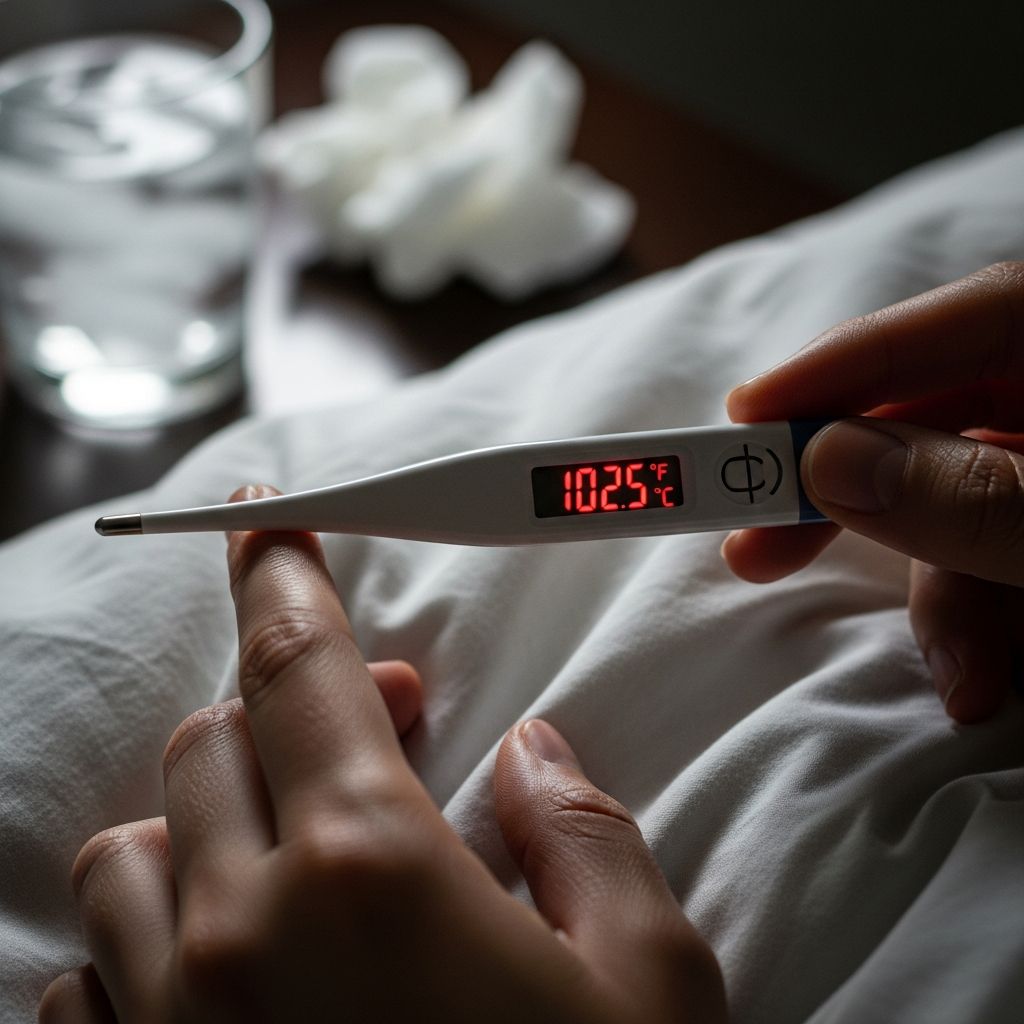
Fever, or high temperature, is a common sign that your body is fighting an infection. It is usually harmless but can indicate a serious condition requiring medical attention. This guide covers symptoms, causes, measurement, treatment, and advice for adults and children.
Key Points
- **Fever** is defined as a body temperature above
38°C (100.4°F)
, often due to viral or bacterial infections but sometimes signaling more serious issues. - Common
signs
include raised temperature,chills
,sweating
,headache
,fatigue
, andmuscle aches
. - Check for fever by feeling if your chest or back is hotter than usual or using a
digital thermometer
. - Most fevers resolve with home care like fluids and paracetamol, but seek help for high or persistent fever.
- In children, focus on behavior over temperature level to assess illness severity.
Understanding Fever
A fever occurs when your body’s thermostat in the brain (hypothalamus) resets to a higher temperature to combat infections. This response helps immune cells work better against viruses and bacteria. While uncomfortable, mild fevers are adaptive and not always needing treatment.
Normal body temperature varies: around 36.5–37.5°C (97.7–99.5°F), higher in evenings. Oral temperature ≥37.8°C (100°F), rectal ≥38°C (100.4°F), or axillary ≥37.2°C (99°F) indicates fever.
Symptoms of Fever
Symptoms vary by person, cause, and severity. Core signs stem from the body raising its temperature.
Common Symptoms in Adults
- Sweating: As temperature peaks or falls.
- Chills and shivering: Feeling cold despite rising heat, due to muscle contractions generating warmth.
- Headache: From dehydration or inflammation.
- Muscle aches: Generalized body soreness (myalgia).
- Loss of appetite: Reduced hunger common.
- Irritability and weakness: Fatigue and mood changes.
Less Common Symptoms
- Gastrointestinal issues: Nausea, vomiting (32% in one study).
- Emotional changes: Anxiety, agitation (18%).
- Achiness: Body pains alerting to fever (11%).
- Respiratory symptoms: Shortness of breath, cough (11%).
- Vivid dreams or hallucinations: Rare, in high fevers.
Symptoms in Children
Children may show:
- Raised temperature ≥38°C.
- Hot to touch, shivery, pale skin.
- Headache, tummy ache, flushed cheeks.
- Feeling sick or lethargic.
Temperature height does not always reflect severity; watch behavior.
Rigors
Rigors are intense shivering episodes with chills as temperature rises rapidly, followed by hot, sweaty phases. You feel freezing while hot to touch. They last minutes to hours, often repeating with infections like flu or sepsis.
Rigors signal significant fever onset via cytokine-induced hypothalamic reset.
How to Measure Temperature
Use a digital thermometer for accuracy. Methods:
- Oral: Under tongue (avoid eating/drinking 15 mins prior). ≥37.8°C fever.
- Rectal: Most accurate, 0.5°C higher. ≥38°C fever (preferred for infants).
- Axillary (armpit): 0.5°C lower.
- Tympanic (ear): Quick for older children/adults.
- Temporal artery (forehead): Non-invasive.
Avoid mercury thermometers. Stripes or forehead scanners are unreliable.
Causes of Fever
Most fevers (80%) from infections:
- Viral: Colds, flu, COVID-19.
- Bacterial: Strep throat, UTIs, pneumonia.
- Other: Heat exhaustion, autoimmune diseases, medications, cancers (rare).
In children: Teething or post-vaccination mild fevers, but high fever needs evaluation.[10]
Treatment of Fever
Self-Care for Adults
- Rest and stay hydrated (2–3L/day).
- Light clothing, cool room (18–22°C).
- Paracetamol (acetaminophen) 500–1000mg every 4–6 hours (max 4g/day) or ibuprofen 400mg every 6–8 hours for pain/fever.
- Do not overdress or use alcohol rubs/tepid sponging (ineffective, risky).
Treatment for Children
Use age-appropriate paracetamol/ibuprofen doses. Focus on comfort:
- Light clothing, open windows.
- Frequent fluids; breastfeed often.
- Avoid aspirin (Reye’s syndrome risk).
Related Stories



Do not wake for medication if comfortable.
When to Seek Medical Help
Adults
Contact doctor if:
- Temperature ≥39.4°C (103°F).
- Fever >3 days or recurring.
- Severe headache, rash, stiff neck, confusion, breathing difficulty, chest/abdominal pain, seizures.
Urgent: High fever with above + vomiting, urination pain.
Children
| Low Risk (Green) | Intermediate (Amber) | High Risk (Red) – Call Emergency |
|---|---|---|
Other reds: Non-blanching rash, focal neurological signs, swelling.
Fever in Children: Special Advice
Illness severity > temperature. Green: Home care. Amber: GP. Red: A&E.
Dehydration signs: Dry mouth, no tears, sunken eyes, reduced nappies.
Frequently Asked Questions (FAQs)
Q: Is a high temperature always dangerous?
A: No, most are from minor infections and self-resolve. Monitor symptoms.
Q: Should I treat every fever?
A: Treat discomfort, not number. Fluids/paracetamol suffice usually.
Q: What causes rigors?
A: Rapid temperature rise with infections; shivering generates heat.
Q: When is fever an emergency in babies?
A: <3 months any fever; 3–6 months >39°C; plus red flags like lethargy.[10]
Q: Can medications cause fever?
A: Yes, drug fever from antibiotics or others; resolves on stopping.
References
- Beyond Intuition: Patient Fever Symptom Experience — PMC – NIH. 2013-10-21. https://pmc.ncbi.nlm.nih.gov/articles/PMC3830719/
- Fever – Symptoms & causes — Mayo Clinic. 2023-11-25. https://www.mayoclinic.org/diseases-conditions/fever/symptoms-causes/syc-20352759
- Fever in Children (High Temperature) — Patient.info. 2024-01-15. https://patient.info/childrens-health/fever-in-children-high-temperature
- Fever (High Temperature) — Patient.info. 2024-05-10. https://patient.info/signs-symptoms/fever
- Ill and Feverish Child — Patient.info (Doctor). 2023-09-20. https://patient.info/doctor/paediatrics/ill-and-feverish-child
- Rigors — Patient.info. 2023-12-05. https://patient.info/childrens-health/rigors-leaflet
Similar Articles








Read full bio of Sneha Tete