Silicosis: Lung Disease from Silica Dust
Understand the risks, symptoms, and prevention of silicosis, a preventable yet incurable lung condition caused by inhaling crystalline silica dust in workplaces.
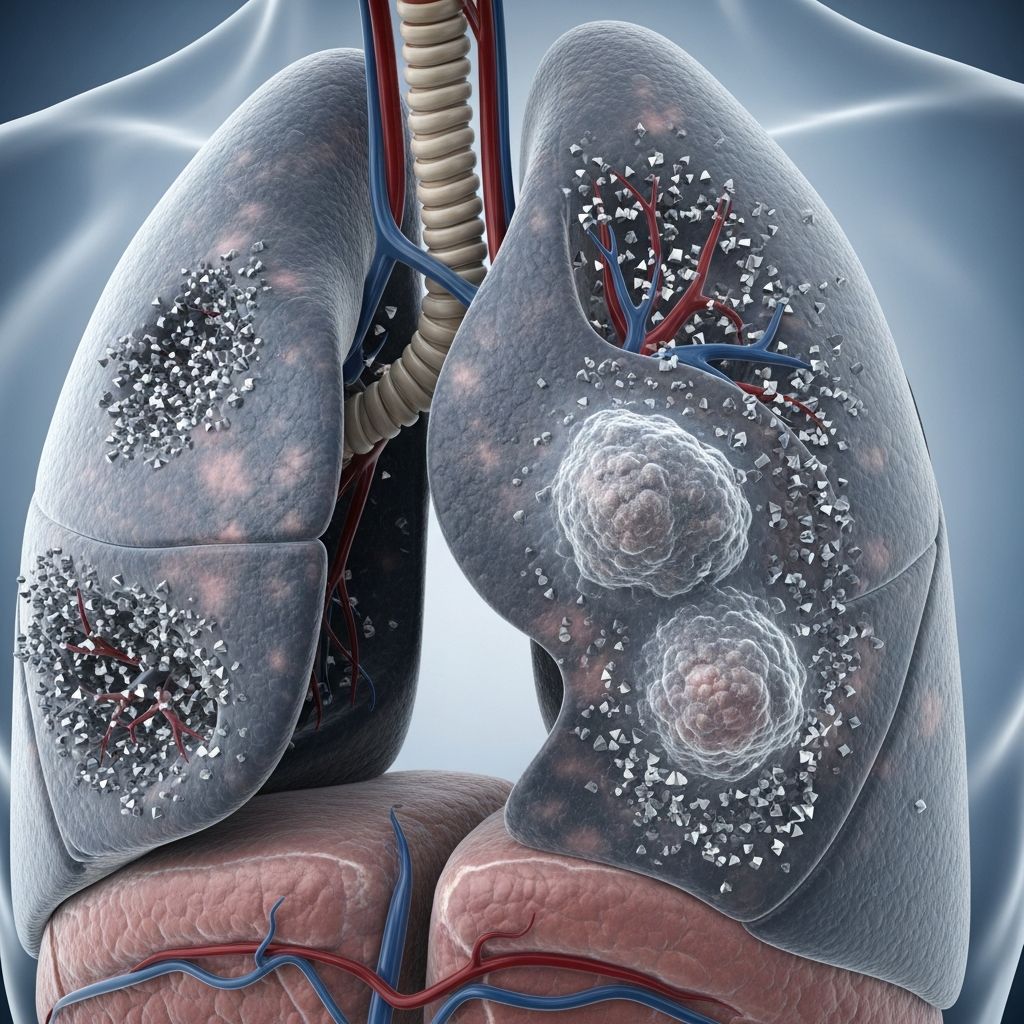
Silicosis develops when tiny particles of crystalline silica, a mineral abundant in materials like quartz, sand, and stone, are inhaled deeply into the lungs. These particles cause inflammation and permanent scarring, impairing lung function over time. Primarily an occupational hazard, it affects workers in industries involving cutting, grinding, or drilling silica-containing substances. No cure exists, but prevention through dust control is highly effective.
The Hidden Danger of Crystalline Silica
Crystalline silica exists in everyday construction materials such as concrete, mortar, granite, and artificial stone countertops. When these are disturbed through processes like sanding, drilling, or blasting, respirable particles—smaller than 5 micrometers—become airborne and evade the body’s natural defenses to lodge in lung alveoli. Over time, the immune system deploys macrophages to engulf these particles, but silica’s toxicity triggers ongoing inflammation and fibrosis.
Unlike larger dust particles that the nose and throat filter out, respirable silica penetrates deep, initiating a cascade of cellular damage. Studies show that even moderate exposure over years accumulates enough particles to provoke disease, while intense short-term exposure can accelerate onset.
Types of Silicosis Based on Exposure Patterns
Silicosis manifests in distinct forms depending on exposure intensity and duration, each with varying progression speeds and severity.
- Acute Silicosis: Rare but aggressive, arising from massive exposure over weeks to months, often in sandblasting or artificial stone work. Symptoms erupt rapidly with severe shortness of breath, fever, and weight loss, potentially leading to respiratory failure within two years.
- Accelerated Silicosis: Emerges after 3-10 years of high-level exposure. Symptoms mimic chronic forms but progress faster, including persistent cough and fatigue.
- Chronic Silicosis: Most prevalent, developing after 10-20+ years of lower-level exposure. Often starts asymptomatically, evolving into exertional dyspnea and cough.
- Complicated Silicosis (Progressive Massive Fibrosis): Advanced stage where nodules coalesce into large fibrotic masses, causing profound respiratory compromise and potential heart strain.
Artificial stone, with up to 95% silica content, heightens risks dramatically compared to natural stone, explaining recent surges in younger workers.
Recognizing Early Warning Signs and Progression
Initial symptoms are subtle: dry cough, mild fatigue, and breathlessness during activity. As fibrosis advances, chest tightness, sputum production, and reduced exercise tolerance intensify. In acute cases, fever and pleuritic pain signal alveolar flooding with proteinaceous material.
Advanced disease brings diminished breath sounds, cyanosis, and cor pulmonale from pulmonary hypertension. Weight loss and fever may indicate superimposed infections. Symptoms can persist or worsen post-exposure due to irreversible scarring.
| Stage | Typical Onset Time | Key Symptoms | Chest X-ray Findings |
|---|---|---|---|
| Acute | Weeks to 2 years | Severe dyspnea, fever, weight loss | Diffuse alveolar infiltrates |
| Accelerated | 3-10 years | Cough, fatigue, progressive SOB | Multiple nodules, upper lobe predominant |
| Chronic | 10+ years | Exertional dyspnea, cough | Small rounded opacities |
| Complicated | Advanced any type | Respiratory failure, clubbing | Large opacities, emphysema |
Diagnostic Approaches for Confirmation
No single test diagnoses silicosis definitively; evaluation combines history, imaging, and exclusion of mimics like tuberculosis or sarcoidosis. Occupational exposure history is pivotal—workers in mining, construction, or fabrication are screened routinely.
- Imaging: Chest X-rays reveal nodular patterns in upper lobes; high-resolution CT scans detect early fibrosis and emphysema.
- Pulmonary Function Tests (PFTs): Show restrictive patterns with reduced lung volumes and diffusing capacity.
- Bal Spirometry and DLCO: Essential for monitoring progression.
- Biopsy: Rarely needed but confirms silica particles in tissue.
Blood tests rule out infections, and sputum analysis checks for mycobacteria given heightened TB risk.
Treatment Strategies: Managing the Irreversible Damage
Related Stories



Treatment focuses on symptom relief and complication prevention, as fibrosis cannot reverse. Core interventions include:
- Bronchodilators and corticosteroids for airflow limitation and inflammation.
- Oxygen therapy for hypoxemia.
- Vaccinations against influenza, pneumococcus, and COVID-19.
- Pulmonary rehabilitation to enhance quality of life.
- Lung transplantation in end-stage PMF cases.
Anti-fibrotic agents like nintedanib show promise in trials but lack approval for silicosis. Corticosteroids may aid acute flares but risk infections long-term.
Serious Complications and Long-Term Risks
Silicosis weakens lung defenses, inviting opportunistic issues:
- Tuberculosis: 30-fold risk increase due to impaired macrophage function; latent TB activation common.
- Lung Cancer: Chronic inflammation promotes oncogene activation (e.g., K-RAS) and immunosuppression, classified as carcinogenic by IARC.
- Autoimmune Diseases: Links to rheumatoid arthritis, scleroderma, and lupus.
- Renal Disease and COPD: Silica particles disseminate systemically.
Progressive massive fibrosis often culminates in ventilatory failure or right heart strain.
High-Risk Industries and Worker Vulnerabilities
Mining, quarrying, construction, foundries, and stone countertop fabrication top exposure lists. Sandblasting, tunneling, and denim stonewashing also pose dangers. Recent outbreaks trace to engineered quartz slabs, with high-silica content evading wet-cutting mitigations.
Younger workers in artificial stone sectors face accelerated disease, underscoring regulatory urgency.
Prevention: The Cornerstone of Control
Eliminating exposure prevents silicosis entirely. OSHA and NIOSH mandate:
- Engineering Controls: Wet methods, ventilation, enclosed cabs.
- Respirators: N95 or higher for residual dust.
- Work Practices: Limit exposure time, ban dry sweeping.
- Monitoring: Air sampling and medical surveillance with annual X-rays.
- Substitution: Lower-silica materials where feasible.
Employers must train workers, provide PPE, and report cases. Banning high-silica engineered stone gains traction globally.
FAQs on Silicosis
What jobs put me at risk for silicosis?
High-risk roles include miners, construction drillers, stone masons, foundry workers, and countertop installers handling silica-rich materials.
Can silicosis be cured?
No, but early detection and prevention halt progression. Management improves symptoms and lifespan.
How soon do symptoms appear after exposure?
Chronic: 10-40 years; accelerated: 3-10 years; acute: months. Artificial stone accelerates onset.
Is silicosis linked to cancer?
Yes, chronic inflammation raises lung cancer risk via genetic mutations and immune suppression.
How can I protect myself at work?
Use wet dust suppression, respirators, local exhaust ventilation, and request air monitoring.
Global Perspective and Emerging Challenges
Despite regulations, silicosis persists in developing nations’ mines and Australia’s stone benchtop industry. U.S. cases surged 10-fold recently among young fabricators. Climate-driven mining expansions heighten exposures. Advocacy pushes for stricter permissible limits (e.g., 0.05 mg/m³) and silica bans in consumer products.
Research explores macrophage-targeted therapies and anti-fibrotics, but prevention remains paramount. Workers must advocate for compliance, as silicosis claims thousands yearly worldwide.
References
- Silicosis and lung cancer: current perspectives — PMC/NCBI. 2018-10-26. https://pmc.ncbi.nlm.nih.gov/articles/PMC6207090/
- Silicosis: An explainer and research roundup — Journalist’s Resource. 2023-06-12. https://journalistsresource.org/home/silicosis-an-explainer-and-research-roundup/
- Silicosis — Iowa HHS. 2024-01-15. https://hhs.iowa.gov/health-prevention/providers-professionals/center-acute-disease-epidemiology/epi-manual/environmental-disease/silicosis
- Overview – Silicosis — RACP Faculty of Occupational & Environmental Medicine. 2023-11-01. https://www.racp.edu.au/policy-and-advocacy/division-faculty-and-chapter-priorities/faculty-of-occupational-environmental-medicine/silicosis/overview
- Silicosis: Causes, Symptoms, Diagnosis & Treatment — Cleveland Clinic. 2024-05-20. https://my.clevelandclinic.org/health/diseases/22622-silicosis
- Mining and Silicosis — CDC/NIOSH. 2025-02-10. https://www.cdc.gov/niosh/mining/topics/silicosis.html
- Silica, Crystalline – Health Effects — OSHA. 2023-09-05. http://www.osha.gov/silica-crystalline/health-effects
Similar Articles








Read full bio of Sneha Tete