Calorie Deficit Explained: Simple Math For Easy Weight Loss
Discover the simple mathematical approach to weight loss that Harvard Health experts recommend for sustainable results.
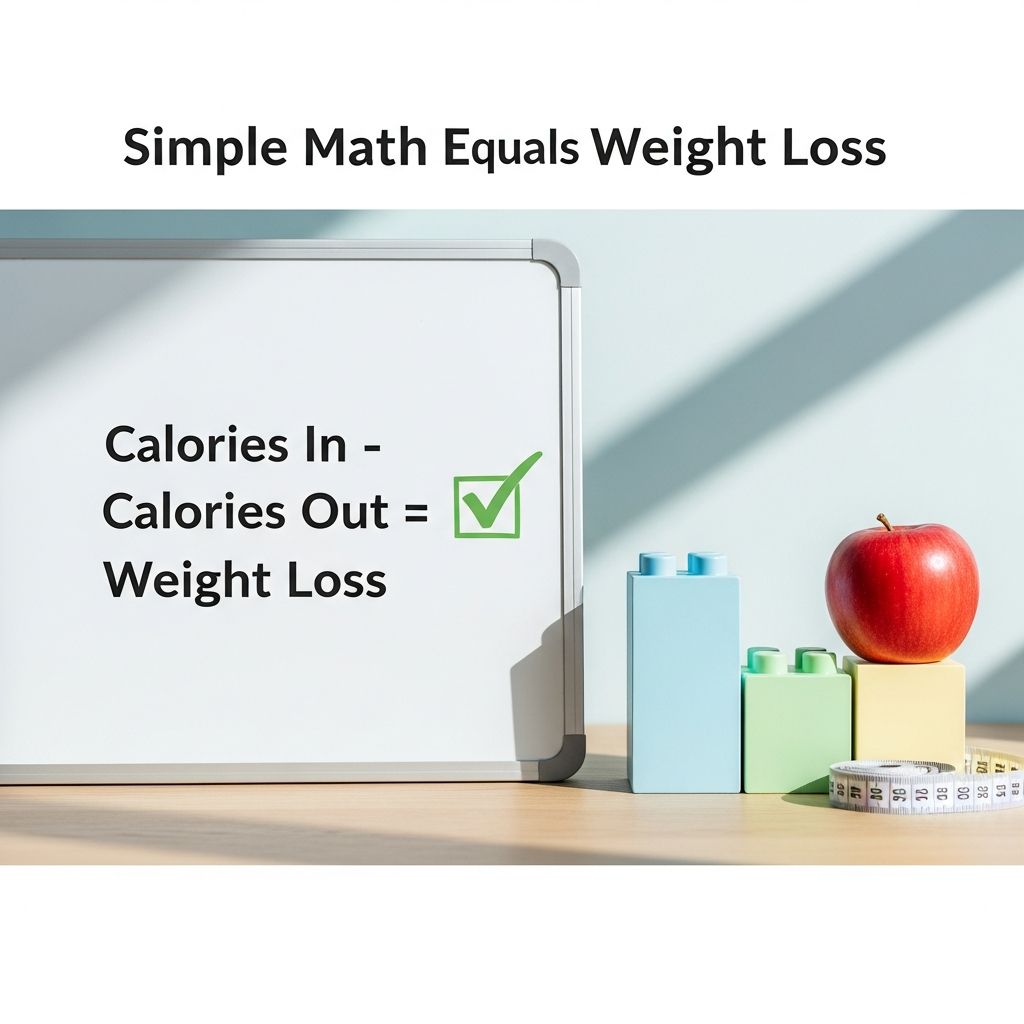
Simple Math Equals Easy Weight Loss
Weight loss doesn’t have to be complicated. At its core, losing weight comes down to one fundamental mathematical principle: burning more calories than you consume. Harvard Health experts have long advocated for this straightforward approach, which removes the mystery and confusion surrounding weight loss strategies. Instead of following restrictive diets or purchasing expensive weight loss programs, understanding the basic math behind weight loss empowers you to make informed decisions about your health and body.
The simplicity of this concept is both powerful and liberating. When you understand that weight loss is fundamentally a numbers game, you can stop obsessing over which specific foods are “good” or “bad” and instead focus on the broader picture of energy balance. This mathematical framework removes the emotional complexity often associated with dieting and replaces it with objective, measurable goals.
Understanding the Calorie Balance Equation
The foundation of weight loss is surprisingly straightforward: one pound of body weight equals approximately 3,500 calories. This means that to lose one pound per week, you need to create a deficit of 500 calories daily (500 calories × 7 days = 3,500 calories). To lose two pounds per week, you would need a deficit of 1,000 calories per day. This simple mathematical relationship provides a clear framework for understanding how much weight you can realistically expect to lose based on your caloric intake and expenditure.
However, it’s important to recognize that while this equation provides a useful guideline, individual results vary based on factors such as metabolism, age, physical activity level, and overall health status. The mathematical principle remains true, but the practical application requires consideration of your unique circumstances.
Calculating Your Daily Caloric Needs
Before you can create a caloric deficit, you need to determine your baseline caloric requirements. Your daily caloric needs depend on several factors, including your age, gender, current weight, height, and activity level. These factors combine to determine your Basal Metabolic Rate (BMR)—the number of calories your body burns at rest—and your Total Daily Energy Expenditure (TDEE), which includes additional calories burned through physical activity.
Once you know your TDEE, you can calculate the appropriate caloric deficit for your weight loss goals. For example, if your TDEE is 2,500 calories and you want to lose one pound per week, you would aim to consume approximately 2,000 calories daily. This mathematical approach removes guesswork and provides a concrete target to work toward.
The Role of Physical Activity in the Equation
Exercise plays a crucial role in the weight loss equation on both sides of the equation. First, exercise increases your caloric expenditure, making it easier to create the necessary deficit. Second, regular physical activity helps preserve lean muscle mass during weight loss, which maintains your metabolic rate and prevents the metabolism slowdown that can occur with diet alone.
Related Stories



Different types of exercise burn different amounts of calories. Cardiovascular activities like running, cycling, and swimming typically burn significant calories during the activity. Strength training may burn fewer calories during the workout itself but increases your resting metabolic rate, meaning you burn more calories throughout the day. The most effective approach combines both types of exercise within a structured, consistent routine.
The Importance of Consistency Over Perfection
While the math of weight loss is simple, the execution requires consistency. One day of overeating won’t derail your progress, just as one day of perfect adherence won’t guarantee success. What matters is your average caloric intake over time. This perspective removes the all-or-nothing mentality that often leads people to abandon their weight loss efforts after a single indulgence.
Consistency allows the mathematical principle to work reliably over weeks and months. If you maintain an average deficit of 500 calories per day over a week, you will lose approximately one pound, regardless of the specific days or meals involved. This flexibility makes weight loss sustainable and psychologically manageable compared to rigid, restrictive diets.
Tracking and Monitoring Your Progress
To apply the mathematical principles of weight loss effectively, you need accurate data. Tracking your food intake through apps, journals, or photographs helps ensure you’re hitting your caloric targets. Weighing food portions provides precise measurements, reducing the estimation errors that often lead to unintentional overconsumption.
Regular weigh-ins, typically once or twice per week, help you monitor whether your caloric deficit is producing the expected mathematical results. Short-term weight fluctuations due to water retention, hormonal changes, or food timing shouldn’t discourage you—the mathematical principle works over longer time periods. Most experts recommend averaging your weight over multiple weeks to identify true trends rather than focusing on daily variations.
Why Traditional Diets Often Fail: The Math Reveals the Truth
Many commercial diets fail not because the mathematical principle is wrong, but because they’re unsustainable. A diet that creates an excessive caloric deficit might produce rapid initial weight loss, but the extreme nature of the restriction makes it impossible to maintain long-term. The math still works, but the approach isn’t compatible with real-life sustainability.
Additionally, some diets claim to “boost metabolism” or provide special benefits beyond simple caloric balance. While certain foods and nutrients can slightly influence metabolic rate or satiety, the fundamental mathematical equation remains: calories in versus calories out determines weight change. Recognizing this helps you evaluate weight loss claims with skepticism and focus on approaches that align with the established science.
Optimizing Nutrition Within Your Caloric Budget
Once you’ve established your caloric targets, the composition of those calories matters for health, energy, and adherence. While you could theoretically lose weight eating only candy bars (as long as you maintained a deficit), this approach would leave you hungry, low on energy, and deficient in essential nutrients.
Prioritizing protein, whole grains, fruits, vegetables, and healthy fats within your caloric budget provides several advantages. These foods offer greater satiety, meaning you feel fuller longer on fewer calories. They also supply vitamins, minerals, and fiber that support your health during weight loss. From a practical standpoint, these nutrient-dense foods make it easier to sustain your caloric deficit without feeling deprived.
The Mathematical Impact of Small Changes
One of the most empowering aspects of understanding weight loss math is recognizing how small daily changes accumulate over time. Eliminating just 200 calories per day—roughly equivalent to one large coffee drink with added cream and sugar—results in losing approximately 20 pounds over a year, assuming no other changes. This demonstrates that significant weight loss doesn’t require dramatic lifestyle overhauls; modest, consistent changes produce substantial results mathematically.
Similarly, adding light exercise that burns an extra 200 calories daily produces the same mathematical outcome. This flexibility allows you to choose an approach that fits your lifestyle, making the mathematical principle work within your real-world constraints rather than requiring you to conform to an unrealistic ideal.
Understanding Plateaus Through the Math
Weight loss plateaus—periods where progress stalls despite continued effort—confuse many people who don’t understand the underlying mathematics. Plateaus occur because as you lose weight, your body requires fewer calories to maintain basic functions. Your TDEE decreases, meaning the caloric deficit that previously produced one pound of weight loss per week now produces less weight loss.
The mathematical solution to plateaus is straightforward: recalculate your caloric needs based on your new weight and either reduce intake further or increase activity. This isn’t a sign of failure or that your body has stopped responding to a caloric deficit—it’s simply the mathematics working as expected and requiring adjustment to continue progress.
Metabolism and Individual Variation in the Equation
While the fundamental math of weight loss is universal, individual metabolic rates vary. Factors including genetics, age, hormonal status, and muscle mass influence how quickly each person’s body processes calories. Two people eating identical diets and performing identical exercise might lose weight at slightly different rates due to these metabolic differences.
However, these individual variations occur within predictable ranges. The mathematical principle remains valid; it simply requires personalization based on your individual response. Tracking your actual results over several weeks provides the data to calibrate your approach to your unique metabolism rather than relying solely on theoretical calculations.
Frequently Asked Questions
Q: Can I lose weight without counting calories?
A: While formal calorie counting isn’t necessary, the mathematical principle still applies. Using strategies like portion control, eating more whole foods, and monitoring your weight provides feedback on whether you’re maintaining a deficit without explicit counting.
Q: How accurate do my calorie calculations need to be?
A: Perfect accuracy isn’t necessary. Being within 100-200 calories of your target is sufficient because the mathematical principle works over time, smoothing out minor daily variations. Consistency matters more than precision.
Q: Does the type of food affect the math of weight loss?
A: The fundamental mathematical equation for weight loss is calories in versus calories out. However, different foods have different effects on hunger, energy, and adherence, which influences whether you can maintain your caloric deficit long-term.
Q: What if I have an extremely slow metabolism?
A: Even with a slow metabolism, the mathematical principle applies—you simply need a larger caloric deficit to achieve results. This might mean either reducing intake more or increasing activity more than average, but the math remains consistent.
Q: How long does it take to see results from weight loss?
A: Mathematically, maintaining a 500-calorie daily deficit should produce approximately one pound of loss per week. However, expect 2-4 weeks before changes become noticeable as initial weight loss includes water loss, which varies individually.
Q: Is it better to lose weight through diet or exercise?
A: Both contribute to the caloric deficit equation. Research suggests that combining diet and exercise produces superior long-term results because exercise preserves muscle mass and improves overall health beyond just weight loss.
References
- Weight loss strategies, weight change, and type 2 diabetes in US health professionals: A cohort study — PLOS Medicine, published by Keyi Si, Yang Hu, Molin Wang, and colleagues. 2022-09-27. https://doi.org/10.1371/journal.pmed.1004094
- The Healthy Eating Plate — Harvard T.H. Chan School of Public Health, Department of Nutrition. https://www.hsph.harvard.edu/nutritionsource/healthy-eating-plate/
- Overweight & Obesity Statistics — National Institute of Diabetes and Digestive and Kidney Diseases (NIDDK), U.S. Department of Health & Human Services. 2024. https://www.niddk.nih.gov/health-information/health-statistics/overweight-obesity
- Physical Activity Guidelines for Americans — U.S. Department of Health & Human Services, Office of Disease Prevention and Health Promotion. 2018. https://health.gov/sites/default/files/2019-09/PAG_Executive-Summary.pdf
Similar Articles








Read full bio of Sneha Tete