SJS/TEN Images: Clinical Photo Gallery And Key Signs
Visual guide to Stevens-Johnson syndrome and toxic epidermal necrolysis: clinical images and key features.
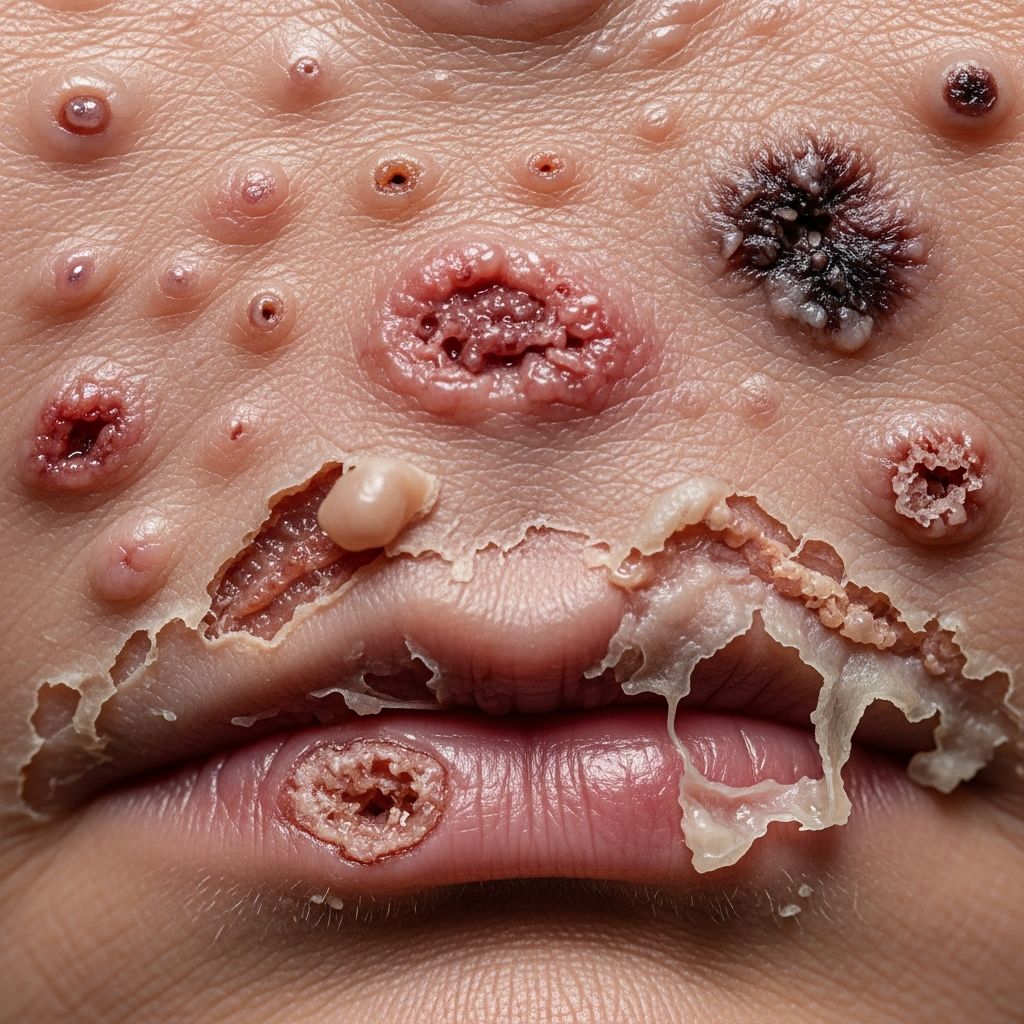
Stevens-Johnson syndrome (SJS) and toxic epidermal necrolysis (TEN) represent a continuum of severe, potentially life-threatening mucocutaneous reactions, primarily triggered by medications, characterized by widespread epidermal necrosis and detachment.
What is SJS/TEN?
Stevens-Johnson syndrome/toxic epidermal necrolysis (SJS/TEN) is a rare, acute, serious, and potentially fatal skin reaction involving sheet-like skin and mucosal loss. SJS and TEN are now considered variants of the same disease spectrum, distinct from erythema multiforme, with SJS involving less than 10% body surface area (BSA) detachment, SJS/TEN overlap 10-30% BSA, and TEN greater than 30% BSA.
The condition typically begins with flu-like prodromal symptoms followed by rapid onset of tender erythematous rash progressing to blisters and epidermal sloughing. Mucosal involvement affects at least two sites, including oral, ocular, and genital mucosa, leading to severe pain and disability.
- Key diagnostic feature: Positive Nikolsky sign where gentle rubbing produces epidermal detachment.
- Mortality: 10% for SJS, up to 50% for TEN, higher in elderly and those with comorbidities.
Images
SJS/TEN – Prodrome and early rash
Initial presentation often shows dusky red macules and patches coalescing on trunk and proximal extremities, with early target-like lesions. Flu-like symptoms including fever, malaise, and sore throat precede skin findings by 1-14 days.
SJS/TEN – Established eruption
Characteristic flat atypical targets with central duskiness and erythematous halo appear symmetrically. Lesions progress rapidly to flaccid blisters and epidermal detachment exposing dermis.
SJS/TEN – Sheet-like detachment
Large areas of epidermal separation create painful erosions resembling burns. Detachment typically spares palms and soles initially but extensive involvement defines TEN severity.
Mucosal involvement – Oral
Severe haemorrhagic crusting of lips with erosions extending to buccal mucosa, tongue, and palate. Dysphagia and pain severely limit oral intake.
Mucosal involvement – Ocular
Bilateral conjunctivitis with membrane formation, corneal erosions, and symblepharon risk. Early ocular involvement predicts chronic complications.
Mucosal involvement – Genital
Erosions and ulceration of vulva, vagina, glans penis, and prepuce causing dysuria and scarring. Genital involvement occurs in 60-90% of cases.
SJS/TEN – Full thickness epidermal necrosis
Histopathology reveals keratinocyte apoptosis progressing to full-thickness epidermal necrosis with sparse lymphocytic infiltrate. Minimal dermal inflammation distinguishes from other blistering disorders.
Acute complications
Sepsis, fluid loss, and multiorgan failure dominate acute phase. Images show denuded skin with secondary infection signs and respiratory compromise from airway involvement.
Healing phase
Re-epithelialization begins at day 8-12 with fragile new skin. Peeling of less affected areas continues for weeks accompanied by intense pruritus.
Long-term sequelae
Survivors develop dyspigmentation, xerosis, nail dystrophy, and cicatricial changes. Chronic ocular surface disease with symblepharon and vision loss affects 20-50%.
Demographics
SJS/TEN affects 1-2 per million annually, with bimodal distribution in young children and adults over 50. Incidence varies by ethnicity due to HLA associations—HLA-B*15:02 strongly linked to carbamazepine-induced SJS/TEN in Asian populations.
| Risk Factor | Increased Risk |
|---|---|
| Age >50 years | 2-3x higher mortality |
| HIV infection | 1000x incidence increase |
| HLA-B*15:02 (Asians) | Carbamazepine risk |
| Active malignancy | SCORTEN mortality predictor |
Causes
Over 95% of cases are drug-induced, with antibiotics (40%), antiepileptics, allopurinol, NSAIDs, and sulfonamides most implicated. Onset typically 4-28 days after drug initiation.
Related Stories



- High-risk drugs: Carbamazepine, lamotrigine, phenytoin, allopurinol, sulfonamides, oxicam NSAIDs.
- Pathogenesis: Cytotoxic CD8+ T cells and NK cells release granulysin, perforin/granzyme, FasL, and TNF-α causing keratinocyte death.
- Non-drug triggers: Mycoplasma pneumoniae (5%), rarely viral infections.
Clinical features
Prodrome (1-14 days): fever >38°C, cough, sore throat, arthralgia. Eruption: abrupt onset of morbilliform or targetoid rash on trunk spreading centrifugally. Skin: erythematous macules → vesicles → flaccid bullae → erosions. Nikolsky positive.
- Mucosal: Haemorrhagic crusts (lips), pseudomembranes (eyes, genitals), respiratory tract erosions.
- Systemic: High fever, tachycardia, hypotension, elevated liver enzymes.
Complications
Acute: Sepsis (30%), pneumonia, ARDS, GI hemorrhage, acute kidney injury. Mortality driven by infection and multiorgan failure.
- Long-term (20-80% survivors): Skin – dyspigmentation, xerosis, alopecia; Eyes – photophobia, entropion, blindness; Genital – vaginal stenosis, phimosis; GI – oesophageal strictures.
Diagnosis
Clinical + biopsy confirming full-thickness epidermal necrosis without interface dermatitis or antibody deposition. SCORTEN score predicts mortality:
| Parameter | Points |
|---|---|
| Age ≥70 | 1 |
| Heart rate ≥120 | 1 |
| Cancer | 1 |
| BSA detached ≥10% | 1 |
| Bicarb <20 | 2 |
| BUN >28 | 2 |
| Glucose >252 | 3 |
Score ≥2: 12% mortality; ≥4: 58%; ≥5: 90%.
Differential diagnosis
- Staphylococcal scalded skin syndrome (SSSS): superficial cleavage, no mucosal involvement, negative biopsy.
- Erythema multiforme major: true targets, acral distribution, Mycoplasma/HSV trigger.
- Pemphigus vulgaris: flaccid bullae, autoantibodies, DIF positive.
- Acute generalized exanthematous pustulosis (AGEP): pustules, spontaneous resolution.
Treatment
Stop causative drug IMMEDIATELY. Transfer to burn ICU. Supportive care paramount: fluid resuscitation, wound care, infection prevention, nutrition.
- Controversial: IVIG (1g/kg x3-4d), cyclosporine (3-5mg/kg), cyclophosphamide. No RCTs prove efficacy; meta-analyses suggest cyclosporine benefit.
- Anti-TNF: Etanercept single dose promising in small trials.
- Wound care: Non-adherent dressings, topical antiseptics, avoid silver sulfadiazine.
Prevention
HLA-B*15:02 screening before carbamazepine in Asians. Avoid high-risk drugs in previous SJS/TEN patients. Desensitization rarely successful. Risk alleles guide pharmacogenetics.
Outlook
Acute phase 8-12 days; reepithelialization 2-3 weeks. Mortality 10-50% by extent. Survivors: 40% chronic sequelae impacting quality of life. Eye involvement worst prognosticator for disability.
Frequently Asked Questions
Is SJS/TEN contagious?
No, SJS/TEN is not infectious. It is a hypersensitivity reaction, primarily drug-induced.
How quickly does SJS/TEN progress?
Rapidly—maximum skin detachment within 4 days. Early recognition critical.
Can SJS/TEN recur?
Yes, if re-exposed to culprit or cross-reactive drug. Lifetime avoidance essential.
What is the best treatment for SJS/TEN?
Drug cessation + supportive care in burn unit. Immunomodulators like cyclosporine show promise but evidence limited.
Does everyone recover fully from SJS/TEN?
No—significant long-term morbidity in survivors, especially ocular and mucosal scarring.
References
- Stevens-Johnson syndrome/toxic epidermal necrolysis — MedlinePlus Genetics. 2023. https://medlineplus.gov/genetics/condition/stevens-johnson-syndrome-toxic-epidermal-necrolysis/
- Stevens-Johnson syndrome / toxic epidermal necrolysis — DermNet NZ. 2023-10-28. https://dermnetnz.org/topics/stevens-johnson-syndrome-toxic-epidermal-necrolysis
- Stevens-johnson Syndrome and Toxic Epidermal Necrolysis — PubMed. 2023-08-21. https://pubmed.ncbi.nlm.nih.gov/37605396/
- Stevens-Johnson syndrome and toxic epidermal necrolysis — Frontiers in Medicine. 2022-06-14. https://www.frontiersin.org/journals/medicine/articles/10.3389/fmed.2022.949520/full
- Stevens–Johnson Syndrome and Toxic Epidermal Necrolysis — PMC. 2021-09-21. https://pmc.ncbi.nlm.nih.gov/articles/PMC8472007/
Similar Articles








Read full bio of Sneha Tete