Red Alert: Skin Cancer Warning Signs You Shouldn’t Ignore
Learn the critical warning signs of skin cancer and when to seek immediate medical attention.
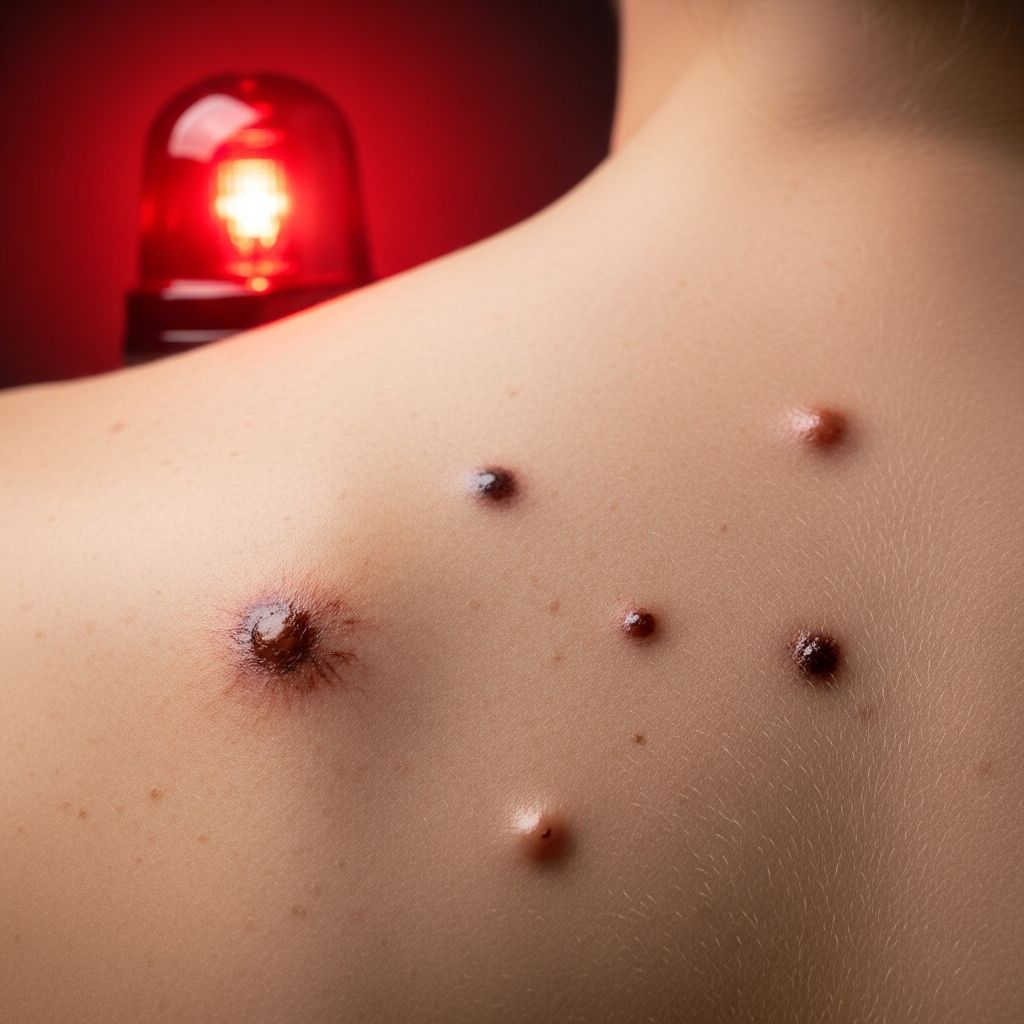
Red Alert: Understanding Skin Cancer Warning Signs
Skin cancer is one of the most common cancers in the United States, yet early detection through awareness of warning signs significantly improves treatment outcomes and survival rates. Understanding what to look for on your skin is essential for catching suspicious lesions before they progress. This comprehensive guide outlines the critical warning signs that demand immediate medical attention and provides you with the knowledge to protect your health.
The ABCDE Method: Your Essential Screening Tool
Dermatologists recommend using the ABCDE method as a straightforward way to evaluate moles and skin spots for potential signs of melanoma and other skin cancers. This mnemonic device helps you remember five key characteristics to monitor:
- Asymmetry: One half of the spot does not match the other half. Benign moles are typically symmetrical, so any asymmetrical appearance warrants closer examination.
- Border: The edges are irregular, blurred, notched, or scalloped rather than smooth and well-defined. Irregular borders are a hallmark of potentially dangerous lesions.
- Color: The spot displays multiple colors or uneven pigmentation, with shades of brown, black, pink, red, white, blue, or tan. Benign moles usually maintain consistent coloring throughout.
- Diameter: The spot is larger than six millimeters, approximately the size of a pencil eraser. While smaller lesions can still be cancerous, this size threshold helps identify suspect growths.
- Evolving: The spot has changed in size, shape, color, or elevation over time. Any changes to an existing mole or the appearance of a new, unusual spot should be evaluated professionally.
Non-Healing Sores: A Critical Red Flag
One of the earliest and most important warning signs of basal cell carcinoma and squamous cell carcinoma is a sore that fails to heal within a few weeks. These lesions often appear as small red patches, scabs, or open sores that may bleed or form a crust easily. What distinguishes these dangerous sores from ordinary wounds is their persistence and tendency to partially improve before reopening.
A sore that lingers for more than three weeks, repeatedly bleeds, oozes, or scabs over without fully healing may indicate skin cancer and requires professional examination. Non-healing lesions are particularly concerning because they signal abnormal cell growth that your body cannot resolve naturally. The sooner you seek dermatological evaluation, the earlier treatment can begin, preventing further tissue damage and improving your prognosis.
Changes in Existing Moles: The “Ugly Duckling” Sign
Any change in an existing mole demands attention. Dermatologists refer to a mole that looks noticeably different from all others on your skin as the “ugly duckling” sign. Changes that warrant professional evaluation include:
- Alterations in the mole’s shape, size, or color
- Development of irregular borders where previously smooth edges existed
- Spread of color or pigmentation beyond the original mole boundary onto surrounding skin
- New swelling or irritation around the mole
Melanoma, the most aggressive form of skin cancer, can develop out of existing moles, making vigilant monitoring essential. When redness or darker pigmentation spreads beyond a mole’s original boundaries, this may indicate melanoma development and should be evaluated immediately. In people with darker skin tones, melanoma tends to occur on the palms or soles of the feet, areas that may receive less routine inspection.
New Suspicious Spots: When Location Matters
A brand-new lesion appearing on previously clear skin should always be taken seriously, especially if it stands out visually from your other moles or looks different in any way. Beyond typical skin surface growths, pay attention to unusual spots in unexpected locations:
- Dark spots under fingernails or toenails may indicate melanoma in people with darker skin tones and require prompt evaluation
- Lesions on non-sun-exposed areas, particularly in individuals with darker skin, can still represent dangerous skin cancers
- New growths on the scalp, ears, or other frequently overlooked areas deserve professional assessment
Painful, Itching, or Bleeding Lesions
Related Stories



While many skin cancers develop without pain, skin lesions that itch, hurt, or bleed spontaneously warrant immediate professional attention. These symptoms indicate inflammation or abnormal cellular activity beneath the skin surface. An early warning sign of skin cancer can be a mole or skin patch that suddenly begins to itch, become tender, or bleed without apparent injury.
Pain serves as your body’s alert system, signaling that something requires investigation. Never overlook discomfort associated with skin lesions. Consulting a specialist for early diagnosis allows for precise skin cancer identification and increases your chances of complete recovery. Spots that spontaneously bleed, especially without any trauma to the area, are particularly concerning and should be evaluated immediately.
Basal Cell Carcinoma: Distinctive Features
Basal cell carcinoma, the most common form of skin cancer, typically develops slowly on the outermost skin layers. This cancer can present in several distinct forms that differ from typical skin growths:
- A pearly or waxy bump, often on the face, ears, or neck
- A transparent or skin-colored bump on the skin
- A brown or blue lesion with distinctive coloring
- A white, scar-like spot that may appear flat and rough
- A flat, scaly patch usually surrounded by a raised edge
- A pink lesion with an indented center
- A sore that repeatedly bleeds, oozes, or scabs over but fails to fully heal
- A dry red or brown patch that may resemble eczema or dermatitis
Red, scaly patches are frequently mistaken for eczema or dermatitis, but persistent patches that bleed, itch, or develop crusts could indicate basal cell carcinoma requiring professional diagnosis.
Squamous Cell Carcinoma: What to Watch For
Squamous cell carcinoma develops when cells in the skin’s top layer begin growing erratically. This cancer commonly develops in areas of high sun exposure but can affect non-exposed areas, particularly in people with darker skin tones. Key warning signs include:
- A firm, red nodule on the skin
- A painful or itchy skin lesion that causes discomfort
- A scaly or crusty lesion with irregular borders
- A red, dry patch of skin that may slowly enlarge
- Rough, red-toned growths that are rougher in appearance than surrounding skin
- A tender sore that may develop from a dry patch
- Areas that itch, burn, or bleed spontaneously
- A curved red bump or crusty growth resembling a small wart
- Brown spots resembling age spots that actually contain squamous cell carcinoma cells
Merkel Cell Carcinoma: A Rare but Serious Warning
While less common than other skin cancer types, Merkel cell carcinoma presents distinctive warning signs requiring urgent attention:
- A growing skin sore that enlarges progressively
- A fast-growing skin mass that appears suddenly
- A firm, dome-shaped growth on the skin
- A spot that appears red, pink, or purple in coloration
- Lesions that are tender or itchy to the touch
- Bleeding at the sore’s site
- Spots that grow or change rapidly compared to other skin lesions
Subtle Warning Signs Often Missed
Many people overlook early skin cancer warning signs because they appear subtle or resemble common, benign skin conditions. Remain vigilant for:
- “Pimples” that aren’t healing over one month or longer
- Raised red patches or bumps that persist
- Rough, scaly wart-like bumps that don’t respond to typical treatments
- Bumps that appear scarred without any history of skin trauma or injury
- Small, smooth, shiny, pale or waxy lumps that may bleed
- Flat red spots or lumps that are scaly or crusty
- Large areas with oozing or crust formation
When to Seek Professional Medical Attention
The timeline for seeking professional evaluation is critical. Any unusual spot that doesn’t heal within a few weeks warrants dermatological examination. Schedule an appointment with a dermatologist if you notice:
- Any changes to an existing mole or skin growth
- A new mole appearing after age 40
- A lesion that meets any ABCDE criteria
- Persistent sores, bumps, or scaly patches
- Spots that bleed, itch, or cause pain without apparent cause
- Lesions that change appearance over weeks or months
Frequently Asked Questions
Q: How often should I perform self-skin checks?
A: Dermatologists recommend performing thorough skin self-examinations monthly, ideally using a mirror and enlisting a partner to check hard-to-see areas. Those with significant sun exposure history or multiple moles should check more frequently.
Q: Can skin cancer develop under nails or in non-sun-exposed areas?
A: Yes, melanoma can develop under fingernails and toenails, particularly in people with darker skin tones. Squamous cell carcinoma can also develop in non-sun-exposed areas, especially in individuals with darker skin, making comprehensive body checks essential.
Q: Does all skin cancer look dark or pigmented?
A: No. Skin cancers can appear in various colors including pink, red, white, blue, and flesh-toned. Basal cell carcinoma often appears as a pearly or waxy bump. Don’t assume a lesion is harmless based on color alone.
Q: What should I do if I find a suspicious lesion?
A: Schedule an appointment with a dermatologist as soon as possible. Avoid attempting to treat or remove the lesion yourself. Early professional evaluation provides the best chance for successful treatment outcomes.
Q: Are people with darker skin tones at lower risk for skin cancer?
A: While melanoma incidence is lower in darker skin populations, these individuals can still develop skin cancer, often at later stages due to delayed detection. Melanoma in darker-skinned individuals frequently appears on palms, soles, or under nails, requiring specific awareness.
References
- 5 Warning Signs of Skin Cancer — AdventHealth. https://www.adventhealth.com/blog/5-warning-signs-skin-cancer
- What are the 7 Warning Signs of Skin Cancer? — Heights Dermatology. https://www.heightsskin.com/blog/1390501-what-are-the-7-warning-signs-of-skin-cancer
- Skin Cancer Explained: Symptoms, Risk Factors, Treatment — UnityPoint. https://www.unitypoint.org/find-a-service/cancer-care/skin-cancer
- Signs of Skin Cancer: Learn to Spot These Red Flags — Florida Cancer Specialists & Research Institute. https://flcancer.com/articles/signs-of-skin-cancer/
- Warning Signs of Skin Cancer — Holly Hanson, MD. https://www.drhollyhanson.com/blog/warning-signs-of-skin-cancer
- How to Spot Skin Cancer Early: 5 Signs Dermatologists Look For — Clarus Dermatology. https://clarusdermatology.com/spot-skin-cancer-early-5-warning-signs/
- 9 Top Skin Cancer Symptoms & Signs — MD Anderson Cancer Center. https://www.mdanderson.org/cancer-types/skin-cancer/skin-cancer-symptoms.html
- Skin Cancer: Symptoms, Types & Treatment — Cleveland Clinic. https://my.clevelandclinic.org/health/diseases/15818-skin-cancer
- 7 Warning Signs of Skin Cancer Every Fair-Skinned Person Should Know — My Family MD. https://myfamilymd.org/blog/7-warning-signs-of-skin-cancer-every-fair-skinned-person-should-know
Similar Articles








Read full bio of medha deb