Skin Conditions A To Z: 13 Symptoms, Causes & Treatments
Comprehensive guide to common skin conditions, symptoms, treatments, and prevention strategies for healthier skin.
Skin conditions affect millions worldwide, ranging from mild irritations to chronic diseases requiring medical intervention. Understanding these conditions is crucial for effective management and prevention. This comprehensive guide covers the most common skin disorders alphabetically, detailing symptoms, causes, treatments, and prevention tips. Whether you’re dealing with acne, eczema, or something more serious like melanoma, knowledge empowers better skin health.
The skin, our body’s largest organ, serves as a protective barrier. When compromised, it can lead to discomfort, cosmetic concerns, or health risks. According to the American Academy of Dermatology, over 85 million Americans suffer from acne alone, while eczema impacts 31 million. Early diagnosis and treatment are key to preventing complications.
Acne
Acne vulgaris is the most common skin condition, affecting nearly 50 million Americans annually. It occurs when hair follicles become clogged with oil and dead skin cells, leading to whiteheads, blackheads, pimples, and cysts.
Symptoms: Redness, swelling, pain, scarring.
Causes: Hormonal changes, excess oil production, bacteria (Propionibacterium acnes), genetics, diet.
Treatments: Topical retinoids, benzoyl peroxide, oral antibiotics, isotretinoin for severe cases. Lifestyle changes like gentle cleansing and non-comedogenic products help.
Prevention: Wash face twice daily, avoid touching face, use oil-free makeup.
Actinic Keratosis
Actinic keratosis (AK) are precancerous rough, scaly patches caused by years of sun exposure. They affect over 58 million Americans and can progress to squamous cell carcinoma if untreated.
Symptoms: Dry, scaly, red or brown patches on sun-exposed areas like face, lips, ears, hands.
Causes: Cumulative UV radiation damage.
Treatments: Cryotherapy (freezing), topical chemotherapy (5-fluorouracil), photodynamic therapy, laser surgery.
Prevention: Broad-spectrum sunscreen SPF 30+, protective clothing, avoid peak sun hours. The Skin Cancer Foundation recommends daily sunscreen application.
Atopic Dermatitis (Eczema)
Atopic dermatitis, a type of eczema, is a chronic inflammatory condition causing itchy, inflamed skin. It affects up to 13% of children and 7% of adults globally.
Symptoms: Intense itching, red or brownish-gray patches, small raised bumps, oozing/crusted skin.
Causes: Genetic mutations (filaggrin gene), immune system dysfunction, environmental triggers like allergens, irritants, stress.
Treatments: Moisturizers, topical corticosteroids, calcineurin inhibitors, biologics like dupilumab for severe cases. Wet wrap therapy provides relief.
Prevention: Identify triggers via patch testing, use fragrance-free products, maintain skin hydration.
Basal Cell Carcinoma
The most common skin cancer, basal cell carcinoma (BCC) grows slowly but can be locally destructive. It represents 80% of non-melanoma skin cancers.
Symptoms: Pearly or waxy bump, flat flesh-colored lesion, pink growth with raised border, non-healing sore.
Causes: UV exposure, fair skin, family history, immunosuppression.
Related Stories



Treatments: Mohs surgery (99% cure rate), excision, radiation, topical therapies for superficial BCC.
Prevention: Sun protection, regular skin checks. CDC data shows UV exposure causes 90% of non-melanoma skin cancers.
Contact Dermatitis
Contact dermatitis results from skin contact with allergens or irritants, causing localized inflammation.
Symptoms: Red rash, itching, burning, blisters, dry/cracked skin.
Causes: Irritants (soaps, detergents), allergens (nickel, poison ivy, fragrances).
Treatments: Avoid trigger, cool compresses, topical steroids, oral antihistamines.
Prevention: Patch testing, barrier creams, hypoallergenic products.
Hives (Urticaria)
Hives are raised, itchy welts triggered by allergic reactions or physical stimuli. Acute hives last <6 weeks; chronic persist longer.
Symptoms: Red/white itchy bumps, swelling (angioedema).
Causes: Allergies (foods, meds), infections, stress, pressure, cold/heat.
Treatments: Antihistamines (loratadine, cetirizine), epinephrine for anaphylaxis, omalizumab for chronic cases.
Prevention: Avoid known triggers, stress management.
Melanoma
Melanoma, the deadliest skin cancer, arises from melanocytes. Early detection via ABCDE rule (Asymmetry, Border irregularity, Color variation, Diameter >6mm, Evolving) saves lives.
Symptoms: New/changing mole, asymmetrical lesion, multiple colors.
Causes: UV exposure, moles, family history, fair skin.
Treatments: Surgical excision, immunotherapy (pembrolizumab), targeted therapy (BRAF inhibitors).
Prevention: Self-exams monthly, annual dermatologist visits. American Cancer Society reports 5-year survival 99% for localized melanoma.
Melasma
Melasma causes brown/gray-brown patches, often on face, triggered by hormones/sun.
Symptoms: Symmetric hyperpigmentation on cheeks, forehead, upper lip.
Causes: Pregnancy, birth control, sun exposure, genetics (Fitzpatrick types III-VI).
Treatments: Hydroquinone 4%, tretinoin, chemical peels, lasers.
Prevention: Sunscreen, hats, avoid hormonal triggers.
Psoriasis
Psoriasis is an autoimmune disease causing rapid skin cell turnover, resulting in thick plaques. Affects 7.5 million Americans.
Symptoms: Silvery scales on red patches, itching, burning, pitted nails.
Causes: Genetics (HLA-Cw6), immune dysregulation (IL-17/23), triggers (stress, infections, smoking).
Treatments: Topicals (steroids, vitamin D analogs), phototherapy, biologics (secukinumab). National Psoriasis Foundation guidelines endorse stepwise therapy.
Prevention: Moisturize, manage stress, avoid alcohol.
Rosacea
Rosacea causes facial redness/flushing, affecting 16 million Americans, often misdiagnosed as acne.
Symptoms: Persistent redness, visible blood vessels, papules/pustules, eye irritation (ocular rosacea).
Causes: Genetics, immune response to skin mites (Demodex), vascular abnormalities, triggers (sun, spicy food).
Treatments: Topical metronidazole, azelaic acid, oral doxycycline, laser for vessels.
Prevention: Gentle skincare, trigger diary, sunscreen.
Seborrheic Dermatitis
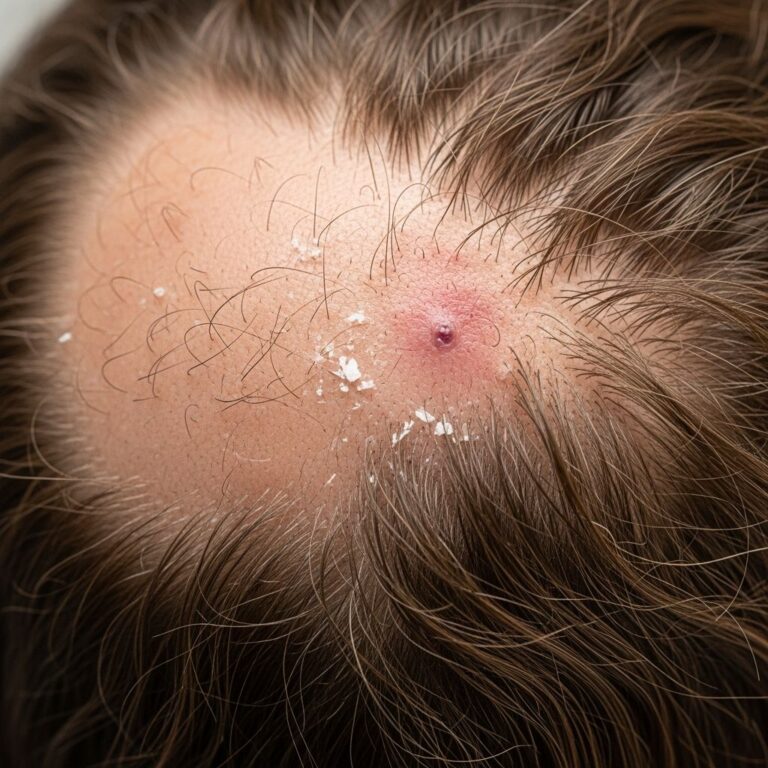
Common scalp condition causing dandruff-like flakes, affects oily areas.
Symptoms: Yellow/white greasy scales, redness, itching.
Causes: Malassezia yeast overgrowth, sebum excess, stress.
Treatments: Antifungal shampoos (ketoconazole), topical steroids.
Prevention: Regular washing, tea tree oil.
Squamous Cell Carcinoma
Second most common skin cancer, potentially metastatic if advanced.
Symptoms: Scaly red patch, wart-like growth, open sore.
Causes: UV exposure, HPV, chronic wounds.
Treatments: Surgery, radiation, cryotherapy.
Prevention: Sun protection.
Vitiligo
Autoimmune destruction of melanocytes causes white patches.
Symptoms: Milky-white depigmented areas, often symmetrical.
Causes: Autoimmunity, genetics, oxidative stress.
Treatments: Narrowband UVB, topical calcipotriene, JAK inhibitors (ruxolitinib cream, FDA-approved 2022).
Prevention: Sunscreen on affected areas.
When to See a Doctor
Seek medical attention for: non-healing sores >2 weeks, changing moles, severe pain/itching, signs of infection (pus, fever), sudden rash with systemic symptoms. Early intervention prevents scarring and complications. Tele-dermatology apps facilitate access.
Frequently Asked Questions (FAQs)
What is the most common skin condition?
Acne affects up to 85% of adolescents and many adults.
Can skin conditions be prevented?
Many yes—sun protection prevents 90% of skin cancers; moisturizing manages eczema.
Are skin conditions contagious?
Most no, but impetigo and warts are. Psoriasis/eczema noninfectious.
How does diet affect skin?
High-glycemic diets worsen acne; omega-3s benefit psoriasis. Evidence from NIH studies.
Skin Care Tips for Healthy Skin
- Cleanse gently twice daily
- Moisturize immediately after bathing
- Use broad-spectrum SPF 30+ daily
- Avoid hot showers
- Eat antioxidant-rich foods
References
- Skin Cancer Facts & Statistics — Skin Cancer Foundation. 2024-01-15. https://www.skincancer.org/skin-cancer-information/skin-cancer-facts/
- Acne Vulgaris — National Institute of Arthritis and Musculoskeletal and Skin Diseases (NIAMS), NIH. 2023-06-01. https://www.niams.nih.gov/health-topics/acne
- Psoriasis Clinical Guideline — American Academy of Dermatology. 2024-03-12. https://www.aad.org/member/clinical-quality/guidelines/psoriasis
- Atopic Dermatitis Guidelines — Joint Task Force on Practice Parameters. 2024-05-20. https://www.jacionline.org/article/S0091-6749(23)01332-5/fulltext
- Melanoma Treatment (PDQ®)–Health Professional Version — National Cancer Institute (NCI), NIH. 2025-12-10. https://www.cancer.gov/types/skin/hp/melanoma-treatment-pdq
- Burden of Skin Disease—United States, 2023 — CDC. 2024-08-05. https://www.cdc.gov/mmwr/volumes/73/wr/mm7329a1.htm
Similar Articles








Read full bio of Sneha Tete