Skin Disorders in Chemical Industry Workers
Understanding occupational skin diseases and protection strategies for chemical workers.
The manufacturing and processing of chemicals plays a critical role in supporting numerous industries worldwide, from agriculture to pharmaceuticals. However, workers engaged in chemical manufacturing face significant occupational health risks, particularly to their skin. According to a European Union study, approximately one in four cases of occupational dermatoses is related to chemical exposure. The prevalence of occupational skin diseases in the chemical industry affects between 4–11 workers per 1,000 employed in this sector, representing a substantial public health concern that requires comprehensive prevention and management strategies.
Introduction to Occupational Skin Diseases
Occupational skin diseases represent some of the most significant causes of work-related morbidity, with dermatitis and contact-related conditions being the predominant disorders affecting workers across multiple industries. The skin serves as the body’s primary defense barrier against pathogens and harmful substances, yet occupational exposures can compromise this protective function. Various forces—including friction, heat, cold, irritants, and allergens—can breach the skin’s natural barrier, leaving it vulnerable to breakdown and secondary bacterial infections. While occupational skin diseases can affect workers in virtually any sector, those employed in the chemical industry face elevated and sustained risks due to the nature of their work environment.
Elevated Risk Factors for Chemical Industry Workers
Chemical industry workers encounter multiple risk factors that elevate their susceptibility to skin disorders. These factors include:
- Direct contact with corrosive, irritating, and allergenic chemical substances
- Potential for acute high-concentration exposures to hazardous chemicals
- Cumulative chronic exposures to mild irritants over extended work periods
- Inadequate personal protective equipment or improper use of available equipment
- Poor workplace safety practices and inadequate hygiene facilities
- Lack of awareness regarding chemical hazards among workers and supervisors
In developed nations, rates of occupational dermatoses have declined due to increased automation, improvements in chemical manufacturing processes, and enhanced education for both employers and employees. However, workers in chemical facilities remain at substantially higher risk compared to the general population.
Types of Chemical-Skin Interactions
Chemical exposure can produce three distinct types of skin interactions that are of occupational concern: direct skin effects, immune-mediated skin effects, and systemic effects. Understanding these mechanisms is essential for appropriate diagnosis, treatment, and prevention.
Direct Skin Effects
Direct skin effects occur when chemical exposure produces localized damage such as irritation, necrosis, or corrosion of the epidermis. These effects typically manifest immediately upon exposure and range from mild irritation to severe tissue damage depending on the chemical’s strength, concentration, and duration of contact.
Immune-Mediated Skin Effects
Immune-mediated responses represent a significant occupational concern, with allergic contact dermatitis (ACD) being the second most commonly reported occupational illness, accounting for 10–15% of all occupational diseases. Hundreds of chemicals present in virtually every industrial setting—including metals, epoxy and acrylic resins, rubber additives, and chemical intermediates—have been identified as causing immune-mediated skin disorders and urticaria.
Systemic Effects
Beyond localized skin effects, dermal exposure to many occupational chemicals such as solvents and pesticides can result in serious systemic toxicity, including acute poisonings, neurotoxicity, lung and kidney damage, cardiovascular and respiratory effects, reproductive toxicity, and carcinogenicity.
Related Skin Disorders in Chemical Workers
Related Stories



Chemical industry workers may develop various dermatological conditions as a result of occupational exposure. The most prevalent conditions include:
Contact Dermatitis
Contact dermatitis is the most common skin complaint among chemical industry workers, accounting for approximately 90% of all occupational skin disorders. Workers may develop either allergic contact dermatitis, irritant contact dermatitis, or both conditions concurrently. Allergic contact dermatitis occurs when skin contact with a substance triggers an immune-mediated allergic reaction, while irritant contact dermatitis results from direct chemical damage to the skin that exceeds the skin’s capacity for self-repair.
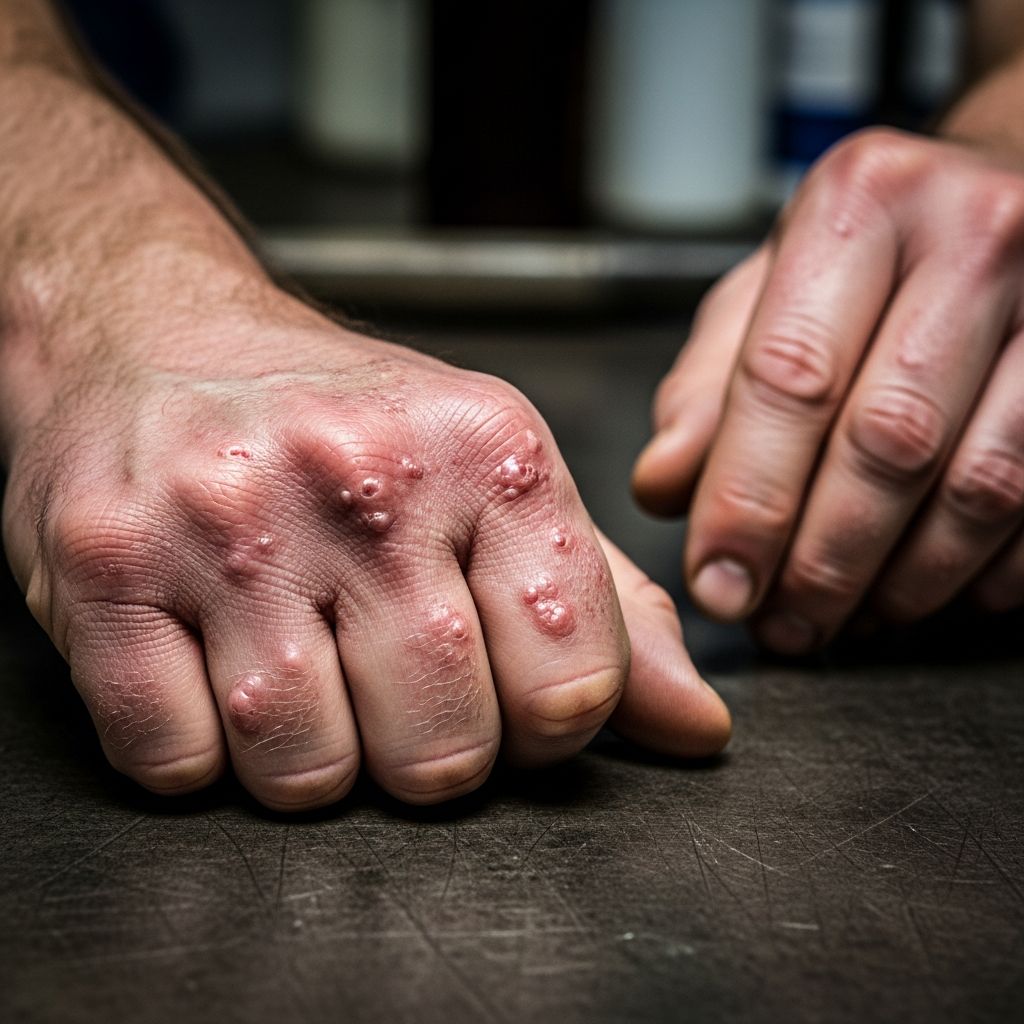
Irritant contact dermatitis can be caused by acute exposures to highly irritating substances such as acids, bases, and oxidizing agents, or through high-frequency wet work and chronic cumulative exposure to mild irritants like detergents and weak cleaning agents. The condition typically presents with red or swollen hands and fingers, cracked or itchy skin, inflammation or rash at affected areas, and in severe cases, blisters, burns, or flaking skin. The severity of the reaction depends on the chemical’s strength, the length and frequency of exposure, the worker’s baseline skin condition, and individual immune tolerance.
Chemical Burns
Workers in the chemical industry face elevated risk for chemical burns, which represent acute, severe injuries from direct contact with corrosive substances. These burns can cause permanent scarring and tissue damage and require immediate medical intervention.
Contact Leukoderma
Contact leukoderma, characterized by white patches on the skin, can occur following exposure to phenolic compounds and related substances. This condition represents a specific hazard in industries where exposure to these chemicals is likely.
Other Occupational Skin Conditions
While less common than contact dermatitis, other skin conditions may result from occupational chemical exposure, accounting for less than 10% of occupational skin diseases. These include:
- Non-allergic urticaria
- Eczema
- Folliculitis (inflammation or infection of hair follicles)
- Chloracne (a variant of acne indicative of systemic poisoning by certain hydrocarbons)
- Skin cancers (melanoma, squamous cell carcinoma, basal cell carcinoma)
Economic Impact of Occupational Skin Diseases
Occupational skin diseases create significant economic burden both for individual workers and broader society. The economic impact stems from several factors:
- Lost productivity due to worker absence and reduced work capacity
- Medical treatment and healthcare costs
- Potential permanent disability in severe or chronic cases
- Workers’ compensation claims and insurance expenses
- Reduced quality of life for affected workers
When dermatitis becomes chronic, it becomes substantially less responsive to treatment even after causal agents are eliminated, potentially resulting in permanent occupational disability.
Workplace Risk Assessment
A thorough workplace risk assessment is fundamental to identifying and mitigating hazards that could expose workers to skin disease. Effective risk assessments should:
- Identify all chemicals present in the workplace and their hazard classifications
- Evaluate potential exposure routes, including dermal contact
- Assess the adequacy of current control measures and personal protective equipment
- Review workplace safety practices and hygiene facilities
- Identify problems with poor workplace safety and gaps in current protocols
- Determine which workers face elevated risk based on their specific job duties
Comprehensive workplace safety guidelines should encompass multiple elements of exposure control and prevention, with personal protective equipment forming a critical component of an integrated approach to worker protection.
Personal Protective Equipment and Control Measures
Due to the dangerous nature of chemical work, different types of personal protective equipment may be necessary to maintain employee safety. Essential protective measures include:
- Chemical-resistant gloves: Multiple pairs or double-gloving for added protection
- Protective clothing: Long-sleeved tops, long pants, and aprons to minimize exposed skin
- Eye protection: Safety glasses or chemical splash goggles
- Face shields: For work with splash hazards
- Respiratory protection: Where chemical aerosols or vapors are present
- Foot protection: Chemical-resistant footwear to protect against spills
Beyond personal protective equipment, engineering controls such as ventilation systems, closed-system processes, and automated handling equipment should be prioritized to reduce exposure at the source.
Diagnosis and Treatment of Occupational Skin Disorders
Accurate diagnosis of occupational skin disorders requires careful clinical evaluation and consideration of the worker’s exposure history. Contact dermatitis is characterized by clearly demarcated areas of rash at sites of exposure, typically appearing on the hands and fingers. Diagnosis may be confirmed through patch testing, particularly for suspected allergic contact dermatitis cases.
In general, occupational dermatitis should not cause disability lasting beyond two weeks; most work-induced dermatitis improves upon cessation of contact and with appropriate treatment. However, recurrence and worsening can occur if working conditions remain unchanged and preventative measures are not implemented. When skin is repeatedly exposed to irritants and inadequate care is provided, the skin undergoes ulcerative change, developing cracks and weeping, while nails develop chronic dystrophy.
Treatment approaches include:
- Removal or reduction of exposure to the causative agent
- Appropriate wound care and skin hygiene
- Use of emollients and moisturizers to repair the skin barrier
- Topical corticosteroids for inflammation management
- Systemic treatments in severe cases
- Avoidance of irritants during the healing process
Prevention Strategies for Chemical Industry Workers
Prevention represents the most effective approach to protecting chemical industry workers from occupational skin diseases. Key prevention strategies include:
Engineering Controls
Implementation of engineering controls to minimize exposure at the source, including improved ventilation systems, closed-loop processes, automated handling equipment, and barriers between workers and hazardous chemicals.
Administrative Controls
Establishment of clear workplace policies regarding chemical handling, safe work procedures, rotation of duties to limit cumulative exposure, adequate break periods, and facilities for washing and changing clothes.
Personal Protective Equipment
Provision of appropriate, well-maintained personal protective equipment and training on proper selection, use, and care of protective items.
Worker Education and Training
Comprehensive training for all workers regarding chemical hazards, proper handling procedures, recognition of early symptoms of skin disease, and importance of seeking medical attention promptly.
Medical Surveillance
Implementation of health surveillance programs to detect occupational skin diseases early, monitor workers with known exposures, and track trends in workplace-related conditions.
Skin Care and Hygiene
Provision of appropriate facilities for washing and skin care, education on proper cleaning techniques, and recommendation of skin barrier products to maintain skin integrity.
Frequently Asked Questions
Q: What is the most common skin disorder affecting chemical industry workers?
A: Contact dermatitis is the most common skin complaint among chemical industry workers, accounting for approximately 90% of occupational skin disorders. Workers may develop allergic contact dermatitis, irritant contact dermatitis, or both conditions concurrently, depending on the specific chemical exposure and individual susceptibility.
Q: How long does occupational dermatitis typically last?
A: In general, occupational dermatitis should not cause disability lasting beyond two weeks. Most work-induced dermatitis improves upon cessation of contact with the causative agent and with appropriate treatment. However, if exposure continues and preventative measures are not implemented, the condition can become chronic and less responsive to treatment.
Q: What personal protective equipment is most important for chemical workers?
A: Chemical-resistant gloves are among the most critical protective items, often requiring double-gloving for added protection. Additionally, workers should wear long-sleeved tops, long pants, and aprons to minimize exposed skin. Eye protection, face shields, respiratory protection (where appropriate), and chemical-resistant footwear provide additional essential protection.
Q: Can occupational skin diseases cause permanent disability?
A: Yes, when dermatitis becomes chronic, it can become substantially less responsive to treatment even after the causal agents are eliminated. Repeated exposure to irritants and poor skin care can cause the skin to develop cracks, weeping, and chronic nail dystrophy, potentially resulting in permanent occupational disability.
Q: How prevalent are occupational skin diseases in the chemical industry?
A: Occupational skin diseases affect approximately 4–11 workers per 1,000 employed in the chemical industry. According to a European Union study, around one in four cases of occupational dermatoses is related to chemical exposure, highlighting the significant burden of these conditions in this sector.
Q: What systemic health effects can result from dermal chemical exposure?
A: Beyond localized skin effects, dermal exposure to occupational chemicals such as solvents and pesticides can result in serious systemic toxicity, including acute poisonings, neurotoxicity, lung and kidney damage, cardiovascular and respiratory effects, reproductive toxicity, carcinogenicity, and potentially death.
References
- Potential Health Effects Associated with Dermal Exposure to Occupational Chemicals — National Center for Biotechnology Information (NCBI). 2014. https://pmc.ncbi.nlm.nih.gov/articles/PMC4270264/
- Workers Who Risk Their Skin — Gen Re. 2015-08. https://www.genre.com/us/knowledge/publications/2015/august/cflh15-1-campbell-en
- Skin Disorders in Chemical Industry Workers — DermNet NZ. https://dermnetnz.org/topics/skin-disorders-in-chemical-industry-workers
- Preventing Occupational Skin Disorders in Construction — Laborers’ Health and Safety Fund of North America (LHSFNA). https://lhsfna.org/preventing-occupational-skin-disorders-in-construction/
- Is Your Job Causing an Occupational Skin Disease? — Columbia Skin Clinic. https://columbiaskinclinic.com/skin-care/occupational-skin-diseases/
- Occupational Contact Dermatitis — American Academy of Family Physicians (AAFP). 2002-09-15. https://www.aafp.org/pubs/afp/issues/2002/0915/p1025.html
- Dermal Exposure Overview — Occupational Safety and Health Administration (OSHA). https://www.osha.gov/dermal-exposure
Similar Articles








Read full bio of Sneha Tete