Skin: 3 Main Layers, Essential Functions, And Care
Understanding your skin: anatomy, layers, functions and common conditions explained.
Skin: The Body’s Largest Protective Organ
Your skin is far more than just a covering—it is the body’s largest organ, serving as your first line of defense against the external world. Composed of water, protein, fats, and minerals, skin continuously works to protect you from germs, regulate your body temperature, and enable the sensation of touch. Understanding the structure and function of your skin is essential for maintaining overall health and recognizing when something might be wrong. Your skin sheds approximately 40,000 cells every day as it continuously replenishes itself, making it a dynamic and ever-changing organ system.
The Three Main Layers of Skin
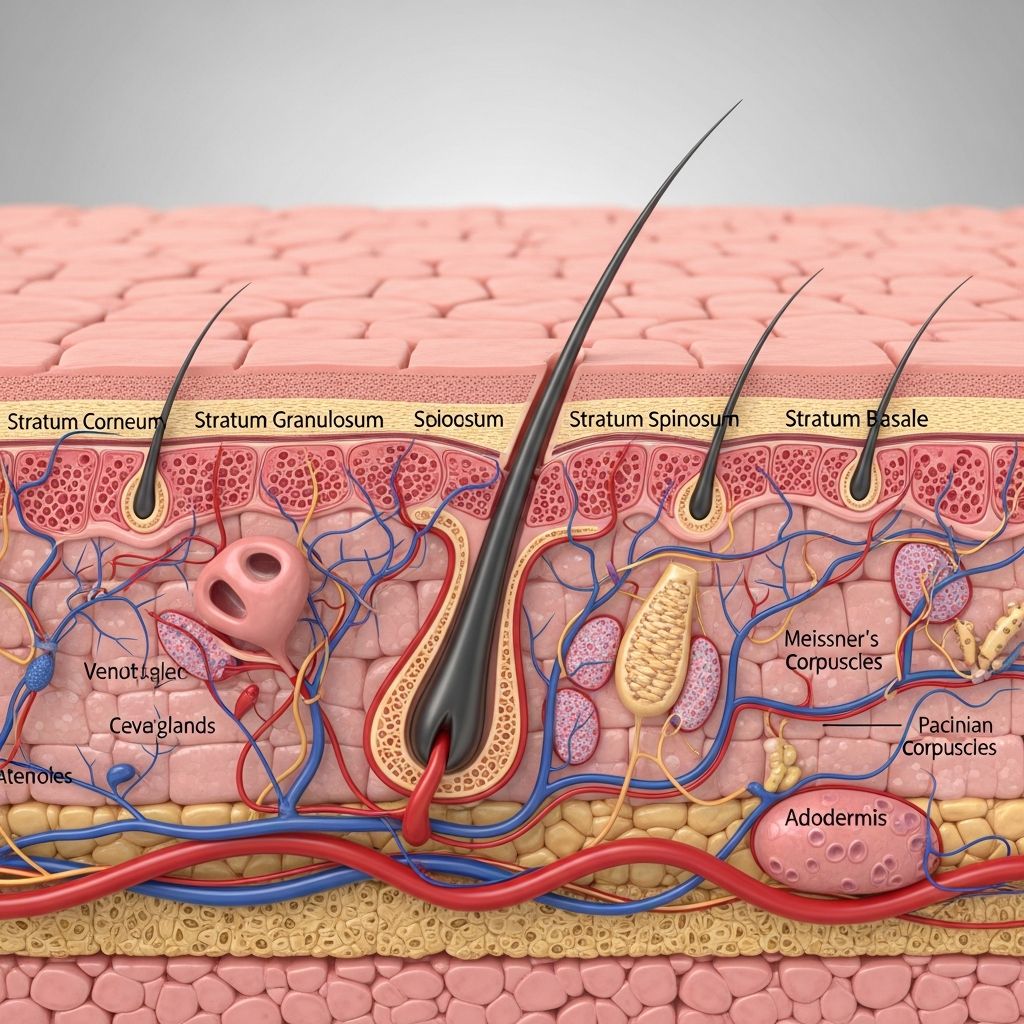
Skin is organized into three distinct layers, each with its own structure and function. These layers work together seamlessly to provide protection, elasticity, and sensory perception. From the outermost layer to the innermost, they are the epidermis, dermis, and hypodermis.
The Epidermis: Your Outer Barrier
The epidermis is the outermost layer of skin and serves as your body’s primary barrier against the environment. This thin but crucial layer is composed primarily of epithelial cells and contains melanocytes, which produce melanin—the pigment responsible for your skin color. The epidermis continuously sheds dead cells and regenerates new ones, with the entire layer replacing itself approximately every two to four weeks. It contains no blood vessels, receiving nutrients from the layer beneath it. The epidermis is also home to Langerhans cells, which are part of your immune system and help protect against infections and harmful invaders.
The Dermis: Support and Sensation
Beneath the epidermis lies the dermis, a thicker layer rich in blood vessels, nerves, and connective tissue. This layer contains collagen and elastin, proteins that give your skin its strength, elasticity, and resilience. The dermis houses hair follicles, sweat glands, and sebaceous glands that produce oil to keep your skin moisturized. It is also where sensory receptors detect touch, temperature, and pain, allowing you to experience tactile sensations. The blood vessels in the dermis not only supply nutrients but also help regulate body temperature through vasoconstriction and vasodilation.
The Hypodermis: Insulation and Support
The hypodermis, also called the subcutaneous tissue, is the deepest layer of skin. Composed primarily of adipose tissue (fat), it serves as insulation to maintain body temperature and provides cushioning to protect underlying bones and organs from injury. This layer also contains larger blood vessels and nerves that branch out to the upper layers. The hypodermis acts as an energy reserve for your body and helps anchor the skin to the muscles and bones beneath it.
Critical Functions of Skin
Your skin performs numerous vital functions that are essential to your survival and well-being. These functions extend far beyond simple appearance and encompass protection, regulation, and sensation.
Protection Against External Threats
The primary function of skin is to act as a protective barrier against harmful external elements. Your skin shields you from bacteria, viruses, and other microorganisms that could otherwise cause infection. It also protects you from ultraviolet radiation from the sun, though the degree of protection depends on melanin levels and sun exposure history. Additionally, skin protects underlying tissues and organs from physical injury, chemical damage, and environmental pollutants.
Related Stories



Temperature Regulation
Skin plays a crucial role in maintaining your body’s core temperature within a narrow range. When your body is too warm, blood vessels in the dermis dilate to increase blood flow to the skin’s surface, allowing heat to dissipate into the environment. Simultaneously, sweat glands produce perspiration, which cools the skin through evaporation. Conversely, when your body is too cold, blood vessels constrict to conserve heat. This thermoregulatory function is essential for maintaining optimal body temperature and ensuring proper organ function.
Sensory Perception
Your skin is equipped with millions of sensory receptors that detect various stimuli, including pressure, temperature, and pain. These sensory nerves transmit information to your brain, allowing you to perceive and respond to your environment. This tactile sensation is not only important for experiencing pleasure but also for protecting yourself from dangerous situations, such as recognizing excessive heat or sharp objects.
Vitamin D Production
When exposed to sunlight, skin synthesizes vitamin D, a crucial nutrient for bone health, immune function, and calcium absorption. This process begins when ultraviolet B (UVB) rays hit the skin, converting 7-dehydrocholesterol into previtamin D3. This is one reason moderate sun exposure is beneficial, though it must be balanced with the risks of skin damage and cancer.
Common Skin Conditions and Disorders
The skin is susceptible to numerous conditions and diseases that can range from minor and temporary to serious and chronic. Understanding these conditions can help you recognize symptoms and seek appropriate treatment.
Skin Cancer
Skin cancer is the most common cancer in the United States, with more than 5 million new cases diagnosed every year. There are three main types: basal cell carcinoma, squamous cell carcinoma, and melanoma. Melanoma is the most dangerous form, though most skin cancers can be cured if diagnosed and treated early. A significant majority of skin cancers are sun-related, and it is estimated that approximately 1 in 3 Americans will develop skin cancer during their lifetime. About 60% of cumulative sun exposure occurs before age 18, making childhood sun protection critically important.
Acne
Acne is one of the most common skin conditions, affecting millions of people worldwide. Contrary to popular belief, acne is largely genetic or hormonally driven and has nothing to do with personal hygiene or how often you wash your face. It occurs when hair follicles become clogged with dead skin cells and sebum, creating an environment where bacteria can thrive. Treatment typically involves using benzoyl peroxide to kill acne-causing bacteria and retinoids like adapalene to keep pores clean and clear.
Wrinkles and Premature Aging
As skin ages, blood vessels that supply blood to the skin shrink over time, which can lead to more wrinkling, premature aging, and delayed healing in the skin. Collagen and elastin break down, sun damage accumulates, and the skin loses moisture. Prevention through sun protection and a consistent skin care routine can significantly slow the aging process.
Eczema and Psoriasis
These inflammatory skin diseases cause itching, redness, and scaling. Environmental pollutants can worsen these conditions, making proper skin care and environmental control important management strategies.
Other Common Conditions
Skin diseases include all conditions that clog, irritate, or inflame your skin. These may cause rashes, inflammation, itchiness, or other skin changes. Some skin conditions are genetic, while lifestyle factors may cause others. Many skin diseases can be managed with medication, proper skin care, and lifestyle changes, though some may never completely disappear.
Skin Care and Maintenance
Daily Skin Care Routine
A basic skin care routine includes a gentle cleanser, sunscreen, and certain toners and serums tailored to your individual needs. Your routine should be divided into morning and evening components. In the morning, focus on protecting your skin from sun and environmental contaminants. In the evening, focus on repairing and restoring your skin.
Essential Products and Steps
The foundation of any skin care routine includes cleansing your face with a gentle cleanser suited to your skin type, applying a moisturizer to maintain hydration, and using sunscreen of SPF 30 or higher every day. An antioxidant serum or cream containing vitamin C, vitamin E, or ferulic acid can provide additional protection from environmental damage and free radicals. Physical sunscreen that reflects the sun is generally more effective than chemical sunscreen that absorbs UV rays.
Sun Protection
No matter where you’re from, you’re never truly safe from the sun. The sun’s rays not only dry out your skin but can also significantly impact the pigment in your skin. Sun exposure is the leading preventable cause of skin damage and skin cancer. Daily sunscreen use, protective clothing, and avoiding peak sun hours (10 AM to 4 PM) are all important protective measures.
Monitoring Your Skin for Changes
Regular self-examination is crucial for early detection of skin cancer and other serious conditions. If you’re older than 30, you shouldn’t be developing any new moles, so check once a month to see if you spot any new ones. If you have existing moles, birthmarks, or skin conditions, watch for signs of melanoma using the ABCDE rule:
- Asymmetry: One half of the mole doesn’t match the other
- Border: Borders are irregular, scalloped, or poorly defined
- Color: Multiple colors present within the same mole
- Diameter: Mole is larger than a pencil eraser
- Evolving: Mole is changing in size, shape, or color
Any existing mole or lesion that is itching, bleeding, or growing should be evaluated by a dermatologist. Having more than one of these features is a sign that something more serious could be going on.
Understanding Skin Types
Skin type varies from person to person and can significantly influence your skin care needs. Understanding your skin type—whether dry, oily, normal, combination, or sensitive—helps determine the best way to care for your skin. Those with oily skin should use cleansers containing benzoyl peroxide or salicylic acid and look for noncomedogenic products. Normal skin typically requires a basic routine of daily cleansing, moisturizing day and night, and daily sunscreen.
When to See a Dermatologist
A dermatologist is a doctor who has expertise in the diagnosis and treatment of diseases and conditions of the skin, hair, nails, and mucus membranes. You should consult a dermatologist if you have unusual skin symptoms, suspect skin cancer, have persistent acne, or want professional guidance on your skin care routine. Dermatologists can prescribe medications or topical creams for specific conditions such as cystic acne or chronic dry skin.
Frequently Asked Questions
Q: Why is sunscreen important if I have darker skin?
A: Sunscreen is important for all skin types and colors. While darker skin has more melanin and natural sun protection, it is still susceptible to sun damage, skin cancer, and premature aging. Everyone should use SPF 30 or higher sunscreen daily.
Q: How often should I get a professional skin check?
A: Most dermatologists recommend annual skin checks for adults, though those with a personal or family history of skin cancer or numerous moles may need more frequent evaluations.
Q: Can skin conditions be cured?
A: Many skin conditions can be managed effectively with proper treatment and lifestyle changes, though some chronic conditions may never completely disappear. However, treatment can reduce symptoms and keep them controlled for extended periods.
Q: What is the best way to protect skin from pollution?
A: Use topical antioxidants like vitamin C or vitamin E daily to protect your skin from oxidative damage caused by environmental pollutants. These products help neutralize free radicals that can worsen aging, acne, and other skin conditions.
Q: Is a complex skin care routine necessary?
A: No. You can have a simple, easy-to-remember process with basic products that help keep your skin clean, moisturized, and protected from the sun. A routine doesn’t need to be complicated to be effective.
References
- 10 Skin Care Tips From a Dermatologist — Cleveland Clinic Health. 2024. https://health.clevelandclinic.org/skin-care-tips
- Skin Care Routine: A Step-by-Step Guide — Cleveland Clinic Health. 2024. https://health.clevelandclinic.org/what-products-do-i-actually-need-for-a-simple-everyday-skin-care-routine
- Skin: Layers, Structure and Function — Cleveland Clinic. https://my.clevelandclinic.org/health/body/10978-skin
- What Is My Skin Type and Why Does It Matter? — Cleveland Clinic Health. 2024. https://health.clevelandclinic.org/understanding-skin-types
- Skin Diseases: Types of, Symptoms, Treatment & Prevention — Cleveland Clinic. https://my.clevelandclinic.org/health/diseases/21573-skin-diseases
- What is a dermatologist & what do they treat? — Cleveland Clinic. https://my.clevelandclinic.org/health/articles/12165-dermatologists-skin-care-doctors
Similar Articles








Read full bio of Sneha Tete