Skin Needling: 6 Essential Benefits For Radiant, Youthful Skin
Minimally invasive collagen induction therapy for skin rejuvenation, scar reduction, and texture improvement.
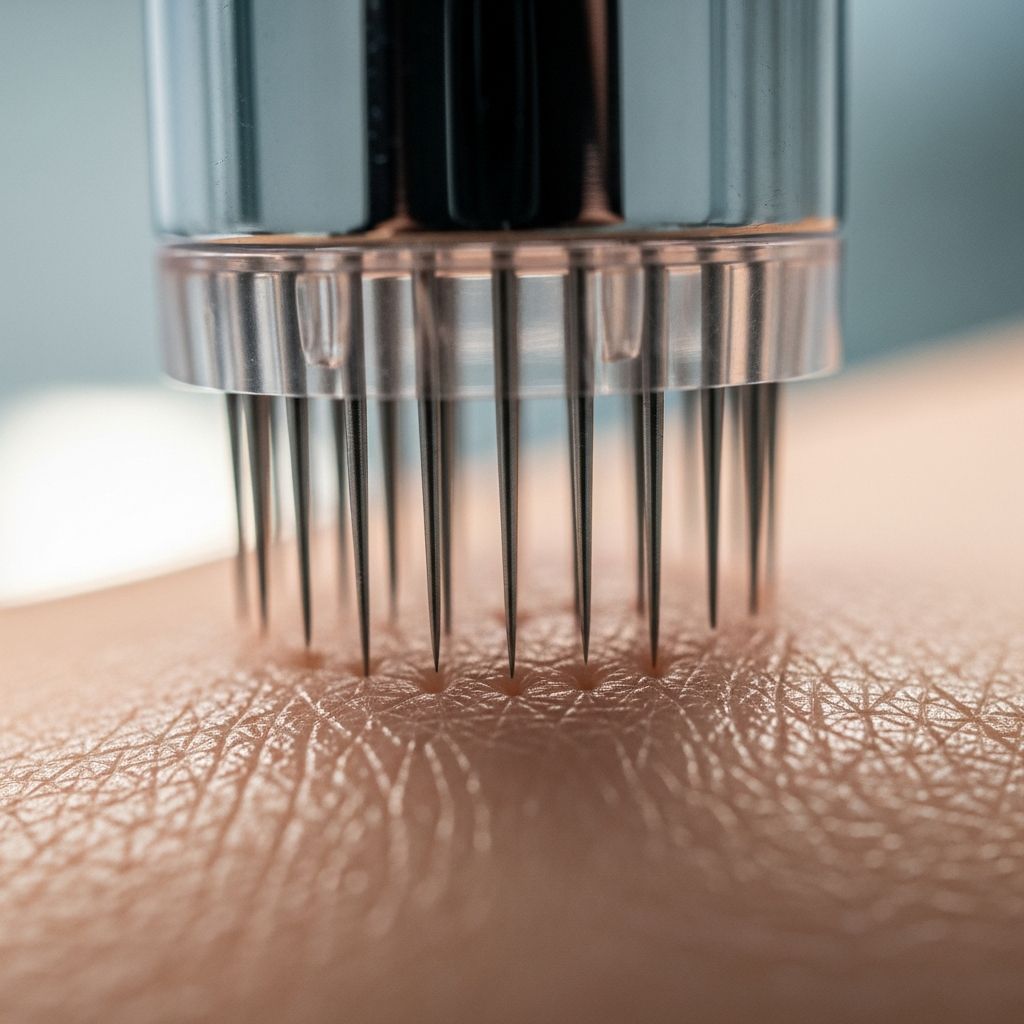
Skin needling, also known as microneedling or collagen induction therapy, is a minimally invasive, non-surgical procedure that uses fine needles to create controlled micro-injuries in the skin, stimulating natural collagen and elastin production for rejuvenation.
Introduction
Skin needling has gained popularity as a versatile dermatological treatment for improving skin appearance without the risks associated with ablative procedures like lasers or chemical peels. By puncturing the skin with tiny needles, it triggers the body’s wound healing response, leading to enhanced skin texture, firmness, and reduced imperfections. Devices vary from manual rollers like Dermaroller® to automated pens such as Dermapen™, with needle lengths typically ranging from 0.5 mm to 3 mm, allowing customization for different skin depths and concerns. Professional treatments are safer and more effective than at-home devices due to precise control over depth and sterility.
How it works
The mechanism of skin needling involves creating thousands of microchannels or wounds in the epidermis and dermis. These channels close within minutes, preserving the skin’s barrier while injuring superficial collagen and blood vessels. This initiates a controlled inflammatory cascade, releasing growth factors such as platelet-derived growth factor, transforming growth factor (TGF-α and TGF-β3), connective tissue activating protein, and fibroblast growth factor. These factors promote neocollagenesis (new collagen formation), neoelastogenesis (new elastin), and neovascularization (new blood vessels), resulting in thicker, firmer skin with improved hydration and reduced scars. Unlike heat-based treatments, microneedling avoids thermal damage, making it suitable for all skin types with minimal risk of post-inflammatory hyperpigmentation.
Uses
Skin needling is effectively used for a wide range of dermatological conditions:
- Facial rejuvenation to reduce fine lines, wrinkles, and improve skin tone and texture.
- Acne scarring, including atrophic and ice-pick scars, with studies showing significant improvement, especially when combined with platelet-rich plasma (PRP).
- Stretch marks (striae) and burn scars.
- Hyperpigmentation, melasma, and uneven pigmentation by enhancing topical agent penetration.
- Rhytides (wrinkles) associated with aging.
- Enlarged pores and overall skin laxity.
- Alopecia (hair loss) by improving follicle health.
- Mesotherapy, where hollow needles deliver drugs directly into the skin.
Research confirms its efficacy across skin types, with peer-reviewed studies demonstrating scar reduction and rejuvenation.
Benefits
Skin needling offers numerous advantages over traditional resurfacing methods:
- Minimal downtime: Recovery in 1-3 days with only transient redness.
- Safe for all skin types: No heat damage reduces hyperpigmentation risk.
- Cost-effective: Less expensive than lasers.
- Enhances product absorption: Microchannels allow deeper penetration of topicals like hyaluronic acid, vitamin C, or depigmenting agents.
- Natural results: Stimulates body’s own collagen without foreign substances.
- Versatile: Treatable areas include face, neck, décolletage, arms, abdomen, and thighs.
| Condition | Benefits of Skin Needling | Supporting Topicals |
|---|---|---|
| Acne Scars | Up to 70% improvement in scar severity | PRP, hyaluronic acid |
| Wrinkle Reduction | Skin tightening and texture improvement | Peptides, antioxidants |
| Hyperpigmentation | Enhanced depigmentation agent delivery | Hydroquinone, vitamin C |
| Stretch Marks | Collagen remodeling for faded appearance | Retinoids |
Procedure
The procedure is well-tolerated and takes 15 minutes to 1 hour depending on the area. Steps include:
- Preparation: Skin is cleansed and numbing cream applied for 30-45 minutes.
- Needling: Device glides or stamps over the skin at 90-degree angles. Needle depth varies: 0.5 mm for fine lines/pigmentation, 1.0-1.5 mm for wrinkles/scars, 1.5-2.5 mm for deep scars/stretch marks.
- Serum application: Topicals like PRP or hyaluronic acid are applied to penetrate microchannels.
- Completion: Soothing mask or serum applied; no bandages needed.
Automated pens adjust speed and depth for uniform treatment, reducing pain compared to manual rollers. Pain is minimal (scale 2-4/10) with topical anesthesia.
Post-procedure care
Immediate aftercare ensures optimal results and minimizes risks:
Related Stories



- Avoid sun exposure and use broad-spectrum SPF 50+ daily.
- Apply gentle moisturizers and hyaluronic acid serums.
- No makeup, retinoids, or exfoliants for 48-72 hours.
- Expect redness, mild swelling, and pinpoint bleeding resolving in 24-48 hours.
- Full results visible in 4-6 weeks as collagen builds.
Practical tips
- Choose a qualified dermatologist or aesthetician with sterile, single-use needles.
- Home devices (0.2-0.5 mm) safe 2-3 times weekly for maintenance, but not for scars.
- Combine with PRP for enhanced results in acne scars.
- Thicker skin (e.g., cheeks) tolerates deeper needles; adjust for sensitive areas.
- Avoid if active infections, keloid scarring, or pregnancy.
Amount of procedures required
Treatment frequency depends on the condition:
- Acne scars: 3-6 sessions, 4-6 weeks apart.
- Stretch marks/burn scars: 4-5 sessions.
- Anti-aging/wrinkles: 3 sessions initially, then 1-2 yearly maintenance.
- Pigmentation: 4-6 sessions.
Studies show cumulative improvement with sessions, plateauing after optimal number.
Side effects
Generally safe with low complication rates:
- Common (transient): Erythema (redness), dryness, mild edema (1-3 days).
- Rare: Infection, bruising, herpes reactivation, allergic reactions if non-sterile.
- Minimal risk in experienced hands; adverse events <5%.
No increased risk of scarring or pigmentation changes in darker skin types.
Frequently Asked Questions
Is skin needling painful?
With numbing cream, discomfort is minimal, similar to a light prickling sensation.
How long do results last?
Collagen production continues for 6-12 months; maintenance every 6-12 months sustains benefits.
Can I do skin needling at home?
Short-needle (0.2-0.5 mm) devices are safe for home use 2-3x/week, but professional treatment is needed for scars.
Who should avoid skin needling?
Those with active acne, eczema, keloids, blood clotting disorders, or on isotretinoin within 6 months.
Does it work on all skin types?
Yes, safe and effective for Fitzpatrick types I-VI due to no thermal injury.
References
- Skin needling – DermNet — DermNet NZ. 2023. https://dermnetnz.org/topics/skin-needling
- Skin needling for the treatment of acne scarring: A comprehensive review — Alster TS, Li MK. Journal of Cosmetic Dermatology. 2020-06-30. https://onlinelibrary.wiley.com/doi/abs/10.1111/jocd.13577
- Microneedling in All Skin Types: A Review — Singh A, Yadav S. Journal of Drugs in Dermatology. 2017. https://jddonline.com/articles/microneedling-in-all-skin-types-a-review-S1545961617P0308X
- Microneedling in Dermatology: A Comprehensive Review — NCBI/PMC. 2024. https://pmc.ncbi.nlm.nih.gov/articles/PMC11499218/
- Micro-needling: current state of knowledge and clinical applications — NCBI/PMC. 2024. https://pmc.ncbi.nlm.nih.gov/articles/PMC12621213/
- A Systematic Review Examining the Potential Adverse Effects of Microneedling — Journal of Clinical and Aesthetic Dermatology. 2023. https://jcadonline.com/examining-potential-adverse-effects-microneedling/
Similar Articles








Read full bio of Sneha Tete