Skin Prick Testing: A Comprehensive Guide For Allergy Diagnosis
Comprehensive guide to skin prick testing for diagnosing IgE-mediated allergies, including procedure, interpretation, and clinical applications.
Skin prick testing (SPT) is a first-line diagnostic procedure for identifying IgE-mediated allergic sensitization in patients with conditions such as allergic rhinoconjunctivitis, asthma, atopic dermatitis, food allergies, and anaphylaxis. It involves introducing small amounts of allergen extracts into the epidermis to provoke a localized wheal-and-flare reaction if specific IgE antibodies are present on cutaneous mast cells. This test is minimally invasive, cost-effective, provides immediate results, and when performed correctly, offers high reproducibility and diagnostic accuracy.
What is skin prick testing?
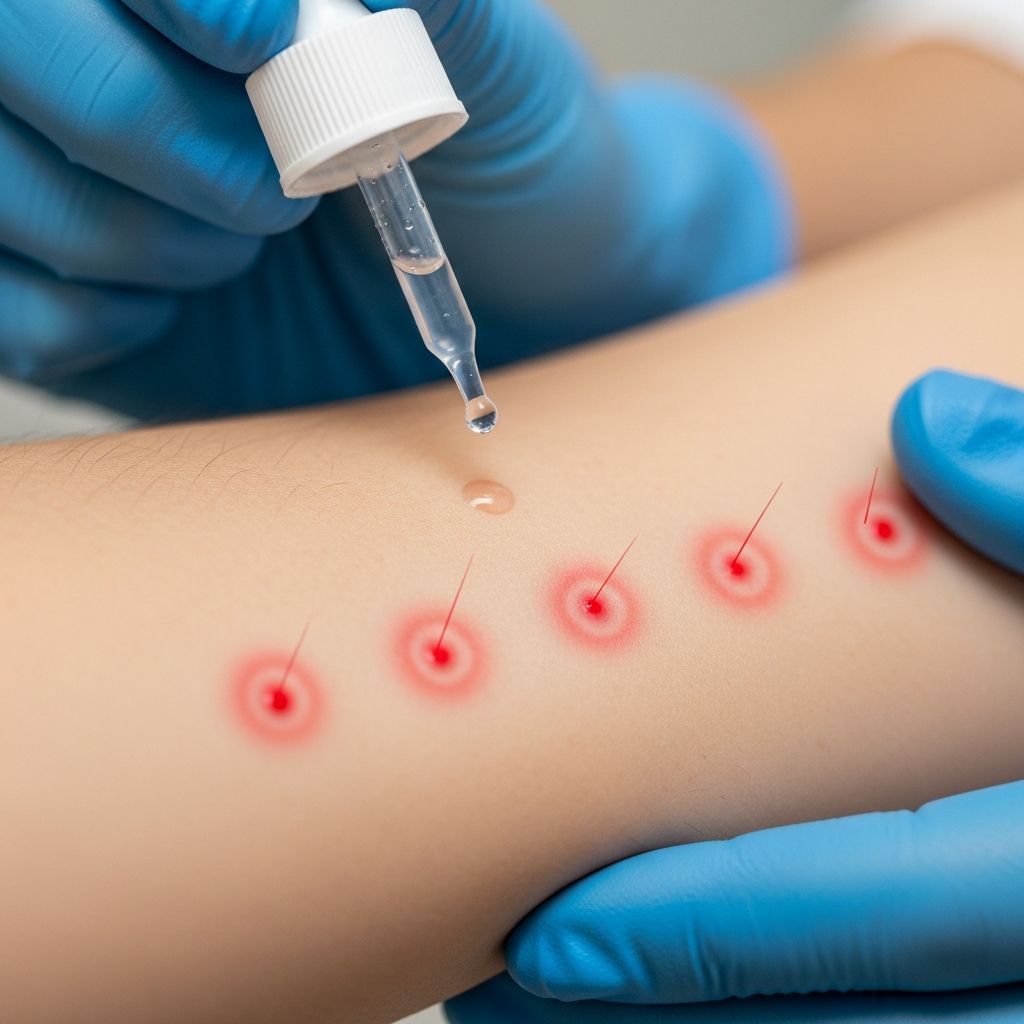
Skin prick testing detects the presence of allergen-specific IgE antibodies by eliciting a type I hypersensitivity reaction. A drop of allergen extract is placed on the skin, which is then pricked with a lancet to introduce the allergen into the superficial epidermis. If sensitized, mast cells degranulate, releasing histamine and other mediators, resulting in a characteristic wheal (raised white area) surrounded by erythema (flare) within 15-20 minutes. This reaction serves as a surrogate marker for sensitization in target organs like the airways, skin, or gut.
SPT is preferred over intradermal testing for routine allergy diagnosis due to lower risk of systemic reactions and better standardization. It can test multiple allergens simultaneously—typically 3 to 25—making it efficient for broad screening. European standards define a positive result as a wheal ≥3 mm diameter compared to the negative control.
Who should have skin prick testing?
SPT is indicated for confirming clinical suspicion of IgE-mediated allergies based on history and examination. Strong indications include:
- Allergic rhinoconjunctivitis (hay fever)
- Asthma, particularly if allergen exposure is suspected
- Atopic eczema or dermatitis with possible aeroallergen triggers
- Acute urticaria or angioedema
- Food allergies presenting with anaphylaxis, oral allergy syndrome, or eczema flares
- Drug allergies (e.g., penicillin, after initial screening)
- Venom allergies (bee, wasp stings)
- Suspected latex allergy
It is not suitable for non-IgE-mediated conditions like contact dermatitis (use patch testing instead) or when skin conditions preclude testing. Patients on antihistamines or with severe dermatographism may require test postponement. Allergy testing enhances diagnostic accuracy when combined with history, differentiating true allergies from mimics.
How is skin prick testing performed?
The procedure is standardized to ensure reliability. It typically takes 30-45 minutes and is performed by trained allergists or dermatologists.
Preparation
- Patient preparation: Avoid antihistamines, tricyclic antidepressants, and certain medications for 3-7 days prior. No fasting required. Explain the procedure and obtain consent.
- Skin preparation: Clean the volar forearm (inner aspect) with alcohol, avoiding wrist and elbow crease. Mark sites 2-3 cm apart with pen or grid to prevent cross-reactivity.
- Materials: Standardized allergen extracts, positive control (1 mg/mL histamine), negative control (saline), disposable lancets (1-2 mm tip), ruler, tissues, gloves.
Procedure Steps
- Apply 1-2 drops of each extract (10-20 μL) to marked sites.
- Prick perpendicularly through the drop into epidermis using a new lancet per allergen; penetrate 1 mm without bleeding. Wipe excess.
- Include controls: histamine should produce ≥3 mm wheal; saline none.
- Allow 15-20 minutes for reaction peak.
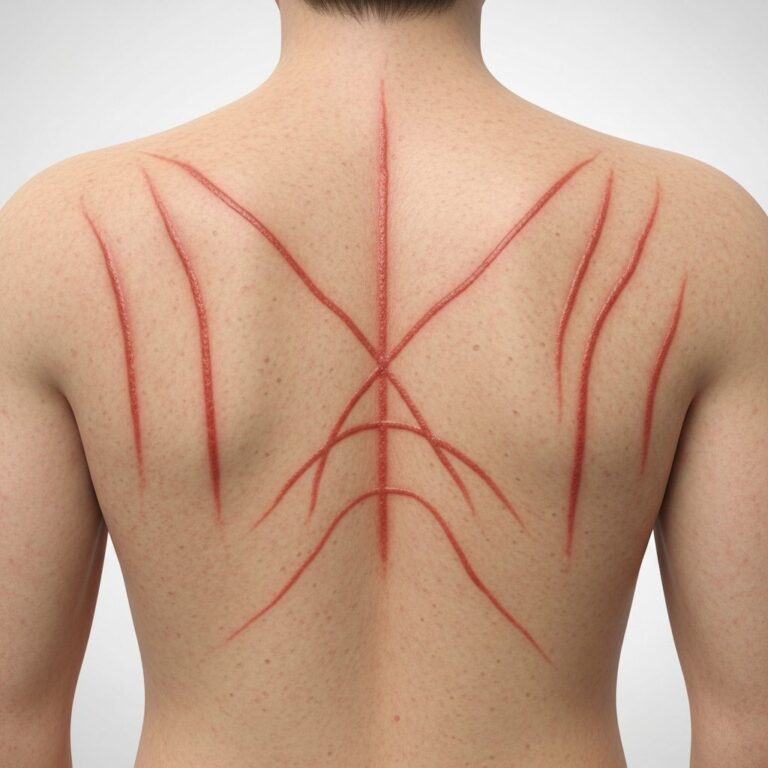
Alternative sites: upper back in children or if forearms are unsuitable. Devices like multi-headed prick testers ensure consistency.
How are the results interpreted?
Reactions are read at 15-20 minutes by measuring wheal diameter (mean of perpendicular axes) and erythema. Grading uses the EAACI system:
| Grade | Wheal Size (mm) | Interpretation |
|---|---|---|
| 0 | No wheal | Negative |
| 1+ | <3 mm | Doubtful |
| 2+ | 3-6 mm | Mild positive |
| 3+ | 7-10 mm | Moderate positive |
| 4+ | 11-15 mm | Strong positive |
| 5+ | >15 mm or pseudopodia | Severe positive |
Related Stories



A result is positive if wheal ≥3 mm larger than negative control. Histamine confirms skin reactivity; absent response suggests antihistamine interference. Large reactions may indicate high sensitization risk. Results must correlate with clinical history for diagnosis.
What are the limitations of skin prick testing?
While highly sensitive (up to 95% for some allergens), SPT has limitations:
- False positives: Dermatographism, irritant reactions, cross-reactivity.
- False negatives: Medications, faded extracts, non-responsive skin (e.g., elderly).
- Sensitivity varies by allergen; not diagnostic alone—requires history correlation.
- Unsuitable for patients with extensive skin disease, bleeding disorders, or unstable asthma.
- Not for food allergy confirmation without challenge (risk of anaphylaxis).
Intravenous regional anesthesia or beta-blockers increase systemic reaction risk.
What are the risks of skin prick testing?
SPT is safe with systemic reaction risk <1%. Local pruritus, large local reactions occur in 5-10%; rare anaphylaxis (0.02-0.04%) in high-risk patients (e.g., food allergy).
- Monitor for 30 minutes post-test.
- Epinephrine and resuscitation equipment mandatory.
- Contraindicated in severe/uncontrolled asthma, pregnancy (relative), or unstable patients.
Aftercare
Advise cool compresses, topical steroids/antihistamines for large reactions. Avoid scratching. Results discussed immediately; management plan (avoidance, immunotherapy) initiated.
Alternatives to skin prick testing
- Intradermal testing: More sensitive for drugs/venom but higher risk; not for foods/aeroallergens.
- Specific IgE blood tests (RAST/ImmunoCAP): No skin prep needed; useful in antihistamine users or skin disease.
- Patch testing: For delayed (type IV) hypersensitivity.
- Challenge tests: Gold standard for food/drug confirmation.
Frequently Asked Questions (FAQs)
Is skin prick testing painful?
Mild prick sensation; comparable to a mosquito bite. Reactions may itch.
How long do results take?
Read at 15-20 minutes; immediate discussion possible.
Can I eat before testing?
Yes, no fasting required.
What if I’m on antihistamines?
Stop 3-7 days prior; blood tests alternative.
Is it safe for children?
Yes, from infancy; back preferred site.
Does a positive test mean I’m allergic?
Sensitization only; clinical correlation needed.
This comprehensive overview ensures SPT’s proper use in allergy diagnosis, improving patient outcomes through targeted management.
References
- Skin prick testing – DermNet — DermNet NZ. 2023-01-15. https://dermnetnz.org/topics/skin-prick-testing
- The skin prick test – European standards — PMC – PubMed Central. 2013-02-22. https://pmc.ncbi.nlm.nih.gov/articles/PMC3565910/
- Allergy Skin Test: Purpose, Procedure & Results — Cleveland Clinic. 2023-06-01. https://my.clevelandclinic.org/health/diagnostics/24912-allergy-skin-test
- Skin prick testing – for the diagnosis of allergic disease — Australasian Society of Clinical Immunology and Allergy (ASCIA). 2016-03-01. https://www.allergy.org.au/images/stories/pospapers/ASCIA_SPT_Manual_March_2016.pdf
- Allergy skin tests — Mayo Clinic. 2024-05-10. https://www.mayoclinic.org/tests-procedures/allergy-tests/about/pac-20392895
Similar Articles








Read full bio of Sneha Tete