Skin Problems Due to Caterpillars and Moths
Explore skin reactions from caterpillars and moths, including stings, dermatitis, and rare systemic effects with diagnosis and treatment options.
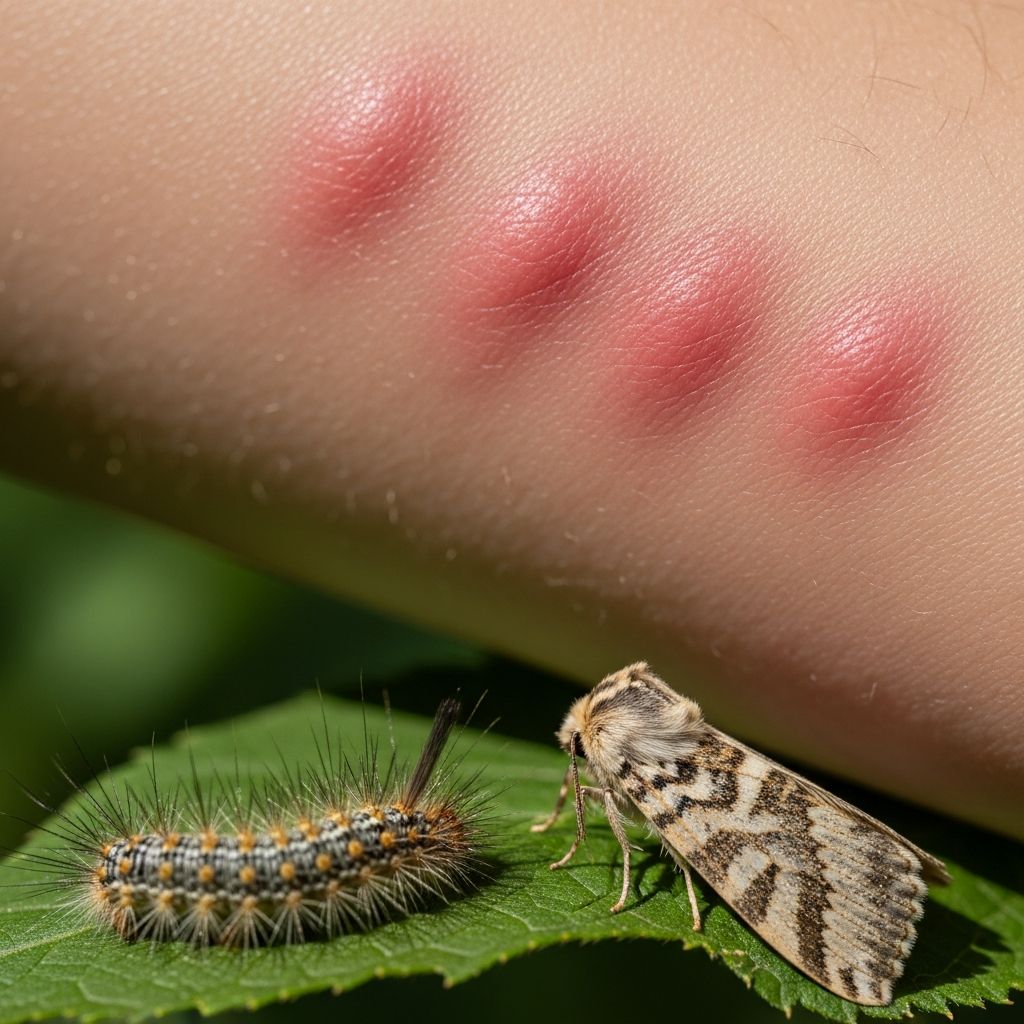
Moths, butterflies, and their larvae known as caterpillars belong to the order
Lepidoptera
, encompassing an estimated 125,000 to 150,000 species worldwide. While most are harmless, a small subset can provoke adverse human reactions, predominantly through contact with caterpillars rather than adult moths or butterflies. These reactions range from mild localised irritation to severe systemic effects, often mediated by irritating hairs (setae), spines, venoms, or toxins.Background
Caterpillars, the larval stage of moths and butterflies, develop defensive mechanisms including barbed hairs, venomous spines, and toxic secretions to deter predators. These structures can inadvertently affect humans, embedding into skin, eyes, or mucous membranes upon contact. Adult moths may carry similar irritant hairs, but butterflies rarely cause issues. Pathomechanisms involve mechanical irritation, toxin injection, or allergic hypersensitivity, leading to conditions like erucism (cutaneous reactions) or lepidopterism (systemic involvement). In regions like New Zealand, the gum leaf skeletoniser (*Uraba lugens*) is notorious for causing painful stings with redness and weal formation.
Occurrence
Adverse reactions occur globally but are more prevalent in tropical and subtropical areas where Lepidoptera diversity is highest. Common scenarios include accidental brushing against infested vegetation, handling cocoons, or airborne dispersal of hairs during moth flights. In urban settings, outbreaks of species like the processionary caterpillar (*Thaumetopoea pityocampa*) in Europe or browntail moth (*Euproctis chrysorrhoea*) in North America lead to clusters of cases. Occupational exposure affects gardeners, forestry workers, and children playing outdoors. Seasonal peaks align with larval stages, typically spring to autumn.
Prevalence
Exact prevalence is underreported due to mild, self-resolving symptoms and diagnostic challenges. However, outbreaks can impact thousands; for instance, in Brazil, *Lonomia* caterpillars cause hundreds of envenomations annually, some fatal. In the US and Europe, dermatitis from oak processionary or brown-tail moths prompts public health alerts. Children and atopic individuals are at higher risk due to frequent outdoor activity and hypersensitivity. Studies indicate Lepidoptera account for a small fraction of arthropod-related dermatoses, overshadowed by mosquitoes and bees, yet rising with climate-driven range expansions.
Reactions
Reactions vary by species and exposure route, classified into cutaneous, ocular, oral, and systemic types. Most are self-limited, resolving in days to weeks, though browntail moth rashes may persist several weeks.
Localised Stinging Reaction
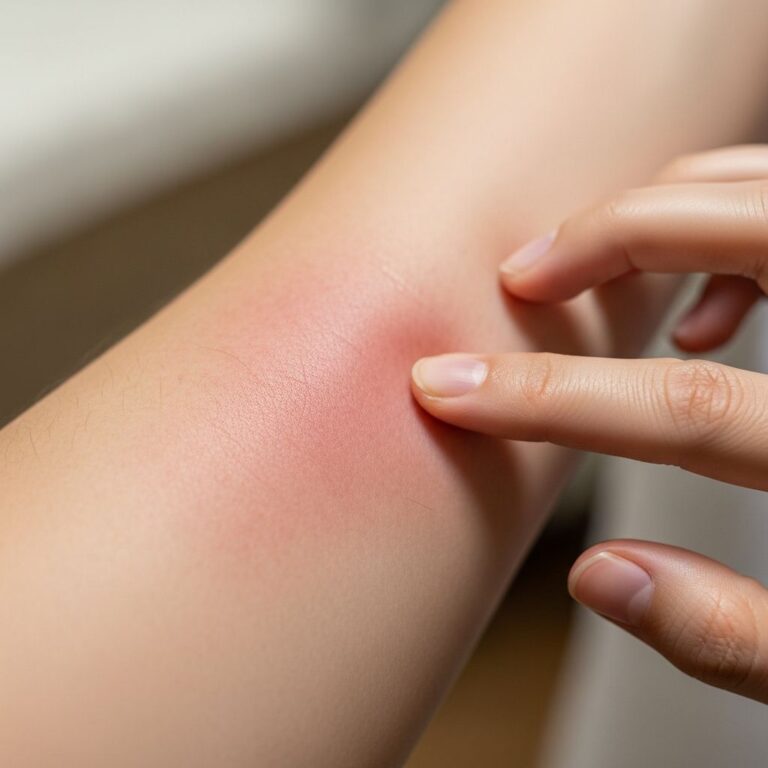
Immediate burning pain at contact sites from venomous spines or hairs, as in *Parasa* species (asp caterpillar). Lesions appear as erythematous papules or wheals, lasting hours to days.
Papular Urticaria and Dermatitis
Characterised by itchy papules, vesicles, or eczematous patches from irritant setae. Common with furry caterpillars like *Euproctis chrysorrhoea*, causing airborne dermatitis.
Urticarial Weals
Large, transient hives from histamine release or allergic response, often widespread if hairs are inhaled or widespread contact occurs.
Widespread Haemorrhage
Rare but severe, linked to *Lonomia* caterpillars in South America, causing consumptive coagulopathy with ecchymoses, mucosal bleeding, and potential renal failure.
Related Stories



Biting Moths
Uncommon; some moths like *Hylesia* species bite or release urticating hairs during swarms, leading to ‘lepidopterism’ with systemic symptoms.
Ophthalmia Nodosa
Ocular inflammation from embedded setae, progressing from conjunctivitis to granulomatous uveitis. Reported with processionary caterpillars.
Oral Exposure
Ingestion of hairs causes pharyngitis, stomatitis, or seasonal ataxia from *Anaphe venata* in Africa.
Dendrolimiasis and Pararamose
Arthralgias and myalgias from *Premolis semirufa* or *Parasa* caterpillars, respectively, mimicking rheumatic disease.
| Reaction Type | Common Culprits | Symptoms | Duration |
|---|---|---|---|
| Localised Stinging | *Uraba lugens*, *Parasa* spp. | Pain, redness, wheals | Hours-days |
| Papular Urticaria | Browntail moth | Itchy papules, dermatitis | Days-weeks |
| Haemorrhagic | *Lonomia* spp. | Bleeding, coagulopathy | Weeks if untreated |
| Ocular | Processionary caterpillar | Conjunctivitis, uveitis | Variable |
Diagnosis
Diagnosis relies on clinical history and morphology, as features overlap with other arthropod bites, contact dermatitis, or infections. Key clues include:
- History of outdoor exposure near infested trees (e.g., pines, oaks).
- Linear or clustered lesions matching contact patterns.
- Associated symptoms like airborne irritation or flock sightings.
- Presence of spines/hairs visible under dermoscopy.
Laboratory tests like patch testing or biopsy show non-specific eosinophilic infiltrates but are rarely diagnostic. Differential includes scabies, urticaria multiforme, or phytodermatitis.
Treatment
No specific antidotes exist except *Lonomia* antivenom. Management is symptomatic.
First Aid
- Remove adherent hairs/spines with cellophane tape or forceps; avoid rubbing.
- Wash with soap/water; apply cool compresses.
- For ocular involvement, irrigate with saline and refer to ophthalmology.
Symptomatic Relief
- Topical corticosteroids (e.g., hydrocortisone 1%) for inflammation.
- Oral antihistamines (loratadine) for urticaria/itching.
- Calamine lotion or colloidal oatmeal baths for dermatitis.
- Severe cases: oral prednisone or antibiotics if secondarily infected.
For *Lonomia*, urgent antivenom administration prevents haemorrhage progression. Most resolve spontaneously within 1-2 weeks.
Prevention
Avoidance is key:
- Wear protective clothing in endemic areas.
- Monitor public health alerts for outbreaks.
- Remove nests professionally; do not handle manually.
- Educate children on risks.
Outcome
Mild reactions self-resolve without sequelae. Chronic cases may leave postinflammatory hyperpigmentation. Sensitisation can worsen subsequent exposures, though tolerance develops over time. Fatalities are rare, confined to untreated *Lonomia* envenomations.
Frequently Asked Questions (FAQs)
What causes the most common skin reactions from caterpillars?
Irritating barbed hairs (setae) or venomous spines that inject toxins or provoke allergy.
How long do caterpillar rashes last?
Typically 1-7 days for stings; up to weeks for dermatitis like browntail moth.
Is treatment with steroids always needed?
No, mild cases respond to first aid and antihistamines; steroids for moderate-severe.
Can these reactions affect the eyes?
Yes, ophthalmia nodosa from embedded hairs causes inflammation; seek immediate care.
Are there fatal reactions?
Rarely, from *Lonomia* haemorrhage; antivenom is available in affected regions.
References
- Skin problems due to caterpillars and moths — DermNet NZ. 2010 (updated). https://dermnetnz.org/topics/skin-problems-due-to-caterpillars-and-moths
- Caterpillars and moths: Part I. Dermatologic manifestations of encounters with Lepidoptera — Eric W. Hossler, J Am Acad Dermatol. 2010-01-01. https://pubmed.ncbi.nlm.nih.gov/20082886/
- How Long Does Caterpillar Dermatitis Last — RichenSkin (secondary, informed by primary). 2023. https://richenskin.com/how-long-does-caterpillar-dermatitis-last.html
- Arthropod bites and stings — DermNet NZ. 2015-10. https://dermnetnz.org/topics/arthropod-bites-and-stings
- Caterpillars and moths — Eric W. Hossler, Dermatologic Therapy. 2009. https://onlinelibrary.wiley.com/doi/abs/10.1111/j.1529-8019.2009.01247.x
Similar Articles








Read full bio of medha deb