Skin Problems in Hairdressers and Barbers
Comprehensive guide to occupational skin diseases affecting hairdressers and barbers, including causes, prevention, and management strategies.
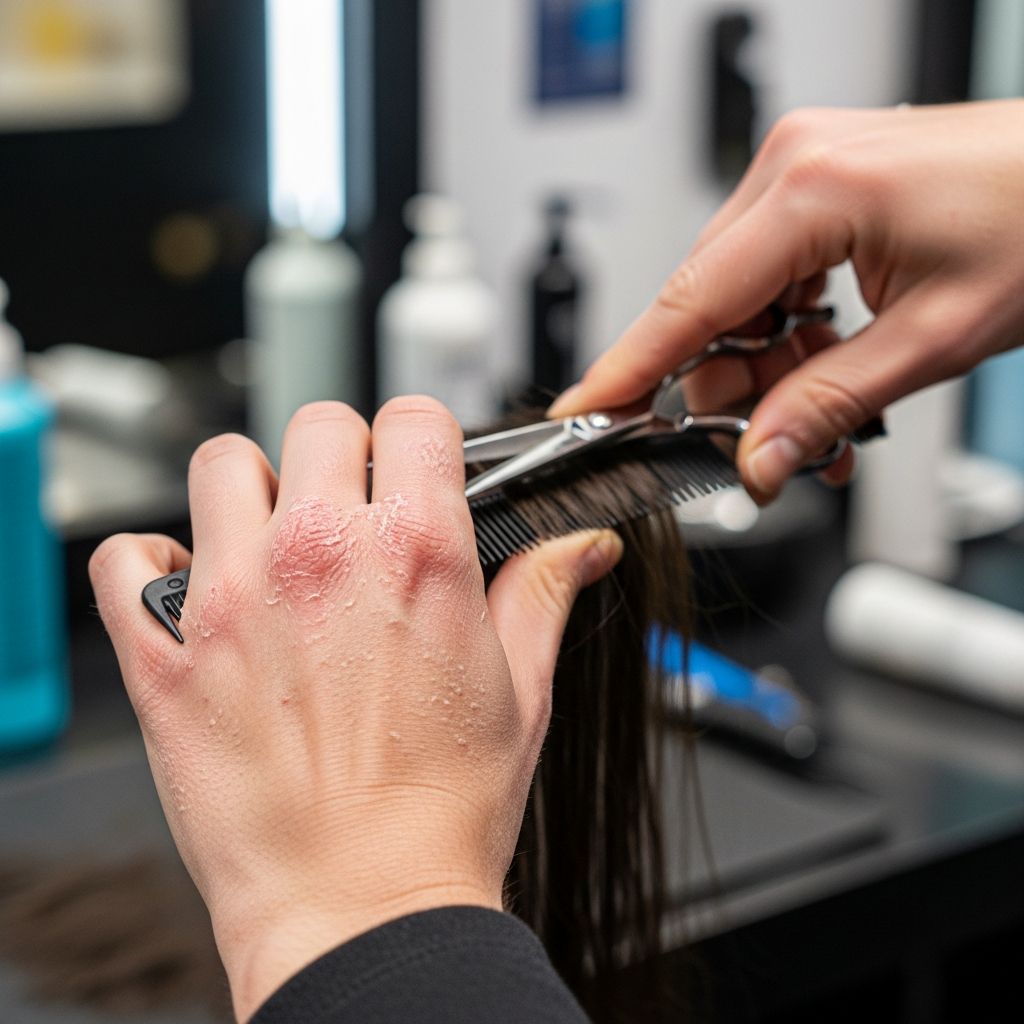
Hairdressers and barbers face significant occupational risks for developing skin conditions, primarily due to repeated exposure to irritants and allergens in hair products, wet work, and cleaning agents. Up to 70% of professionals in this field experience work-related skin damage during their careers, with contact dermatitis being the most prevalent issue. These problems can lead to chronic issues, time off work, and even career-ending outcomes if not managed properly.
What Causes Skin Problems in Hairdressers and Barbers?
The hairdressing and barbering professions involve frequent contact with a variety of hazardous substances that compromise skin integrity. Key causes include:
- Wet work: Prolonged hand immersion in water during shampooing and rinsing leads to skin barrier disruption, defatting, and increased susceptibility to irritants. Constant wetting and drying cycles cause the skin to dry out, flake, split, and crack.
- Chemical irritants: Shampoos, conditioners, bleaches (containing hydrogen peroxide), perming solutions, and dyes contain alkaline or detergent-based compounds that strip natural oils from the skin.
- Allergens: Common sensitizers include para-phenylenediamine (PPD) in hair dyes, ammonium persulfate in bleaches, and proteins from human hair or skin, triggering allergic reactions.
- Other factors: Friction from tools, soaps, detergents, and cleaning products exacerbate damage. Apprentices and those performing basin work are at highest risk for irritant dermatitis.
Repeat exposure defats the skin, making it prone to dryness, cracking, and infections. Allergic responses develop over months or years, often after initial irritant damage.
Who is at Risk?
Anyone in hairdressing or barbering is vulnerable, but certain groups face higher risks:
- Apprentices and juniors: They handle most wet work and cleaning, leading to early-onset irritant contact dermatitis.
- Individuals with atopy: History of eczema, asthma, or hay fever increases susceptibility due to inherently sensitive skin.
- Long-term professionals: Cumulative exposure raises allergy risks; studies show 61% of practicing hairdressers and 59% of students report hand skin problems.
- Self-employed stylists: Comprising 65% in the UK, they may delay treatment due to income loss.
Globally, millions of hairdressers are affected, with women showing higher rates of hair colorant use and related exposures.
Types of Skin Conditions
Skin issues in this profession primarily manifest as contact dermatitis, categorized into two main types:
| Type | Description | Common Causes | Symptoms |
|---|---|---|---|
| Irritant Contact Dermatitis | Non-immune reaction from direct chemical damage; most common, affecting up to 50% within 3 years of starting. | Wet work, shampoos, bleaches, soaps. | Redness, dryness, itching, cracking, fissuring; worsens gradually. |
| Allergic Contact Dermatitis | Delayed hypersensitivity (type IV); flares 4-24 hours post-exposure; poorer prognosis without allergen avoidance. | Hair dyes (PPD), persulfates, fragrances. | Itchy blisters, flaking, swelling; spreads beyond contact area. |
Other conditions include eczema (40% prevalence), contact urticaria (immediate hives), and rarely psoriasis mimics. Severe cases feature blistered, painful skin impairing finger movement. Pulmonary irritation from aerosols and potential carcinogenicity from dyes are additional concerns.
Clinical Features and Diagnosis
Symptoms typically affect hands and wrists: initial dryness progresses to redness, itching, vesicles, scaling, and deep fissures. Allergic forms may involve face or eyelids from airborne spread.
Diagnosis involves:
- Clinical history: Occupation, exposures, onset timing.
- Patch testing: Gold standard for allergies; applies suspects to back for 48-hour readouts at specialized clinics.
- Differential: Rule out urticaria (wheals), psoriasis (scaly plaques), infections.
Early recognition prevents chronicity; long-term outcomes are poor, with many exiting the profession.
Related Stories



Prevention Strategies
Prevention is critical, as no cure exists for established allergies. Key measures include:
- Moisturizers: Apply frequently, especially after washing; rub into hands, wrists, between fingers. Use unperfumed, preservative-free emollients.
- Gloves: Nitrile or neoprene for chemicals (avoid latex/PVC which permeates); cotton liners for wet work; single-use for dyes.
- Work practices: Minimize wet work, use tools for mixing, dry hands thoroughly, avoid hand-washing dishes.
- Product selection: Low-allergen dyes, patch-test clients, ventilation for aerosols.
- Skin care routine: Wash with lukewarm water and mild soap; overnight barrier creams.
HSE recommends awareness campaigns; up to 70% lifetime risk underscores urgency.
Treatment Options
Treatment focuses on removal from irritants/allergens and skin restoration:
- Topical: Emollients, mild-mid potency steroids for inflammation; calcineurin inhibitors for chronic cases.
- Systemic: Antihistamines for itch; antibiotics for secondary infections.
- Vocational advice: Job modification or retraining if severe.
Healing takes weeks; recurrence is common without prevention.
Prognosis and Long-term Management
Irritant dermatitis improves with avoidance, but allergic forms persist lifelong. Poor outcomes include career abandonment; education and early intervention preserve livelihoods. Regular skin checks and compliance with protection yield best results.
Frequently Asked Questions (FAQs)
Q: How common is dermatitis in hairdressers?
A: Extremely common; 50-70% develop hand dermatitis within years, with 61% of practitioners affected.
Q: Can allergic dermatitis be cured?
A: No, but strict allergen avoidance and protection prevent flares.
Q: What gloves should hairdressers use?
A: Nitrile for chemicals, cotton-lined for wet work; change frequently.
Q: Is wet work the biggest risk?
A: Yes, combined with chemicals; it defats skin, enabling penetration.
Q: Should those with eczema avoid hairdressing?
A: Not necessarily; with rigorous prevention, many succeed, but atopy heightens risk.
Additional Occupational Hazards
Beyond skin, risks include respiratory issues from sprays, chemical burns, infections, and IARC-noted probable carcinogenicity of hair dyes. Holistic safety protocols are essential.
This guide synthesizes evidence to empower hairdressers and barbers. Prioritize skin health to sustain your passion for styling.
References
- Hairdressing and Barbering – Increased Risk of Contracting Occupational Dermatitis — Workplace Scientifics. 2023. https://www.workplacescientifics.com/post/coshh-managing-risk-of-dermatitis-at-work
- Understanding Health Challenges for Hairdressers — Gloveman. 2024-10-22. https://www.gloveman.co.uk/news/understanding-health-challenges-for-hairdressers
- Hairdressers and Beauty Therapists — Occupational Dermatology Research and Education Centre. Accessed 2026. https://www.occderm.asn.au/resources-about-skin-health/hairdressers-and-beauty-therapists/
- Health Concerns for Cosmetologists — Rutgers School of Public Health. Accessed 2026. https://sph.rutgers.edu/njss/health-concerns
- Occupational Exposures of Hairdressers and Barbers — INCHEM / IARC. 1993. https://www.inchem.org/documents/iarc/vol57/01-occh.html
- Occupational Dermatitis in a Hairdresser — PMC / NIH. 2007. https://pmc.ncbi.nlm.nih.gov/articles/PMC1952494/
Similar Articles








Read full bio of medha deb