Skin Problems On The Arms: 8 Common Conditions To Spot
Comprehensive guide to identifying and understanding common skin conditions affecting the arms, from erythema to pigmentary changes.
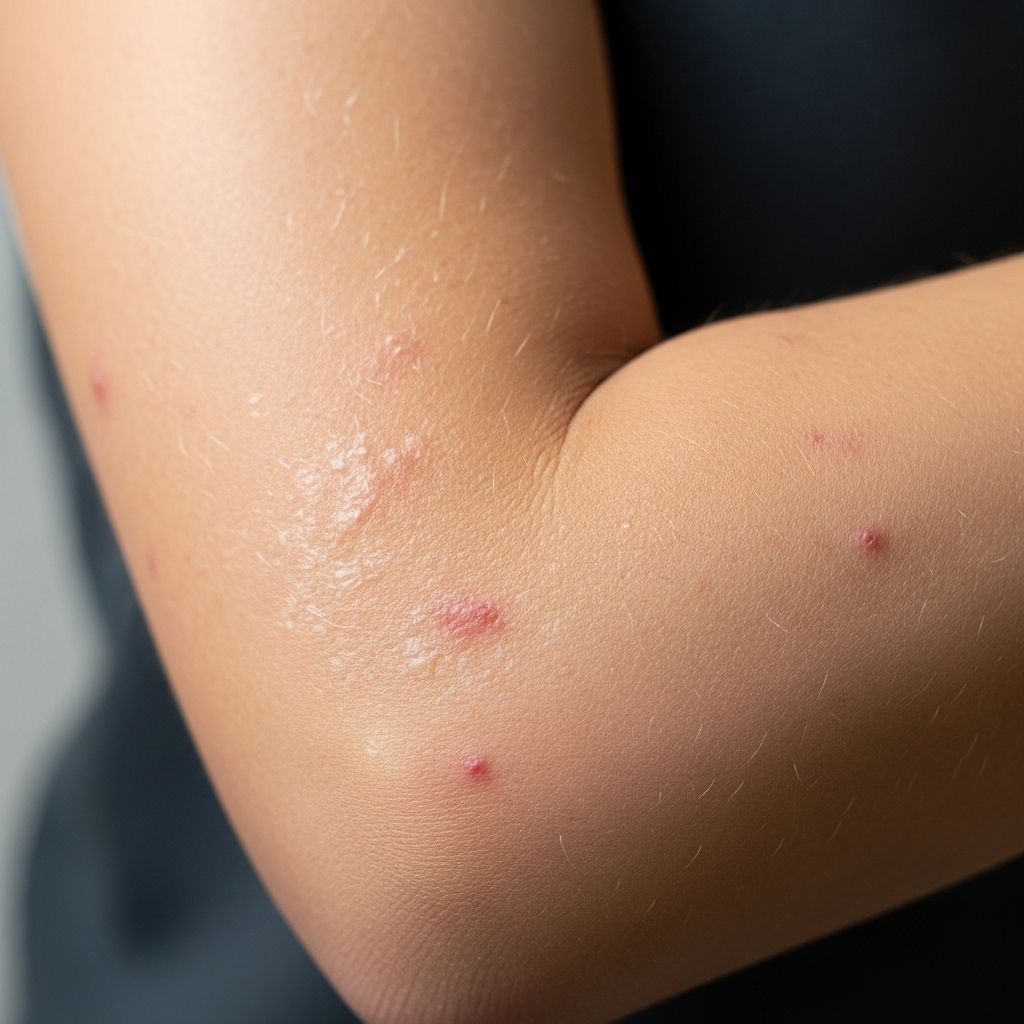
Skin conditions that commonly affect the arms can present in various forms, including erythema, papules, pustules, erosions, crusting, dry scaly patches, and pigmentary changes. These issues range from mild and self-limiting to chronic conditions requiring medical intervention. This article categorises arm skin problems by their characteristic appearances to aid in identification and guide appropriate management.
What are the skin problems on the arms?
The arms are prone to a wide array of dermatological conditions due to their exposure to environmental factors, friction, and allergens. Conditions may be localised to the upper arms, forearms, elbows, or wrists, and can affect people of all ages and skin types. Erythema (redness) is often less pronounced in darker skin tones, while pigmentation changes are more noticeable. Early recognition is key to preventing complications like secondary infections or scarring.
Arms: erythema without surface change
Erythema on the arms without scale, crust, or vesicles typically indicates vascular or inflammatory processes. Common causes include:
- Urticaria (hives): Acute itchy wheals triggered by allergens, infections, or physical stimuli. They appear suddenly and resolve within 24 hours.
- Erythema multiforme: Target-like lesions often on extensor arms, associated with infections like herpes simplex or medications.
- Polymorphic light eruption: Photodermatosis presenting as red patches on sun-exposed forearms after UV exposure.
- Systemic lupus erythematosus (SLE): Photosensitive erythema, potentially with associated joint pains or fatigue.
In darker skin, erythema may appear as dusky purple or greyish rather than bright red. Diagnosis often involves history, examination, and sometimes biopsy.
Arms: red papules/pustules
Red papules or pustules on the arms suggest folliculitis, acneiform eruptions, or arthropod bites. Key conditions include:
- Folliculitis: Inflamed hair follicles due to bacteria (e.g., Staphylococcus aureus), fungi, or friction from shaving. Presents as small red bumps or pustules around hairs.
- Keratosis pilaris: Common harmless condition with rough, follicular papules on upper arms, often called ‘chicken skin’. Bumps are skin-coloured, red, or brown; skin feels dry and may itch mildly. Most prevalent on extensor arms and thighs.
- Arthropod bites: Clustered red papules from mosquitoes, fleas, or bedbugs, often pruritic with central puncta.
- Pityriasis lichenoides: Acute (PLEVA) or chronic forms with red-brown papules that may scale or necrose, common in young adults.
Treatment varies from topical antiseptics for folliculitis to emollients and keratolytics (e.g., urea cream) for keratosis pilaris.
Arms: erosions, crusting
Erosions and crusting indicate superficial skin barrier breakdown, often from infection, trauma, or autoimmune processes. Examples:
- Impetigo: Bacterial (Streptococcus or Staphylococcus) superficial infection with honey-coloured crusts, highly contagious.
- Herpes zoster (shingles): Unilateral dermatomal vesicles that erode and crust, following nerve distribution on arms.
- Scabies: Intensely itchy burrows with papules, vesicles, and crusts, especially in webspaces; arms may show secondary excoriations.
- Atopic dermatitis flares: Weeping erosions from severe itch-scratch cycles in flexural or extensor areas.
May also blister or swell in conditions like bullous impetigo or contact dermatitis. Prompt antibacterial or antiviral therapy is essential.
Related Stories



Arms: dry/scaly and very itchy
Pruritic dry scaly conditions disrupt the skin barrier, leading to xerosis and inflammation. Prominent examples:
- Atopic dermatitis (eczema): Chronic relapsing condition with intense itch, flexural or extensor distribution in arms. Skin is dry, erythematous, and lichenified from rubbing. Common in children but persists into adulthood.
- Allergic contact dermatitis: Reaction to nickel in watches/jewellery or fragrances, presenting as itchy eczematous patches on wrists/forearms.
- Psoriasis: Well-demarcated plaques with silvery scale, often on elbows and extensor arms.
- Chronic actinic dermatitis: Rare photodermatosis with eczematous rash on photo-exposed arms, intensely pruritic even to minimal UV.
Management includes emollients, topical corticosteroids, and itch control with antihistamines.
Arms: dry and scaly with minimal itch
Less symptomatic scaling suggests hyperproliferative or ichthyotic disorders:
- Pityriasis alba: Hypopigmented scaly patches on arms, common in atopic children, resolves spontaneously.
- Tinea corporis (ringworm): Annular scaly plaques from dermatophyte infection.
- Discoid eczema: Coin-shaped scaly plaques from id reactions or trauma.
- Chronic hand dermatitis extending to forearms: Thickened scaly skin from irritants or allergens.
Pigmentation more pronounced in dark skin. Antifungals for tinea; otherwise, moisturisers suffice.
Arms: multiple skin-coloured papules
Skin-toned papules are often benign but may concern cosmetically:
- Keratosis pilaris: As above, follicular plugs giving goosebump appearance.
- Trichodiscomas or fibrofolliculomas: Multiple small papules in Birt-Hogg-Dubé syndrome.
- Lichen nitidus: Tiny shiny papules in linear arrangement.
- Molluscum contagiosum: Umbilicated papules from poxvirus, common in children.
Usually asymptomatic; reassurance or gentle exfoliation advised.
Pigmentary changes on the arms
Hyperpigmentation or hypopigmentation alters arm skin colour:
- Post-inflammatory hyperpigmentation: Dark spots following resolved inflammation, more evident in darker skin.
- Vitiligo: Depigmented patches with sharp borders.
- Pityriasis versicolor: Hypopigmented scaly patches from Malassezia yeast.
- Erythema dyschromicum perstans (ashy dermatosis): Grey-brown patches on arms.
See pigmentary disorders for full details. Treatments include topicals like hydroquinone or phototherapy.
Related Conditions
Arms may be involved in systemic diseases:
| Condition | Arm Involvement | Key Features |
|---|---|---|
| Dermatomyositis | Proximal upper arms | Muscle weakness, heliotrope rash, Gottron papules |
| Intertrigo | Underarms (axillae) | Moist erythematous rash in folds, secondary infection |
| Scaly skin diseases | Generalised arms | Papulosquamous disorders by duration and site |
Frequently Asked Questions (FAQs)
What causes bumpy skin on my upper arms?
Bumpy skin, often keratosis pilaris, results from keratin plugs in hair follicles. It’s harmless, genetic, and improves with moisturisers and exfoliants.
Why do I have red itchy patches on my forearms?
Possible causes include eczema, contact dermatitis, or photodermatitis. Consult a dermatologist for patch testing or biopsy if persistent.
Can arm rashes be a sign of something serious?
Yes, rashes like those in dermatomyositis or chronic actinic dermatitis may indicate underlying autoimmune issues. Seek evaluation if accompanied by weakness or photosensitivity.
How do I treat dry scaly skin on arms?
Use fragrance-free emollients frequently, avoid hot showers, and apply mild steroids for inflammation. Persistent cases need medical review.
Are arm skin problems contagious?
Some like impetigo, scabies, or tinea are; others like eczema or keratosis pilaris are not. Isolate if infectious.
References
- Skin problems on the arms — DermNet NZ (Hon Assoc Prof Amanda Oakley). 2015-09 (updated). https://dermnetnz.org/topics/skin-problems-on-the-arms
- Keratosis Pilaris — DermNet NZ. Updated 2023. https://dermnetnz.org/topics/keratosis-pilaris
- Chronic Actinic Dermatitis — DermNet NZ. Updated 2024. https://dermnetnz.org/topics/chronic-actinic-dermatitis
- Atopic Dermatitis — DermNet NZ. Updated 2024. https://dermnetnz.org/topics/atopic-dermatitis
- Adult-onset Dermatomyositis — DermNet NZ. Updated 2023. https://dermnetnz.org/topics/adult-onset-dermatomyositis
Similar Articles








Read full bio of medha deb