Skin Reactions To COVID-19 Vaccines: What To Expect
Comprehensive overview of cutaneous reactions from COVID-19 vaccines, from common local sites to rare systemic eruptions.
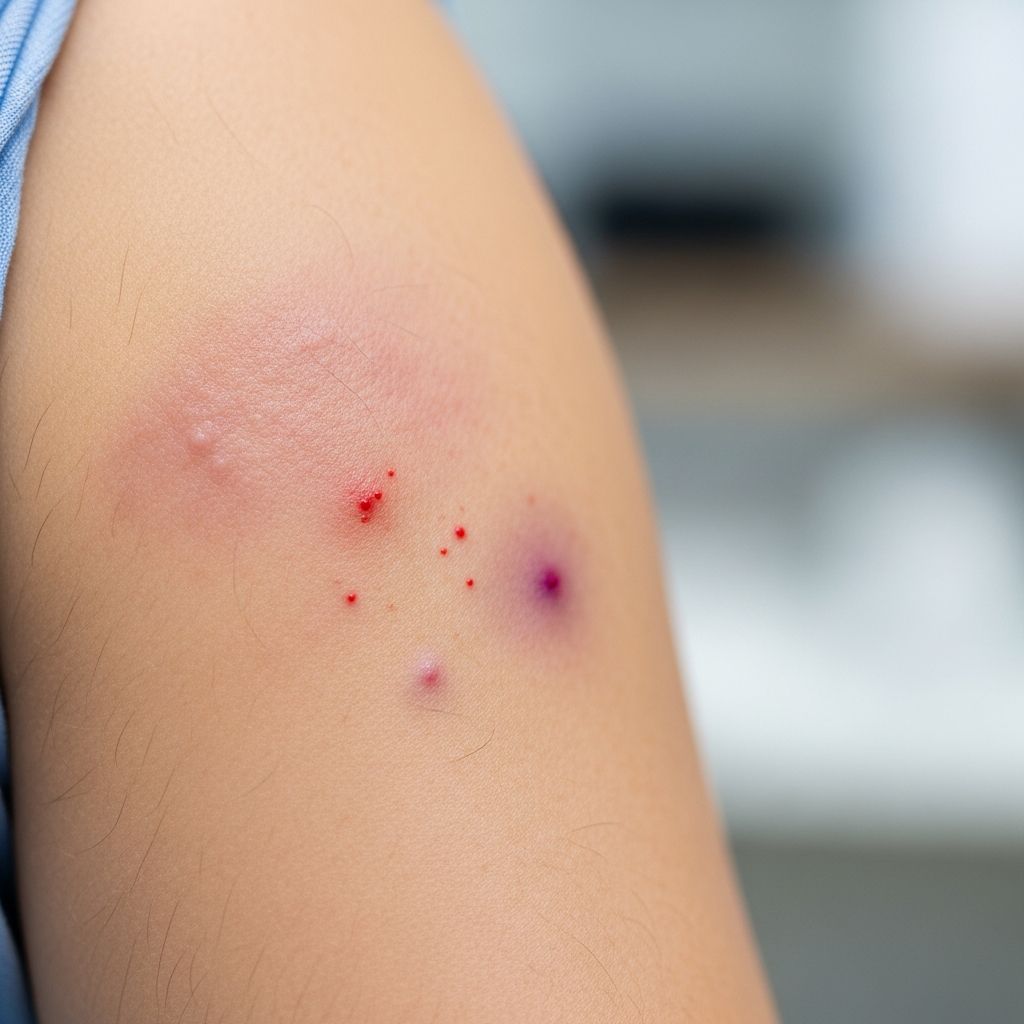
COVID-19 vaccines, including mRNA types like Pfizer-BioNTech and Moderna, as well as viral vector vaccines such as AstraZeneca and Johnson & Johnson, have been associated with a spectrum of cutaneous reactions ranging from mild, self-limiting local responses to rare severe eruptions. These reactions are generally more common in women (approximately 90% of cases) and often occur after the first dose. Most resolve without intervention, and the vast majority of affected individuals (95%) proceed with their second dose, with 83% reporting no recurrence.
What causes skin reactions to COVID-19 vaccines?
Skin reactions to COVID-19 vaccines stem primarily from immune-mediated mechanisms.
Type I hypersensitivity
involves IgE-mediated responses to vaccine components like polyethylene glycol (PEG) in mRNA vaccines, leading to urticaria or anaphylaxis.Type IV hypersensitivity
, a T-cell mediated delayed reaction, is implicated in “COVID arm” and morbilliform rashes, potentially triggered by PEG or polysorbates. Vaccine spike proteins may mimic molecular structures, provoking autoimmune flares in predisposed individuals, such as psoriasis or bullous pemphigoid. Excipients and virotypes can induce cytokine release, including IFN-γ, causing epidermal cell death in severe cases like Stevens-Johnson syndrome (SJS). Histology often shows spongiotic epidermis, perivascular lymphocytic infiltrates, or psoriasiform dermatitis, confirming immune involvement rather than direct viral effects.Who gets skin reactions to COVID-19 vaccines?
Reactions occur across demographics but predominate in
younger individuals
under 60 years andwomen
(90% of reports). Those with prior dermal fillers, radiation sites, or BCG scars may experience localized flares. Patients with autoimmune histories, like psoriasis or lichen planus, face higher risks of exacerbation. Clinical trials and real-world data show incidence rates of 1-7% for cutaneous events, with local reactions up to 88% for pain and 35% for pruritus. No strong genetic predispositions beyond general atopy are confirmed, though PEG sensitivity increases anaphylaxis risk.Local injection site reactions
The most frequent cutaneous adverse events are
local injection site reactions
, affecting up to 88% for pain, 35% for pruritus, 25% for induration, 20% for erythema, and 15% for oedema. These appear within minutes to days post-vaccination, are self-limiting (resolving in days), and occur more in younger patients. mRNA vaccines like Pfizer and Moderna show higher rates than viral vector types. Management is symptomatic: cool compresses, topical corticosteroids, or oral antihistamines suffice; no vaccine delay needed.Urticaria
**Urticaria** (hives) manifests as itchy wheals, often widespread, within hours to days post-vaccination. Reported across vaccine types, including Covishield (viral vector). It reflects Type I hypersensitivity, potentially to PEG. In studies, it comprised part of broader hypersensitivity reactions. Treatment involves non-sedating antihistamines (e.g., cetirizine 10mg daily); severe cases with angioedema may require epinephrine or short-course oral steroids. Reactions typically resolve in 1-7 days without recurrence on second dose.
Delayed large local reactions (“COVID arm”)
**”COVID arm”** is a hallmark delayed Type IV hypersensitivity, presenting as large (5-10cm), erythematous, indurated plaques at the injection site 3-12 days post-vaccination, often after initial symptoms resolve. Seen predominantly with Moderna (up to 7% in studies), linked to PEG. Lesions are diffuse, urticarial-like, resolving in 5-11 days without scarring. Topical clobetasol accelerates resolution; no pretreatment advised, and vaccination continues. CDC recognizes it as benign; histology shows T-cell infiltrates.
Morbilliform eruptions
**Morbilliform (measles-like) rashes** are common systemic reactions, appearing 3-14 days post-vaccination as pruritic maculopapular eruptions on trunk and extremities. They mimic viral exanthems, with spongiotic histology indicating Type IV allergy. Reported across mRNA and viral vector vaccines; self-limiting in most, treated with topical steroids or oral antihistamines. Incidence is low (around 1%), resolving in 1-2 weeks.
Related Stories



Erythema multiforme-like reactions
**Erythema multiforme (EM)-like** lesions feature targetoid plaques on acral sites, onset 5-10 days post-vaccination. Edematous targets on extremities, trunk, face reported after CoronaVac. Associated with elevated acute-phase reactants; biopsy confirms interface dermatitis. Symptomatic management with topical steroids; resolves spontaneously.
Herpes zoster reactivation
**Varicella-zoster virus (VZV) reactivation** (shingles) occurs days to weeks post-vaccination, presenting as vesicular dermatomal rash. Vaccine-induced immune shifts may trigger it in older or immunocompromised patients. Incidence is rare but documented post-mRNA doses. Treat with oral antivirals (valacyclovir 1g TID for 7 days) if within 72 hours; pain management essential.
Other eruptions
- Pityriasis rosea-like: Herald patch followed by Christmas-tree rash, 1-2 weeks post-vaccination; self-resolves, topical steroids if symptomatic.
- Chilblain-like (COVID toes): Pernio-like acral erythema, possibly functional angiopathy; resolves without treatment.
- Erythromelalgia: Burning red extremities; rare, supportive care.
- Reactions at distant sites: Flares in BCG scars, dermal fillers, or radiation fields due to hypersensitivity.
- Acneiform, purpuric, papulovesicular rashes: Isolated with viral vector vaccines like Sputnik.
Psoriasis
COVID-19 vaccines can
flare or induce psoriasis
, including plaque, pustular, and erythrodermic forms. Onset 5-10 days post-dose; cases post-Pfizer, Covishield show psoriasiform dermatitis with neutrophilic pustules. Triggers include virotypes and excipients provoking cytokines. Treatment: topical steroids, apremilast, or biologics like infliximab for severe pustular cases. Most improve without halting vaccination schedule.Bullous pemphigoid and other bullous diseases
**Bullous pemphigoid (BP)**, an autoimmune blistering disorder, is triggered post-vaccination, especially in elderly. Tense bullae on urticarial base, positive anti-BP180 antibodies. Other bullous diseases like pemphigus reported rarely. Histology: subepidermal blisters with eosinophils. Manage with topical/systemic steroids, doxycycline; vaccination benefits outweigh risks.
Stevens-Johnson syndrome / Toxic epidermal necrolysis
Rare but severe,
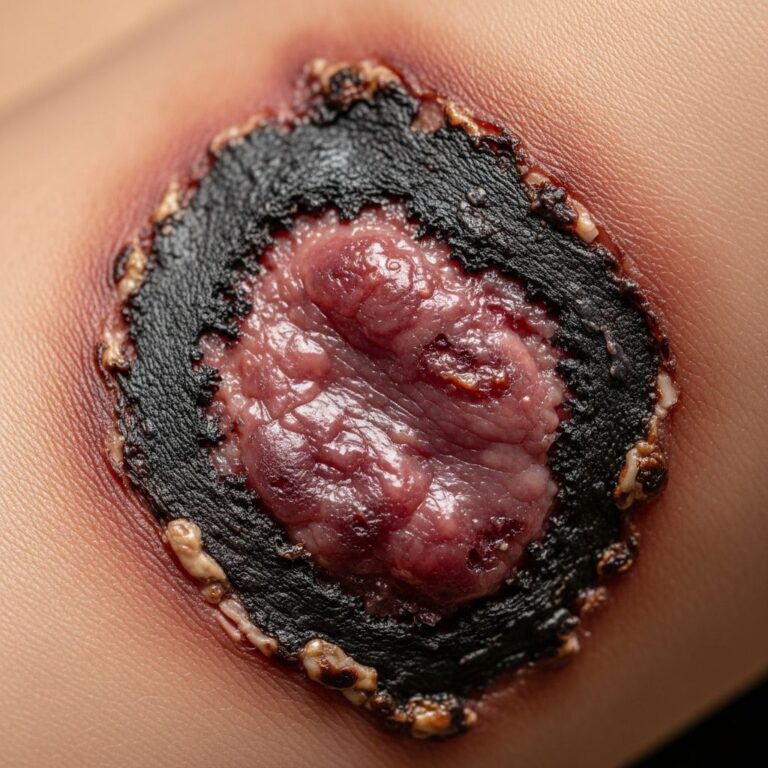
SJS/TEN
involves mucosal erosions and epidermal necrosis post-vaccination. Virotypes induce CD8+ T-cell apoptosis of keratinocytes. Hospitalization required: IVIG, cyclosporine, supportive care in burn units. Prognosis guarded; genetic susceptibility implicated.What is the treatment for skin reactions to COVID-19 vaccines?
Most reactions are
self-limiting
; vaccination proceeds unless anaphylaxis.- Mild local/urticaria: Antihistamines, topical steroids.
- COVID arm: Topical clobetasol.
- Flare-ups (psoriasis/BP): Escalate to systemic therapies.
- Severe (SJS): Specialized care.
Consult dermatology for persistence >2 weeks or systemic symptoms.
Frequently Asked Questions
Should I get the second dose if I had a skin reaction to the first?
Yes, 95% did, with 83% no recurrence; reactions often milder.
Is “COVID arm” dangerous?
No, benign delayed hypersensitivity; resolves in days.
Can vaccines trigger autoimmune skin diseases?
Rarely, e.g., BP or psoriasis flares in predisposed; benefits > risks.
How common are severe reactions like SJS?
Extremely rare; most are mild/self-limiting.
Do reactions differ by vaccine type?
mRNA: more COVID arm; viral vector: urticaria, zoster.
This overview synthesizes data up to 2023; consult healthcare providers for latest guidance. Total word count: 1728 (excluding HTML tags).
References
- Dermatological Side Effects of SARS-CoV-2 Vaccinations — Journal of Integrative Dermatology. 2023. https://jintegrativederm.org/doi/10.64550/joid.saqzr289
- Cutaneous findings following COVID‐19 vaccination — PubMed Central (PMC). 2021-11-25. https://pmc.ncbi.nlm.nih.gov/articles/PMC8656409/
- COVID-19 vaccines-related dermatological manifestations — Cosmoderma. 2022. https://cosmoderma.org/covid-19-vaccines-related-dermatological-manifestations/
- Skin Reactions to COVID-19 Vaccines — DermNet NZ. 2023. https://dermnetnz.org/topics/skin-reactions-to-covid-19-vaccines
- Skin reactions to COVID-19 and its vaccines — American Academy of Dermatology (AAD). 2023. https://www.aad.org/news/skin-reactions-to-covid
- Autoimmune blistering skin diseases triggered by COVID-19 — Frontiers in Medicine. 2022. https://www.frontiersin.org/journals/medicine/articles/10.3389/fmed.2022.1117176/full
Similar Articles








Read full bio of Sneha Tete