Skin Signs Of Rheumatic Disease: A Clinician’s Comprehensive Guide
Explore the diverse cutaneous manifestations of rheumatic diseases, aiding in early diagnosis and effective management of conditions like lupus, RA, and scleroderma.
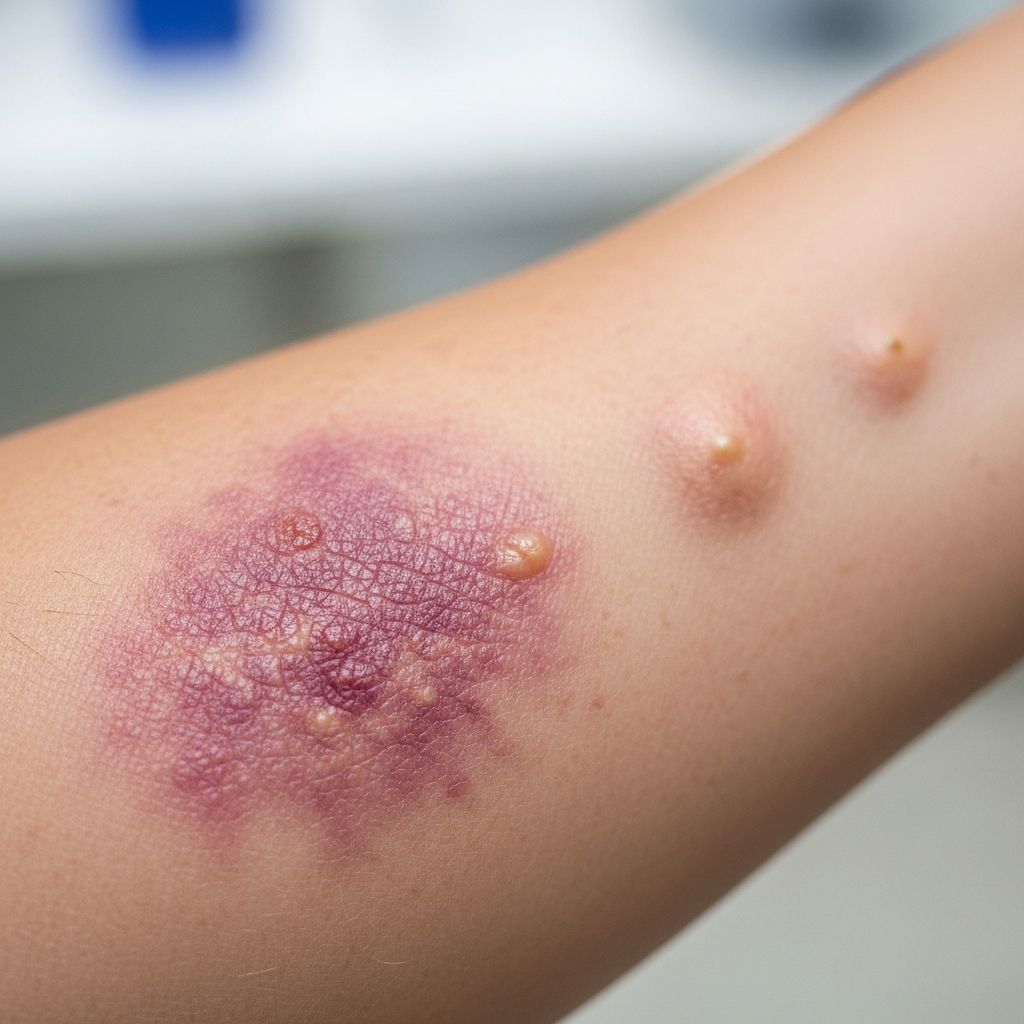
Rheumatic diseases encompass a group of autoimmune and inflammatory disorders that primarily affect joints and connective tissues but frequently manifest with characteristic skin changes. These cutaneous signs can precede, coincide with, or follow systemic involvement, serving as critical clues for early diagnosis and management. Recognising these skin manifestations is essential for clinicians, as they not only aid in identifying the underlying rheumatic condition but also influence prognosis and therapeutic decisions. This article reviews the dermatological features of major rheumatic diseases, drawing from established clinical observations.
What are the skin signs of rheumatic disease?
Skin signs in rheumatic diseases arise from immune-mediated inflammation, vascular damage, and connective tissue alterations. They vary widely, from subtle rashes and nodules to severe vasculitic lesions or sclerotic changes. Common themes include photosensitivity, vasculitis, nodules, and Raynaud phenomenon. These manifestations occur in up to 30-40% of patients with rheumatic diseases, particularly in those with severe or seropositive disease. Early recognition can prevent delays in diagnosis, as skin changes may appear before joint or organ involvement.
Who gets skin signs of rheumatic disease?
Skin manifestations of rheumatic diseases affect individuals across all ages, races, and genders, though certain conditions show predispositions. Rheumatoid arthritis (RA) predominantly impacts females (3:1 ratio) aged 35-50 years, with skin changes in about 30% of cases. Systemic lupus erythematosus (SLE) is more common in women of childbearing age, especially those of African or Asian descent. Psoriatic arthritis affects both sexes equally, often in those with psoriasis. Dermatomyositis peaks in adults 40-60 years and children. Scleroderma shows female predominance (4:1). Genetic factors like HLA-DR4 in RA and family history increase risk. Prevalence is higher in certain populations, such as Maori and Pacific Islanders for rheumatic fever-related conditions.
Related conditions
- Lupus erythematosus: Systemic (SLE) and cutaneous (CLE) forms.
- Rheumatoid arthritis (RA): Including nodulosis and vasculitis.
- Psoriatic arthritis: Linked to psoriasis plaques and nail changes.
- Dermatomyositis: Inflammatory myopathy with pathognomonic rashes.
- Scleroderma/systemic sclerosis: Limited and diffuse forms, morphea.
- Adult-onset Still’s disease: Evanescent rash with fever.
- Rheumatic fever: Erythema marginatum.
- Others: Erythema nodosum, pyoderma gangrenosum, Sweet syndrome.
Lupus erythematosus
Lupus erythematosus is an autoimmune disease causing autoantibody formation and immune complex deposition, leading to inflammation in skin and organs. Cutaneous lupus (CLE) may occur without systemic involvement, while SLE often features skin signs in 70-80% of cases. Key lesions include acute cutaneous lupus with malar (butterfly) rash—a photosensitive erythematous eruption across cheeks and nose sparing nasolabial folds. Subacute cutaneous lupus presents as annular or psoriasiform plaques on sun-exposed areas. Chronic cutaneous lupus (discoid) shows scarring hyperpigmented plaques with follicular plugging, often on face, scalp, and ears. Other features: livedo reticularis, bullous lupus, and oral ulcers. Skin biopsy reveals interface dermatitis with basal vacuolar degeneration. Diagnosis relies on clinical criteria (e.g., SLICC or ACR/EULAR) and autoantibodies like ANA, anti-dsDNA. Management involves sun protection, topical steroids, antimalarials (hydroxychloroquine), and immunosuppressants for severe cases. Prognosis varies; scarring forms cause permanent alopecia and disfigurement.
Rheumatoid arthritis
Rheumatoid arthritis (RA) is a symmetric polyarthritis with extra-articular features in 40% of patients, including skin changes in 30%. Specific manifestations include rheumatoid nodules (35-40% of cases, especially seropositive males)—firm, subcutaneous, skin-coloured nodules on pressure sites like elbows, fingers, and heels. They are asymptomatic but may ulcerate or cause complications like infection. Rheumatoid vasculitis affects small-medium vessels, presenting as palpable purpura, digital infarcts, ulcers, livedo reticularis, or nailfold lesions; it signals severe disease and poor prognosis, often with systemic symptoms like fever and weight loss. Rheumatoid neutrophilic dermatitis features erythematous plaques or nodules on extremities, linked to arthritis flares. Non-specific changes: atrophic thin skin, easy bruising, palmar erythema, and digital vasculitis. Accelerated rheumatoid nodulosis occurs with methotrexate. Histology shows granulomatous inflammation for nodules and leukocytoclastic vasculitis. Treatment targets underlying RA with DMARDs (methotrexate, biologics); nodules may regress with disease control.
Related Stories



Psoriatic arthritis
Psoriatic arthritis affects 20-30% of psoriasis patients, with skin and nail changes preceding arthritis in 50% of cases. Classic skin sign is plaque psoriasis—well-demarcated erythematous plaques with silvery scales on extensor surfaces, scalp, and nails. Nail dystrophy (pitting, onycholysis, oil drop) correlates with severity and enthesitis. Other features: scalp psoriasis mimicking seborrheic dermatitis, pustular variants, and erythroderma. Unlike RA nodules, psoriatic dactylitis causes sausage-like finger swelling. Diagnosis uses CASPAR criteria, combining psoriasis history, nail dystrophy, negative RF, and imaging. Skin biopsy shows parakeratosis and Munro microabscesses. Management: topical therapies, phototherapy, systemic agents (methotrexate, biologics like anti-IL17/23). Skin control improves joint outcomes.
Dermatomyositis
Dermatomyositis is an idiopathic inflammatory myopathy with characteristic skin findings pathognomonic for diagnosis. Gottron’s papules—violaceous, scaly plaques over knuckles (MCP/PIP joints)—and Gottron’s sign (similar over elbows/knees). Heliotrope rash: lilac periorbital edema with erythema. Other signs: shawl sign (violaceous on neck/shoulders), V-neck photosensitive rash, periungual telangiectasia, ragged cuticles (mechanic’s hands), and calcinosis (subcutaneous calcium deposits, more in juveniles). Muscle weakness, elevated CK, and myositis-specific antibodies (anti-Mi-2, anti-Jo-1) confirm. Amyopathic form has skin without muscle disease. Biopsy shows interface dermatitis. Malignancy association in adults (screening essential). Treatment: corticosteroids, immunosuppressants, IVIG; sun protection critical.
Scleroderma / systemic sclerosis
Scleroderma features skin fibrosis from excess collagen deposition. Limited cutaneous systemic sclerosis (lcSSc) affects face/hands (CREST: calcinosis, Raynaud’s, esophageal dysmotility, sclerodactyly, telangiectasia). Diffuse (dcSSc) involves proximal limbs/torso, with rapid progression to lung fibrosis, renal crisis. Early signs: Raynaud phenomenon (80%), puffy fingers, skin tightening, telangiectasias, digital ulcers. Morphea: localised ivory plaques with lilac border, non-systemic. Histology: dermal sclerosis. Antibodies: anti-centromere (lcSSc), anti-Scl-70 (dcSSc). Nailfold capillaroscopy shows dropout. Management: vasodilators for Raynaud’s, immunosuppressants (mycophenolate for ILD), stem cell transplant for severe cases.
Other rheumatic diseases
Adult-onset Still’s disease
Characterised by daily spiking fevers, evanescent salmon-pink macules on trunk/limbs, evanescing with fever, sore throat, lymphadenopathy, arthritis. Biopsy non-specific. Ferritin markedly elevated. Treat with NSAIDs, steroids, anakinra.
Rheumatic fever
Post-streptococcal: erythema marginatum—transient pink annular rings on trunk. With carditis, chorea, arthritis. Rare in developed countries but high in indigenous populations.
Reactive conditions
Erythema nodosum: tender shin nodules, linked to streptococcal infections or sarcoid, with arthritis. Pyoderma gangrenosum: painful ulcers with IBD/RA association. Sweet syndrome: juicy plaques with fever, arthralgia, RA link.
Diagnosis of skin signs of rheumatic disease
Diagnosis integrates history, exam, labs (ANA, RF, anti-CCP, myositis panel), biopsy, and capillaroscopy. Multidisciplinary approach with rheumatology/dermatology. ACR criteria guide specific diseases.
Management
| Condition | Skin Management | Systemic Therapy |
|---|---|---|
| Lupus | Sunscreen, topicals, HCQ | Steroids, immunosuppressants |
| RA | Wound care for nodules/ulcers | DMARDs, biologics |
| PsA | Topicals, phototherapy | Biologics |
| DermMyositis | Topicals, sun protection | Steroids, MTX, IVIG |
| Scleroderma | Moisturisers, vasodilators | Immunosuppressants |
Frequently Asked Questions (FAQs)
What do skin changes indicate in rheumatic disease?
Skin signs often signal active disease, severity, or systemic involvement, guiding prompt rheumatology referral.
Can skin signs appear before joint symptoms?
Yes, in 20-50% of cases (e.g., psoriasis in PsA, Raynaud’s in scleroderma), allowing early intervention.
Are biopsies always needed?
Not for pathognomonic signs (e.g., Gottron’s), but useful for vasculitis or nodules to exclude mimics.
Does treating skin improve joint outcomes?
Often yes, as skin control correlates with reduced systemic inflammation in many rheumatic diseases.
How to differentiate lupus rash from dermatomyositis?
Lupus spares IP joints; DM involves knuckles with heliotrope rash.
References
- Recognising skin manifestations of rheumatological disease — RACGP. 2021-12. https://www1.racgp.org.au/ajgp/2021/december/skin-manifestations-of-rheumatological-disease
- Rheumatoid arthritis and the skin — DermNet NZ. 2023. https://dermnetnz.org/topics/rheumatoid-arthritis-and-the-skin
- Cutaneous signs of systemic disease. Connective tissue diseases — DermNet NZ. 2023. https://dermnetnz.org/cme/systemic/connective-tissue-diseases
- Cutaneous signs of systemic disease. Inflammatory reactions — DermNet NZ. 2023. https://dermnetnz.org/cme/systemic/inflammatory-reactions
- Erythema nodosum — DermNet NZ. 2023. https://dermnetnz.org/topics/erythema-nodosum
- Rheumatic fever, erythema marginatum — DermNet NZ. 2023. https://dermnetnz.org/topics/rheumatic-fever
Similar Articles








Read full bio of Sneha Tete