Skin Surgery: A Comprehensive Guide To Procedures & Care
Comprehensive guide to skin surgery techniques, indications, procedures, and complications for benign and malignant lesions.
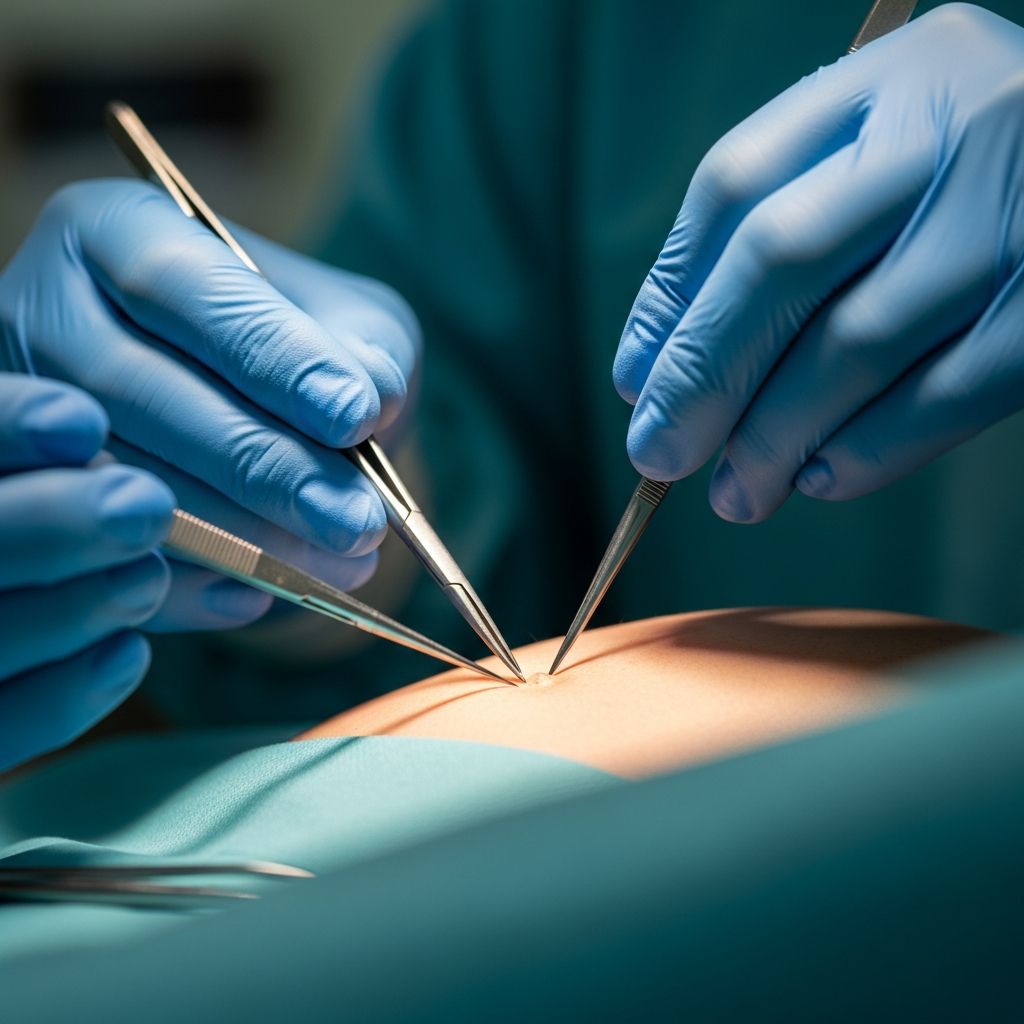
Skin surgery encompasses a range of procedures performed by dermatologists and other specialists to diagnose, treat, and remove skin lesions that are benign, symptomatic, cosmetically concerning, or potentially malignant. These interventions aim to excise lesions while minimising scarring and ensuring complete removal of pathological tissue, particularly for skin cancers like basal cell carcinoma and squamous cell carcinoma.
What is skin surgery?
Skin surgery involves the excision, biopsy, or destruction of skin lesions using techniques such as shave excision, curettage, punch biopsy, elliptical excision, Mohs micrographic surgery, electrosurgery, cryotherapy, flaps, and skin grafting. Dermatologists receive training in basic procedures, with advanced techniques requiring further specialisation. The choice of method depends on lesion type, size, location, suspicion of malignancy, and cosmetic considerations.
Procedures are typically outpatient under local anaesthesia, using agents like 2% lignocaine with adrenaline for rapid onset and haemostasis. Compliance with standards such as those from Standards New Zealand ensures safety.
Who performs skin surgery?
Dermatologists perform most skin surgeries, especially for skin cancers. Plastic surgeons, otolaryngologists, ophthalmic surgeons, general surgeons, and general practitioners may also conduct procedures. For complex facial lesions or large tumours, referral to specialists is recommended.
Surgical management of skin lesions
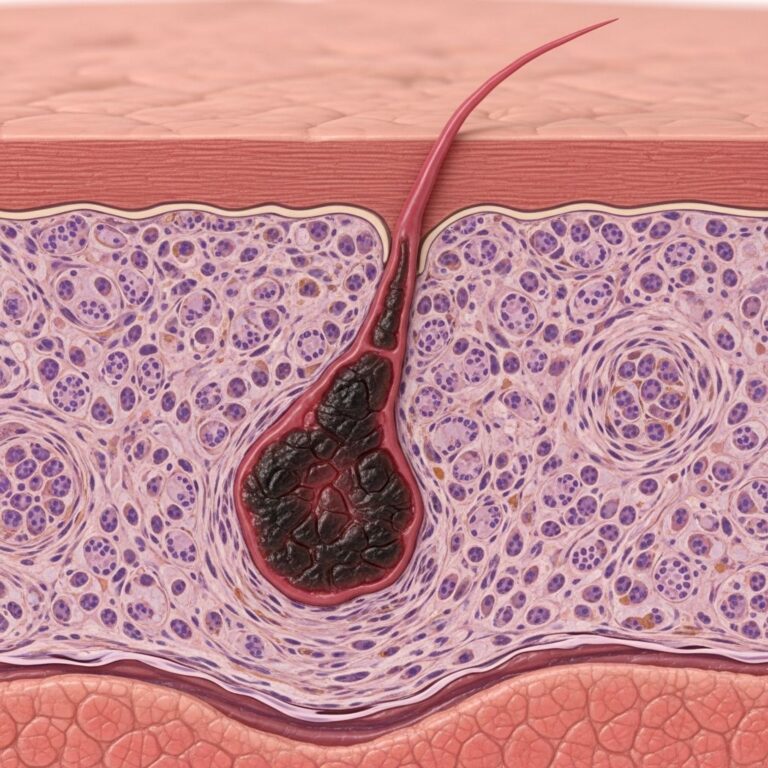
Skin surgery addresses malignant lesions (e.g., basal cell carcinoma, squamous cell carcinoma, melanoma), premalignant conditions (e.g., actinic keratoses), and symptomatic or unsightly benign lesions (e.g., seborrhoeic keratoses, skin tags, moles). Techniques include destructive methods (cryotherapy, curettage, electrosurgery), excisional biopsies, Mohs surgery, and reconstructive options like flaps and grafts.
Shave excision (tangential excision)
Suitable for superficial lesions entirely above the skin surface, such as seborrhoeic keratoses, actinic keratoses, and skin tags. A No.10 scalpel blade or flexible DermaBlade® is used to shave the lesion parallel to the skin surface. Haemostasis is achieved with light cautery, and the wound heals by secondary intention. This method avoids deep excision, reducing scarring for non-infiltrating lesions.
Curettage and cautery
Curettage scrapes away tissue using a curette for superficial benign lesions like pyogenic granulomas or low-risk non-melanoma skin cancers. It is inappropriate for melanocytic lesions or infiltrating tumours. For malignancies, follow with electrosurgery to remove soft tumour cells, then diathermy for haemostasis. Curettage may debulk larger tumours before excision.
Punch biopsy
Ideal for sampling suspected squamous cell or basal cell carcinomas. Mark the site, infiltrate with local anaesthetic, cleanse, and drape. Stretch skin perpendicular to lines of least tension, insert the punch vertically with a twirling motion into subcutaneous fat, and cut the base with iris scissors. Handle gently to avoid crush artefact; use a needle for extraction. Suitable for diagnosis but not suspicious melanomas, as sampling may miss pathology.
Incisional and excisional biopsy
Incisional biopsy removes part of a large lesion; excisional removes the entire lesion with margins. Infiltrate superficial dermis with 0.5 ml lignocaine/adrenaline per 1 cm². Excise elliptically along skin tension lines for optimal closure and minimal scarring. Orient perpendicular to muscle pull or parallel to creases.
Related Stories



Mohs micrographic surgery
For high-risk skin cancers (e.g., recurrent or mid-facial lesions with unclear margins). Under local anaesthesia, curette the bulk, then excise 2-3 mm margins. Process frozen sections (3 mm thick) horizontally, stain, and map tumour remnants. Repeat stages until clear, preserving healthy tissue. Highly effective for complete tumour removal.
Electrosurgery
Uses high-frequency current for desiccation (drying tissue) or fulguration (sparking). Gentle for skin tags, warts, syringomas; low power for telangiectasia. For small non-melanoma cancers, shave/curette then electrofulgurate, sending specimens for histology.
| Skin Lesion | Electrosurgical Method |
|---|---|
| Skin tags, warts, syringomas | Gentle electrodesiccation prior to curettage |
| Telangiectasia | Fine needle electrode, very low power |
| Small non-melanoma skin cancers | Shave/curette then electrofulguration (histology required) |
Cryotherapy
Liquid nitrogen freezes superficial lesions like warts or actinic keratoses. Often combined with curettage.
Wound closure techniques
Primary closure for small defects; flaps (adjacent skin rotated to fill) or grafts (skin from donor site) for larger wounds. Grafts are shaved or full-thickness, secured with stitches/staples, bolster dressings, or vacuum therapy. Match colour/thickness; tissue expanders for staged procedures.
Anaesthesia in skin surgery
Local intradermal lignocaine (1-2%) with adrenaline (1:100,000) provides 1-3 hours anaesthesia, reduces bleeding/toxicity. Avoid adrenaline on digits/penis or in poor circulation/heart disease. Use fine 27-30G needles.
Planning skin surgery
Assess lesion characteristics, patient comorbidities, site for cosmesis/tension lines. Biopsy suspicious lesions first. Aim for right-angle excision parallel to creases for minimal scarring. Specialist referral for facial/large lesions.
Immediate complications of skin surgery
- Bleeding: Controlled with pressure, cautery, or sutures.
- Infection: Rare (<1%), prevented by asepsis; treat with antibiotics if needed.
- Haematoma: Blood collection under skin.
- Nerve damage: Temporary/permanent sensation loss.
- Allergic reactions: To anaesthetics/dressings.
- Graft failure: Poor take due to movement/shear.
Delayed complications of skin surgery
- Scarring: Hypertrophic, keloid, or stretched.
- Poor wound healing: In smokers/diabetics.
- Recurrence: Incomplete excision.
- Dehiscence: Wound reopening.
Unnecessary surgery occurs if benign histology follows excision of suspected malignancy; biopsy mitigates this.
Inappropriate skin surgery
Avoid curettage for melanomas/dermal tumours; shave for infiltrating lesions. Weigh cancer risk vs. surgical risks.
Information for patients
Discuss indications, alternatives, risks, aftercare (wound cleaning, no straining). Follow-up for histology results, scar management.
Frequently Asked Questions
Is skin surgery painful?
A: Local anaesthesia ensures pain-free procedure; post-op discomfort managed with paracetamol.
How long does recovery take?
A: 1-2 weeks for small wounds; longer for grafts/flaps. Avoid sun, follow dressings.
Will there be a scar?
A: Yes, but minimal with proper technique along tension lines. Fades over 6-12 months.
When is Mohs surgery used?
A: For facial/high-risk skin cancers to maximise cure and cosmesis.
Can all lesions be removed outpatient?
A: Most yes, under local; large/complex may need theatre.
References
- Surgical procedures – Common skin lesions — DermNet NZ. 2023. https://dermnetnz.org/cme/lesions/surgical-procedures
- Introduction to skin surgery – Common skin lesions — DermNet NZ. 2023. https://dermnetnz.org/cme/lesions/introduction-to-skin-surgery
- Skin grafting — DermNet NZ. 2023. https://dermnetnz.org/topics/skin-grafting
- The role of surgery in dermatology — DermNet NZ. 2023. https://dermnetnz.org/topics/the-role-of-surgery-in-dermatology
- Risks and complications of skin surgery — DermNet NZ. 2023. https://dermnetnz.org/topics/risks-and-complications-of-skin-surgery
- Skin surgery — DermNet NZ. 2023. https://dermnetnz.org/topics/skin-surgery
Similar Articles








Read full bio of medha deb